
Mario RPG as a genre includes three different sub-franchises that have been cornerstones of Nintendo systems for three decades. Super Mario RPG: Legend of the Seven Stars came out on Super Nintendo in 1996. This game was notable for being a collaboration between Square and Nintendo. This game was the first to introduce a genre with action-command turn-based combat. Mario RPG Paper was a Mario game released on the Nintendo 64 in 2001, featuring a paper aesthetic and Star Spirits the party progression system. Mario & Luigi: Superstar Saga came out on the Game Boy Advance in 2003. This game was developed by AlphaDream and introduced the dual-protagonist combination attack mechanic, which the series has continued to improve in six games on Handheld systems and the Nintendo Switch. The editor's curated ranking for 2026 focuses on the 10 Mario RPG entries. These games have a lasting cultural impact and narrative depth that have earned them a place in the permanent canon.
This ranking for 2026 is also built with three criteria in mind. One of them is that the game must feature action-command turn-based JRPG style combat that is typical in games under the Mario RPG umbrella, to distinguish them from the main series Mario platformer entries. Another is that the mechanics must stand up to modern standards, even though the game was made before remasters became popular. Lastly, the game must have a cultural impact that goes beyond the Nintendo first-party fandom to the wider JRPG genre. Super Mario RPG is the game that best embodies all these criteria, due to the fact that both the original version and the 2023 Switch remake illustrate what can be done in the genre when designers fully commit to the action-command style combat. Paper Mario: The Thousand Year Door gets second place in the ranking as the GameCube version and the 2024 Switch remake are considered the best games in the Paper Mario series.
Mario and Luigi: Bowser's Inside Story earns the third spot for its unique take on the DS three-protagonist combat structure which expanded the AlphaDream formula into new territory that no other Mario and Luigi title has fully explored.
The AlphaDream catalog spans GBA, DS, and 3DS generations with Mario and Luigi: Superstar Saga, Partners in Time, Bowser's Inside Story, and Dream Team. The Nintendo handhelds and Switch also dominate the current Mario RPG library. Mario & Luigi: Superstar Saga, Partners in Time, Dream Team, and Bowser's Inside Story make up the AlphaDream catalog that spans GBA, DS, and 3DS generations. The studio ceased operations in 2019, but a Switch revival began with the Super Mario RPG remake in 2023 and it will continue in 2024 with both Paper Mario: The Thousand-Year Door HD and Mario & Luigi: Brothership. These offerings mark three Switch games in 24 months and validate the Mario RPG umbrella as a prominent Nintendo Switch JRPG brand. If you are looking for Mario RPG games in 2026, the titles listed below will be the ultimate starting point for exploring the AlphaDream catalog across the SNES, Nintendo 64, GameCube, GBA, DS, Wii, 3DS, and Switch hardware generations.
How We Ranked Every Mainline Mario RPG
Our editor's chosen methodology assesses the Mario RPG entries on three different dimensions, each revealing different design strengths. The first is mechanical action-command depth. The best entries combine turn-based menu selection with an element of real-time player skill through button press timing windows for both offense and defense animations. Super Mario RPG was the first to introduce the action-command system in 1996 and the 2023 Switch remake added triple-attack mechanics to extend party combo options while keeping the original combat system. In Paper Mario: The Thousand-Year Door, each chapter has a unique audience system where crowd reactions can boost or decrease damage and turn each chapter into a performance-driven combat experience that has not been replicated by other Paper Mario titles.
When ranking Mario RPG entries, genre definitions become philosophical. Some reviewers distinguish real-time platformer-RPG hybrid combat of Super Paper Mario from action-command turn-based combat, however, innovatively chapter-based RPG progression plus the dimensional flip mechanic solidifies a top-ten ranking. Paper Mario: Sticker Star and Paper Mario: Color Splash were ranked lower for sticker-card combat that strayed too far from the core action-command mechanic that is foundational to the Mario RPG umbrella. Mario & Luigi: Paper Jam was also ranked lower due to the crossover format which combines mechanics from both subseries, but fails to create a definitive entry in either. These editorial decisions place greater value on action-command combat innovation than a completionist approach.
Lasting cultural impact and narrative warmth is the third filtering criterion.
Mario & Luigi: Superstar Saga saved the Mario and Luigi franchise in 2003 by mixing easy-to-approach tactical mechanics with funny character writing that created the dual-protagonist voice for all subsequent AlphaDream releases. The Paper Mario games on Nintendo 64 inspired two decades of design choices for the Paper Mario games with their party progression system featuring Star Spirits. Mario & Luigi: Bowser's Inside Story on DS introduced the three-protagonist combat system in which Mario, Luigi, and a giant Bowser all fight on different layers. At this scale the series has rarely revisited this design innovation. Each entry below has been reassessed against the modern playability thresholds through 2026 and those that still hold up are ranked highly, even if they predate the widespread availability of remasters.
10. Mario & Luigi: Partners in Time — DS Time-Travel Origin (2005)
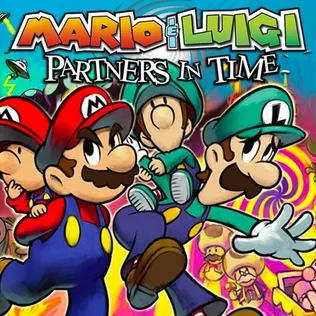
Coming in 10th place we have Mario & Luigi: Partners in Time. The game was the second mainline Mario & Luigi game and the entry that introduced 4 protagonist combat with the addition of baby Mario and baby Luigi alongside the adult brothers. It released in 2005 for Nintendo DS and built on the combat of Superstar Saga by adding in the time period mechanic that added an additional layer to encounters and created combat situations where 4 party members had to coordinate attacks. The quest of the Cobalt Star and the Shroob alien invasions were also drastically different from the Beanbean Kingdom adventures in Superstar Saga. This comprehensive ranking reflects editorial standards in 2026.
Mario & Luigi: Partners in Time also introduced a new level of combat input coordination and tactical complexity with 4-protagonist combat. Each character mapped to a different shoulder button, and chained Bros Items required multi-button timing across all 4 characters. It became very polarizing for the franchise because of the difficulty and time travel narrative that went away from the formula that Superstar Saga was known for. The Dual Screen of the Nintendo DS was used to create the first time traveling mechanic that would later be used again in several other titles.
9. Super Paper Mario — Wii Platformer-RPG Hybrid (2007)
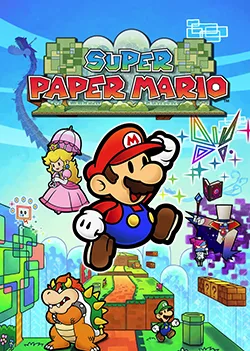
The ninth game in the Paper Mario franchise is Super Paper Mario, which, unlike its predecessors, features real-time combat instead of turn-based combat. Instead of using the action-command style combat that the first three entries in the series used, Super Paper Mario uses a side-scrolling combat system that allows you to fight as Mario, Peach, Bowser, or Luigi. They are playable characters that can be swapped around during the chapter Camille. With the dimensional flip system, players are able to switch between 2D and 3D during a level, which unlocks pathways and reveals weaknesses in enemies that can't be seen from the 2D perspective.
In place of the earlier entries in the series partner system, where players had to choose 1 of 7 options, players are instead teamed up with 1 of the 4 elemental sidekicks at the beginning of each chapter that provides an ability to help in combat — Thoreau could attack enemies, Carrie could transport Mario across obstacles, and Slim could disable players. The storyline follows the four-character party as they move through all eight chapters and different dimensions to battle the Chaos Heart. Super Paper Mario is one of the most divisive entries in the Mario RPG series due to the fact that combat is no longer turn-based. Regardless, this unique design made it a permanent addition to the Paper Mario series for the Wii. This comprehensive ranking reflects editorial standards in 2026.
8. Mario & Luigi: Brothership — Switch Series Revival (2024)
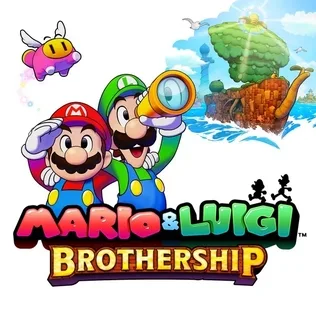
Mario & Luigi: Brothership is ranked eighth as the 2024 Nintendo Switch exclusive that brought back the Mario & Luigi series five years after AlphaDream closed in 2019. Moving to the Switch has made it so Mario and Luigi are now adventuring in the Concordia archipelago instead of the Mushroom Kingdom. This setting change allows for them to have a sea-faring co-op adventure where they reconnect island chains. Acquire and Nintendo have developed this game as a new beginning for the series while still keeping the action-command combat system. This time, they have introduced a new feature called Bros Plug that lets you customize your attacks by plugging in different options to Gummy & Pouch slots.
Combat is still the same as in previous games where you have to control two characters together as you have to do with the six games that AlphaDream released. The goal is to time your attacks and defense with the right inputs at the right time. Instead of having linear chapters, the Brothership game gives you an island-hopping campaign, which is a lot better. This means that you can control which sea routes to take and which lighthouses to fix in the whole Concordia world. Brothership also confirmed that the Mario & Luigi games can still be profitable on Switch and proved that the AlphaDream design philosophy can continue with new teams. Brothership is also the foundation for the new era of Mario & Luigi games. This comprehensive ranking reflects editorial standards in 2026.
7. Mario & Luigi: Dream Team — 3DS Dreamscape Two-World (2013)
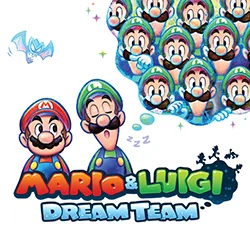
Dream Team is ranked seventh because of the 2013 Nintendo 3DS release that first introduced the dual-world dreamscape mechanic. The player experiences the dream world from the perspective of Luigi, and the 3DS can show both the dream world and the real world. In the dream world, There are combat mechanics with a giant Luigi which is a swarm of Luigis and They perform the usual attacks but in a higher volume. The combat system is based on the previous game, Bowser's Inside Story, but adds even more options for combos.
All of the above made Dream Team unique compared to the previous games in the Mario and Luigi franchise. The new story with the Pi'illo race and the antagonist, Antasma, was not used in further games in the franchise though it created an interesting new lore. The 3DS system was able to have much longer and more complicated The Bros attacks in combat than the DS games and Dream Team had a campaign that was 40 hours long , this made it on par with the other highly rated games in the Mario and Luigi franchise. It has remained the best game in the franchise for the 3DS and it was also one of the AlphaDream games that used the dream mechanic the most until the studio took a break and came back to a more simple style of game in 2015. This comprehensive ranking reflects editorial standards in 2026.
6. Paper Mario: The Origami King — Switch Origami Visual Peak (2020)
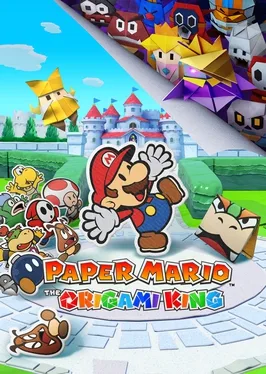
The Origami King is the sixth title to be released in 2020 for the Nintendo Switch. It also has the most innovative design for Paper Mario, showcasing the use of origami folding techniques and a unique combat puzzle system. The ring-based combat system allows for very detailed and 3D environments that are like crafted paper. They created origami enemies, added scenery, and bosses that all had folding and unfolding animations. This level of detail had not been captured in previous Paper Mario games. The storyline of King Olly who invaded the Mushroom Kingdom gave the team at Intelligent Systems a new antagonist to work with that did not involve the traditional Bowser cast.
The ring combat system is what replaced the audience mechanic in The Thousand Year Door. It works like a tile rotation puzzle where you can turn the tiles to place your enemies in groups to maximize damage multipliers before attacks. This puzzle design annoyed many fans of Paper Mario, as they preferred an action-command style of combat. However, this system required more thought and spatial reasoning than any other turn-based JRPG of the time The four character partner system along with the addition of Olivia who is an origami sister, gives the Origami King additional character arcs that provide the road trip story across the Nintendo Switch open world. This game serves as a Paper Mario flagship title and demonstrated that the series can still be innovative with its combat systems even if fans wanted to go back to a more traditional set of turn-based combat systems. This comprehensive ranking reflects editorial standards in 2026.
5. Mario & Luigi: Superstar Saga — GBA Series Origin (2003)
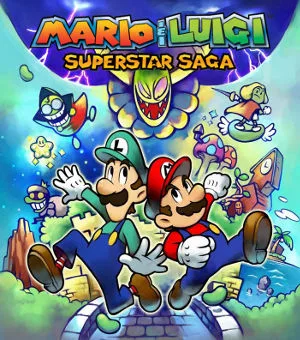
Superstar Saga is in fifth place as a 2003 Game Boy Advance release that started the Mario & Luigi series and established the dual protagonist action command combat that AlphaDream refined over six more releases. The combat innovation of the Mario & Luigi series is due to the GBA hardware limited visual presentation. Mario is assigned to one shoulder button and Luigi to the other. Attacks and items are based on timing, so players are rewarded for coordinating their two characters in turn-based combat. The Cackletta antagonist and Beanbean Kingdom set a comedic tone that every future Mario & Luigi game kept.
The Minion Quest side campaign allowed Bowser's minions their own playable battle scenarios and the remake also updated the visual presentation but kept the original combat and game mechanics. The remake proved the design of Superstar Saga is still in line with the standards for playability two decades after the GBA release. The Beanbean Kingdom, Hoohoo Mountain, Chucklehuck Woods, and the Beanbean International Airport gave AlphaDream a setting that was different from the Mushroom Kingdom that future Mario & Luigi games continued to use. Superstar Saga is the first Mario & Luigi game that all of the later games in the series are based upon tonally and mechanically. This comprehensive ranking reflects editorial standards in 2026.
4. Paper Mario — N64 Series Foundation (2001)
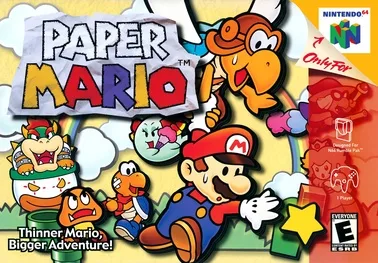
The first Paper Mario game came out on the Nintendo 64 in 2001. It was the fourth game released in that year. It established the paper aesthetic in action-command JRPGs. Intelligent Systems then used this format for the next 20 years for each of their games. Because of the unique hardware of the Nintendo 64, they were able to create a different visual presentation. This new style of graphics made the JRPG stand out because while all of the other JRPGs were using layered sprites, Paper Mario had 3D environments and 2D sprites controlling Mario and the seven Star Spirits. The combat system was turn-based with action commands where you had to press a button for an attack or defend move to deal or block damage. This became the template for all of the games that came after it.
The narrative structure of the game had Mario rescuing the seven Star Spirits across different thematic chapters. Each Star Spirit that was rescued gave Mario new abilities in combat and also changed what he could do in the overworld. The badge system allowed for Mario's combat moves and stats to be customized by equipping badges. There was a limited amount of badge points which made the customization beyond what the partner roster offered possible. In the west, the original N64 Paper Mario was finally made available when the game was released on the Wii's Virtual Console in 2007 and also with the inclusion of the game in Nintendo Switch Online. The N64 version of the game was constantly repackaged and remains the original version of the game that was released. It also serves as the foundation for the whole Paper Mario series that was built on top of it. This comprehensive ranking reflects editorial standards in 2026.
3. Mario & Luigi: Bowser's Inside Story — DS Three-Protagonist Peak (2009)
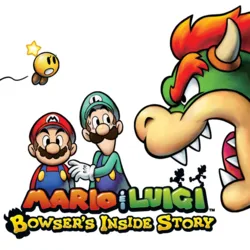
The 2009 release of the Nintendo DS game Mario & Luigi: Bowser's Inside Story includes features such as incorporating three different protagonists, which includes Bowser, Mario, and Luigi. This game also capitalizes on the DS's unique dual-screen feature where players can see the tiny Mario and Luigi as they navigate inside the body of the giant Bowser while he fights outside on the Overworld. No other game in the Mario & Luigi franchise has reused this mechanic at this scale. The game's premise is that Fawful has kidnapped Princess Peach, and involves a storyline with a Dark Star artifact, which provides AlphaDream the franchise's strongest antagonist arc. This comprehensive ranking reflects editorial standards in 2026.
While the action command/bowser inside story combat layers standard encounters are turn based, the combat where giant Bowser is fighting is based on touch screen controls that allow players to punch and breathe fire. The Special Attack roster gives Bowser his own Special Attack tree. Superstar Saga Bros Attacks return, but there are also more options available. Using Pump and Vacuum, players can control Bowser to push Mario and Luigi through pathways, and suck enemies into Bowser for internal fights. The 2018 remake for the Nintendo 3DS updated graphics while keeping the three protagonist mechanic intact. The remake also added Bowser Jr.'s Journey side campaign. Bowser's Inside Story continues to be the best game in AlphaDream's line up, and remains the highest mark for the set Mario & Luigi series standards that are rarely matched.
2. Paper Mario: The Thousand-Year Door — Paper Mario All-Time Peak (2004)
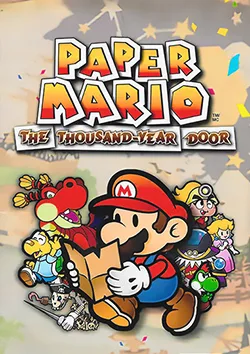
Paper Mario: The Thousand-Year Door is one of the most recognized games for the GameCube, and still remains a fan favorite to this day. In the spring of 2004, Nintendo released the game and it has stood the test of time and remains popular still. The game has audience participation in the battle system, includes eight partners, and has chapters that provide a structure to the world. In spring 2024, Nintendo is rereleasing the game on the Nintendo Switch. With the Switch release, there are new features like quality of life improvements, new audio, and new graphics, but the original battle system remains. With the two-console access, this new version will hold the record for the most consoles available for a Paper Mario game. The audience participation system has been improved, creating different damage outputs based on how the audience interacts with you, making it the first time in an era where no other game has used the same mechanics.
There are eight chapters that range from the port town of Rogueport to wrestling rings and ghost forests. Mario will travel through combat arenas where the audience participates. In each chapter, there are partners who provide different skills. Goombella, a researcher, Koops, a hesitant Koopa, Yoshi, the speed-runner, Vivian the kind-hearted Shadow Sister, Flurrie the Actress, Ms Mowz, the badge-collecting thief, and Admiral Bobbery the retired naval Commander who is also a Bomb Captain Bobbery. Each of your partners has different combat abilities and different roles in puzzle solving in the overworld. The action command system allows you to time an attack and defend and each turn will go from selecting an action to completing a real-time skill check to achieve mastery and punish those who are inattentive.
By modernizing the game to ensure the game reaches the current essence of gaming, the Paper Mario series has rarely been able to reach the same level again. The remake demonstrates the level of gaming that was present in 2004 and to today's audience.
The release of Switch HD has brought new Switch-exclusive features that the GameCube version was not able to process, such as new and more sophisticated framerate animations and updates in the environmental rendering. The Thousand-Year Door is the best Paper Mario game and it is the game that all fans diving into Nintendo Mario RPGs should play after Super Mario RPG. This comprehensive ranking reflects editorial standards in 2026.
1. Super Mario RPG — Square-Nintendo Foundational (1996)
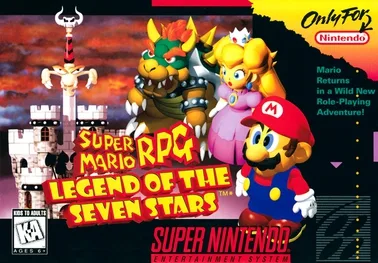
The title of best RPG Mario game goes to the Mario RPG game created by Square Enix (then just Square) and Nintendo for the Super Nintendo which was released in 1996 and remade for the Nintendo Switch in 2023. The game features action-command style turn-based combat and it includes all of the Mario characters along with original characters Mallow and Geno. The Smithy Gang is the antagonist of the game and they come from a sword that crashes into Bowser's castle. When you play the game Mario, Mallow, Geno, Bowser, and Princess Peach team up to take down the Smithy Gang. Fighting tactics from Final Fantasy were brought into the game to make it a unique JRPG style game. The Switch version of the game keeps the same combat system built in the 1996 game but changes the graphics to 3D HD and also introduces a new system where you can combine attacks with 3 characters to perform a powerful elemental attack.
The first game to use an action-command combat system was Super Mario RPG and from that game all of the Mario RPG games got their combat system from it. For example, Paper Mario came out in 2001 and Mario and Luigi Superstar Saga came out in 2003 and they both used that system. The next Mario RPG game to use that same system is Brothership which is coming out in 2024. The last dungeon of Super Mario RPG has the Smithy Factory and the overworld of Star Road and both of these places created a template that all Mario RPG games used. In other words, these two places became a model of what other Mario RPG games were going to use for their late game content.
The Nintendo Switch remake is also the first version of the game that can be sold to a modern audience. This remake also added accessibility features like a Breezy mode for combat as well as an improved version of the combat system that is now a triple-move chain system. The original game had a limit of 5 characters for partying up and now with the system it allows for unlimited combinations of groups.
The Switch release has established Super Mario RPG as the genre-defining foundational Mario RPG entry title that every fan of the umbrella series should discover as the historical starting point. Super Mario RPG remains the peak Mario RPG release and the starting point for everything the Mario RPG umbrella has spawned across three decades of Nintendo platform releases. This comprehensive ranking reflects editorial standards in 2026.
Honorable Mentions and Where to Start
Although many Mario RPG games were considered for inclusion, only a few made it to final consideration. While Paper Mario: Sticker Star was the first game to introduce a card sticker combat system, it also strays far from the core Mario RPG games because it does not include the action-command turn-based system. As such, it will not be considered for ranking here. Paper Mario: Color Splash also used a paint-and-card combat system, further diverging from the genre by not including the combat systems found in Super Mario RPG or the early Paper Mario titles. Mario & Luigi: Paper Jam is a crossover of the Paper Mario and Mario & Luigi series sub-series on the 3DS that has crossover combat, taking mechanics from both subseries, but does not offer a full-fledged game in either franchise. While Captain Toad: Treasure Tracker and Mario + Rabids: Kingdom Battle do not strictly fall under the action-command Mario RPGs, they are notable Mario-ish titles that feature RPG-style progression systems. For more information on Nintendo JRPGs that include other franchises, see our Best Nintendo JRPGs of All Time ranking. This comprehensive ranking reflects editorial standards in 2026.
For readers who are unfamiliar with Mario RPG titles in 2026, we suggest starting with Super Mario RPG on Switch through the 2023 remake. It contains the original action-command system. Paper Mario: The Thousand Year Door on Switch through the 2024 remake is the best Paper Mario game. It features modern accessibility improvements. Mario & Luigi: Bowser’s Inside Story on Nintendo 3DS through the 2018 remake is the best Mario & Luigi game, containing a combat system with three protagonists.
Mario & Luigi: Brothership is the modern Switch entry for fans looking for the post-AlphaDream development direction. For historical context on how the Paper Mario series began, you can find Paper Mario on Nintendo Switch Online. With three flagship Mario RPG releases slated for 2023-2024, the Switch library will always remain the most accessible Nintendo platform for active 2026 Mario RPG exploration, offering a confirmed permanent flagship Nintendo Switch JRPG identity for the umbrella.
All images are official screenshots from their respective publishers and developers. Published May 14, 2026.