
This is the beginning of Icicle Disaster's collection of JRPG reviews. Here, we take a look at old Famicom releases to modern JRPGs that continue to push the boundaries with their stories, gameplay, and mechanics.
Our reviews run off the pure hype and give you the context you need to assess the game yourself. Each entry discusses the game’s mechanics and design, story, music and graphics, programming, and cultural relevance. The reviews will give a score and we explain the rationale, so you can make the most of the experience without the game becoming stale and repetitive.
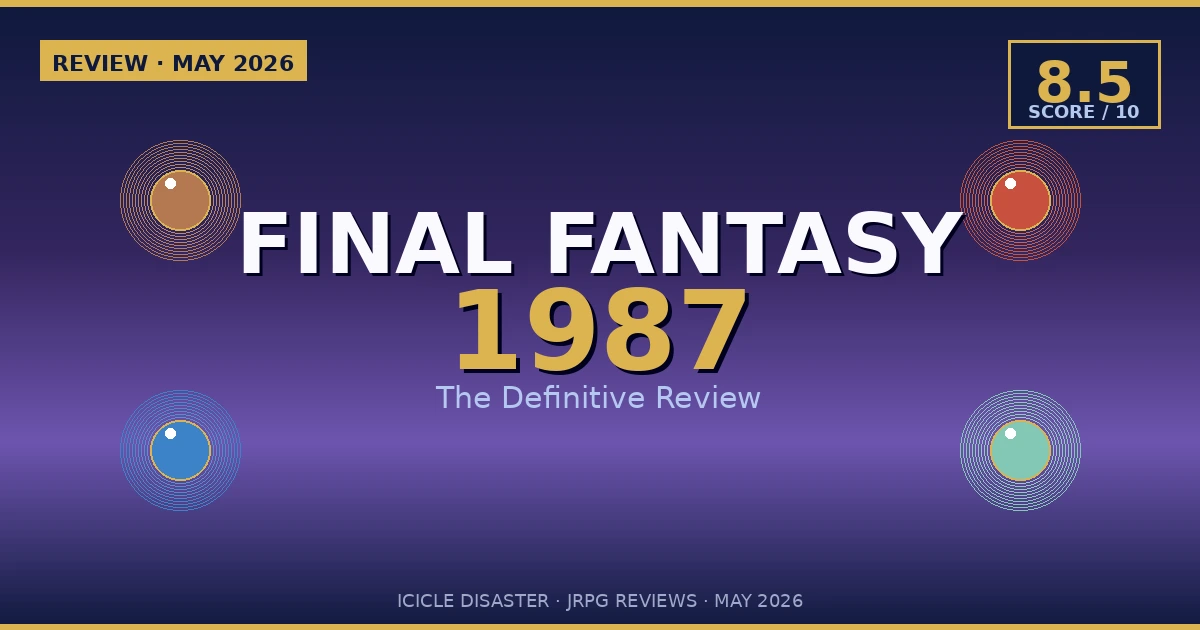
As of now, we have only just one full review but there will be more entries that will be added throughout 2026 and the years beyond. Remaining reviews will have information about platforms for that year, who the composer and director are, and game recommendations that are similar enough to play if you want them to. If you want to check out the history of the franchise and where it ranks in JRPGs, we also have it on our site.
Featured Reviews
About These Reviews
Each review on this page is written from a long-time JRPG perspective, prioritizing critical assessment over promotional summary. We examine games as cohesive works — how their design choices interact with story, how music supports gameplay, how visual identity reinforces theme. For franchise-wide context outside individual reviews, see every Final Fantasy ranked, every Persona game ranked, or best RPGs of all time.
The review cadence targets one full editorial deep-dive per month with shorter capsule reviews appearing in our updates section alongside JRPG news coverage. For broader genre context, our history of JRPGs traces how the genre developed from Dragon Quest's 1986 debut through the modern era.