
Final Fantasy is the JRPG genre's defining franchise — 16 numbered mainline entries plus Tactics, plus an MMO, plus countless spin-offs spanning 1987 to 2024. Ranking the mainline entries is the JRPG community's most-debated exercise. Icicle Disaster has reviewed and ranked over 250 JRPGs since 2017 (see our comprehensive JRPG rankings), with 16 Final Fantasy entries representing the spine of that database. This is the definitive 2026 ranking of every mainline Final Fantasy game, from the worst to the best, with editorial weight per entry reflecting actual playthroughs rather than aggregated review scores.
The methodology: each entry ranked on narrative depth, mechanical innovation per its era, soundtrack quality, character cast memorability, and lasting franchise influence. Final Fantasy VI sits at #1 because the consensus across JRPG critics, designers, and franchise historians treats it as the genre's defining 16-bit-era achievement — and that consensus is correct. Final Fantasy Tactics earns #2 because Yasumi Matsuno's Ivalice-set tactical RPG remains the franchise's most narratively ambitious side-entry. From there, ranking the modern mainline entries (VII Remake/Rebirth, X, IX, V, XII Zodiac Age) reveals where Square Enix's design philosophy shifts created tension between classic JRPG conventions and modern action-RPG trends.
This list covers all 16 mainline numbered Final Fantasy entries (I-XVI) plus Final Fantasy Tactics as the canonical tactical RPG companion. Final Fantasy XIV (the MMO) is covered separately in its own dedicated ranking. For context on the broader JRPG genre + adjacent franchises, see our Persona series ranking, Dragon Quest ranking, Tales franchise ranking, and Fire Emblem ranking for the complementary franchise context.
1. Final Fantasy VI (1994)
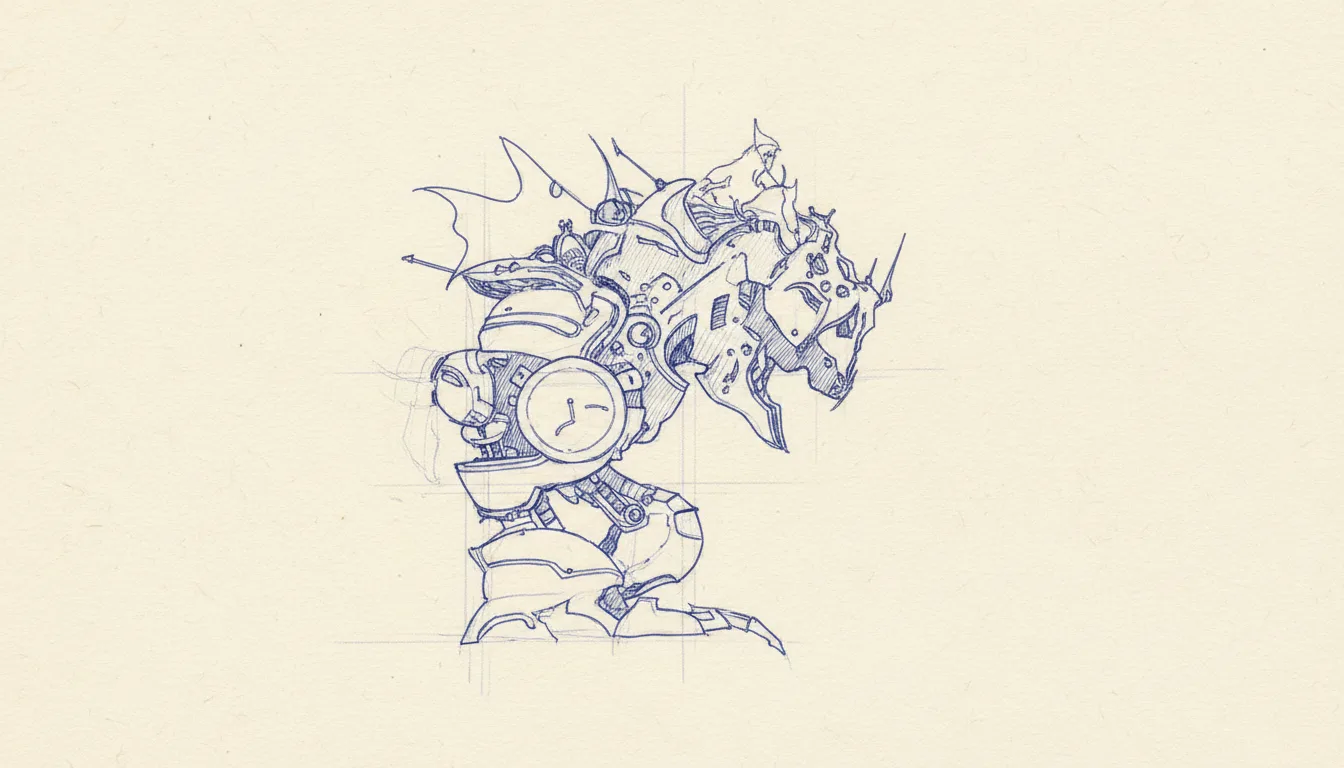
Final Fantasy VI is consensus #1 across the JRPG canon — not because it's the most mechanically deep entry, but because no other Final Fantasy game (and arguably no other JRPG, period) has matched the narrative density, character ensemble depth, and pure emotional weight that the SNES original delivered in 1994. The cast of 14 playable characters — each with their own backstory, magical specialty, and arc — established the ensemble JRPG template that every subsequent Final Fantasy entry would either follow or react against. Kefka Palazzo remains the franchise's defining villain: not a tragic-backstory antihero, but a genuinely nihilistic, world-destroying agent of chaos who actually wins partway through the game (the World of Ruin transition mid-campaign is structurally unprecedented for a JRPG of its era and remains shocking even to modern players who know it's coming).
Mechanically, the Magicite system tied magic acquisition to Esper bonds — each character could equip Magicite and learn any spell, but stat growth was determined by which Esper was equipped at level-up. This created a level-up-planning meta layer (do you equip Stamina-growth Espers early for tanky characters, or Magic-growth Espers for mage builds?) that rewarded long-form planning without forcing players into rigid class roles. The Desperation Attacks (low-HP critical-state moves with unique animations) added emergent moments that defined the SNES-era combat aesthetic. Pure mechanical execution of late-16-bit JRPG design.
The Nobuo Uematsu soundtrack remains his peak work — "Dancing Mad" (Kefka's final boss theme, 17 minutes across 4 movements) is structurally a small symphony rather than a video game track. "Aria di Mezzo Carattere" (the Opera House sequence) integrates a full operatic performance into the main campaign — the first JRPG to attempt this kind of high-art crossover. "Terra's Theme," "Locke's Theme," "Edgar & Sabin's Theme" — every party member gets a memorable musical identity. The soundtrack alone justifies the #1 ranking; the rest of the game's strengths reinforce it.
Modern accessibility (2026): Pixel Remaster (2022) on PS4, Switch, Xbox, PC, iOS, Android with cleaned-up font, rebalanced grinding curves, and orchestral soundtrack option. The Pixel Remaster is the definitive modern way to experience FF VI. Original SNES via Switch Online Expansion Pack is the historical-purist option. For more compact JRPG experiences after FF VI commitment, see our best JRPGs under 30 hours roundup (FF VI fits in this bracket at 25-30h focused). FF VI is the JRPG every fan of the genre should play at least once.
For first-time players in 2026 wondering whether a 32-year-old SNES JRPG can hold up: yes. The Pixel Remaster's modernized fonts + skip-text option + auto-battle + 2x/4x speed during random encounters eliminate every PS1/SNES-era friction point that previously prevented modern audiences from completing classic JRPGs. The 25-30 hour focused playthrough fits compact JRPG schedules (the franchise's compact-runtime bracket includes other essential short JRPGs if FF VI hooks you on the era), while the World of Ruin completionist path extends 35-40 hours for players wanting maximum FF VI depth. The Pixel Remaster also includes the previously-Japan-exclusive bonus dungeons + soul-of-thamasa stat-boost items + orchestral soundtrack mode that the original SNES release lacked. FF VI Pixel Remaster is canonically the most accessible mainline FF entry on every modern platform.
2. Final Fantasy Tactics (1997)
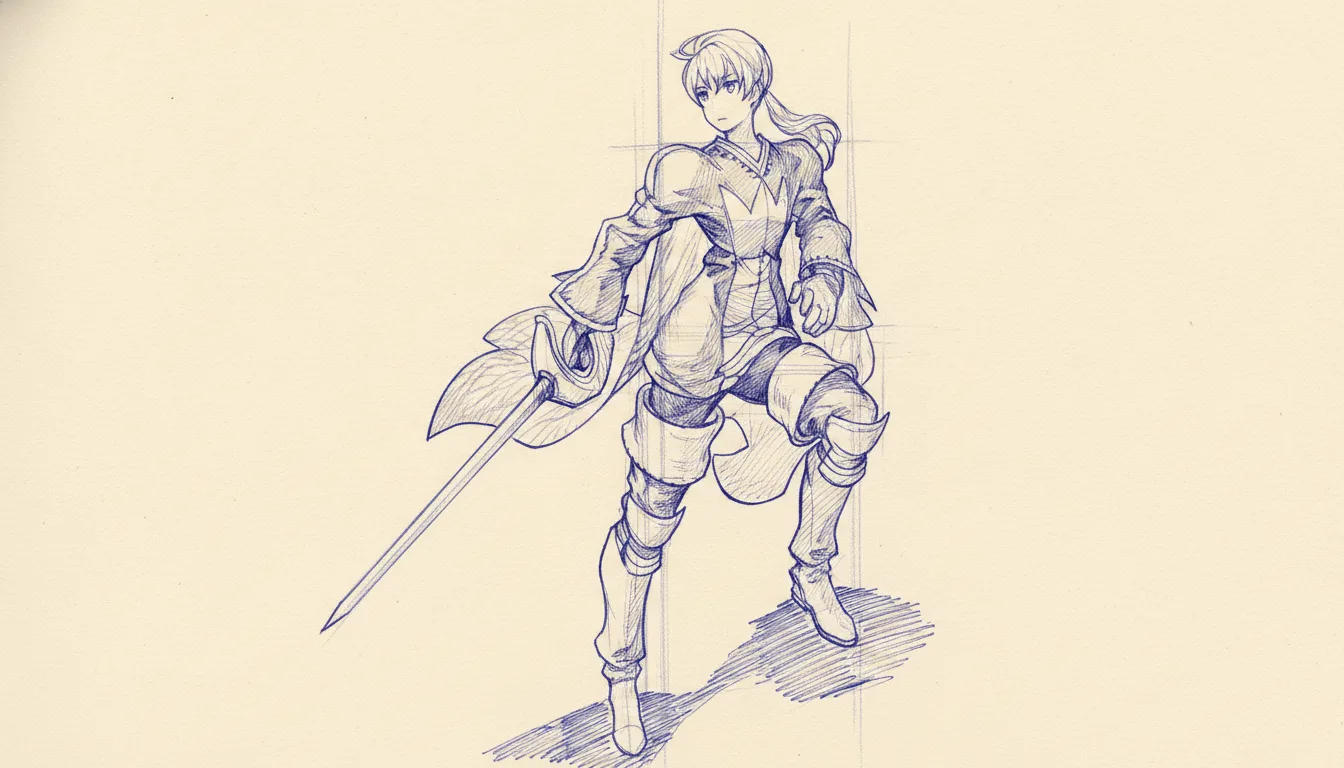
Final Fantasy Tactics is the franchise's most narratively ambitious side-entry — Yasumi Matsuno's Ivalice setting introduced the political-tragedy storytelling weight that would later define Vagrant Story, FFXII Zodiac Age, and the entire Ivalice Alliance sub-franchise. The campaign follows Ramza Beoulve through a feudal-war political crisis where the heroic narrative is deliberately undermined: Ramza's actual contributions are erased from history by Delita Heiral, whose successful manipulation of the war's outcome positions him as the official hero while Ramza fades into anonymity. This is JRPG storytelling that takes adult themes seriously in a way the broader Final Fantasy franchise rarely matched.
The Job system (22+ classes across the campaign — Squire, Chemist, Knight, Archer, Monk, Priest, Wizard, Time Mage, Summoner, Calculator, Dragoon, Samurai, Ninja, Lancer, Geomancer, Dancer, Bard, Mystic, Mediator, Mime, plus secret jobs like Onion Knight) creates one of the deepest character-customization systems any tactical RPG has produced. Each character can master multiple jobs across playthrough, and the cross-job ability slots (a Knight with Black Magic, a Wizard with Counter Tackle) enable build experimentation that the broader Final Fantasy franchise's class-locked systems never achieved.
The tactical-grid combat with elevation-based positioning + height advantage + facing-direction backstab modifiers + per-character speed-based turn order creates emergent tactical situations every battle. The Lancer's Jump command (vertical attack that bypasses turns by leaving the battlefield) + the Calculator's CT/Height/Prime-Number formulae for area-of-effect spells + the Samurai's Iaido draw-out katana abilities give each job a distinct mechanical signature. Final Fantasy Tactics remains the franchise's most mechanically deep tactical entry by significant margin (see our best SRPG games ranking for the tactical-RPG genre in depth — FF Tactics ranks top-tier).
The 1997 PS1 original gained the 2007 PSP remake (War of the Lions) with added cutscenes, voiced dialogue, two new jobs (Onion Knight + Dark Knight), and improved translation. The 2026 release of Final Fantasy Tactics: The Ivalice Chronicles (Switch 2) is the long-awaited modern remaster — adding HD visuals, dual-language audio, and rebalanced encounters while preserving the original Job system depth. For 2026 newcomers: play Ivalice Chronicles on Switch 2 if available; PSP War of the Lions if not; PS1 original via PS Plus if you want the historical version. FF Tactics is essential JRPG reading for any fan interested in the genre's tactical-storytelling possibilities.
FF Tactics rewards completionists with Tetra Master mini-game depth + multiple JP-Job-Point earning strategies + post-game Deep Dungeon optional 10-floor descent. The Calculator job mastery alone takes 15-20 hours of dedicated grinding but creates one of the most-broken endgame builds in tactical RPG history (Math Skill formulas that hit every enemy on the map simultaneously). For tactical RPG fans curious about the genre's adjacent franchises after FF Tactics commitment, our Fire Emblem franchise ranking covers the SRPG genre's other defining series. The 2026 Ivalice Chronicles (Switch 2) modern remaster is the canonical 2026 starting point — definitive way to experience the franchise's most ambitious side-entry without PS1-era friction.
3. Final Fantasy X (2001)
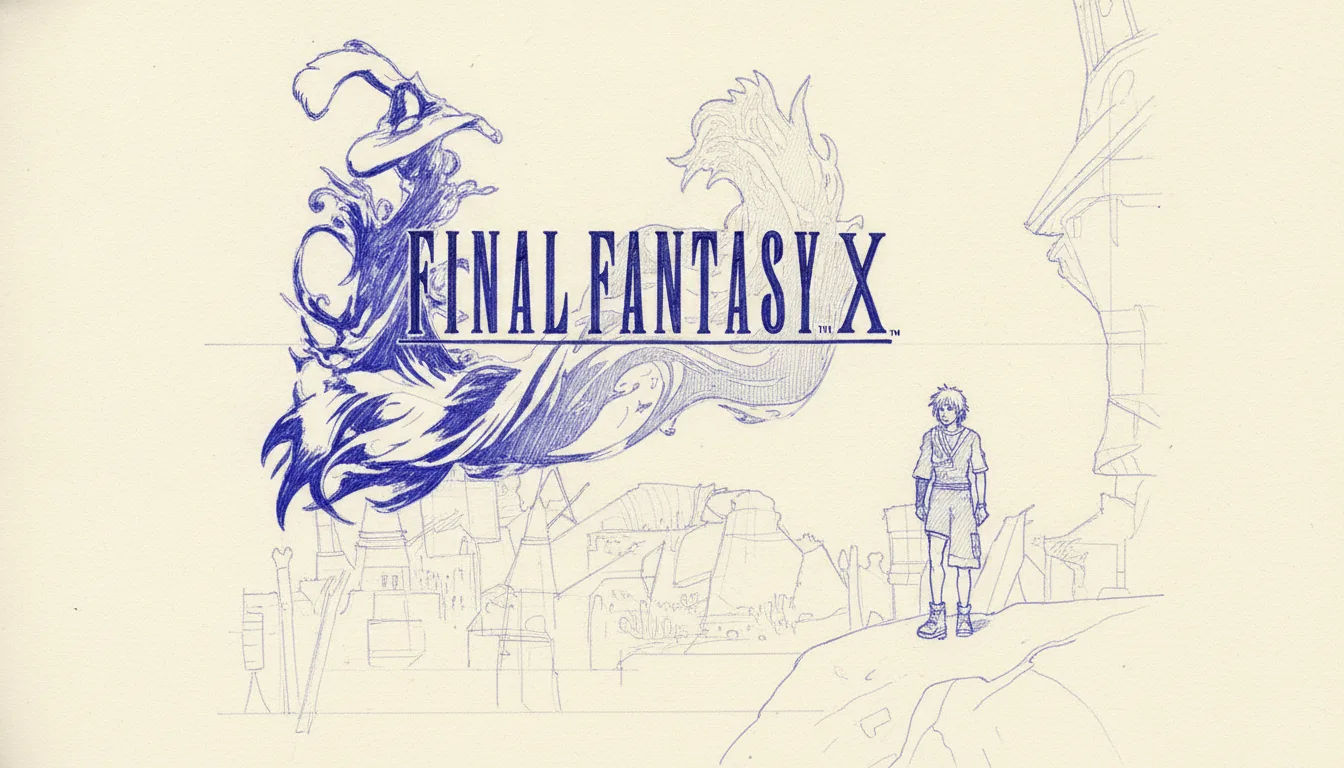
Final Fantasy X marks the franchise's transition from sprite-era to fully 3D + voice-acted JRPG presentation — and the first FF where Square (now Square Enix) committed to cinematic cutscenes as a core narrative tool rather than supplementary spectacle. Tidus + Yuna's pilgrimage across Spira to destroy the eternal-recurrence cycle of Sin remains the most emotionally focused mainline Final Fantasy story — every character arc, every sidequest, every Aeon summon serves the central pilgrimage narrative. The ending (Tidus's existence revealed as Yu Yevon-summoned dream, fading as Sin is destroyed) is one of the franchise's most-cited emotional climaxes.
The Sphere Grid replaces traditional level-up XP allocation with a board-game-style progression system: each character moves through a node grid earning stat boosts + abilities. The Standard Sphere Grid keeps each character to a defined role (Tidus speed/HP, Yuna magic, Auron strength); the Expert Sphere Grid (PS3+ HD Remaster) opens grid for free-form character customization. Both create meaningful long-form planning that the broader JRPG genre still imitates.
The Conditional Turn-Based Battle (CTB) system replaced ATB with strict turn order shown in a side panel — players see exactly when each character + enemy will act, enabling tactical planning that ATB's real-time guesswork prevented. The Aeon summon system + Overdrive limit breaks + Mix item combinations + Lulu's doll-weapon variety provided combat depth that FFXII would later abandon for the Gambit system. FFX combat remains one of the cleanest mainline FF combat systems.
The Nobuo Uematsu/Masashi Hamauzu/Junya Nakano soundtrack (Uematsu's last FF as primary composer) includes "Suteki da ne" (Yuna's vocal theme by Rikki — the franchise's first proper vocal song integrated into core campaign) and "To Zanarkand" (the piano theme that opens the campaign and becomes the franchise's most-recognized solo piano composition). The soundtrack's emotional weight matches the narrative weight.
Modern accessibility: FFX/X-2 HD Remaster (PS3 2013, PS4 2015, Switch/Xbox 2019, Steam) — definitive way to play in 2026. Includes International edition content + Expert Sphere Grid + improved textures. FFX-2 sequel (included in HD Remaster bundle) is mechanically inventive but narratively weaker. FFX itself is essential FF reading + arguably the most modern-friendly entry point for FFI-VI-era fans.
FFX's 60-80 hour campaign with completionist content (Blitzball + Monster Arena + Aeon power-leveling + Dark Aeons + Penance superboss) ranks among the deepest mainline FF investments — close to the 100-hour completionist bracket that defines the franchise's longest-form entries. The Blitzball mini-game (underwater team sports management) is so deep it's functionally a second game embedded in FFX — many players spend more time on Blitzball than on the main pilgrimage. For 2026 players wanting modern-era FF without massive time commitment, FFX HD Remaster's main campaign (50 hours focused) fits a typical 2-3 month playthrough.
4. Final Fantasy VII Remake / Rebirth (2020-2024)
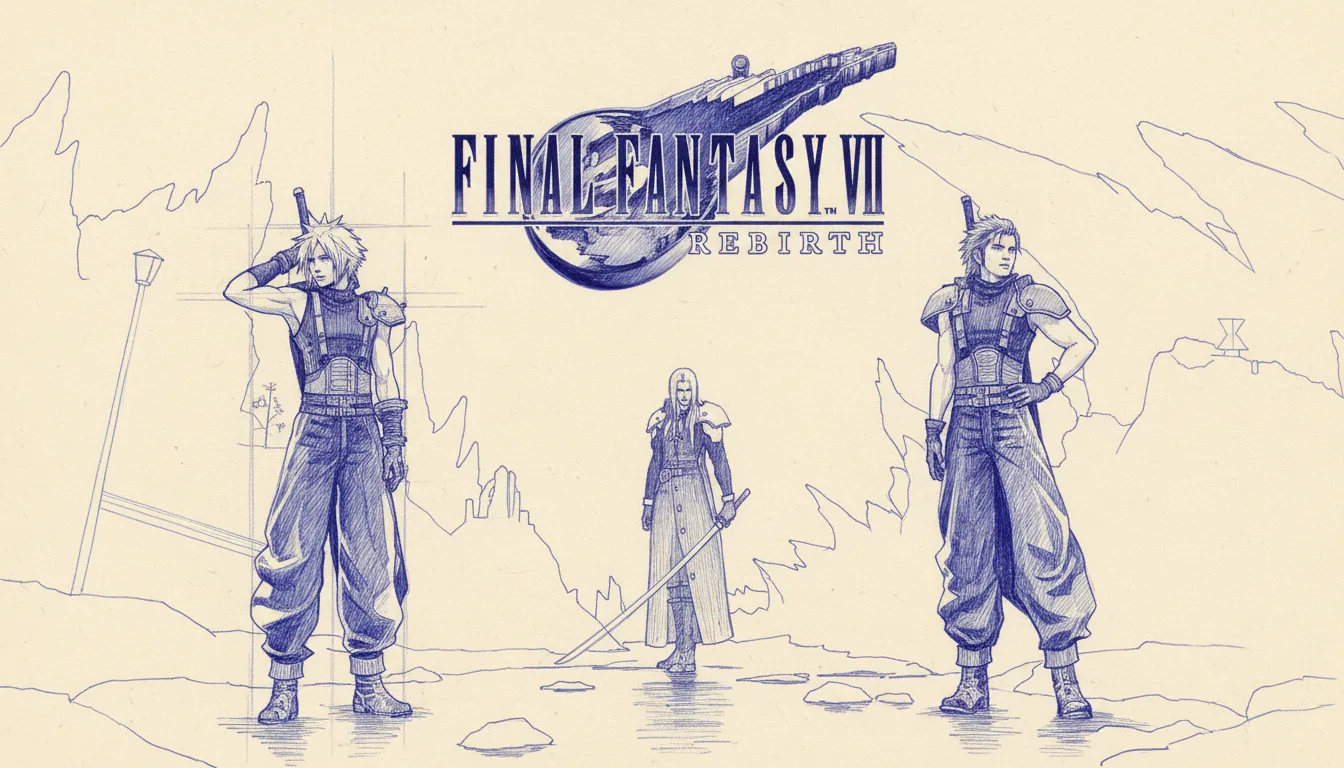
Final Fantasy VII Remake (2020) + Rebirth (2024) represent Square Enix's most ambitious franchise modernization — splitting the 1997 PS1 original into a planned trilogy across PS4/PS5 generations. Both entries preserve the original's narrative beats (Cloud + Sephiroth + Aeris + Mako energy crisis + Shinra megacorporation antagonist) while modernizing combat to action-RPG hybrid, expanding character arc development beyond the original's necessarily compressed runtime, and adding entirely new sub-plots (Whispers timeline-disruption mechanics in Remake; expanded character pairings + open-region exploration in Rebirth).
The combat system is the standout reinvention: real-time action-RPG layer with ATB charge system underneath, party-character-switching mid-combat, tactical command pause for ability selection. The system honors the original's turn-based ATB while delivering moment-to-moment action that 2026 audiences expect. Materia equipping + leveling carries forward from the original mechanical core.
Rebirth (2024) added open-region exploration, mini-games (Queen's Blood card game, Chocobo Racing return, Fort Condor tactical RPG mini), Combat Simulator post-game challenges, and Synergy Skills (paired-character special abilities) that elevate the Remake-trilogy combat depth significantly. The 100-hour Rebirth campaign (with all side content) ranks among the deepest PS5 JRPG offerings — see our best PS5 JRPGs ranking where FF7 Rebirth tops the list as Tier 1 PS5-native showcase.
The honest critique: 3 games to tell the FF7 story is a major time commitment (Remake 40h + Rebirth 100h + final entry TBD = 200+ hours total for full trilogy). The original FF7 told its story in 35-50 hours. Whether the Remake trilogy's expanded scope justifies the multiplied runtime depends on player tolerance for narrative reinterpretation. For first-time FF7 experience in 2026: original FF7 (1997 PS1, available on Steam/Switch/mobile via PSone Classics) remains valid choice; for modern-audience experience: Remake/Rebirth trilogy delivers the canonical 2020s reimagining.
The FF7 Remake trilogy represents Square Enix's biggest single-franchise investment of the 2020s — over 8 years of development across Remake (2020) + Rebirth (2024) + Part 3 (TBD). For PS5 owners specifically, FF7 Rebirth is the platform's defining JRPG showcase (see our PS5 JRPGs ranking where Rebirth tops the Tier 1 hardware-native list). The combat synergy system + 8+ playable characters with distinct movesets + Queen's Blood card mini-game depth + 100+ hour Rebirth campaign make this the most content-rich modern Final Fantasy by significant margin. For first-time FF7 newcomers in 2026: Remake is required before Rebirth; original 1997 PS1 FF7 (Steam/Switch/mobile via PSone Classics) remains valid alternative at 35-50h compressed campaign.
5. Final Fantasy IX (2000)
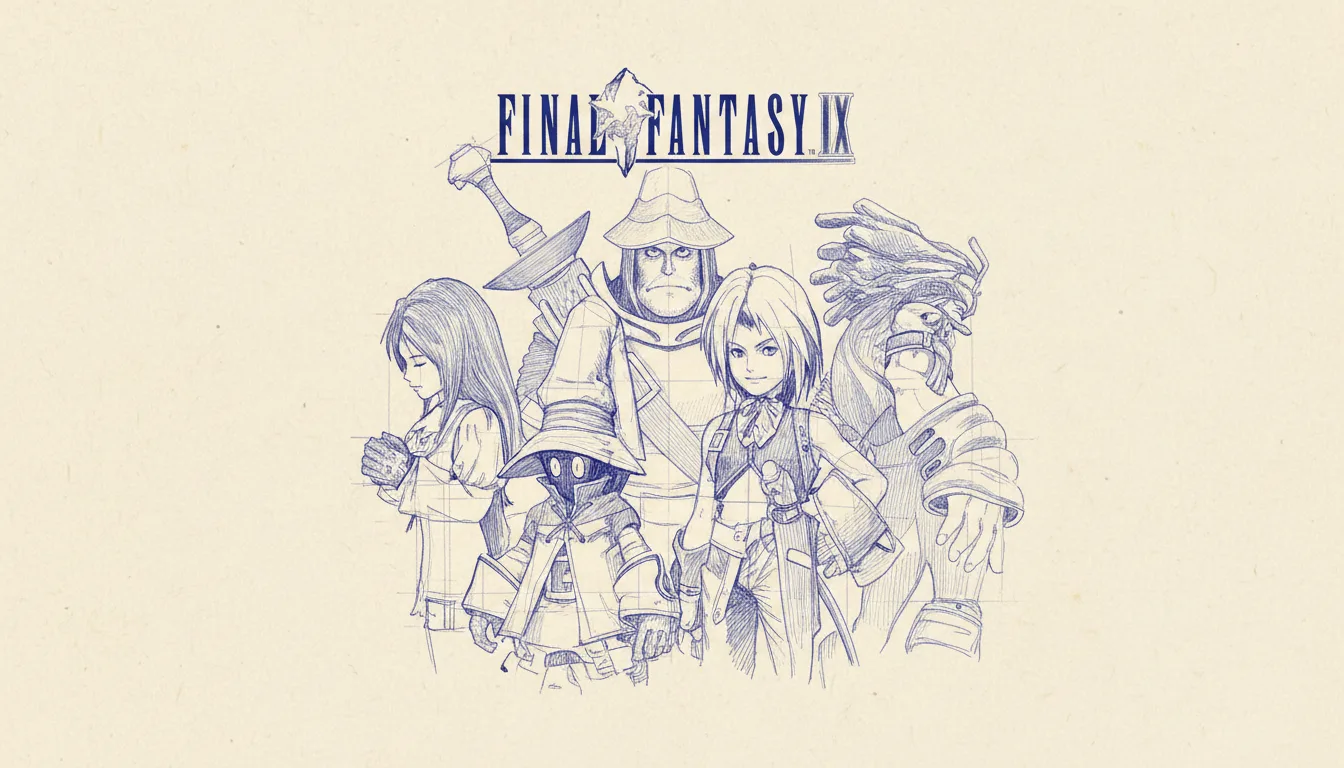
Final Fantasy IX (2000) is Hironobu Sakaguchi's intentional swan song to classic Final Fantasy aesthetic before Square's PS2-era shift to photorealistic 3D characters (FFX onward). Vivi the Black Mage child, Zidane the lovable rogue protagonist, Garnet the princess in disguise, Steiner the loyal knight, Freya the Dragon Knight, Quina the gourmand — the cast returns to the cartoonish + fantasy-romantic art direction that defined FFI-VI before Cloud's photorealistic Soldier aesthetic in FFVII set the franchise on its modern character-design path.
The narrative is the franchise's most thoughtful meditation on mortality + identity: Zidane's discovery of his Genome origins + Vivi's grappling with Black Mage manufactured-mortality + Kuja's villain-arc resolution all explore "what does it mean to be alive" themes with maturity that JRPGs of any era rarely match. The Iifa Tree finale + Necron final boss (which appears only in the literal final encounter without prior plot setup) deliver some of the franchise's strangest + most memorable final-boss design.
Combat returns to the traditional ATB system (after FFVIII's controversial Junction experiment) with the Trance limit-break mechanic + Active Time Event side-cutscene system (witness scenes happening to other party members in other locations during your campaign) + Tetra Master mini-game (the franchise's last truly engaging card mini-game until Queen's Blood in Rebirth). The Abilities system (each character learns abilities from equipped weapons/armor + retains learned abilities after equipment changes) creates customization depth without the Junction-system frustration of FFVIII.
Modern accessibility: FFIX is available on PS4/PS5 (PS Plus), Switch, Xbox, PC, iOS, Android — most ports preserve original PS1 graphics with cleaned-up resolution. Pixel Remaster status as of 2026: not yet released (FFI-VI Pixel Remasters exist; FFVII-IX awaiting). For 2026 play: Switch or Steam recommended for portability + modern controls. FFIX remains the consensus "underrated mainline FF" — players who skipped it during PS1 era owe themselves the 40-hour campaign.
FF IX's narrative themes (mortality, identity, what-it-means-to-be-alive) place it alongside the franchise's most thoughtful storytelling alongside FF VI and FF X. For JRPG fans interested in romance-themed entries, FF IX's Zidane-Garnet love story remains one of the franchise's most natural romance arcs — see our JRPGs with great love stories ranking for adjacent recommendations. The Iifa Tree finale + Necron-as-final-boss + Vivi's death-acceptance epilogue create one of mainstream JRPG's most philosophically mature endings. Skipping FF IX during the PS1 era is the consensus 'biggest regret' among FF franchise fans — the 2026 cross-platform availability makes correcting that mistake trivially easy.
6. Final Fantasy V (1992)
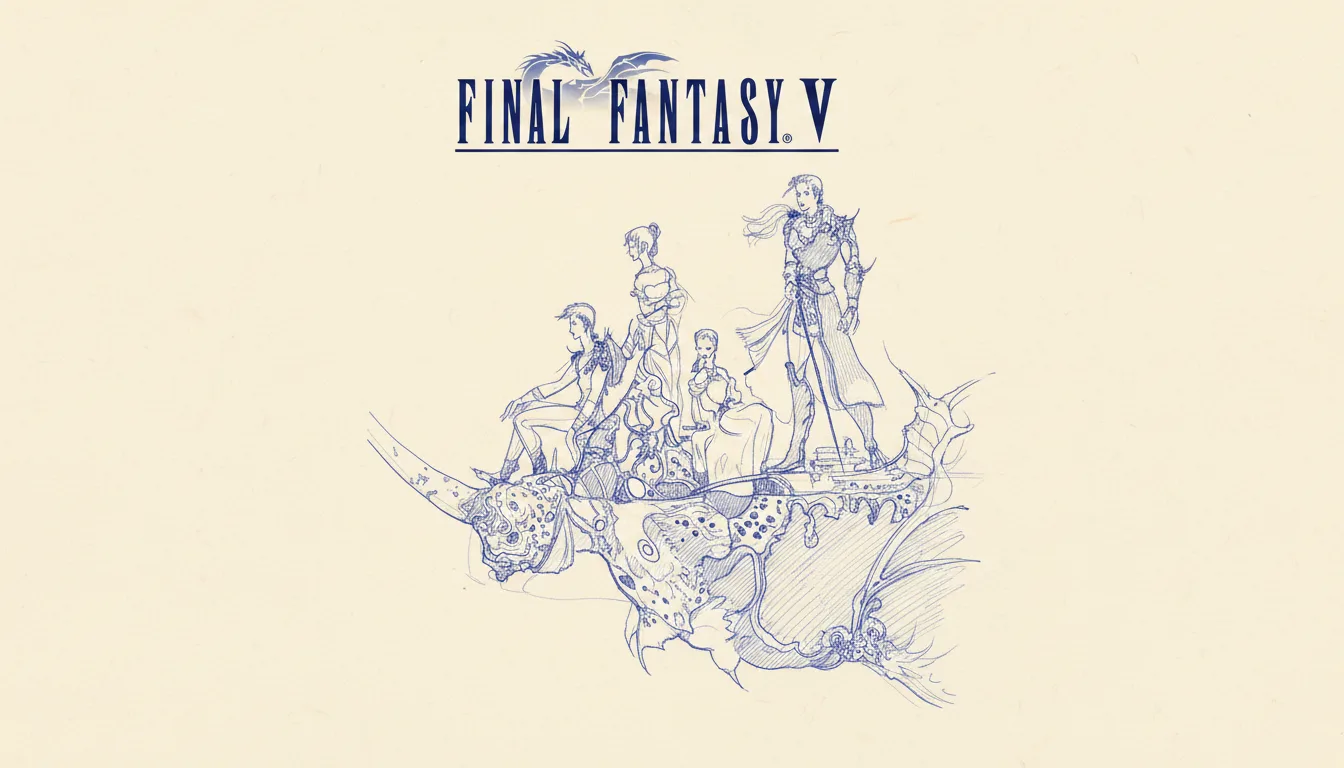
Final Fantasy V is the Job system origin entry — the franchise's first foray into the flexible class-customization that would later define FFTactics + FFXI + the broader JRPG genre's tactical-RPG sub-branches. Each of the 4 party members (Bartz, Lenna, Galuf, Faris) can master any of 22 Jobs across the campaign, with mastered abilities equippable across other Jobs (a Knight with Black Magic, a Monk with White Magic). This is the mechanical foundation that elevates FFV from "minor mainline entry" to "essential FF reading for any fan interested in the franchise's class-system evolution."
The 4 Crystals narrative (Wind, Water, Fire, Earth) drives a straightforward fantasy quest plot — FFV is not the franchise's narrative high point. But the campaign's pacing + the cast's emotional moments (Galuf's mid-game sacrifice arc + Faris's gender-reveal subplot) deliver enough character work to justify the Job system experimentation. The villain Exdeath's tree-of-darkness ultimate form remains one of the franchise's most visually striking final boss designs.
The 4 Job Fiesta community challenge (random Job assignment + permadeath rules) created an enduring FFV-specific replay culture that the broader Final Fantasy franchise doesn't share. FFV is the most replayable mainline FF entry by significant margin because the Job system makes every playthrough mechanically distinct.
Modern accessibility: Pixel Remaster (2021 on PC/iOS/Android; 2023 console release on PS4/Switch/Xbox) is the definitive modern version with cleaned-up fonts + rebalanced grinding. The Game Boy Advance + iOS port preserved Bartz's full Job mastery without rebalancing — the GBA version remains the community's preferred classic version. FFV is essential for any FF fan interested in Job system mechanics or the JRPG genre's tactical-customization roots.
7. Final Fantasy XII: The Zodiac Age (2006 / 2017)
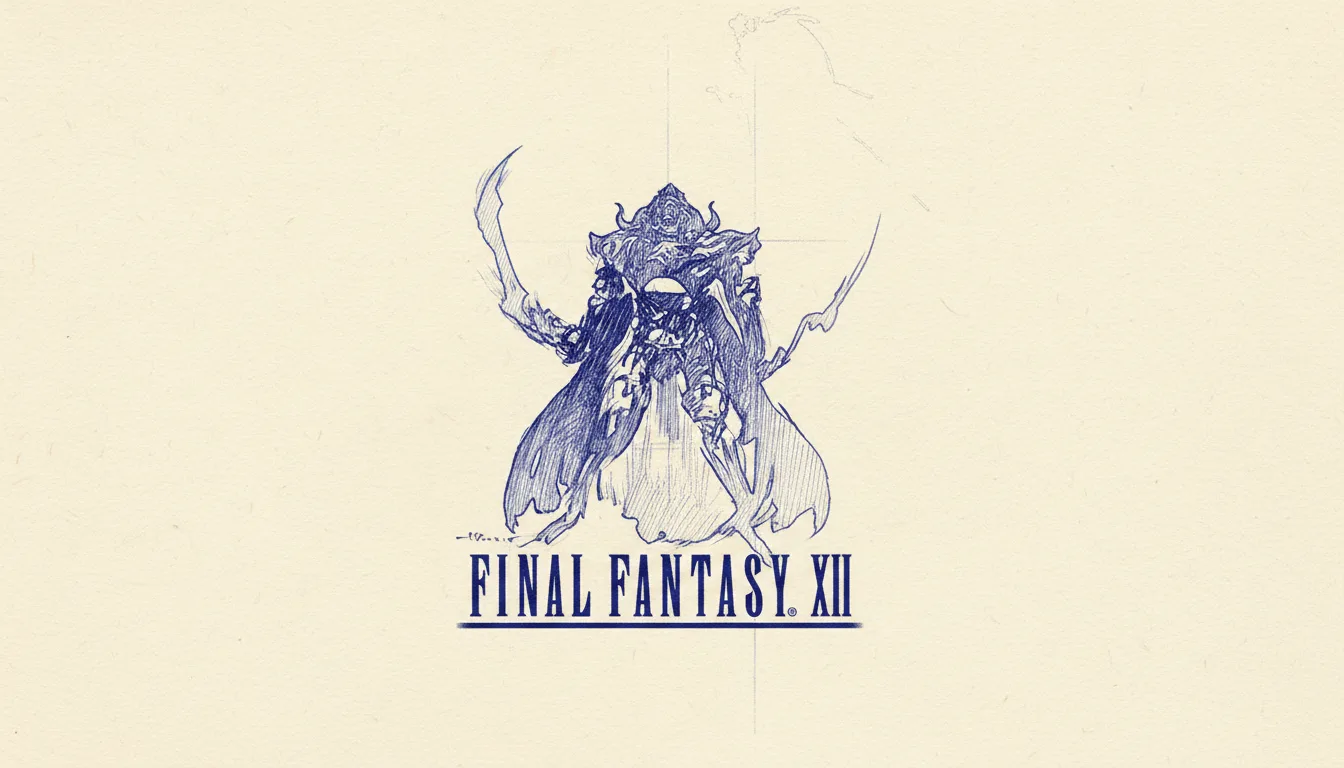
Final Fantasy XII (2006 PS2) introduced the Gambit system — the franchise's most controversial mechanical departure. The Gambit AI programming layer lets players configure each party member's combat behavior through if-then rules (Attack nearest enemy, Cure ally below 50% HP, Use Phoenix Down on KO'd member, etc.) so the party operates autonomously during real-time combat. This was either FFXII's brilliance (Yasumi Matsuno's Ivalice combat philosophy: combat is logistics, not turn-by-turn input) or its failure (FFXII removes player engagement during routine battles). 20 years post-release, the verdict has settled toward "brilliant for completionist players, alienating for newcomers."
The Zodiac Age remaster (2017 PS4, later Switch/Xbox/PC) added the License Board system that the original Japan-only Zodiac Job System edition had introduced — each character locks into 1-of-12 zodiac job paths, creating defined character roles instead of FFXII's original system where every character could equip every license. The Zodiac Age + Express Pass (4x speed during exploration) + revised License Boards + Trial Mode post-game make this the definitive way to play FFXII in 2026.
The Hunt system (parallel to main story — defeat marked enemies across Ivalice for unique loot + bestiary progress) is one of the franchise's strongest implementations of optional content that meaningfully rewards exploration. The Espers (FFXII's summons) are bound to specific License Board tiers — each character can only equip Espers their job allows, creating customization depth. The Quickening triple-chain limit-break system rewards real-time button-press chains.
The Ivalice setting (shared with FF Tactics) and Yasumi Matsuno's political-war narrative weight give FFXII a tonal seriousness most FF entries lack. The mid-campaign departure of Matsuno from Square Enix (replaced by Hiroyuki Ito) created tonal shifts in the later campaign that some fans cite as FFXII's weakness. FFXII is essential for FF fans interested in tactical-AI combat experiments + Ivalice lore deepening (see our coverage of open-world-jrpgs/">open-world JRPGs where FFXII Zodiac Age represents the franchise's strongest open-world entry).
8. Final Fantasy IV (1991)
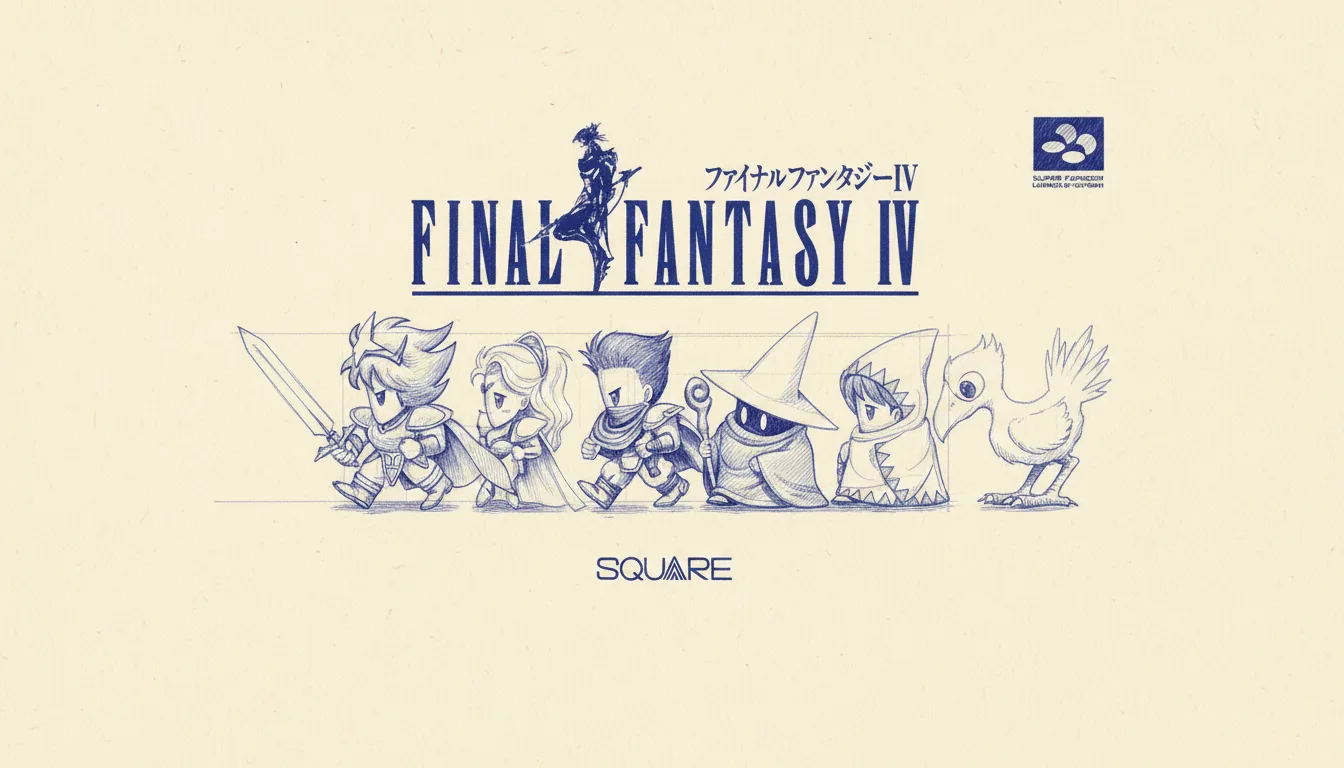
Final Fantasy IV introduced the Active Time Battle (ATB) system that would define every mainline FF combat through FFIX — and ATB itself influenced the broader JRPG genre's combat for the next 30 years. Cecil Harvey's Dark Knight → Paladin redemption arc remains one of the franchise's foundational character transformations. The 5-character active party (expanding from FFI-III's 4-character) created the ensemble template that FFVI would later perfect.
The campaign's emotional moments — Tellah's sacrifice, Cid's airship sacrifice, Yang's apparent death, Kain's loyalty-betrayal arc with Cecil — established the JRPG storytelling convention of party-member-as-emotional-stake. Kefka's nihilism in FFVI would have less impact without FFIV first proving JRPGs could deliver mortality-weight character arcs. The Crystal of Light/Dark + Lunarian backstory + Zeromus final boss create the franchise's first true cosmic-scale narrative.
Modern accessibility: Pixel Remaster (2021) is the definitive modern version. The 2007 Nintendo DS 3D remake (3D character models + voiced cutscenes + remixed soundtrack) is a substantially different experience — FF IV: The After Years sequel (2008) continues the DS storyline. For pure 16-bit experience: Pixel Remaster. For 3D reinterpretation: DS remake (also available on Steam). FFIV is essential FF history reading + still mechanically solid for 2026 players.
9. Final Fantasy VIII (1999)
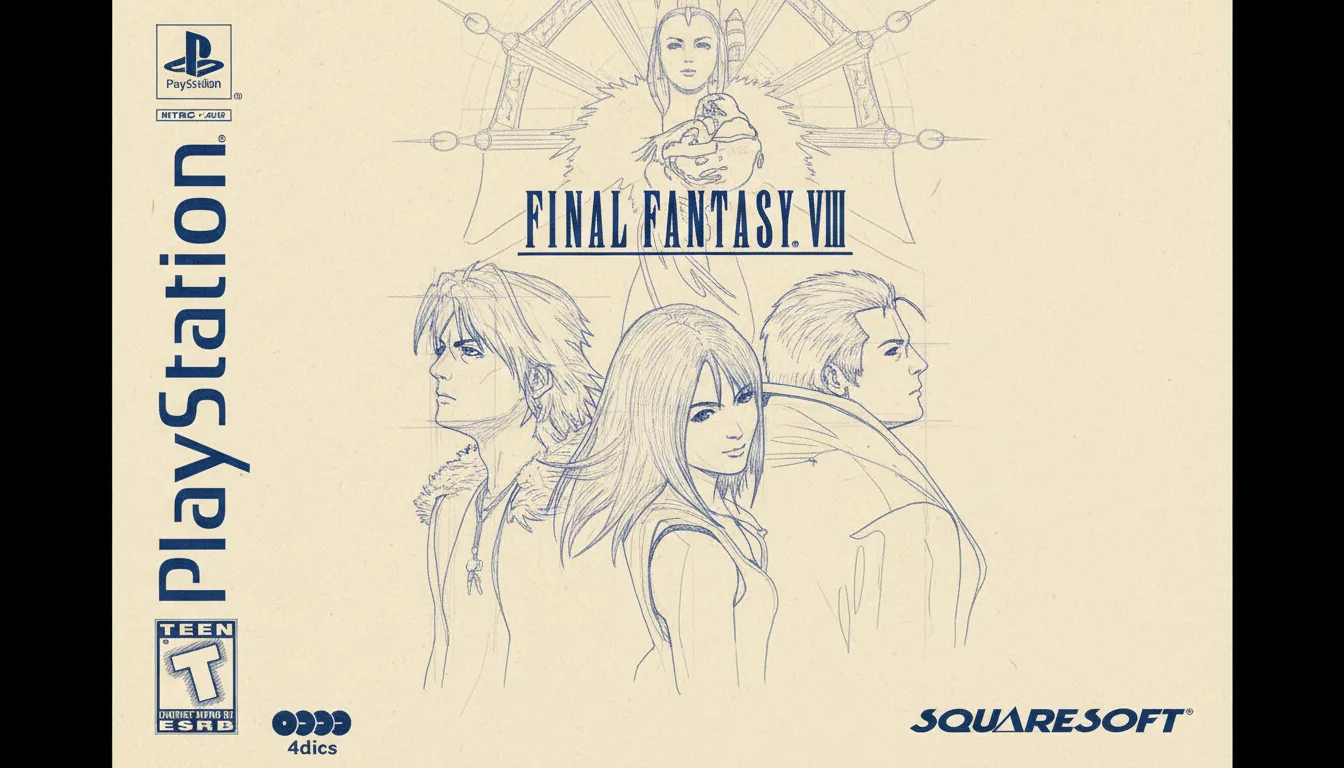
Final Fantasy VIII is the franchise's most divisive mainline entry — the Junction system replaced traditional level-grinding + spell-shopping with a draw-spells-from-enemies + junction-spells-to-stats mechanic that punished players who didn't engage with the system but rewarded those who did with character-build flexibility no other FF entry has matched. Squall Leonhart's lone-wolf protagonist arc + the Garden academy military-school setting + the Rinoa romance subplot make FFVIII the franchise's most teenage-coming-of-age narrative — for better or worse depending on player tolerance.
The Limit Break system reaches its franchise peak in FFVIII: each character has a unique low-HP-triggered limit move (Squall's Renzokuken with trigger-press timing for bonus damage; Rinoa's Angel Wing magic-pool; Zell's Duel input-string fighting-game-style combos). The Triple Triad mini-game (collectible card game woven into main campaign + rule-modification mechanics across regions) remains the franchise's most-replayable mini-game ever produced.
The Nobuo Uematsu soundtrack includes "Eyes On Me" (Faye Wong vocal song that was a genuine 1999 international pop hit) + "Liberi Fatali" (the Latin choral opening theme) + "The Man With the Machine Gun" (Laguna's combat theme that defined late-90s JRPG synth-orchestral fusion). The soundtrack remains FFVIII's most-defended element among the divided fanbase.
Modern accessibility: FFVIII Remastered (2019, PS4/Switch/Xbox/Steam/iOS/Android) cleans up character models + adds Triple Triad QoL improvements + cheat options (no random encounters, max stats, max gil, etc.) that let players bypass Junction system frustration if desired. Pixel Remaster doesn't yet exist for FFVIII. Recommended in 2026 for FF completionists + JRPG fans curious about the franchise's experimental mid-period.
10. Final Fantasy XIII (2010)
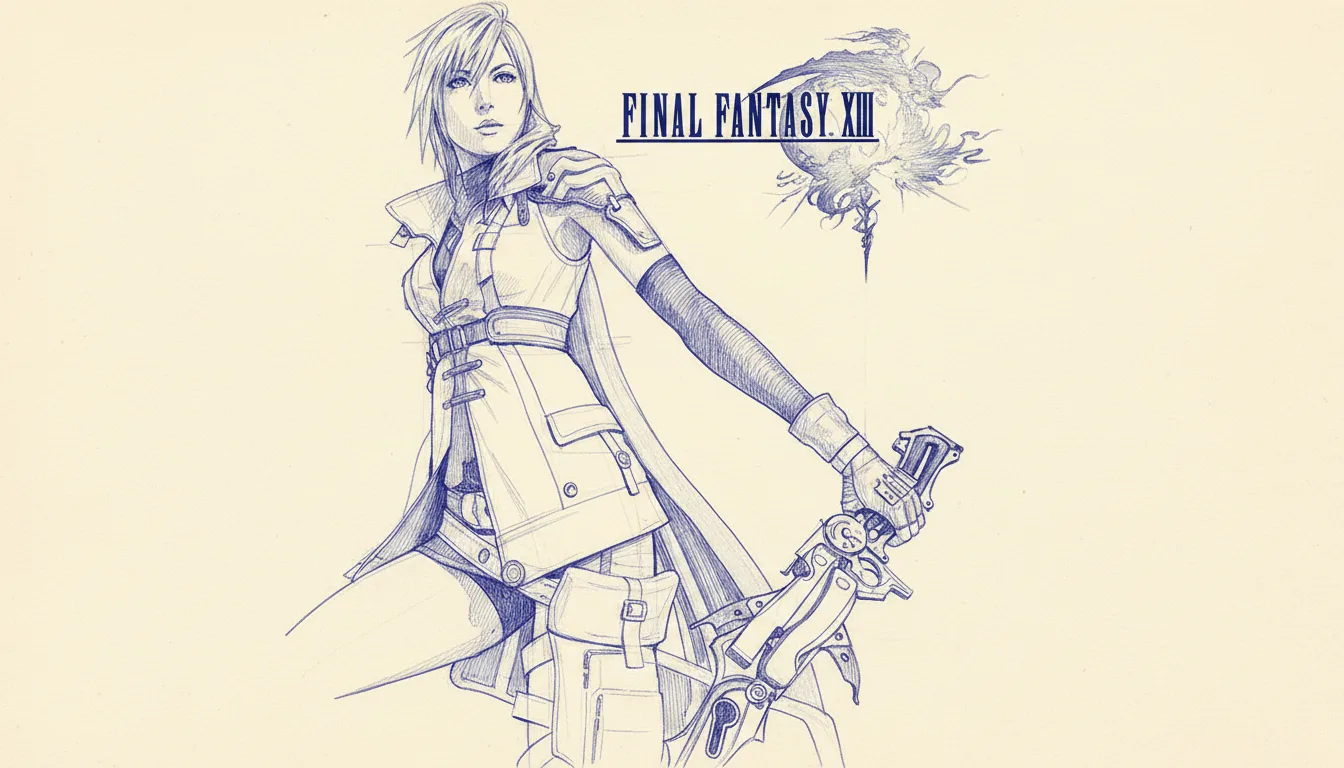
Final Fantasy XIII is the franchise's most-critiqued modern entry — the first 20 hours are functionally a linear corridor without traditional JRPG town exploration or sidequests, and even after the campaign opens to Pulse's overworld in act 3, the linearity-first design alienated franchise fans expecting traditional FF JRPG structure. Lightning Farron's protagonist arc + the l'Cie/fal'Cie mythology + Crystarium leveling system + Paradigm Shift combat (mid-battle role-switching between Commando/Ravager/Medic/Sentinel/Synergist/Saboteur) all attempt to deliver fresh systems but fail to compensate for the linearity critique.
The Paradigm Shift combat is actually mechanically smart — switching between role configurations in real-time based on combat state (start with Ravager-Ravager-Commando for stagger meter buildup, shift to Sentinel-Medic-Medic when boss enters phase 2) creates engaging combat once mastered. The problem: FFXIII's first 20 hours teach the system so slowly that many players abandon before reaching the deeper combat possibilities. FFXIII rewards players who push past act 1.
The sequels (FFXIII-2 in 2011, Lightning Returns: FFXIII in 2013) addressed FFXIII's linearity critique with more traditional open-world exploration + sidequest systems — many FFXIII detractors actually enjoy XIII-2 + Lightning Returns more than the original. The trilogy as a complete experience runs ~80-100 hours.
Modern accessibility: FFXIII trilogy on Xbox 360 (BC on Xbox Series), Steam (PC), but not on PlayStation (no PS4/PS5 release as of 2026 despite years of fan requests). Switch port doesn't exist. The trilogy remains accessible primarily on PC + Xbox in 2026. Recommended only for FF completionists committed to playing all mainline entries — newcomers should start elsewhere.
Lower Tier — Mainline Entries Worth Brief Coverage
The remaining 6 mainline entries (FFI, FFII, FFIII, FFXI, FFXV, FFXVI) range from "mechanically influential historical entry" (FFII) to "modern action-RPG experiment" (FFXVI) — each worth brief context for completionist FF fans without requiring full per-game ranking treatment.
Final Fantasy XVI (2023)
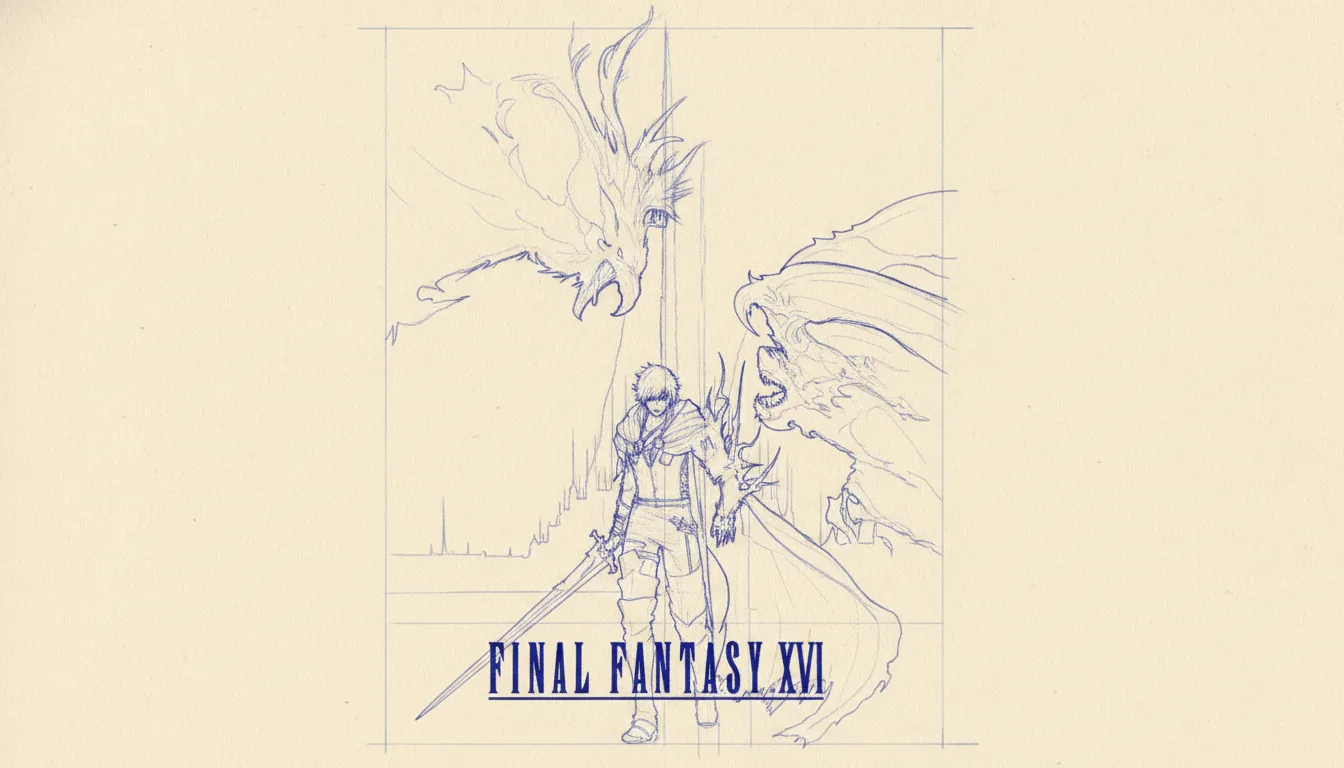
FF XVI (2023 PS5) is the franchise's most ambitious modern action-RPG departure — Clive Rosfield's medieval-political revenge arc + Eikon-vs-Eikon kaiju battles + Game of Thrones-influenced tone. Built specifically targeting PS5 hardware architecture — see our PS5 JRPGs ranking for hardware analysis (FFXVI is Tier 1 PS5-native showcase). The action-RPG combat (designed by DMC's combat director Ryota Suzuki) is mechanically clean but represents a fundamental break from traditional FF turn-based / ATB roots. Critically respected, fan-divisive for that reason. Recommended for action-RPG fans; not recommended for FF fans expecting traditional turn-based.
Final Fantasy XV (2016)
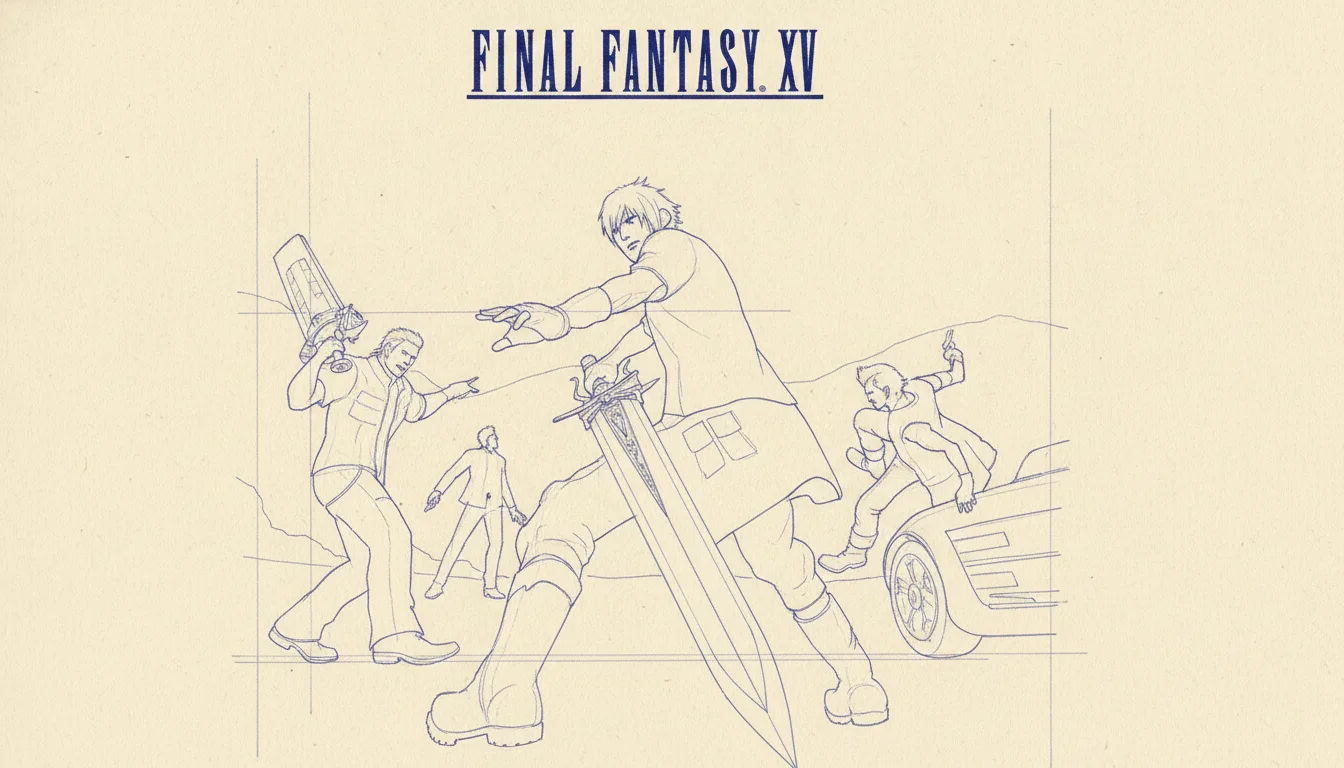
FFXV (2016 PS4) has the franchise's most troubled development cycle (originally announced as FF Versus XIII in 2006, repeatedly delayed and reworked over 10 years before launch as FFXV). The road-trip narrative (Noctis + 3 male friends driving across continent to reclaim crown) delivers genuine emotional moments + the franchise's most underrated soundtrack — but campaign pacing is uneven + the final-act narrative resolution feels rushed. Recommended for FF fans interested in the franchise's modern experimentation; not essential for first-time FF players.
Final Fantasy XI (2002)
FFXI (2002) is the franchise's first MMO entry — Vana'diel world + traditional party-based JRPG combat in persistent online environment. Service has continued for 22+ years (still active in 2026) with a dedicated subscriber base. Not recommended for solo JRPG fans (MMO commitment required); essential for JRPG-MMO historians.
Final Fantasy III (1990)
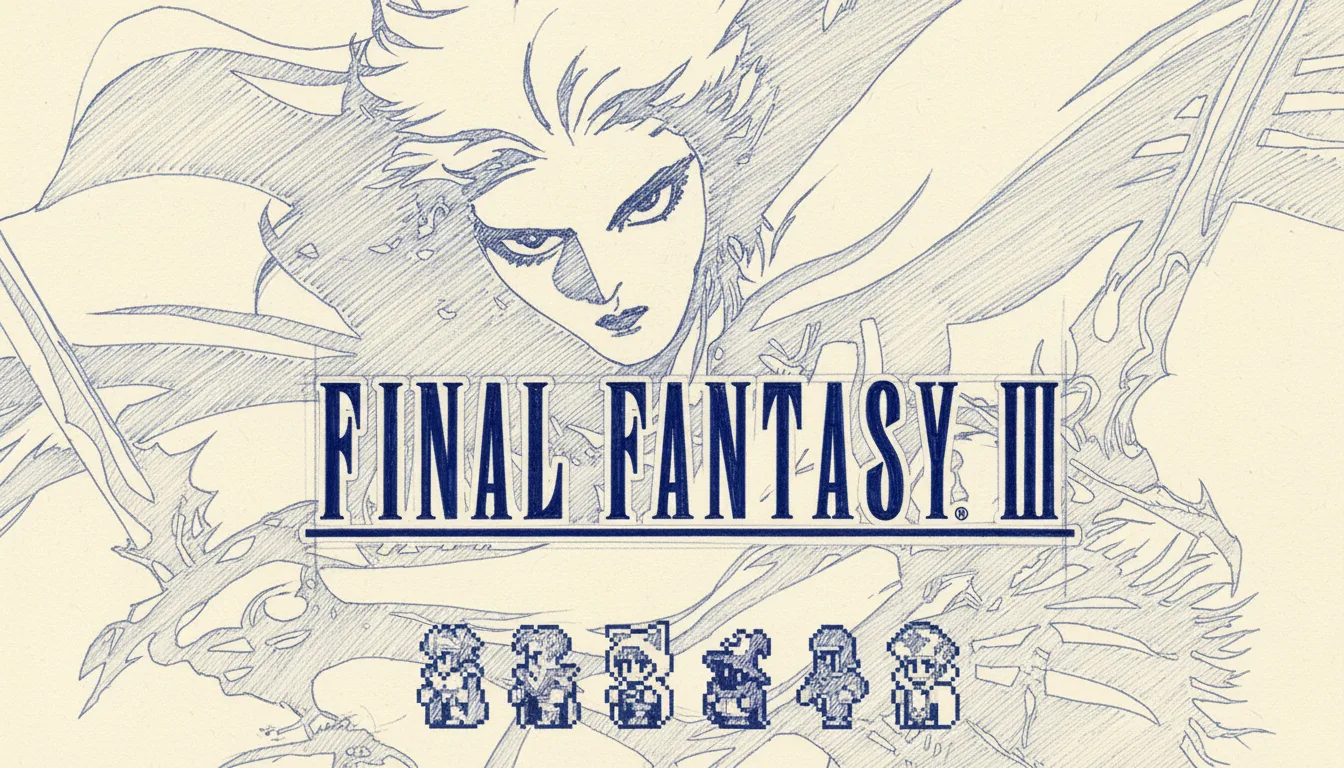
FFIII (1990 Famicom) introduced the Job system that FFV would later perfect. Original Famicom version was Japan-only until 2006 DS remake (with 3D character models + complete English translation). Pixel Remaster (2023) brings the original 2D version to modern hardware. Recommended for FF historians + Job system mechanics fans.
Final Fantasy (1987)
The original Final Fantasy is the foundational franchise entry that established the JRPG genre conventions Square would refine across the next 35+ years. Pure historical interest in 2026 — mechanics are dated by FFIV+ standards. Pixel Remaster (2021) is the definitive way to experience the original today.
Final Fantasy II (1988)
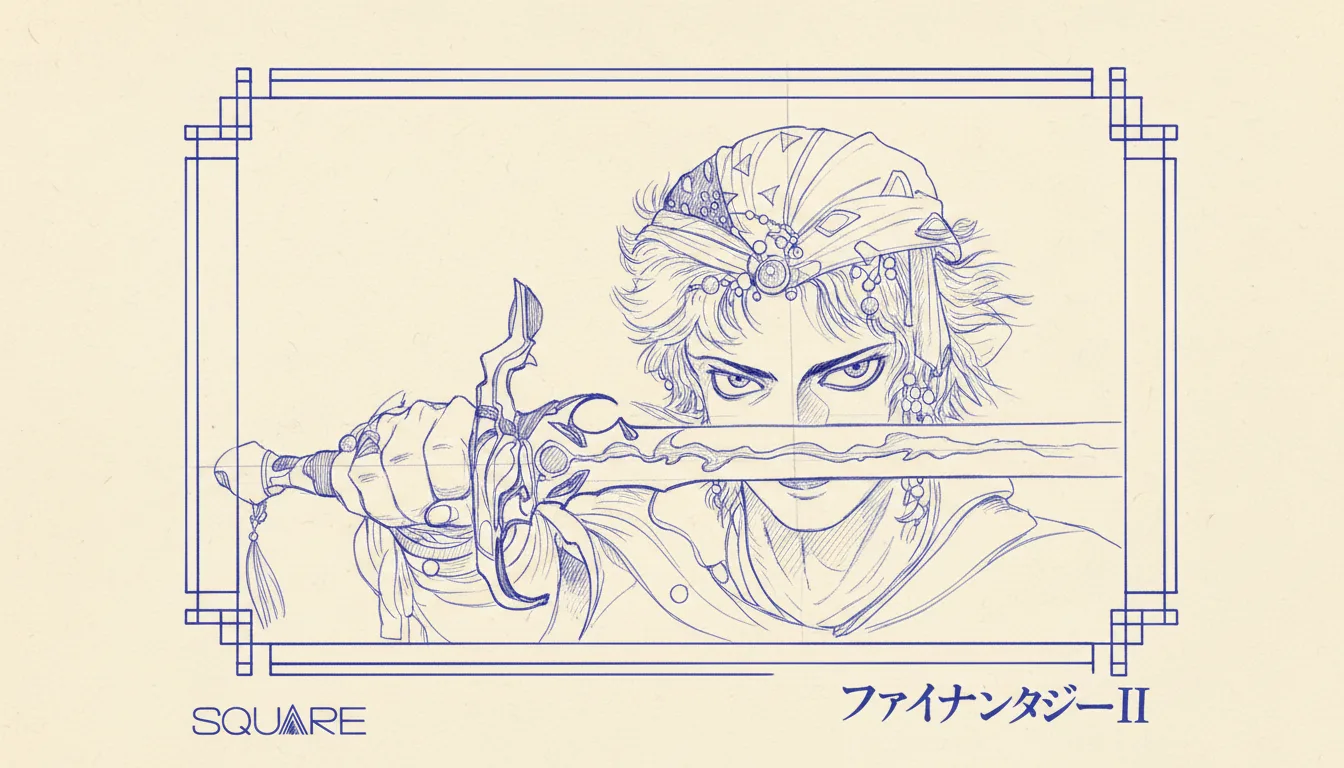
FFII (1988 Famicom) introduced the franchise's storytelling ambition (death of party members, romance subplots, named protagonist character arcs) but pure-action-grinding stat-growth system (use sword more = sword skill increases) makes mechanical engagement frustrating by modern standards. Recommended only for FF historians.
The Final Fantasy Ranking at a Glance — Tier Summary
The complete ranking summary for quick reference + tier-based recommendations:
S-Tier (Essential FF Reading): #1 Final Fantasy VI (1994 SNES) — consensus genre-defining JRPG masterpiece + #2 Final Fantasy Tactics (1997 PS1) — most narratively ambitious side-entry + tactical-RPG masterpiece. Both are essential JRPG genre reading, not just FF-specific recommendations.
A-Tier (Strongly Recommended): #3 Final Fantasy X (2001) — most emotionally focused mainline FF + #4 Final Fantasy VII Remake/Rebirth (2020-2024) — best modern reimagining + #5 Final Fantasy IX (2000) — Sakaguchi's swan song to classic FF aesthetic + #6 Final Fantasy V (1992) — Job system origin + most replayable mainline. All four are mandatory reading for any FF franchise fan, mechanically + narratively rewarding regardless of era preference.
B-Tier (Strong For Their Era): #7 Final Fantasy XII Zodiac Age (2006/2017) — Gambit AI experiment + #8 Final Fantasy IV (1991) — ATB origin + #9 Final Fantasy VIII (1999) — Junction system experiment + #10 Final Fantasy XIII (2010) — Paradigm Shift combat. Each has fans + critics; all are mechanically interesting era-specific entries.
C-Tier (Completionist Only): FFXVI (2023 action-RPG departure), FFXV (2016 road-trip narrative), FFXI (2002 MMO commitment), FFIII (1990 historical interest), FF (1987 foundational), FFII (1988 experimental). Recommended only for FF completionists or specific historical/mechanical interest cases.
Where to start as a 2026 newcomer: Final Fantasy VI Pixel Remaster (Switch/Steam/PS5) is the consensus best starting point — manageable 25-30 hour campaign + maximum narrative payoff + accessible classic mechanics. If you prefer modern action-RPG: FF7 Rebirth on PS5 (but only if you've played FF7 Remake first; Rebirth is part 2 of a trilogy). If you prefer tactical RPG: FF Tactics: The Ivalice Chronicles on Switch 2 (the 2026 modern remaster). Avoid starting with FFXIII (linearity), FFXVI (action-RPG breaks from franchise roots), or FFII (mechanically frustrating). The franchise rewards thoughtful entry-point selection.
For broader genre exploration after FF entry: our mobile JRPG ranking covers portable picks (FF Pixel Remasters lead), Switch JRPG ranking covers handheld-friendly FF entries (Pixel Remasters + FF7 Remake recently added + FF Tactics Ivalice Chronicles 2026), and PS5 JRPG ranking covers next-gen FF showcase (FF7 Rebirth + FFXVI). For franchise-specific deep dives: Persona ranking, Dragon Quest ranking, Tales ranking, Fire Emblem ranking complete the major JRPG franchise cluster context. For genre definitional reading: what JRPG actually means + comprehensive RPG rankings Hub 1 universal anchor.
Frequently Asked Questions
What is the best Final Fantasy game ever made?
Final Fantasy VI (1994 SNES) is the consensus #1 across JRPG critics, designers, and franchise historians. The 14-character ensemble cast + Kefka Palazzo (the franchise's defining nihilistic villain) + Nobuo Uematsu's peak soundtrack (Dancing Mad + Aria di Mezzo Carattere Opera House sequence) + the World of Ruin mid-campaign tonal shift create the most narratively complete mainline FF entry. Final Fantasy Tactics (1997 PS1) earns runner-up status for tactical-RPG depth + Yasumi Matsuno's Ivalice political-tragedy narrative ambition. In 2026, FFVI Pixel Remaster (PS4/Switch/Xbox/PC/iOS/Android) is the definitive modern way to experience the consensus #1 FF entry.
Which Final Fantasy should I play first as a newcomer in 2026?
Final Fantasy VI Pixel Remaster is the optimal starting point for new players in 2026 — manageable 25-30 hour campaign + maximum narrative payoff + accessible classic JRPG mechanics that introduce the franchise's foundational systems without modern-era complexity overhead. Available on Switch, PS4/PS5, Xbox, Steam, iOS, Android. Alternative entry points: FF7 Rebirth (PS5) modern action-RPG; FF Tactics Ivalice Chronicles (Switch 2) tactical RPG; FFX HD Remaster emotional narrative. Avoid starting with FFXIII linearity critique, FFXVI action-RPG departure, or FFII mechanically frustrating.
How many Final Fantasy games are there in total?
16 numbered mainline Final Fantasy entries (FFI 1987 through FFXVI 2023) plus Final Fantasy Tactics (1997 tactical RPG companion) + Final Fantasy XIV the active MMO + dozens of spin-offs. This ranking covers all 16 mainline numbered entries + Tactics for 17 total ranked games. FFXIV covered separately as MMO entry; spin-offs (Crisis Core, Type-0, Crystal Chronicles, Stranger of Paradise, World of Final Fantasy, Theatrhythm) excluded from mainline ranking. FF7 Remake (2020) + Rebirth (2024) + Part 3 (TBD) treated as combined trilogy entry.
Is Final Fantasy Tactics really the second best Final Fantasy?
Yes — Final Fantasy Tactics (1997 PS1) earns runner-up status because the Ivalice political-tragedy narrative weight + 22+ job customization system depth + tactical-grid combat with elevation/height/facing mechanics create the franchise's most mechanically deep tactical entry and one of the most narratively ambitious side-entries Square ever produced. Yasumi Matsuno's storytelling (Ramza/Delita parallel arcs with the heroic narrative deliberately undermined) takes adult themes seriously. The 2026 Final Fantasy Tactics: The Ivalice Chronicles (Switch 2) modern remaster makes the game finally accessible without PS1-era friction.
Why is Final Fantasy VII Remake / Rebirth treated as one entry?
FF7 Remake (2020 PS4) and FF7 Rebirth (2024 PS5) are parts 1 and 2 of a planned trilogy re-telling the original Final Fantasy VII (1997 PS1) story across PS4/PS5 generations. Both preserve narrative beats (Cloud, Sephiroth, Aeris, Mako, Shinra) while modernizing combat to real-time action-RPG hybrid + expanding character development + adding new sub-plots. As a unified re-imagining project, this ranking treats Remake + Rebirth as single entry at #4 — modern FF7 experience requires playing both. Original FF7 (1997) remains valid alternative for compressed 35-50h experience vs the expanded 200+ hour trilogy commitment.
Which Final Fantasy has the best soundtrack?
Final Fantasy VI (1994) Nobuo Uematsu peak work is the consensus best FF soundtrack — Dancing Mad (Kefka's final boss 17-minute 4-movement symphony) + Aria di Mezzo Carattere (Opera House sequence with full operatic performance) + every party member's themed motif (Terra, Locke, Edgar/Sabin, Celes) create the most complete musical character-development the franchise has produced. Strong runners-up: FFX (To Zanarkand piano + Suteki da ne vocal), FFVIII (Eyes On Me Faye Wong + Liberi Fatali Latin choral), FFIX (Sakaguchi swan song themes), FF7 Remake/Rebirth (modernized arrangements). The Nobuo Uematsu FFI-X era remains the franchise's musical golden age.