
Why Dragon Quest Still Matters in 2026
In 1986, Yuji Horii was inspired by the dungeon mechanics of Wizardry and Ultima. Because of the culture gap, Horii had to adjust the mechanics of the games to cater to the Japanese audience. He also recruited Akira Toriyama for monster design and Koichi Sugiyama for music. Founding the franchise along with Horii was Chunsoft, now Spike Chunsoft. Dragon Quest is celebrating its 40th anniversary, still using the same formula as when it started, turn-based combat, slimes, a simple 4 button menu, and a jingly lever jingle that gives the same dopamine hit as it did in 1986. The formula also creates the franchises greatest rivalry. Over my thirty years of playing the franchise, I've spent hundreds of hours across the many Dragon Quest games. Here are eight main series titles and two of my 'foundational entries'. These titles are ranked based on what they have achieved independently, not considering the current gameplay or graphics. A game from 1992 that can still leave me speechless in the third era is doing something that no game from 2024, including Dragon Quest, will match. That is the standard.
How This Ranking Works
Only considering DQ I through DQ XI, and DQ III HD-2D Remake (treating it as a separate experience due to sufficient differing changes). No spinoffs like Dragon Quest Heroes, Dragon Quest Builders, Monsters, Treasures, and Tact because they're trying to be different sorts of games and I’m reserving the best spinoffs for honorable mentions at the end.
Each game is scored 1 to 10 based on the criteria of writing, combat depth, music, art direction, pacing, replayability, how the game holds up as a first time experience for current players and overall experience. A 10 is a "perfect" rating and is equivalent to scoring Dragon Quest. A 7 is equivalent to a ranking a foundational franchise entry that is more respected as a historical piece rather than a source of entertainment. If you want to skip to the rankings, the entire list is available at the end of the article.
10. Dragon Quest (1986)
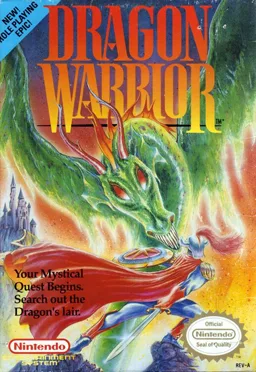
The original Dragon Quest video game was the first in the industry to produce a JRPG title. Yuji Horii changed Western role-playing games and made them into something different. He took Wizardry and Ultima and made them console versions and created a linear, story-driven, Toriyama cartoon character version. This was the first time a console received a role-playing game, and Horii changed how everything would be made for Dragon Quest.
Playing this game as it was intended when it was created is not optimal. You are one lone hero, can only traverse 4 directions, fight 1 singular monster at a time and have to grind levels in specific encouter zones. The writing is also rather daff. By modern standards it is a game that is technically playable (and short) as it is 15 hours long if you grind super efficiently. The game is also well written and you can really feel the confidence in the writing from Horii and Chunsoft to make a game of a high caliber.
9. Dragon Quest II: Luminaries of the Legendary Line (1987)
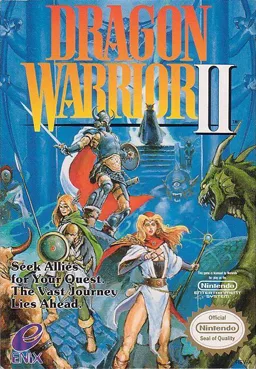
The Dragon Quest series, with its innovative JRPG party system, was first seen in Dragon Quest II. In the first game, players journeyed solo as a heroic character against the rest of the world. Yet in DQII the Prince of Cannock and the Princess of Moonbrooke, and this addition immediately added complexity to the combat system. Players had to consider turn order, the healing capabilities of other players, and whether or not the other players would survive against a battle against a metal slime and the slime's ability to flee.
DQII’s standards when compared with modern ones are laughable, but DQII is the reason the other party-based JRPGs, such as Final Fantasy, Phantasy Star, every Tales game, etc. exist. If you wish to see the genesis of the combat system utilized in the genre, playing this game in a remaster or through the Mini collection is a good choice.
8. Dragon Quest VII: Fragments of the Forgotten Past (2000 / 3DS 2016)
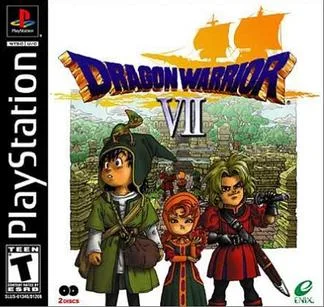
The Dragon Quest franchise's longest game, Dragon Quest VII, boasts a playtime of over one hundred hours if you do everything, but the first four hours of the game contain no combat whatsoever. Instead, you are solving puzzles with stone tablets, fighting neither beasts nor players, and feeling no pressure from the game to do so. The worst pacing issues in the 3DS remake were solved, and random encounters were created, but the core issue remained: DQVII is a seventy hour game with a hundred hour playtime.
It's all or nothing with DQVII, and when it works, it really works. Each restored island is like a self-contained town, cursed by demons, villages frozen in time, or kingdoms ruined by betrayal. Each restoration is an emotional vignette, and the variety gives DQVII an emotional versatility like no other entry. You’ll visit communities, each with their own tragedy, and the emotional cumulative weight of suffering and then later the redemption becomes really moving. The job system is the deepest in the entire franchise too. The payoff is monumental but DQVII just asks too much of your patience before you get it.
7. Dragon Quest IV: Chapters of the Chosen (1990 / DS 2008)
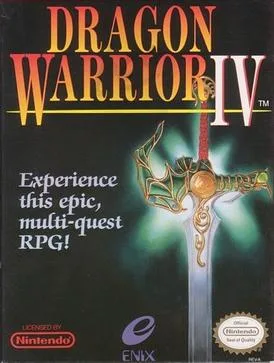
DQIV introduced a new way to structure chapters in video games back in 1990 when the game was first released. Each player plays five different chapters where you control a new character. You have Ragnar, the soldier, Alena the princess, Torneko the merchant, and then twin sisters, Meena and Maya. All five characters meet in Chapter 5 to play with the Hero, who is silent. Every chapter is its own mini RPG and has its own theme; for example, Alena's is a tournament story and Torneko's is a merchant story, while Ragnar's chapter is a regular dungeon crawl. It is like a collection of short stories, and its great because party members get to join the final party in Chapter 5 after completing their own story.
The DS remake added a sixth chapter which allowed us to see Psaro, the villain of the game, as more than a generic demon lord and instead become someone we could almost sympathize with. DQIV has one of the best casts in the franchise and even though the combat is standard Dragon Quest, which means solid but never flashy, it ranks here because of its innovative chapter structure. You don't get a full party until halfway through and the Hero is the least interesting character in his own story.
6. Dragon Quest IX: Sentinels of the Starry Skies (2009)
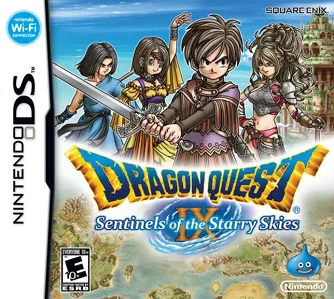
DQIX is unique. It is the only DQ on DS, it had fully customizable party members (not just presets), a local multiplayer coop mode, and a grotto system with randomly generated post-game dungeons for grinding. In Japan, DQIX was a huge social phenomenon. People would bring their DS everywhere to trade treasure maps through Tag Mode. In the West, it was a solitary experience, and without the social aspect, it felt even more strange.
To my shock, the main plot is quite good even with a generic party. You are a Celestrian, an angel that loses their powers and must fall to the ground. The town-by-town story structure is inherited from DQ VII, and it has some really impact stories. Coffinwell’s plague. Bloomingdale’s ghostly love story. For a game with chibi character graphics on DS hardware, these are surprisingly emotional. DQ 9 has the issue of your party members having no personality because you can customize them. The tradeoff from customization is that they are mute, and after sixty hours of pure silence, it gets heavy.
5. Dragon Quest III HD-2D Remake (2024)

The HD-2D Remake has taken a 36 year old NES game and turned it into one of the most gorgeous JRPGs of 2024. The engine used for Octopath Traveler has 16 bit sprites in 3D environments and uses dynamic lighting which fits Dragon Quest's look perfectly, and Baramos's castle has never looked more sinister. With the addition of an orchestral score, and the Quality of Life improvements (visible enemy encounters, the addition of a battle speed up option, and refinements to the personality system), as well as a post game Monster Arena, DQIII will go from an important game in history to a game that will be actually fun to play in 2026.
DQIII's class system is the very first example of the franchise's job-based gameplay - including job changing at Alltrades Abbey. Your team consists of warriors, mages, healers, and thieves. The freedom of creating your own party is similar to DQIX, however, you'll find the same drawback. There are no party members with personality. The story is iconic, but thin by today's standards. This is the origin of the Erdrick saga and setup for DQI and DQII. You are a hero who fights a demon lord - a twist that is telegraphed in 2024 but was mind blowing in 1988. The remake ranks high purely on execution, and while DQIII was always a mechanics first game, this is the best way to experience DQIII.
4. Dragon Quest VI: Realms of Revelation (1995 / DS 2011)
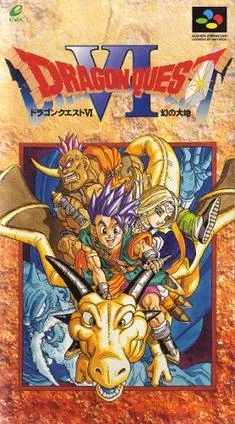
DQVI isn't often discussed. The dream world/real world duality of having the party exist in two versions of the same world and having to determine which is “real” came before everything from Chrono Cross to Persona 4’s TV World. The class system is the deepest in the pre-DQIX era, with master classes requiring the mastery of several base classes first. And the Murdaw boss fight, where a villain literally throws your party out of their identities and into the dream world as amnesiacs is one of the most disturbing in the entire franchise.
The game sits at fourth out of fifth spots because it \_is\_ only a remade DS game and English version of DQIV and DQIV and has a bad translation. The story of the game also loses its flavor when it reaches halfway through because the dream and reality mechanic gets frustrating instead of being surprising as it gets annoying to navigate through. Despite this, the game has a really good game mechanics and this series has the richest out of the rest, and if Square Enix gives the game the HD-2D treatment, it can move a few places.
3. Dragon Quest VIII: Journey of the Cursed King (2004 / 3DS 2017)
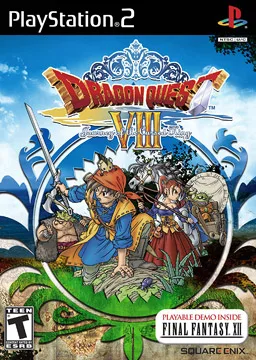
The first fully 3D installment for DQ was DQVIII. Level 5 created a world that justified this change. For a PS2 game, the graphics are pretty impressive, and the world consists of rolling hills and a cel-shaded Toriyama style which looks really nice. DQVIII was also the first in the series to implement a camera that could be rotated. This change allowed for more freedom than previous titles that had a fixed top-down view for 17 years. With Yangus, Jessica, Angelo, and the Hero, the game has the best and most charming cast in the series. Unlike most DQ games, Hero has a personal quest that is driven by a curse and you actually want to see him succeed. Yangus, a cockney thief, is a character with a heart of gold. Jessica's fan service design is actually a facade and she has depth. Angelo is a gambling priest.
The Alchemy Pot has the best crafting system in JRPGs. It is simple enough to be used casually while having enough depth to break the game if you learn all the recipes. In the 3DS version, a side quest that is photography based and two new playable characters and an alternate ending were added. I also rank DQVIII third because the mid-game pacing is a bit rough but the first twenty hours and the last dungeon are some of the best in the series.
2. Dragon Quest V: Hand of the Heavenly Bride (1992 / DS 2009)
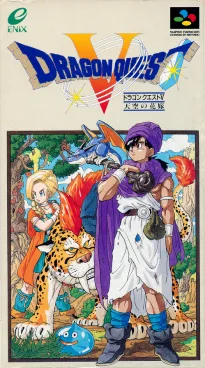
DQV may very possibly be the most emotionally ambitious JRPG in existence, rivaled only by the Persona franchise. The game takes place over the course of three generations, and has you experience the murder of your father as a child, watch your adult self get turned to stone for eight years after marrying a wife of your choosing, and watch your children inherit the misery of your unfulfilled legacy. No DQ game, and no other JRPG of the same era, has attempted to create a story this personal and intimate.
The most well-known part of the game is the marriage mechanic, but the part that truly captures what DQV is about is the stone imprisonment system. Eight entire years go by while you're stuck. Your wife is taken. Your children grow old without you. The game world continues evolving after you are let out, and it does not let you forget about it. The monster recruiting system (catching and training monsters before pokémon even existed) adds some extra layers of complexity, and the script from the DS remake is one of the best localizations that Square Enix has ever released. The story is the franchise's crown jewel, but because DQV's combat is the most simplistic in the post-NES series, it has to rank second.
1. Dragon Quest XI S: Echoes of an Elusive Age (2017 / S: 2019)
DQXI is the best Dragon Quest game because it is every Dragon Quest game. It includes all the typical features that the series has developed over the past 30 years. Elements such as turn-based combat, Toriyama's unique style, town by town gameplay, and collaborations with various antagonists. It has all of these features and executes them magnificently. These elements have never been presented at a higher level in the history of Dragon Quest games. The Luminary is a chosen one trope, but his companions (Sylvando's flamboyant warmth, Erik's guarded loyalty, Veronica and Serena's sisterly dynamic, Hendrik's rigid honor) transform this standard trope into something pretty extraordinary.
The definitive edition is the best version to experience the game. You can switch between 16-bit and 2D graphics, play with character-specific story chapters, enjoy orchestral music, and play a post-game that changes your entire perspective on the story. The best franchise plot twist since the stone imprisonment in DQV is the Act 2 gut punch - the fall. Most JRPG's don't earn the moral weight that the Act 3 decision on what to do with that knowledge has.
DQXI is not changing the game, but it does not need to. It shows how traditional designs in JRPGs are not a dead end - they are a choice. The design choices made in DQXI are some of the best in the genre. If you are going to play only one Dragon Quest game, make it this one. The Definitive S edition is available on Steam, PlayStation, and Switch.
The Ranking at a Glance
1. Dragon Quest XI S — 10/10 — The complete Dragon Quest experience.
2. Dragon Quest V — 9.7/10 — The most emotionally ambitious JRPG of its era.
3. Dragon Quest VIII — 9.5/10 — The 3D leap done right.
4. Dragon Quest VI — 9.3/10 — The class system everyone forgets to credit.
5. Dragon Quest III HD-2D Remake — 9.2/10 — The remake that justified itself.
6. Dragon Quest IX — 9.0/10 — The weird one, and that's a compliment.
7. Dragon Quest IV — 8.8/10 — The chapter-structure experiment.
8. Dragon Quest VII — 8.5/10 — The marathon.
9. Dragon Quest II — 7.5/10 — The party-system foundation.
10. Dragon Quest — 7.0/10 — The one that started it all.
Honorable Mentions: The Spinoffs Worth Your Time
As of now, the spinoff catalog has surpassed the main series in number of releases. Most of these are mediocre: good enough, polished, but ultimately forgettable. However, a few are worth playing.
Square Enix released one of their best spinoff titles in 2018, Dragon Quest Builders 2. It combines the formula of Minecraft with the storytelling of Dragon Quest IIs narrative depth to create a surprisingly impactful story about rebuilding society after a Dragon Quest game. The supporting characters, notably Malroth, are developed surprisingly well for a building game, and the construction sandbox mechanics are incredibly deep.
Out of all the entries in the monster collecting subseries, Dragon Quest Monsters: The Dark Prince is the best. If the Pokemon franchise has been causing you frustration, then DQM will certainly help you with that- especially considering the monster synthesis mechanics are much more in depth than anything you'll find in Pokemon, and the story is worth your time. The story is about the Prince of the monster world and his coming of age story, written with the same level of quality as a mainline Dragon Quest game.
Until 2022, Dragon Quest X held the record as the longest-running game for the Dragon Quest series, measured by total hours played. It is the only MMORPG in the series. With the 2022 release of DQX Offline, the main story of the game is now available to English speakers for the first time. DQX Offline has the same fast-paced, enjoyable combat as the original game. DQX Offline is still unplayable for a majority of readers, and it is a strange recommendation for a game. However, players have likely waited long enough to see what a single-player MMO is like.
Dragon Quest Heroes I and II (2015, 2016) are Musou-style action games co-developed with Omega Force. They are passable, repetitive, and mindless enough to be fun. If you don't really enjoy the Warriors formula, probably skip these.
Where to Start If You've Never Played a Dragon Quest
Dragon Quest XI S Definitive Edition is your best bet at starting the series, as it teaches you the franchise's combat system without previous knowledge. Plus, it is available on every current gen console with cross progression on all of them.
I also suggest the recently launched Dragon Quest III HD-2D Remake if you enjoy turn based combat. The game contains incredible 2D sprites that improve the experience with new pacing, as opposed to the original game which had a slow and often troublesome experience. Additionally, the job system has been redesigned so that you can customize your party more without organizational restrictions. For more context about remakes that have been properly done within the same genre, check out our guide to the best JRPG remakes and remasters.
For something beyond just Dragon Quest, I'd suggest looking at the best JRPGs for beginners list. It includes the most gentle entry points into the JRPG genre including the most beginner-friendly options for Dragon Quest. If you want to see how the Dragon Quest franchise fits into the JRPG canon, have a look at our ultimate JRPG guide. It covers the complete history of the genre.
After finishing XI and III HD-2D, if you're looking for more, revisit this list. The franchise is forty years old, and there is a Dragon Quest game to whatever specific itch the first one scratched — emotional weight (V), open-world exploration (VIII), structural experimentation (IV, IX), or pure historical curiosity (I, II). All of them reward patience. None of them are trying to be anything other than what they are. That's the franchise's whole appeal.
Which Dragon Quest game should I start with in 2026?
Dragon Quest XI S: Echoes of an Elusive Age Definitive Edition (PS4, PS5, Switch, Xbox, PC) is the cleanest first pick for new players. It is the modern Dragon Quest peak with Akira Toriyama character art, Koichi Sugiyama score, classic turn-based combat with full party customization, and a 100+ hour story that distills four decades of series tradition. Those who prefer the foundational classic format will be happy with Dragon Quest III HD-2D Remake (2024), which brings the 1988 original to modern hardware with the Octopath Traveler HD-2D visual style.
Is the Dragon Quest III HD-2D Remake worth playing?
Yes. Square Enix's Dragon Quest III HD-2D Remake takes the 1988 NES classic and remake it for the PS5, Xbox Series, Switch, and PC, and feature the same visual style as their recent retro-style releases known as Octopath Traveler. Also it features rebalanced combat for modern pacing, an expanded class system, new voice acting and quality-of-life improvements. Ranked #5. It is the best option for newcomers to the early Dragon Quest games who want to avoid 8-bit nostalgia.
When is Dragon Quest XII releasing?
Yuji Horii (series creator) announced Dragon Quest XII: The Flames of Fate in May 2021. As of 2023, there have been very few gameplay reveals. A 2026-2028 release window is likely due to the series tradition of long development cycles (Dragon Quest XI was 7+ years from announcement to release). Multi-platform launches are also expected. This is a placeholder update until Square Enix shares something concrete. For now, the 10 mainline entries in the series offer 200+ hours of definitive Dragon Quest content.
Which Dragon Quest game should I start with in 2026?
Dragon Quest XI S: Echoes of an Elusive Age (Definitive Edition) is the cleanest starting point for newcomers in 2026. It's the most polished entry in the franchise, available on Switch / PS4 / Xbox / PC / Steam, and the 60-100 hour campaign delivers the complete Dragon Quest experience with modern quality-of-life improvements. Alternative: Dragon Quest III HD-2D Remake (2024) for a shorter ~30 hour entry that captures the foundational DQ formula in beautiful pixel-3D presentation. Avoid starting with the 1986 NES original — historical importance only.
Is the Dragon Quest III HD-2D Remake worth playing?
Yes — DQ III HD-2D Remake (2024) is one of the cleanest classic-JRPG remakes of the decade. Square Enix used the Octopath Traveler engine to render the 1988 original at modern fidelity while preserving the gameplay structure that defined the franchise's foundational era. The class-change system, Pachisi mini-game, and Yuji Horii's Erdrick trilogy worldbuilding all come through with the original spirit intact plus updated combat pacing. Excellent entry point for players who want classic DQ structure without the original's gameplay friction.
When is Dragon Quest XII releasing?
Dragon Quest XII: The Flames of Fate was announced in 2021 but Square Enix has not confirmed a 2026 release window as of June 2026. Yuji Horii has stated XII will be 'darker than expected' and use real-time combat (departing from the franchise's turn-based tradition). Speculative release window is 2026-2027 based on development timelines for prior mainline entries. Monitor Square Enix announcements at major showcases (TGS, State of Play) for official date confirmation.
What's the difference between Dragon Quest and Final Fantasy?
Both are Square Enix JRPG flagships but with very different design philosophies. Dragon Quest is Yuji Horii's vision: traditional turn-based combat, slime mascots, simple-yet-deep mechanics, family-friendly tone, sequel-stable identity (the formula barely changes between entries). Final Fantasy is rotating-team development: experimental combat systems per entry (ATB → real-time hybrid → Devil-May-Cry-tier action), darker mature tones, dramatic identity shifts per numbered entry. DQ is comfort food; FF is high-concept experimentation.
Are Dragon Quest games connected story-wise?
Mostly no — each numbered DQ entry tells a standalone story. Three loose trilogies exist: the Erdrick trilogy (I + II + III), the Zenithian trilogy (IV + V + VI), and the standalone modern era (VII through XI). You can play any entry without prior context. The shared mythology (slimes, Saint Lyonelle, demons-vs-light themes) creates thematic continuity rather than plot continuity. DQ XI S directly references prior entries as easter eggs but doesn't require them.
Which Dragon Quest game has the best battle system?
Dragon Quest XI S has the most refined turn-based combat in the franchise — Pep Powers (team-up attacks), strategic break timing, and a difficulty modifier system (Stronger Monsters) that scales combat depth to player preference. Dragon Quest IX (DS) introduced revolving party tactics + class-change customization that some long-time fans prefer. Dragon Quest VIII pioneered 3D combat presentation. For pure mechanical innovation, XI S leads; for system depth, IX leads; for visual presentation, VIII leads. The turn-based formula in DQ remains foundational across all entries.