
For all its qualities, it seems odd to suggest a game developed thirty years ago. There are only so many people with access to hardware of the time, who want to experience the nostalgia for CRT monitors, physical game manuals, and the “good ‘ol days” of gaming. Sure, maybe the story, and music holds up, but the gameplay, and quality of life features are sorely out of date.
This is one of the main reasons why remakes and remasters are more important for JRPGs than for other genres. JRPGs require a massive time investment, and the burnt-out, outdated gameplay experience that was tolerable in 1995 would be completely unacceptable 20 years later. The best remakes focus on removing what modern audiences feel are the painful aspects of outdated games, while still retaining what most gamers consider the heart of the game.
The huge difference for many of the games on this list is that the remakes often excel in user experience, presentation, and modern game accessibility to the player base when compared to the original. This makes the request for a time investment that most gamers consider large, more reasonable. For those friends in your circle who are trying the foray into this niche game style, the recommended games for beginners in this genre are exactly the remakes of this genre for the same reasons.
Persona 3 Reload
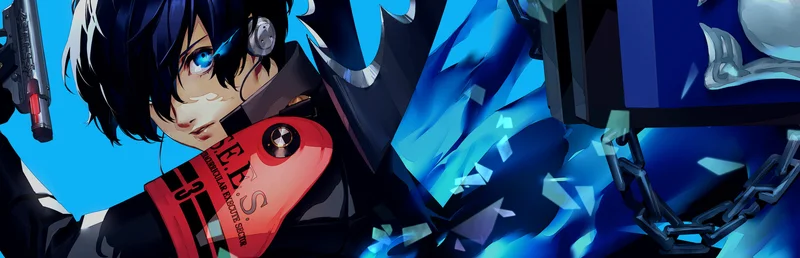
Persona 3 Reload is a remake of a beloved classic JRPG originally released in 2006. Reload aims to preserve the original's melancholic tone while building new assets, systems, UIs, and visuals. It is the definitive version of the game and the best JRPG of 2024.
The original Persona 3 had a social link system that became a franchise hallmark, but it had its problems. Party members were AI controlled. The dungeons were repetitive. The UI was outdated. Reload addresses all of this and brings the interactive and visual style of Persona 5 as a baseline for the new combat system and revamped social link system. Reload also reworked the dungeon of Tartarus to give players enough content for 80 hours of exploration.
Reload recreates the 3rd persona stories meticulously, tapping into the original source material regarding the mortality, loss and the acceptance of parting that persona 3 exhibits. Reload trusts the original source material and jazzes it up with musical and aesthetic elements and technology back from the ps2 and uses elements like a new cast and newly added tracks to "modernize" the original source material. Each character relives the emotional climax and each players journey is intensified by everything from the ps2 to the modern reloaded version.
“I played the original on PS2 in 2007. Reload made me cry at scenes I thought I remembered. I did not remember them at all.”
Final Fantasy VII Remake / Rebirth
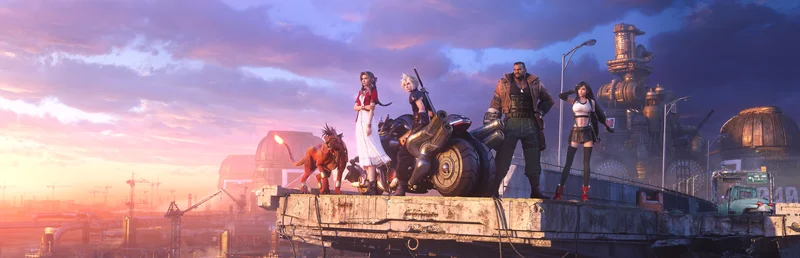
Final fantasy 7 is a reimagining of the 1997 version that just embellishes the version into something new and perfect and offers an entire new experience. The combat system is more of a blend of command elements and real time elements. The combat system is complex! Each character can feel how much an attack generates and switching between the party members helps make the combat system engaging and alters the combat experience across an endless amount of hours. The materia system returns with enough depth to satisfy players who want to optimize their build without leaving newcomers out.
Rebirth broadens the scope dramatically. Open zones are filled with content, side quests are character-driven as opposed to checklist-driven, and the Gold Saucer segment alone has more minigames than some complete releases. The game has confidence in its world enough to allow you to explore almost freely which is what the original expressed through pre-rendered backgrounds and text boxes. Rebirth does it with immersive environments that reward the player for exploring.
Chrono Trigger is the game that shows some designs are so fundamentally perfect that they need very little changing. The DS version is considered the definitive version as it has a more accurate translation as well as some bonus dungeons while keeping the rest of the experience untouched. The PC version had a rough launch but was patched to a solid version. The mobile versions, while intended for a game designed around physical buttons, are surprisingly playable.
“Rebirth took everything I loved about the original and showed me I had only seen a fraction of what that world could be.”
Chrono Trigger

Chrono Trigger is an amazing remaster subject because it needs so little to be an incredible game. The combat is as creative as it was in 1995. The time-traveling mechanic combined with a branching plot is something that predates open-world games. The pixels even in the original DS release look amazing.
What sets Chrono Trigger apart from so many other games in the genre is that it actually saves the players time. A full playthrough of the game is approximately 25 hours, which is a time investment that's extremely rare for contemporary JRPGs. Every instance in the time-travel mechanic of the game is fully realized, and there is absolutely no filler. The experience was tailored to the player to make sure there is a fully complete and satisfying story. Chrono Trigger was so influential that a guide to RPG magic systems would even detail the combat mechanics of Chrono Trigger.
The HD-2D remake of Dragon Quest III celebrates the original look of games from its era. The NES release of the game established what would be the defining characteristics of the Dragon Quest series for the next 40 years. The job system, customizable parties, and open-world exploration would influence countless other games. The HD-2D remake even preserves the original systems while adding the beautiful graphics seen in Octopath Traveler.
“I play Chrono Trigger once every three years. Every time, I notice something I missed before. No other game does that.”
Dragon Quest III HD-2D Remake

Using HD-2D visuals works well with Dragon Quest because the series has always used Toriyama's character designs with warm, cartoony aesthetics. When it comes to the charm of the game, the engine's depth of field, lighting, and other visual effects improve environments without overpowering the aesthetics. Dungeons get atmospheric depth, the overworld goes beyond the original tile-map's suggestions, and towns maintain the cozy feel.
The vocation system has been revamped, and the process to change classes is simplifyd and improved overall. Skill inheritance is now more visible, and the system's balance adjustment shifts to reward multiple class experiments rather than punish players. Considering it's a remake of a game designed in 1988, it does well to strike a nostalgic yet modern feel. Our site-wide ranking of the entire Dragon Quest series covers all of the main entries and is available for readers who wish to dig into deeper than the third game.
In 2022, Live A Live, a Super Famicom game from 1994, was remade with HD-2D graphics and was finally released in the West. This remake is not merely a visual upgrade. It's a vital game rescue, filling the thirty-year gap of unavailability for the game and hopes of an entire generation of Western players. Live A Live is an important game, especially considering the context of the HD-2D remakes.
“The HD-2D remake turned a game I respected into a game I love. The Toriyama art has never looked this good.”
Live A Live Remake
There's no mistaking how unique this title is. The structure is broken up into seven chapters, each with their own protagonist, different time periods, and distinct gameplay styles. At the end, everything converges into a single closing chapter. One of the chapters is prehistoric and contains no dialogue. One is The Wild West and is based around setting traps. There’s also one centered on martial arts and character recruitment, and another in the near future that has gameplay mechanics similar to a mech RPG. The terminals of each chapter are designed to be more than self-contained than is alluded, and it rewards players with thematic focus.
The HD-2D art style is applied to each chapter and, while based on the same pixel art for each chapter, the original offers approximations of the art styles for each chapter. The prehistoric segment has earthy hues while the chapter styled with futuristic sci-fi elements has a cold hues. The aesthetic of the final chapter layers all of these to create what feels like a culmination of the various styles. The title has only gained wider awareness since 2022, but has rightfully gained the acclaim as one of the finest examples of the genre on current consoles.
The Second Story R has also been the most original regarding utilizing visual layers of the 2D pixel art than what has been done before in the remake genre, and more of the same style from the original. The result is divorced from anything else, whether audiences get it or not, while some might say charming, most will only see it as jarringly to create the perception of a diorama come to life.
“I waited 28 years to play this game. It was worth every single year of that wait.”
Star Ocean: The Second Story R

The original Second Story was a PS1 classic that featured one of the deepest item creation systems in JRPG history. The remake keeps the item creation system, but makes it more accessible. Crafting in The Second Story R is not a side activity and is a core progression system. Creating equipment through this system will be much more powerful than any equipment found in stores or loot chests. Players that engage in the item creation system will experience a vastly different game compared to players that don't.
Most remakes overlook added value with a dual-protagonist structure, but the original _Wild Arms: The Second Story_ did not. As Claude, Rena, and other characters unlock different abilities, the story diverges so there are varied recruitment options, unlock extra scenes, and differ party compositions. There are enough distinguishing factors to make two playthroughs worthwhile as the original did, and the remake improves on this by providing better presentation and faster pacing. If readers are interested in crafting systems and how they impact JRPG gameplay, the guide to JRPG crafting systems explores the mechanical diversity across the genre.
No other project in their history has been as definitive as remaking the first six _Final Fantasy_ games _Pixel Remastered._ Developers have had the same opportunity as _The Pixel Remasters_ to finalize and improve their original sprite graphics, but they always opted for smoother, different, and cheaper options. Those unhappy with port graphics on GBA or judging the bizarre art style of mobile ports will find definitive In the _Pixel Remasters_ the GBA sprites have and left no room for compromise with smoother).
“The 2.5D art style grew on me within an hour. By hour thirty, I could not imagine the game looking any other way.”
Final Fantasy Pixel Remaster Series
The music deserves the spotlight as Uematsu's original compositions have been, through the _The Pixel Remasters_ and updated to_, breathtaking. The FFVI opera scene, the crystal theme in FFI, and the full orchestra arrangement of Terra's theme. It rivals the best cinema score and lifts great compositions to an even greater perimeter. The experience of playing with the original chips and The music, which has been updated to be less shocking, has also been updated.
The quality-of-life improvements include auto-battles, customizable encounter rates, a mini-map, and updated font rendering. While these changes seem small, they lead to greatly improved playability throughout FFVI's 30+ hour current playtime. While the difficulty is still present, the game reduces the friction between the player and the content to the point where it is practically non-existent.
Tactics Ogre: Reborn is one of the most politically complex narratives in the history of JRPGs, and combines it with gameplay rebalancing, a complete voice cast, and an all-new restructured progression system. The original Tactics Ogre: Let Us Cling Together on PSP was great, but Reborn refines the narrative weight and mechanical rough spots to make it the Tactics Ogre game that every tactical RPG fan has been waiting for.
“I bought FFVI on seven platforms. The Pixel Remaster is the first version where Square got it right.”
Tactics Ogre: Reborn
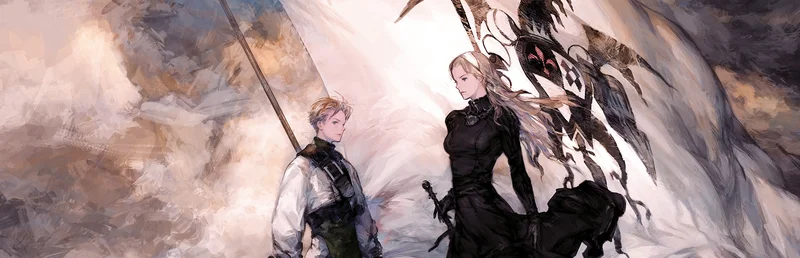
The narrative revolves around themes of ethnic strife, political games, and the cost of revolutions. The player has the agency to make choices to determine the fates of various factions. The game is very hard and doesn’t let you take the ‘easy’ way out. Compromises and wars must be made, and the titular system in the game, the Chariot system, allows players to rewind turns in battles. This might sound trivial, but it actually encourages players to adopt unconventional strategies.
We should especially comment on the World Tarot system. After finishing the game, it allows you to go to any story decision point. Meaning that you can play an alternate path without starting over. This ability makes it possible to do other story branches, which that helps the game make each playthrough feel less linear. Very few games do replayability as well as this. Readers who are interested in games that present meaningful player agency and separate narratives will find the guide to multiple endings JRPGs useful as it elaborates on the best examples of the genre.
Unlike most JRPG remakes, Trials of Mana has a different style. Typically, the original art style and game mechanics are preserved, and modern quality of life features are added, but in this case it was built from the ground up as a 3D action RPG. That's perhaps a more controversial decision between die hard fans of the original and ...remade it.
“Tactics Ogre asks questions without right answers. Reborn makes sure you hear every side before you decide.”
Trials of Mana Remake

Your party of three can be chosen from the six playable characters. Each has different mechanics and distinct playstyles, and can also be quite different through their werewolf transformations, spell cast combos, and tank skills. Each of this makes a large difference in how combat works so the composition of the party is relevant. The class system is also diversified as it branches multiple times, and this further increases the amount of playthroughs needed to explore everything, especially when combined with at least two playable characters.
The game is shorter than other games on this list, which benefits it. It has a 25-hour play time, and with the brisk pacing, every session leads to further progress. There is a post-game boss rush and a new dungeon that will test your mastery of the combat system. Many Western players never experienced this game in its original form, but its Trials of Mana Remake offers an accessible and fun way to enter a franchise that deserves greater praise.
The original Xenoblade Chronicles on Wii was a game that outgrew its hardware. The world it created was gigantic, the fighting system was system was out of the scope of what Wii was capable of, and it was story was huge as well. The Wii was just too weak to handle any of the core aspects of the game. The Definitive Edition on Switch does not reimagine the game, it stays true to its original vision, just on a console that is capable of rendering the world of Xenoblade as Monolith Soft intended.
“I expected a nostalgia trip. I got a genuinely fun action RPG that stands on its own regardless of the source material.”
Xenoblade Chronicles: Definitive Edition

The upgrade is monumental. The art for all the character models was redone to better match the style of Xenoblade 2. The environments are rendered at a higher resolution, better lighting is used, and the distance objects draw at is better as well. The UI was changed. All of these changes are better than just cosmetic changes. They will improve the experience of spending 70 hours in a massive world these changes supplemented. Gaur Plains, the Eryth Sea, and Mechonis Field go from being impressive to just beautiful.
The new chapter, (Future Connected), will help bridge the story of Xenoblade 1 and 2. The new chapter is shorter than the main game, and it is also simpler than the main game, but the new chapter will help close holes within character arcs that were felt incomplete in the previous game. The Definitive Edition also has a remastered soundtrack, and offers both the original and the newer soundtrack, this is a great addition that show respect for nostalgia along with the offer for better quality audio. The complete ranking of the Xenoblade franchise includes all entries in the line for the readers who want to go beyond and explore the series from this point.
The best remakes, such as those on the list, show three qualities that separate them from what is seen as a cash grab.
“I bounced off the Wii version. The Definitive Edition removed that barrier entirely.”
What Makes a Great JRPG Remake?
First, they have respect for the source material. They do not add where additions are unnecessary and do not remove what made the original unique. They recognize that the original players and the players experiencing it for the very first time have different but compatible needs, and they cater to both audiences without sacrificing for either.
Second, they improve accessibility without decreasing the depth. Modern UI conventions, adjustable difficulty, and quality-of-life features like auto-save and fast travel remove friction, but do not remove challenge. The games on this list are not easier than their originals. They are just smoother. The difficulty lies in the gameplay, not in the struggle with the interface.
Third, they justify their existence. A remake that adds nothing but a higher resolution is a port with a higher price tag. The remakes on this list justify their existence by providing something the original could not, whether that be a complete visual overhaul, additional content, rerecorded music, or a fundamental rethinking of how the game plays. Every one of them gives you a reason to play it, even if you finished the original years, even decades ago.
We are living in the golden age for remakes of Japanese role-playing games (JRPGs). With the HD-2D engine, developers can honor the classic pixel-art games. Persona 3 Reload is one of the many bankable games that is being remade from the ground up. The Pixel Remaster series shows that it is not always best to do something extravagant. Sometimes it is best to do something that is simple. Fix what doesn't work, improve what does work, and let the original design do the rest.
Conclusion
For new players, these remakes provide the best potential entry point for JRPGs. With these remakes, new players will have the best stories of the genre and JRPGs will become even more accessible for the genre's old players. New games will be offering something new with a few familiar characters. The games on the list show the best and most accessible side of the genre. For more examples on what to play next, the ultimate JRPG provides everything from combat system breakdowns to franchise rankings on what to play next. For a broader view of the genre, the ultimate JRPG guide covers everything from franchise rankings to combat system breakdowns.