
2026 Ranking: The Best Crafting Systems in JRPGs
Crafting systems are the backbone of a JRPG's progression layers. For thirty years, the genre has refined systems where players collect raw materials, combine them with alchemy, smithing, or synthesis, and produce items that completely alter combat builds and exploration abilities. The best crafting systems reward players for systematic experimentation, support hundreds of viable recipe combinations, and create gameplay loops that can sustain hundreds of hours of optimization-focused play outside of the game’s main storyline.
In 2026, we ranked the ten JRPGs with crafting systems that best shaped the genre. Atelier Ryza 3 ranks the highest as the current Atelier formula is the most advanced iteration of alchemy as a core loop. Final Fantasy XIV takes 2nd place as the MMO format allows Square Enix to create the most complex crafting specialization system in any JRPG. Mana Khemia and Atelier Sophie 2 are also in the top tier with their Gust-developed alchemy systems. Each game was rated in three areas: the mechanical depth of recipe and material systems, the integration with combat progression, and the crafting loop’s long-term replay value.
For the best crafting-centric JRPGs look at the following list. These are entries where asset assembly becomes a game in itself, and where the game simply ends and the credits roll is just one of many possible endpoints for an extended crafting odyssey. Our editor's 2026 ranking is a direct reflection of their extensive knowledge of crafting systems in JRPGs.
How We Ranked the Best JRPG Crafting Systems
Our editor's proprietary methodology assesses JRPGs design across three criteria, each highlighting unique design advantages. Mechanical breadth is prioritized first. The most robust systems include countless recipes for crafting that yield items classified by different qualities, each possessing distinct traits and effects that materially alter the game's combat and exploration strategy. The synthesis loop in Atelier Ryza 3 allows players to create single legendary items that can evolve throughout an 80-hour campaign and change drastically from its original form.
When it comes to evaluation of JRPGs that incorporate farming and crafting genres the boundaries become more philosophical. Atelier is the definitive franchise for crafting JRPGs as it has defined the criteria since 1997, thus multiple Atelier titles rank highly. Final Fantasy XIV is included as a hybrid MMO-RPG because of the eight specialist crafting jobs that operate as full JRPG progression systems in isolation from combat. Rune Factory 5 also straddles the farming sim genre, but for its integration of crafting and action-RPG combat, it is classified as a JRPG. These genre-defying entries are editorially focused on crafting-system innovation over genre constraints.
Lastly, progression integration. The best crafting systems are not isolated minigames. In Final Fantasy XI, crafting is integrated into the MMO economy and player-driven marketplace. Smithing in Bravely Default II is integrated with the job-mastery system that controls access to optimal builds in the late game. The synthesis system in Final Fantasy IX makes the choice of equipment more meaningful than other games due to the ability-learning system. The history of the genre referenced in our ultimate JRPG guide provides context for the crafting design philosophies found in these titles.
10. Recettear: An Item Shop's Tale (2007)
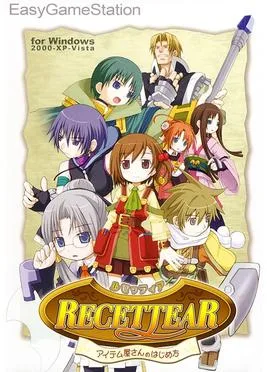
Recettear: An Item Shop's Tale is a 2007 game released by EasyGameStation, a small Japanese indie game company. In 2010, it became a cult classic after receiving its first English translation. The player is Recette, who runs an item shop, and the player must pay off her father's debt. The game features a crafting system that combines dungeon diving (to get materials) and shop management (to sell crafted items). You hire dungeon adventurers to bring back loot, and you can sell that loot, or you can turn the loot into better, more valuable crafted items. This creates an economic loop that tests your resource allocation skill over a 40 hour campaign.
The depth of the crafting system is modest, but the integration of the shop economics with the crafting system makes every recipe decision feel important and high-stakes because you can make enough money to pay rent for a week, but if you make a bad crafting decision, then you have to send another adventurer to a dungeon to get back the money you lost. This game was the first of many indie games to attempt the same shop-management JRPG hybrid, but Recettear proved that crafting systems do not need AAA budgets to make satisfying gameplay loops. It has developed a cult following over the last 19 years. This comprehensive ranking reflects editorial standards in 2026.
9. Etrian Odyssey IV: Legends of the Titan (2012)
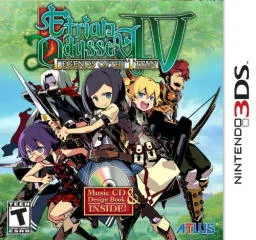
In 2012, Etrian Odyssey IV: Legends of the Titan, came out on the 3DS as the most polished entry of the dungeon crawler franchise. It's intricate crafting system is truly unique for JRPGs. Every piece of gear, whether that be an item of armor, a weapon or an accessory, is recruited by crafting from your own personal dungeon mining, looting defeated monsters, or defeating bosses as the loot is unlimited. There is no buyable or tradable gear systems, so every item is earned craft or lose.
Etrian Odyssey IV was released on the Switch in 2023 as a part of the remaster Etrian Odyssey Origins Collection which includes I and II, adding crafting systems from the original while adding features to streamline the crafting and material gathering system. Etrian Odyssey IV excels at creating a true crafting experience while still having limitations. This is why it was a pick for the collection; it expressed value of crafting systems the best. This comprehensive ranking reflects editorial standards in 2026.
8. Bravely Default II (2021)
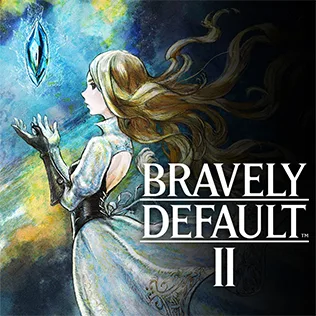
Bravely Default II released on Switch in 2021, and showcased a smithing system that integrates with what has now become standard in modern Bravely titles, i.e., job-mastery progression. In the campaign, 24 jobs become available over the course of the storyline, and to master each job, one has to invest time and resources into crafting, in addition to accruing combat experience. Each job has signature pieces of equipment that are obtained through boss drops, and which have weapon evolution paths that span multiple chapters of the campaign. The crafting system feedback loop directly reinforces the strategic depth of the brave/default combat system.
Smithing also adds depth with the puzzles of elemental affinity and weapon trait optimization, as well as the finite allocation of rare resources towards competing build directions. The campaign respects the time of players, as it is strategically designed so that players do not have to grind for materials. The Switch's hardware portability is also beneficial for crafting playthroughs, as it allows players to break their crafting into multiple sessions. The integration of crafting with job-class mastery in Bravely Default II builds enough customization depth to compete against modern Final Fantasy titles, while still maintaining the classic JRPG aesthetic that the series has continued to refine since the original 3DS title Bravely Default. This comprehensive ranking reflects editorial standards in 2026.
7. Rune Factory 5 (2022)
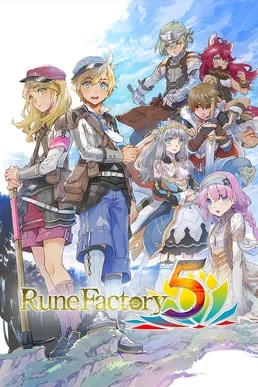
Rune Factory 5 has come out recently which adds a lot of new things to the farm-sim plus action-JRPG hybrid genre that has been developed by Marvelous since 2007. With the new release, the farming and food production, weapons, accessories, bait, and farming tool upgrades, and etc. All of the crafting stations unlock at certain points in the story and can be upgraded like an RPG. The farming sim side of the game gives the tools to create the weapons and cooking which means everything you do in the farming sim side affects your abilities in the fighting side of the game. This comprehensive ranking reflects editorial standards in 2026.
The marriage system adds to the complexity of crafting. Each spouse that you marry will give you a crafting bonus and that will be different based on the personality and skills of the spouse. There are cooking buffs that you can get from your spouse that will help you in combat. The crafting will keep things feeling fresh in the campaign which typically runs from 60 to 80 hours long. The move to 3D from 2D for the actual crafting of the game was a lot but the depth that the crafting brought to the game made it worth it. The reason that Rune Factory 5 made it in is because of the unique combination of farming, cooking, and weapon crafting which gives a crafting system that is of a higher caliber than most JRPGs.
6. Final Fantasy IX (2000)
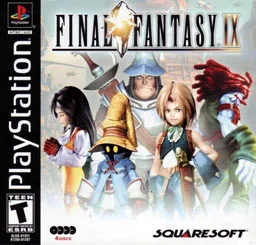
Produced by Hironobu Sakaguchi, Final Fantasy IX was released in 2000 and met with a positive response from audiences and critics alike. The incorporation of a crafting system in the game with the equipment-based synthesis system was praised. The flexibility of the crafting system allowed for engrained systems of character development, customization, and synthesis. For example, each character has to equip an item in battle to learn different mechanics. Additional powerful synthesis teacher items can also be found and crafted out of synthesis equipment (the Black Mage Village and other places). This ability to learn from the units and the combination with synthesis motivates players to synthesize and shop in every store in the game. This comprehensive ranking reflects editorial standards in 2026.
Synthesis materials, tournament rewards, and rare cards all come from the crafting metagame and compliment the Tetra Master card minigame nicely. The modern QOL features in the Pixel Remaster version add comfort to the grind associated with learning character mechanics. The equipment-based system and magic philosophy in Final Fantasy IX create and define one of the best growth systems in the franchise. The incorporation of the crafting system represents the JRPG mechanics that the game encapsulates, and the implementation has proven to be one of the strongest in the franchise.
5. Final Fantasy XI (2002)
Final Fantasy XI came out in 2002 and was Square Enix's first MMO. It also created the first definitive crafting system which would pave the way for crafting systems in JRPGs MMOs that have come out after it. Players can choose from 8 crafting professions (Alchemy, Bonecraft, Clothcraft, Cooking, Fishing, Goldsmithing, Leathercraft, Smithing and Woodworking) and each offers a unique and independent skill tree that can be leveled to mastery. It can take hundreds of hours of play to do this. The crafting system in FFXI also create a player driven economy. It offered one of the first genuine free-market experiences any game has offered. Players were able to trade through regional auction houses and to each other.
Even for modern standards, FFXI's crafting is fairly intimidating. In-order to produce optimal results from synthesis recipes, players need to have the right skill level in the right ingredients at the right time and on the right elemental day. Crafting in FFXI is a progression that takes years, and it is very casual play. Players built databases of recipes and crafting guides and these remain active reference materials for the players even 20 years after the game launched. For this reason, FFXI has earned its spot. No other JRPG has ever tried to offer crafting this scale and depth. The game is receiving content updates for 2026, which means that the crafting system is a living history project of JRPGs. This comprehensive ranking, curated in 2026, covers the genre's most influential entries.
4. Mana Khemia: Alchemists of Al-Revis (2007)
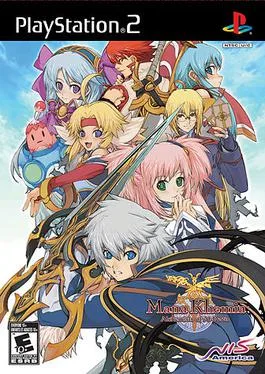
In 2007, Mana Khemia: Alchemists of Al-Revis showed us a new and unique way to create Alchemy games on the PS2. Instead of putting the player in a fantasy world where they can create potions and spells, we get to go to school to learn alchemy. Instead of using a wizard's tower, we get to use the classroom as a core system for the game. Instead of doing alchemy in a game, we do it in a school. This comprehensive ranking reflects editorial standards in 2026.
Every season of a school year has a unique set of alchemy assignments that we need in order to create the potions, spells, and weapons to go to the next part of the story. A lot of time and effort went into creating hundreds of recipes that help the player get through the various ranks of the fantasy world. Alchemy decisions made by the player cause the system to change the character's abilities. Building and creating your character to your preference changes the combat system and how the player can take advantage of each character. It's a lot better than you'd find in other entries in the Atelier series. On top of that, Mana Khemia's crafting system is a work of art.
3. Atelier Sophie 2: The Alchemist of the Mysterious Dream (2022)

Atelier Sophie 2: The Alchemist of the Mysterious Dream released in 2022 in the Mysterious Dream sub-series of the Atelier franchise. Players encounter a whimsical variety of environmental biomes and surreal character designs resulting from the game's dream-realm setting. Additionally, Atelier Sophie 2 boasts the best, most refined synthesis implementation in the franchise’s alchemy systems history. Players will use a cauldron to create different recipes with hundreds of possible ingredients and various item “quality” tiers and “combat/exploration” related traits that will affect overall combat and exploration outcomes.
Sophie's alchemy systems will produce synthesized items with relevant traits that genuinely impact combat/exploration outcomes, and from a deep synthesis mechanics perspective, the alchemy systems will not feel punishing, nor will they be excessively present. Players experienced the removal of time limits from previous entries with sketch loops, and without limits, Anna offers a meditative loop experience that Atelier players will appreciate. JRPG players have marveled at the industry’s brightest pastels and anime aesthetics while experiencing the franchise’s Atelier Sophie 2 deep synthesis mechanics. JRPG Atelier Sophie 2 embodies the Atelier franchise’s formulaic modern refinement pinnacle. This comprehensive ranking reflects editorial standards in 2026.
2. Final Fantasy XIV (2010)
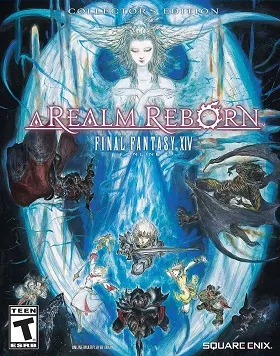
Though originally released in 2010, Final Fantasy XIV has now released one of the most in-depth crafting systems in any JRPG with its 2013 re-launch A Realm Reborn. In the game, there are eight Disciples of the Hand specialist crafting subclasses all with their own unique job quests, skill trees, and end game content. Each of these subclasses (Carpenter, Blacksmith, Armorer, Goldsmith, Leatherworker, Weaver, Alchemist, and Culinarian) are implemented in a way so that players can lvl all of them, up to max lvl, simultaneously which promotes a crafting completionist playstyle that can easily span thousands of hours. With regards to the crafting system, depth includes, and is not limited to: ingredient quality variance, Master Recipe systems that gate higher level recipes behind a player optimized crafting rotation, and multi-step recipes that require the craft of more intermediate items before the targeted component can be made. Disciples of the Land (Botanist, Fisher, Miner) offer all of the raw materials that are needed by the crafting specialists that help to drive the economy of the game make it even better. Even more crafting-focused content will be added with Endwalker, Dawntrail, and the other upcoming expansions. With unparalleled depth in the crafting systems, it’s easy to see why Final Fantasy XIV deserves to be second on the list. It has been a pleasure to see how the other JRPGs have been inspired by the rich crafting in this game. It is also reflected in our JRPG postgame content guide. With Final Fantasy XIV, crafting is a game within a game. This comprehensive ranking reflects editorial standards in 2026.
1. Atelier Ryza 3: Alchemist of the End & the Secret Key (2023)
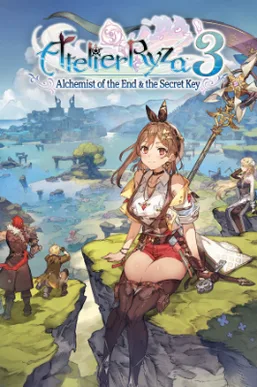
Atelier Ryza 3: Alchemist of the End and the Secret Key launched in 2023, finishing an Atelier trilogy full of fan-favorite titles with an engrossing take on its alchemy system. With the most expansive hometwon of the three with the city of Kurken Island, players can explore four huge interconnected open worlds, each filled with even more synthesis ingredients than ever before. Players can even experience item evolution chains, in which they can take the same signature item through the entire 80-hour campaign and synthesize it into a basic legendary artifact through selecting the required ingredients. This comprehensive ranking reflects editorial standards in 2026.
The synthesis system is incredibly deep and contains hundreds of elements that can produce synthesized items of differing qualities and even stats. Players can experience trait propagation, system keys, and other modifiers to raid, explore, and complete quests in order to obtain the rare crafting modifiers to unlock certain controls. New to the series, real-time-with-tags battles allows players to control a craftsman and tag teammates in order to swap with any of the six selected members and utilize items to gain resources. Atelier Ryza 3 also pays homage to the Atelier Iris trilogy (2004-2006) and its 3D-alchemy, as well as the indie Moonlighter (2018) which combines crafting with shopkeep mechanics. It features a beautifully-designed open world to explore, which creates a modern masterpiece of the series.
Our ranking of jrpgs with multiple endings gives more context on multi-ending jrpgs that usually pairs with crafting completionism.
How JRPG Crafting Systems Actually Work in Practice
Top-tier JRPG crafting systems have their own unique design language. These systems have changed and developed over the years, but players who understand the mechanics will understand why some implementations are enjoyable while others are simply boring inventory management tasks. Here, we discuss what exemplifies the core design elements of crafting systems using examples from the ranking countdown and titles that shaped the genre from outside the boundaries of crafting systems.
An integral part of any crafting-focussed JRPG is the resource collecting economy. Atelier Ryza 3 has the most active resource collection across the whole campaign because the quality of crafted items scales to the quality of collected materials. Unlike other crafting-focused JRPGs, Atelier Sophie 2 has inventory management as a gathering system, while Rune Factory 5 has seasonal collection windows gate unique recipes and material collection. Unlike other crafting JRPGs, those where crafting mechanics are bolted onto the adventure systems, critical crafting systems include a gathering loop to create the meta-game pacing. See best JRPG magic systems for related resource economy patterns for wider cluster mechanic context.
The RNG layers and quality grades system provide a risk-reward mechanism for each synthesis attempt. In the Atelier series, starting from positions one and three, each game features a 5-star quality tier system in which crafts that reach a certain quality successfully create a chain of additional effects (i.e. bonuses) that lower qualities would lose access to. The position four entry, Mana Khemia: Alchemists of Al-Revis, is credited with being the first to implement the trait inheritance system, where synthesized ingredients traits are passed on to the resulting item based on player synthesis skill and dice roll system. In modern indie games, taking a deterministic approach to crafting by following a recipe is referred to as input selection strategically, and this mechanic is often referenced in the design of alchemy systems. For contextualized references to related systems within Square Enix franchises, see the best Square Enix JRPGs for related design lineage.
The enchant and imbue systems expand crafting beyond making items to include Final Fantasy IX’s (position six) Synthesis Shop, where players can take existing pieces of equipment and combine them with additional materials to make new ones, and the weapon job-tag imbuing mechanic of Bravely Default II (position eight) that adds further complexity by changing which classes can equip certain weapons. This system integrates with the weapon-locked progression discussed in the best JRPGs with class systems which emonstrate a combination of class and gear systems to define role flexibility.
Disassembly and Extraction (D&E) of items disrupts the normal crafting flow from parts to completed items by reversing the process. For example, in Recettear: An Item Shop's Tale, players can break down shop inventory into materials to help in new crafts, creating a closed loop novel to the retail-management JRPGs. In Final Fantasy XIV, the game is able to utilize a mechanic called desynthesis. This means that players can break down high level equipment for crafting tokens, and this technique provides resource flexibility unlike pure-create systems.
The addition of durability and repair systems adds a layer to the maintenance gameplay that is associated with equipment. The original version of the MMOs, Final Fantasy XI, applied the first style of MMO durability where crafted weapons needed to be repaired through a dedicated NPC interface, or by consuming an item. This style creates a demand for crafting that supports player economies over time. Many modern action RPGs use the multi-end system design with a style of play within the game where durability can be a decisive factor in reaching certain endings.
Crafting is often integrated with questing NPC goals to make it seem less like optional gameplay. In Etrian Odyssey IV, players can access guild-board commissions where they are required to deliver a crafted item of specific quality which ultimately creates a configuration of quest completion that is dependent on the depth of the crafting system. This same design is utilized throughout the JRPG genre and is especially prominent where narrative delivery of a crafted item becomes more significant than a menu-driven task.
Set bonuses and synergy patterns give players incentive to craft and commit to a theme. Atelier Ryza 3 Elemental's positional synergies give all party members buffs when the same elemental gear is crafted for every piece, and Final Fantasy XIV Set Bonuses allow players to access certain spells when specific gear is equipped. This creates a need to build beyond just stat optimization and most modern HD-2D games use this for streamlined party building. For an in-depth look at how crafting systems evolved from the SNES era to the current Atelier era, consult the history of JRPGs for complete details.
Honorable Mentions for JRPG Crafting Design
The titles listed in the countdown above emphasize the importance of crafting in the main gameplay loop instead of just making crafting an incidental part of the game. Many titles that are craft-centric in a historical context have also significantly contributed to the crafting design in ways that cannot be captured by the ten-position listing. This may be due to their platform's limitations, the audience's niche focus, or the fact that their design philosophy has been absorbed by other newer titles already on the main list.
Atelier Iris: Eternal Mana, on the PlayStation 2, is the first game to bring the Atelier series to the West. It introduced the series’ modern alchemy system, which has been used in all following Atelier titles. While Gust's pre-Iris Atelier titles were only released in Japanese, Atelier Iris established the alchemy system that all future Atelier titles refined. It has also been suggested that the most recent Atelier games released at positions one and three inherit synthesis from Atelier Iris. For a visual shopping list on how Atelier's pixel art era has evolved, see best pixel art JRPGs for related visual tradition coverage.
Star Ocean: Till the End of Time on PlayStation 2 featured a unique Item Creation system where random party members could break the game by crafting items that led to enemies being overpowered. This created legendary speedrunning communities devoted to exploiting the system, which also inspired many of the later tri-Ace games including Star Ocean: The Second Story R. Later Star Ocean entries also incorporated social link mechanics for broader Persona-style social system intersections, which are discussed in all ranked Persona games.
Wild ARMs 3 on PlayStation 2 implemented the personal Skill system, which gave players the opportunity to construct their characters in a unique way due to the class assignment system. This gave each character different crafting skills, which in turn affected the player's party composition choices. This system also found its way in Wild ARMs 4 and 5, but with some refinements, which furthers the Wild ARMs franchise's unique crafting design lineage that falls outside the Atelier and Final Fantasy crafting systems. As for the Wild ARMs series, it also relates to the sprawling franchise-wide context that has been discussed in every ranking of Final Fantasy games, as the series' developer Sacnoth has design veterans from Squaresoft.
The Item World system, implemented in the Disgaea franchise across many platforms, allows players to enter their created items in order to level the items up through battling and grinding. This system allows for endless vertical progression, which allows Disgaea to break free from the traditional temporal limits of most JRPGs. The Item World system has been adopted by many indie games, and its mechanics are even seen in the most anticipated JRPGs of 2027.
The Atelier series has one of the most expanded craft systems in the history of JRPGs. Since 1997, Gust has published over twenty Atelier games, and the series has progressively evolved systems of synthesis, gathering, and overall economy that the rest of the genre continues to cite. The most anticipated JRPGs of 2027 will cover the Atelier series' crafting systems and the rest of the the genre's evolving systems.
For broader genre context on related mechanical patterns, see best JRPGs with job class systems.
For broader genre context on related mechanical patterns, see best JRPGs with multiple endings.
For broader genre context on related mechanical patterns, see every Final Fantasy ranked.
For broader genre context on related mechanical patterns, see every Persona game ranked.
For broader genre context on related mechanical patterns, see jrpgs with the best stories.
The JRPG Crafting Renaissance Continues
The primary characteristic unifying these ten games is their recognition that crafting as an activity deserves its own layer of gameplay design. Instead, it is relegated to a menu option that facilitates killing things. The best JRPG crafting systems incentivize multiple forms of experimentation and allow for a plethora of alternative viable build paths through ingredient and recipe combinations, and ultimately, these systems reward players with a form of meaningful long-term progression that extends beyond the main storyline. Atelier Ryza 3 is the most modernized and contemporary game that achieves all three objectives, all while maintaining the Atelier series's signature cozy aesthetic developed over the brand's 26-year history.
The recommendation for people just starting to dive into crafting JRPGs is very clear. Atelier Ryza 3 is the modern template for the genre, and Atelier Sophie 2 is next for a more focused experience on alchemy, then for crafts, Final Fantasy XIV is the deepest workshop specialized crafting system any JRPG has released, and for an alchemy setting with an academic theme, go for Mana Khemia, and if you want crafting alongside traditional job-class mastery, go for Bravely Default II. The other entries reward exploration once you have established what specific crafting mechanics resonate with you most.
For additional context, refer to our best postgame content to see the other JRPGs that have crafting as a main game loop. For additional JRPGs that this curated 2026 list relates to, check our ultimate JRPG guide. This comprehensive ranking reflects editorial standards in 2026.