
I've spent an embarrassing number of hours staring at job menus. Not job listings — job systems. The ones where you turn your knight into a monk, your monk into a dragoon, and your dragoon into whatever unholy hybrid the game lets you get away with. There's a specific dopamine hit when a JRPG hands you a grid of classes and says "go nuts." These twelve games gave me that hit the hardest.
The job system — sometimes called a class system, vocation system, or license board depending on who made it — is one of the genre's oldest and most satisfying mechanics. It lets you customize your party beyond just equipment and stats. You're choosing identities. Playstyles. Entire philosophies of how to approach combat. And the best ones let you break them wide open. Here's where to start. Updated for March 2026.
For platform-specific JRPG guides, see PS5, Switch, Steam, Xbox, PS4, PS2, PS1, SNES, PSP, GBA, DS, 3DS, and Vita. The JRPG tier list ranks games cross-platform, and the best RPGs of all time covers the genre's peaks.
12. Dragon Quest III HD-2D Remake
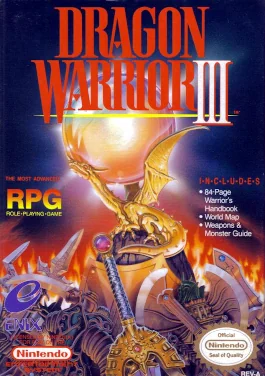
The one that started it all. Dragon Quest III introduced the vocation system back in 1988, and the HD-2D Remake (2024) proves the core idea still holds up. You build a four-person party from scratch — warrior, mage, priest, thief, merchant, and more — then unlock the ability to change vocations at Alltrades Abbey while keeping learned skills. Simple by modern standards. But there's a reason every job system since owes this game a debt. The HD-2D visual treatment makes grinding vocations really pleasant, and the satisfaction of creating a party that's entirely yours hasn't aged a day. I always end up making my hero a sage by endgame. Every single time.
Source: Square Enix / Artdink via Steam
11. Final Fantasy III Pixel Remaster
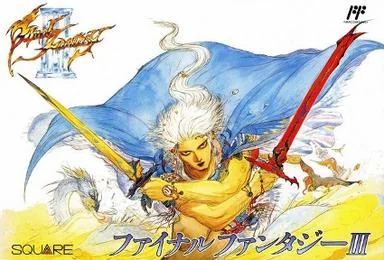
Final Fantasy III was the first FF to let all four party members freely swap between jobs. The original Famicom version punished job changes with a transition penalty — your stats tanked for a few battles after switching. The Pixel Remaster removes that, making experimentation painless. Twenty-three jobs ranging from the basic (warrior, black mage) to the iconic (dragoon, scholar, devout) give you enough variety to rebuild your party for every dungeon. The game practically demands it. Certain bosses are designed to punish specific setups, so hoarding one team comp gets you killed. It's rigid in a way that forces creative thinking. Scholar is secretly the best job in the game. Fight me.
Source: Square Enix via Steam
10. Etrian Odyssey Origins Collection

Etrian Odyssey doesn't give you characters. It gives you a guild roster and says "staff it yourself." Pick from classes like Landsknecht, Protector, Medic, Survivalist, Alchemist — each with branching skill trees that let you specialize further. Your party of five is entirely your creation, and the dungeon mapping is entirely your responsibility. There are no NPCs telling you where to go. No quest markers. Just you, your custom party, and a labyrinth that wants to kill all of you. The Origins Collection bundles the first three games remastered for Switch, and the class variety across all three is staggering. I lost a 15-hour party to a FOE on floor 3 once. Built a better team. Went back. Beat it. That's the loop.
Source: Atlus via Nintendo Switch
9. Disgaea 5: Alliance of Vengeance
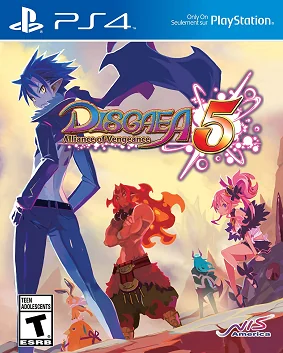
Disgaea doesn't have a job system. Disgaea IS a job system. Over 40 humanoid classes and 30+ monster classes, all unlockable through class mastery and stat thresholds. Your characters can reincarnate into new classes, carrying over learned skills and stat bonuses. The level cap is 9999. Damage numbers reach the billions. You can throw characters into other characters. It's completely unhinged, and the class system is the foundation of the entire absurdity. Want a healer who punches harder than your fighters? Reincarnate your cleric five times with carry-over fist skills. Want a mage who never dies? Stack defensive evilities from three different warrior classes. Disgaea 5 specifically has the cleanest UI and most accessible progression loop in the series. It's also 200+ hours if you touch the postgame. You've been warned.
Source: Nippon Ichi Software via Steam
8. Fire Emblem: Three Houses
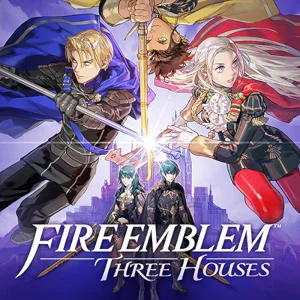
Three Houses turns the Fire Emblem class system into a school curriculum. Your students train in weapons, riding, magic, and flying — and when their skill levels are high enough, they can certify into new classes through exams. Fail the exam? Wasted certification seal. It adds a layer of planning that most Fire Emblem games skip: you're not just promoting units, you're educating them. Do you push Bernadetta toward Bow Knight for her crest synergy, or detour through Pegasus Knight for the movement? The hybrid classes at Master tier — Holy Knight, Mortal Savant, War Master — reward creative skill investment. And because Three Houses has three (technically four) separate campaigns, you get to experiment with different builds across multiple playthroughs. My Golden Deer run turned Lysithea into a Dark Knight who one-shot everything. No regrets.
Source: Intelligent Systems / Nintendo via Switch
7. Octopath Traveler
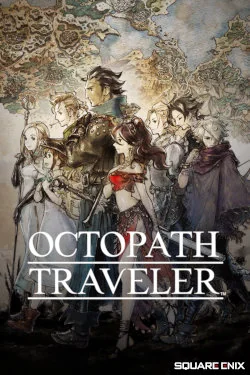
Eight characters with fixed primary jobs — scholar, warrior, cleric, thief, dancer, apothecary, merchant, hunter. Nothing special yet. But then you find shrine altars that unlock secondary jobs, and suddenly every character can dual-class. Stick scholar on your cleric and she gains elemental attack spells to complement her healing. Give your thief the hunter job and he gets bow attacks plus the ability to steal after capturing monsters. The break-and-boost combat system makes job pairings matter more than raw stats. Stacking the right weapon types to break enemy shields, then boosting a multi-hit skill for maximum damage — it's turn-based combat at its most satisfying when your job loadout supports the strategy. The Steam version runs beautifully. The HD-2D art makes everything look like a diorama you want to live inside.
Source: Square Enix / Acquire via Steam
6. Octopath Traveler II
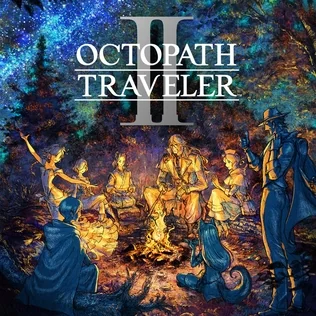
Everything Octopath 1 did, but better. The secondary job system returns with new base classes — inventor, armsmaster, conjurer, arcanist — that are hidden behind optional boss fights instead of sitting in open-world shrines. You earn them. The latent ability system (a character-specific super meter) adds another layer to job planning: some latent abilities synergize with specific secondary jobs in ways the game never tells you about. You just have to experiment. Temenos as a scholar with his latent ability to break any shield? Game-breaking. Osvald stacking elemental damage from arcanist skills? Bosses evaporate. The character stories are also dramatically better — actual crossover moments between the eight protagonists that the first game lacked entirely. If you're picking between the two, start here.
Source: Square Enix / Acquire via Steam
5. Final Fantasy XII: The Zodiac Age
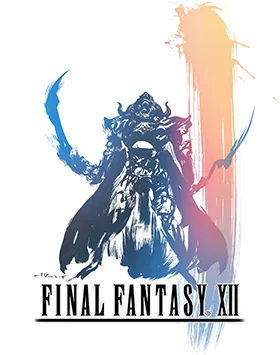
The original FF12 had one license board for everyone. The Zodiac Age gives each character two jobs from twelve options — and those twelve boards are different enough that the combination matters enormously. Assign Uhlan and Time Battlemage to the same character and they get access to heavy armor plus time magic plus spears. Pair Red Battlemage with Archer for a ranged healer who can also cast dark magic. The combinations create 66 possible dual-job setups per character, and since you have six party members, no two playthroughs need to look alike. Factor in the Gambit system — programmable AI conditions that automate your party's behavior — and you're practically building both the characters AND their decision-making logic. It's the closest a JRPG has come to feeling like actual party management. The PS5 version runs at a locked 60fps with the speed-up toggle that makes grinding license points painless.
Source: Square Enix via Steam / PS5
4. Tactics Ogre: Reborn
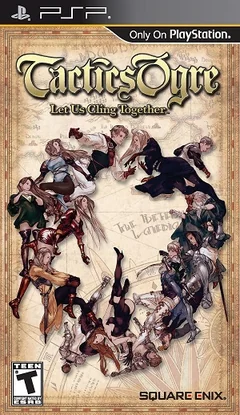
Tactics Ogre invented the tactical RPG class system before Final Fantasy Tactics existed. The Reborn remaster (2022) modernized the mechanics without losing the depth. Classes level independently from characters — your knight is level 15, your wizard is level 12, and switching between them means adapting to their current power level. It prevents the "overleveled freelancer" problem that plagues other job systems. You have to invest in each class separately. The Chariot system lets you rewind turns mid-battle to try different approaches, which means you can experiment with riskier class setups without fear. And the branching story — your moral choices determine which characters join, which die, and which classes become available — ties the job system to the narrative in a way no other game in this list attempts. Heavy. Brilliant. Undersold.
Source: Square Enix via Steam
3. Bravely Default II
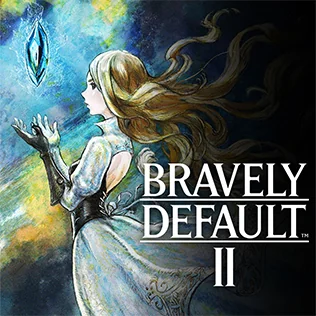
The Bravely series exists because someone at Square Enix asked "what if we made a new game that was just the Final Fantasy V job system with modern graphics?" Bravely Default II has 24 jobs, each earned by defeating asterisk holders — boss fights where you actually steal the job from the person using it against you. Every job has its own ability tree, and you can set one primary job (for stat growth and weapon proficiency) plus one secondary job (for borrowed abilities). The Brave/Default system — banking or spending turns in advance — turns every job combination into a risk calculation. Do you Default for three turns to stack a quad-Brave burst of dragoon jumps? Or do you play it safe with steady white mage heals? The game rewards min-maxers and gamblers equally. I beat the secret boss by stacking Freelancer's "Late Bloomer" passive with Phantom's evasion. Took me four hours to set up. Thirty seconds to execute. Worth it.
Source: Square Enix / Claytechworks via Switch
2. Final Fantasy Tactics: War of the Lions
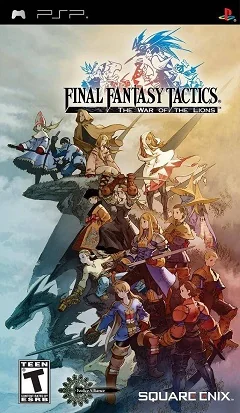
Twenty base classes plus special character-specific jobs. Ability learning through JP earned in battle. Cross-class skill inheritance that lets you build nightmares like a Monk with Knight swords, or a Summoner with Chemist item usage. Final Fantasy Tactics doesn't just have a job system — it has a job ecosystem. The requirement chains force you to plan ahead: you can't become a Ninja without first mastering Thief and Archer. Can't become a Samurai without Knight and Monk. Each promotion path feels earned, and the skills you pick up along the way define your unit's identity long after they've moved past the source class. And then there's the Calculator. A class that casts any spell instantly, for free, targeting based on mathematical conditions like "all units whose level is a multiple of 4." It's absurd. It breaks the game. I refuse to play without one. Still one of the best RPGs ever made, twenty-eight years later.
Source: Square Enix via PSP / Mobile
1. Final Fantasy V

This is the one. The job system that every other game on this list is either inspired by, reacting to, or trying to surpass. Final Fantasy V gives you 26 jobs — the deepest roster in any mainline FF — and lets every character equip abilities learned from ANY mastered job. Master Black Mage? Now any character can equip "Black Magic" as a secondary command regardless of their current job. Master Monk? "Barehanded" turns your mage into a fistfighting spellcaster with monk-tier attack power.
The combinations are endless and often hilarious. Chemist's "Mix" command with Freelancer stats. Dual-wielding Rangers with Rapid Fire. Mime copying your most powerful ability for zero MP cost. FFV understands something about JRPGs that its more story-driven sequels forgot: the system IS the fun. The characters are thin. The plot is charming but simple. None of that matters because you're too busy figuring out whether White Mage plus Mystic Knight plus Samurai's "Shirahadori" counter-evasion is the optimal combo for the next boss (it is). The Pixel Remaster on Steam is the definitive version. I've replayed it more than any other Final Fantasy. It's not even close.
Source: Square Enix via Steam (Pixel Remaster)
Honorable Mentions
Persona 5 Royal's Persona fusion is technically a class system — fusing monsters to inherit skills and fill Arcana slots functions like job mastery. Xenoblade Chronicles 3's class inheritance across seven characters creates one of the deepest party-building systems on Switch. Dragon Quest IX on DS let your entire party reclass infinitely, and the postgame grotto crawling with optimized vocation builds is still legendary. And if you go really old school, Dragon Quest VI's dual-vocation mastery predates most modern implementations.
The job system endures because it solves the same problem every JRPG faces: how do you keep combat interesting for fifty hours? The answer is choice. Give players real choices about who their characters become, and the combat stays fresh because the player is always building toward something. These twelve games figured that out better than anyone else. Your party, your rules.
All images are official promotional materials sourced from their respective publishers. Final Fantasy V, III, XII, Tactics — Square Enix. Dragon Quest III — Square Enix / Artdink. Bravely Default II — Square Enix / Claytechworks. Octopath Traveler I & II — Square Enix / Acquire. Tactics Ogre: Reborn — Square Enix. Fire Emblem: Three Houses — Intelligent Systems / Nintendo. Disgaea 5 — Nippon Ichi Software. Etrian Odyssey — Atlus. All trademarks belong to their respective owners. Published March 25, 2026.
The battle systems ranking analyzes combat design, the soundtracks ranking covers the music, and the JRPG meaning guide explains the genre's roots. For shorter RPGs under 20 hours, that guide has options. The 2026 recommendations page has fresh picks.
Job System Design Mechanics That Define the Genre
AP mechanics, JP requirements, class resets, and more are all examples of resource systems within a job system. Each of these mechanics requires players to invest both time and effort, crafting an ecosystem that serves as the foundation of job systems. The resource systems evolve and refine player engagement, creating the enjoyable resource management game in contrast to less engaging systems that often feel like players are just navigating menus. The purpose of this section is to explore the systems that have evolved throughout JRPG history, and to examine how influential systems in the genre have been defined.
Every job system in JRPGs has some sort of resource economy. This has been perfected, and pioneered in the job system in the top JRPG game: Final Fantasy V. This game introduced AP-per-job mechanics where players earn ability points tied to the job currently equipped. This encouraged players to stay in weaker classes to gain AP and advanced skills. The game that has taken the place of Final Fantasy V is Final Fantasy Tactics: War of the Lions. It introduced a more refined system with JP gating that required players to grind in order to gain certain skills. This resource-based economy, and the class reset system that many modern JRPGs have become dependent on, offers what many consider a meta game in JRPGs with job systems.
The flexibility to change classes anywhere is what separates advanced job systems from basic class assignments. In Final Fantasy III Pixel Remaster ranked eleven, there were mid-dungeon job changes to adjust to the strategy, and Final Fantasy V expanded this by allowing class changes to be done at no cost at any save point. These job changes lead to the tactical depth of character customization based on specific needs for an encounter rather than being locked to a specific build for the whole game. Bravely Default II ranked three uses the most advanced version of this by allowing any job combination to be tried out in a battle through a quick menu which also greatly changes how players engage with the system compared to systems where you have to make a commitment.
The models for how unlock progression trees work vary significantly in the genre. Octopath Traveler ranked seven has job shrines where you discover advanced jobs by exploring the overworld which integrates job unlocking with environmental exploration. Etrian Odyssey Origins Collection ranked ten has a guild-management system where the player can create characters in certain class slots, and those characters can be retired and replaced. Disgaea 5: Alliance of Vengeance ranked nine has the largest unlock tree with hundreds of class transformations available through reincarnation which extends the game into hundreds of hours of optional grinding. For a deeper look at unlock progression in relation to crafting and equipment systems in the genre see best JRPG crafting systems for related mechanics.
Multi-step progression chains create the most powerful builds in the genre behind class transformations. In Final Fantasy Tactics: War of the Lions, you need to unlock both Squire and Chemist before any other job can be accessed, and then it takes an additional 40+ hours of grinding to unlock the Ninja and Calculator jobs, as they have 5 and 6 class requirements, respectively. At position 12, Dragon Quest III HD-2D Remake uses the Dharma Temple class change system, which the original NES design has influenced every subsequent Dragon Quest job system. In the technique, long-term build commitment can be seen, which is a stark contrast to the flexible resetting mechanics described earlier.
Title's that want narrative differentiation may implement unique character class assignments, where specific classes are restricted to certain characters. At position 8, Fire Emblem: Three Houses gates the Dancer class to one recruitable character, and Tactics Ogre: Reborn at position 4, puts a similar restriction on the Lord class to the protagonist Denam Pavel. This mechanic creates roster decisions, as parties must be built around the scarcity of certain classes instead of freely assigning any class. This scarcity intersects with the multiple-route end design seen in the best JRPGs with multiple endings, as character-specific class access often creates endings that are locked behind specific characters.
In some games, class restrictions are determined by gear instead of by job assignments. In position five, Final Fantasy XII: The Zodiac Age uses license boards to create a system where weapon categories, and particular accessory slots, define and restrict jobs, thus creating a system where class selection both determines and restricts part of the equipment loadout. This mechanic intersects with wider genre patterns seen in best pixel art JRPGs, where sprite class indicators signal the current state of the job-engagement system.
The JRPG Job System Continues to Evolve
The job system genre has seen the release of new entries that refine the system's core design instead of replacing it altogether. Take Square Enix’s Final Fantasy XVI, which has moved away from traditional job systems to use action-combat systems. However, the Final Fantasy IX Pixel Remaster will return to the classic job inheritance system. Following the commercial success of Octopath Traveler II, Square Enix will continue to invest in HD-2D job-system titles. Furthermore, Dragon Quest XII will reportedly build on the dual-class hybrid system found in Dragon Quest XI by adding new combination tiers.
The HD-2D revival has motivated developers to create deeper systems with job systems in mind. Commercial success with Octopath Traveler II provided incentive to create more complex systems with integrated narrative. Using an easily understood interface, the ability to integrate narrative and UI design allowed commercial success. With an extension of the flexible job-swap mechanic with Bravely Default III, this release rumor could help establish an overall job system genre. The independent scene continues experimenting with job system variants as seen in Chained Echoes and Sea of Stars. The former allowed more focused builds with its hybrid system than the traditional FF V-style total flexibility offered. The latter used a simplified model rather than full jobs but maintained the AP-per-skill economy grind. For genre history that contextualizes how job systems developed alongside other JRPG mechanics, see history of JRPGs which covers the SNES era when Final Fantasy V crystallized the canonical job system template.
For context across franchises on why Square Enix is linked with the job system design tradition, best Square Enix JRPGs provides coverage of the publisher's entire catalog, including the titles not in this countdown that impact job system evolution, including Persona-style social link mechanics that integrate with job systems via party member specialization. Franchise-wide ranking exists in every ranked Persona game. JRPGs with the best narratives and most elaborate mechanics are the ones where the story ambition equals the narrative. For calendar-coverage of announced job-system titles, track the genre for the following year with most anticipated JRPGs of 2027 for upcoming releases.
For broader genre context on related mechanical patterns, see best JRPG magic systems.
For broader genre context on related mechanical patterns, see every Final Fantasy ranked.
For broader genre context on related mechanical patterns, see every Persona game ranked.
For broader genre context on related mechanical patterns, see jrpgs with the best stories.