
This primary ranking of JRPGs in 2026 looks at JRPGs that have incorporated branching narratives and developed an entire design philosophy around them. With multiple endings, a single playthrough can become a multi-dimensional puzzle. Each decision in the game such as conversations, recruits, or the makeup of the roster can alter the game’s outcome in ways that are unanticipated. The five ending multiple system philosophy is what distinguishes a 60-hour campaign to an 180-hour obsession for a completionist. This comprehensive ranking reflects editorial standards in 2026.
Across 30 years of JRPGs, this list tries to rank the top 10 JRPGs with multiple ending systems that have had the greatest impact on the genre. In 1995 with Chrono Trigger, Thirteen endings based on New Game Plus timing, set the standard. Lady A through Z of NieR: Automata took it further with twenty-six possible endings. Persona 5 Royal reinforced the idea with the true ending that completely changes the meaning of the campaign. Each game was assessed on three criteria. The narrative meaning the payoff and reward and the overall system of the endings the game provided. p>
If you are trying to find some of the finest JRPGs that value and respect having multiple playthroughs, you need look no further than the upcoming ranking. These are games where there are many different points and endings in the story where the gameplay is completely different than what the developers intended. In 2026, look for the ranking to come out for the best JRPGs to have multiple endings.
How We Ranked the Best JRPGs With Multiple Endings
Multi-ending JRPGs are reviewed by our editors using three categories related to design. The first is mechanical sophistication. The best systems provide branching outcomes based on player actions and not on cutscene triggers. An example is NieR: Automata, which has 26 endings. These include gag endings that are tied to specific combat scenarios. Another example is Chrono Trigger, which has 13 endings. These are determined by which New Game Plus playthrough is finishing before defeating Lavos.
Narrative payoff is just as important. Each of the three main endings in Persona 5 Royal (bad, true, third semester) are based on different philosophical perspectives of the story as told by the author. In Suikoden II, there is a true ending that becomes accessible once all 108 Stars of Destiny are recruited. Collecting characters as a Narratively meaningful objective. The best multi-ending JRPGs not only create branching outcomes in the story, but also provide a greater overall perspective on the characters and themes involved.
Lastly, there is respect for the replayability investment. The best games in this category award players for playing the game multiple times by providing a different experience each time. For example, Star Ocean: The Second Story R has a personality system that creates over 100 different ending possibilities and Steins;Gate has a time-loop ending that is one of six core endings. Each ending is based on player interactions with a specific phone trigger. For a complete overview of the JRPG genre, check out our ultimate JRPG guide which highlights the history of branching narratives in the genre. This comprehensive ranking reflects editorial standards in 2026.
Genre boundaries become philosophical when ranking multi-ending JRPGs. The list below includes Steins;Gate as a visual novel hybrid that earned JRPG categorization through its phone trigger system and decision-tree mechanics that genuinely function as gameplay rather than pure narrative selection. The World Ends with You similarly straddles the action-RPG line but its character development progression and Reapers' Game world structure align it with classical JRPG design philosophies. Both inclusions are intentional editorial choices that prioritize multi-ending innovation over rigid genre purity.
| Rank | Game | Endings | Year |
|---|---|---|---|
| #1 | Chrono Trigger | 13 | 1995 |
| #2 | NieR: Automata | 26 (A–Z) | 2017 |
| #3 | Persona 5 Royal | 3 | 2019 |
| #4 | Nier Replicant | 5 (A–E) | 2010/2021 |
| #5 | Final Fantasy Tactics | 2 + true | 1997 |
| #6 | Steins;Gate | 6 | 2009 |
| #7 | Star Ocean: Second Story R | 100+ combos | 2023 |
| #8 | Suikoden II | 2 + true | 1998 |
| #9 | The World Ends with You | 2 + secret reports | 2007 |
| #10 | Tactics Ogre Reborn | 3 routes + true | 2022 |
10. Tactics Ogre Reborn (2022)
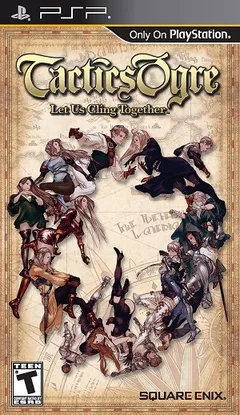
The remaster of Tactics Ogre Reborn released in 2022 and serves as a modern remaster of a 1995 Super Famicom title. The Law, Neutral, and Chaos alignment system enables players to experience three fully separate journeys with protagonist Denam Pavel as he sides with differing political and military factions. Each journey comes with its own set of recruitable characters, mid-game battles, and end-game conditions that drastically alter the outcome of the Valerian Isles.
The Reborn remaster incorporated the “World” system which allows players to replay specific chapters of the story and make alternate decisions. This serves to create a full understanding of the flow of the campaign in regard to the various branching endings the game presents. In addition to the three main endings, the post game content Palace of the Dead must be completed in order to obtain the game's true ending. Tactics Ogre Reborn maintained the multi-endings present in the original 1995 title but modernized it with addition of new quality of life features that honor the players investment in doing multiple playthroughs of the game. This comprehensive ranking reflects editorial standards in 2026.
9. The World Ends with You (2007)
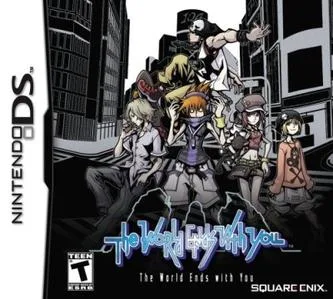
World Ends with You is a game that came out in 2007. It was a brand new experiment for Square Enix in the Japanese Role Playing Games. It had a multi-ending structure that gained a cult following for completionist gamers. The main story takes place in a Parallel Universe Realm that is called the Reapers' Game. You have seven days of game time to finish the main story. To finish the true story though requires post-game play to find the Secret Reports. Secret Reports vary in number and tell the story from different perspectives that the main story doesn’t tell. Each report requires the completion of different challenges and there are 24 Reports total. You must read all of these reports to unlock the complete story.
There are mobile and Switch port versions of the game that have The New Day. This is an epilogue that creates a bridge to the sequel game Neo: The World Ends with You. The combat pin-badge system is also very fun and encourages replaying the game several times to try all of the different combat styles. The game also has random shops called Stride Cross that add complexity to the game when combined with the food digestion system and the optional dialogue that these end game systems create. This is why The World Ends with You deserves to be called a game with multiple endings. It has Secret Reports, a New Day, and different pin-badge styles that all come together to reward gamers for the time and dedication required to unlock everything that the game makers have put into the game. This comprehensive ranking reflects editorial standards in 2026.
8. Suikoden II (1998)
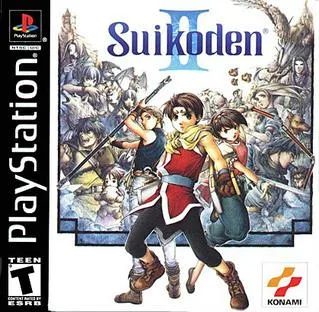
When Suikoden II was released in 1998 for PS1, it became one of the most loved JRPGs, and it is still loved to this day. One of the reasons the game is held so highly among other JRPGs is because of the incorporation of a recruitment system and how it is tied to the true ending of the game. Simply put, the main story ends after the protagonist, Riou, defeats the main antagonist, Luca Blight, who is also the war story's primary antagonist. However, if a player recruits all 108 characters, they are awarded the true ending, where Riou and his best friend, Jowy, have a reconciliation scene. To me, this scene was completely worth the 50 hours of playtime it took to get there.
Regarding the recruitment system, other JRPGs have copied Suikoden II for their character recruiting systems. These recruits are characters of all trades and come from all parts of the Dunan region. Some of these characters are chefs, detectives, and military strategists. These characters may have other job titles, but those are just a couple of examples. Each of these characters can only be recruited if certain story progression milestones are met or if certain quests are completed. Because of this system, it has become necessary to have multiple playthroughs of Suikoden II to recruit all the characters. Each character can only be recruited once per playthrough, and it wouldn't be any fun to go through the story more than once without it. The Suikoden I and II HD Remaster came out in 2025 and was able to modernize all of the recruitment systems from the original game. Now players who never had a working PlayStation can also get the true ending like everyone else. Since the release of Suikoden II, many other JRPGs have used the same character recruitment system, but none of them have been able to do it as well as the 108 Stars system in Suikoden II. Because of this, it is very fitting for Suikoden II to have this place in history. This comprehensive ranking reflects editorial standards in 2026.
7. Star Ocean: The Second Story R (2023)
Star Ocean: The Second Story R came out in 2023 as a full remaster of the 1998 PS1 game. It features a personality-driven private actions system that creates over 100 different endings that make every playthrough different. Each member of the party has affinity values that change as you make different dialogue choices, gift them equipment, and do private actions while in towns between story segments. A combination of high, neutral, or low affinity status across all 8 characters generates the ending, with the most romantic pairings getting additional cutscenes that can include heartfelt love confessions or funny miscommunications. This comprehensive ranking reflects editorial standards in 2026.
The Second Story R remaster adds modern combat improvements, full voice acting, and quality of life improvements while keeping every original ending combination. Depending on your choice of protagonist at the beginning of the game, you will also choose between Claude and Rena, which will branch large portions of the early game. This effectively increases the amount of content available in a single run by two. The new Cave of Trials post game dungeon also helps provide additional context For post game end variations. Star Ocean: Second Story R deserves this spot because The personality driven endings combination of system is one of the most ambitious of the JRPG genre to date. The 2023 remaster also makes the original 1998 game design finally accessible to the modern world.
6. Steins;Gate (2009)
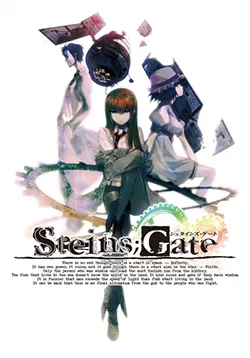
paragraph{Steins;Gate entered the market as a visual novel game in the year of 2009 in Japan and then in the year of 2014 as an international prodcut and the second entry in the Science Adventure Series The game is defined completitionist and the phone triggering mechanism makes it so the game can be categorized as a JRPG and it is able to do this because of the narrative branching system. To Break it down a player needs to answer or ignore a text from a supporting character that is a part of the narrative and each answer creates a different ending path including a a true canon path. The true canon ending path is counted as one of the 6 different endings available The game places a true emphasis on a revolving narrative and because of this the game is able to be on this list.}paragraph{Steins;Gate tells the story of a protagonist by the name of Rintaro Okabe who runs an organization that he has created and calls it the mad scientist club. Within the club, they accidentally create a device that is able to send people backwards through time, and episodes of the game tackle different potential paradoxes that can be created from people rewriting the past. Every game ending is designed to answer a philosophy question from the view of the character who does the actions that create all the different timelines and branches that can be created as a part of the multiverse in which there is one of each character in the game. The remaster of the game is set to be released in the year of 2024 and this remaster is going to keep all of the original game content, and along with that content it is going to add modern graphics, and it will ad voice acting to the game to help it modernize it in order to help make it more accessible to the younger generations who do not have access to the software that the game was originally released on. The game will have all of its original game endings and will give the new generations access to the game endings that were originally available to the people who had access to in the year of 2009. Steins;Gate will be the game to lose this position because all of the endings in the game are fully developed and are equivalent to a fully developed narrative and will give the game a multi-faceted experience. The game will have all of its original game endings and will give the new generations access to the game endings that were originally available to the people who had access to the in the year of 2009.} This comprehensive ranking reflects editorial standards in 2026.
5. Final Fantasy Tactics (1997)
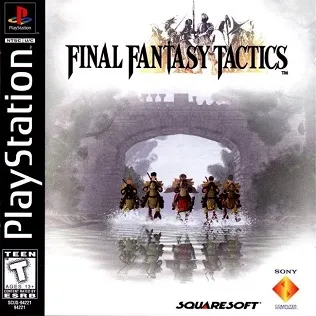
Final Fantasy Tactics launched in 1997 as Square's most ambitious tactical JRPG of the PS1 era, and its multi-ending structure still offers one of the most sophisticated branching designs the franchise has to offer. From the campaign's fourth chapter, it can split in two depending if the protagonist Ramza chooses to side with or against the Knights Templar. Each path features unique recruitable characters including the famed Cidolfus Orlandeau and Beowulf Cadmus. To unlock the true ending, certain late-chapter side battles must be completed and Ramza has to attain specific class mastery thresholds to unlock those battles.'
The remastered War of the Lions for the PSP added multi-ending content with two new optional characters- Balthier from Final Fantasy XII and Luso from Final Fantasy Tactics A2, each with their own unique recruitment quests that lead to endings expanding the Ivalice Alliance references. One of the original optional ending characters, Cloud Strife, is still present in remasters. For completionist players, the hidden Midlight's Deep dungeon at the bottom of the multi-floor postgame dungeon adds additional ending lore. Final Fantasy Tactics earned this slot because the branching system feels organic to the medieval political intrigue narrative and Matsuno's writing makes each ending variation feel earned through specific choices made by the player. This comprehensive ranking reflects editorial standards in 2026.
4. Nier Replicant ver.1.22474487139… (2010)
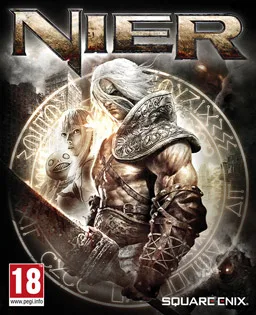
Nier Replicant is a remake of the original 2010 Nier game. It came out in April 2021, established Nier series’ trademark multi-ending story structure, and made the original 2010 title accessible to modern audiences. NieR: Automata, the sequel to Nier Replicant, released in March 2017, and has 26 endings. In Nier Replicant, endings A and B can be achieved in one playthrough, but in order to get ending C, players have to complete a specific weapon story collection across all five playthroughs, resulting in a tragic ending (which also serves to recontextualize the main story). Ending D has the most gut-wrenching sacrifice sequence in the history of JRPGs.
2021 Replicant remaster also features an ending E, which is completely new content and provides a happy ending. Prior to that, the original 2010 Nier game’s ending (which is considered tragic) was the last one to feature an ending. In order to get the deepest endings in the game, players must complete the side content that is related to weapons, as each weapon has 4 progressive vignettes that philosophically prepare players for the game’s late-game revelations. Replicant deserves this spot as it is one of the first and most devastating uses of the multi-playthrough system in a JRPG with a four-ending system. The multi-ending structure of Replicant has influenced an entire generation of action JRPGs narrative design. This comprehensive ranking reflects editorial standards in 2026.
3. Persona 5 Royal (2019)
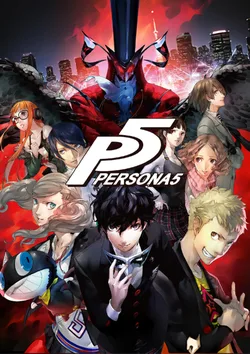
The multi-ending system introduced in 2019’s Persona 5 Royal redefined the game’s narrative structure by enhancing what is now one of the most significant ending systems in Japanese Role Playing Game (JRPG) history. Persona 5 offered players two extreme binary endings in which players could receive an early surrender to an interrogation (bad ending) or deny the antagonist’s offer (true ending). Royal’s latest expansion introduced a new character, Takuto Maruki, who is part of an additional act of campaign content. To access this new content, players are required to complete an achievement related to the in-game relationship system (confidants) prior to an in-game date of November, 18th, which subsequently locks the new antagonist and his aforementioned act.
The new third semester ending of Persona 5 Royal is an entirely new story chapter that spans the months of January and February, adding new encounters and a new palace to the game along with a boss fight that includes a philosophical theme which reframes previous narrative endings. To achieve this, players must do the entire campaign and micromanage their in-game week planner in order to complete all the requirements for a particular social link prior to that same in-game date of November 18th, which is a stark requirement for a completionist and an achievement not typically seen in other games. Persona 5 Royal’s expansion adds a unique sentiment (the aforementioned improvement) over its original themes of acceptance vs. refusal and personal happiness, removing the tacked on feel of fan-service sometimes seen in the gaming community. Persona 5 Royal earned its place as one of the best games in modern JRPG history because no other remaster of this genre even comes close to the narrative scope & thematic improvement ambition of Persona 5 Royal. This comprehensive ranking reflects editorial standards in 2026.
2. NieR: Automata (2017)
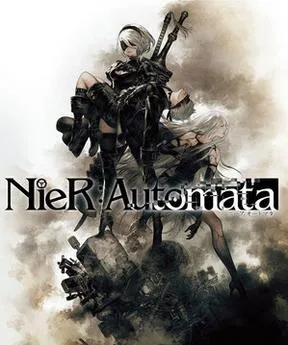
In 2017, PlatinumGames partnered with Square Enix for the sequel to Nier. The 26 letter ending system is a first for JRPGs and easily the most ambitious system they've created. To get each of the 5 core endings from A to E, you have to complete 5 different playthroughs of the game, each with a unique perspective. Route A is the main gameplay story where you play as 2B. Then you get to Route B where you play as 9S, who is a hacker, and he has a different set of gameplay objectives. In Routes C, D, and E, you get to experience the game in a post 2B world where you get to see the infamous deletion ending which alters your saved game files.
The system also has 21 optional endings. Each of these endings is a joke ending and they can only be triggered by specific failures. For example, if 2B sees a fish and you have her eat it, ending F is triggered. If you don't self-destruct at the right time, you get a different ending, ending K. Each of these joke endings also come with their own unique set of cut scenes and credit scenes. With 2024 set to be the release of the Switch version of the game, it will be the first time you can complete the game on the go. Achieving a high ranking on the list of games that contain multiple endings is something that is very well deserved for Kampfer, but other games will be right behind it. For a detailed overview of the game, take a look at our JRPG postgame content guide. This comprehensive ranking reflects editorial standards in 2026.
1. Chrono Trigger (1995)
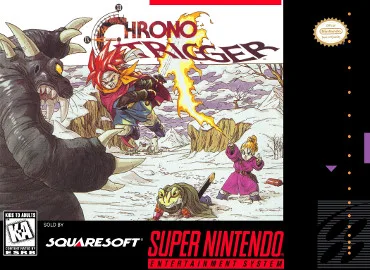
Chrono Trigger came out in 1995 for the Super Famicom and was the first game to feature a New Game Plus mechanic. It also introduced a thirteen-ending system that influenced every JRPG with multiple endings for the next thirty years. Players achieve different endings by fighting the main antagonist, Lavos, at different points throughout the story. Each ending ranges from the canonical good ending, which is obtained by completing the game, to completely unique timelines where the entire party does not meet, Magus takes over as the main character instead of Crono, or the ancient Reptite civilization survives instead of being wiped out by humans.
The design economy, or implementation philosophy, is what makes Chrono Trigger’s ending system last throughout the years. Each ending is tied to a specific narrative condition that, along with particular timing to defeat Lavos, invites players to explore the game’s time travel system rather than rely on guides. The DS remake added two postgame dungeons that preserved the original New Game Plus and thirteen ending system, but also explained the connection to Chrono Cross. The Pixel Remaster restored the original SNES experience and gameplay in 2022. Because of all this, Chrono Trigger deserves the top spot. It’s easy to see that the thirteen-ending system laid the foundations that dozens of other games like RM: Automata, Persona, and Tactics Ogre, refined from the 90’s to now. It’s the best ending system in JRPGs, and any list of games from 2026 will have it ranked highest. This comprehensive ranking reflects editorial standards in 2026.
Multi-Ending Design Mechanics Worth Understanding
The finest multi-ending JRPGs obtain narrative replayability in various ways including basic binary choice systems and complex hidden requirement gating systems. Knowing how these systems work helps players approach new games with realistic anticipation for how their decisions shape gameplay and explains why many titles feel like true branching narratives while others merely have superficial changes.
Consider multiple protagonist routes. This is one of the most ambitious approaches in the genre. Fire Emblem: Three Houses is a modern classic because of its four totally different route paths (Black Eagles, Blue Lions, Golden Deer, and Church of Seiros). Each one requires a different playthrough to see the main conflict from a different leader’s point of view. This requires a lot of development resources, but gives a huge payoff in terms of creating true narrative replayability. Tactics Ogre Reborn, which ranks tenth in our list, uses a more compact version of this over the three Law/Chaos/Neutral routes, diverging at chapter points rather than entirely different protagonists. This technique is also seen in many other similar titles in our best JRPGs with job class systems where class progression based on chosen classes overlaps with route based storytelling.
Multi-ending design requires high skill hidden requirement gating. For instance, in Suikoden II, to achieve the true ending, players must recruit all 108 stars, a task further complicated by chapter-specific time windows that can make some characters missable. Even more complex, Star Ocean: The Second Story R involves private-action affinity systems that determine which character endings can be unlocked at the finale. While these techniques create significant replay value for completionist players, they can be equally frustrating for more casual players, especially when they finish without uncovering the true ending. Many modern JRPGs mitigate this problem with new game plus that allows players to replay specific chapters to achieve goals that remain unattainable in a single playthrough, which in turn demonstrates a design philosophy that connects to the most complete JRPG crafting systems.
More granular than route branching, the choices-matter design philosophy functions at the level of individual dialogue and actions. NieR: Automata and Steins;Gate epitomize this approach where each significant choice alters the ending and often unlocks a new letter (in Automata) from A to Z or diverges timelines creating new branches (in Steins;Gate). To make every branch not feel arbitrary requires significant narrative engineering. Many pixel art era classics referenced in best pixel art JRPGs established a visual vocabulary that modern HD-2D releases continue to use. This philosophy intertwines with magic system design too, where castable spells (or, in some systems, a subset of spells) determine whether a player can reach a specific ending. The best JRPG magic systems provide coverage of how mechanical depth supports narrative depth.
Honorable Mentions
With the most ends, ends are told with purpose per modern platform and narrative impact plus modern platform and narrative impact gives the best results. Many great games are held in consideration for less than 10 spots because they were originally on legacy hardware or their influential multi-ending designs have been absorbed by newer games already on the list.
NieR: Automata, placed 2nd, refined the dark multi-ending narrative experience from Drakengard on PS2, which was the 1st of its kind. Yoko Taro's original in 2003 had 5 endings which were reached on increasingly silly progression requirements, consisting of absurd tasks ending with the original of Ending E, which spawned the entire NieR franchise. Original Drakengard is still a legally accessible relic and foundational text as for multi-endings in JRPGs, so that is why it is out of the main ranking. For contextual franchise Final Fantasies ranked, every Square Enix game that influenced Taro's design choices, ranks.
Fire Emblem: Three Houses is a Switch game that deserves recognition for having a four-route system as stated in the mechanics section. Intelligent Systems put unprecedented effort into 4 entirely distinct route paths and it paid off with the franchise's highest selling title at over 4 million copies. This mechanic combined with class progression hits on franchise ranking cover in every Persona game as those share dev DNA with Three Houses' social link mechanics, while the ranked games also share the monastery interactions.
Available on the Nintendo DS, Radiant Historia stands as one of the industry's first and finest examples of elegant time-branching multiple endings design. The developers at Atlus created a unique mechanism to deliver branching narratives through what can only be described as a 'historia' book. This 'historia' book allowed players to visualize and experience timeline divergence as they unlocked alternate routes in world history. The edition published for the 3DS titled Perfect Chronology added content to the previously existing branches and still serves as an influence to many of the newer time-traveling JRPGs in today's market (including those in our history of JRPGs series) but for purists, the original DS version remains the canonical experience.
On the PlayStation 3, Drakengard 3 continues the tradition of Yoko Taro with five multi-endings (each controlled by separate gameplay criteria). The infamous final boss of the game is a rhythm game, and many players had to use a very specific level of skill in order to unlock what is called 'Ending D'. The overall Drakengard series and the JRPGs with the best stories coverage are centered around the theme of narrative ambition taking precedence over commercialism and accessibility.
The Shadow Hearts series introduced a branching storyline based on player performance in combat (the protagonist's fighting style was modified) and this was implemented within the series' unique 'Ring of Karma' system. The Ring of Karma system required players to successfully complete a series of quick time events in order to achieve a 'light' ending; failure to do so would cause a shift towards a morally 'dark' ending. Few JRPGs have attempted to achieve a narrative focus with a real-time skill connection to the same extent as this series. For broader Square Enix franchise alternatives, see best Square Enix JRPGs for entries that took different approaches to player-skill-narrative integration.
Reaching the rank of three in our countdown, Persona 5 Royal is also being mentioned here again due to the new endings added from the Royal Era. The newest version of the game added Maruki's 3rd-semester arc which includes a new true ending that has a mix of conditions for specific character relationships (confidants) and time management (calendar) restrictions. For context pertaining to the Persona series, all of the Persona titles ranked include a breakdown of the endings for each game in the series as well as the evolution of the endings starting from the Royal era all the way back to the PS1.
With the NieR/Drakengard series, we are able to see how one designer’s (Yoko Taro) vision for endings in a game can evolve and become more sophisticated over time as he continues to make more games. While the original Drakengard game is far less polished than its successors, the design choices present in that game laid the groundwork for what would eventually become the commercially successful NieR Automata and all of the newer games that have been inspired by it. For those looking for what is next from these designers, sequentially following that design philosophy, will be the most anticipated JRPGs of 2027 which are already announced.
Multi-ending design often intersects with completion-gating systems like crafting requirements where missing recipes blocks ending unlocks. For broader crafting depth coverage, see best JRPG crafting systems for full mechanic survey.
The Final Fantasy mainline has experimented with multi-ending design from FF Tactics (position five) through more recent entries. For franchise-wide context, every Final Fantasy ranked covers each numbered entry and their respective ending design.
Persona social link gates have shaped modern multi-ending design philosophy since Persona 3 introduced relationship-driven endings. For franchise-wide context, every Persona game ranked traces this design evolution from the PS1 originals through Royal.
The JRPG Multi-Ending Design Continues to Evolve
These ten games share a commitment to seeing credit sequences as one of many possible endings. Honorable mention goes to Chrono Cross (1999) with twenty endings, the direct sequel that Square built on the Chrono Trigger NG+ template, though our editorial scope here prioritizes the originator over the sequel. The best JRPGs with multi-ending systems reward players for exploring gameplay systems. They also encourage repeat playthroughs that feel meaningful, add new branches, and change the philosophical perspectives of the original theme. Chrono Trigger is still the gold standard for thirteen-ending NG+ templates. It achieved these three goals the best out of any game in the last thirty years.
If you're just starting to discover multi-ending JRPGs, Chrono Trigger is the best place to begin. Then try NieR: Automata for the most modern ambitious take. For a fully fleshed out additional story, there's Persona 5 Royal. For a branching narrative in a visual novel, there's Steins;Gate. For classic tactical-strategy with hidden true ending paths, there's Final Fantasy Tactics. The other games give rewards for exploration after learning what specific multi-ending mechanics resonate with you most.
For a larger context of JRPGs, look at our comprehensive post on the best JRPG postgame content rankings to see endgame design philosophies that support multi-ending unlock systems. For the combat fundamentals that branching narrative campaigns are built on, check our JRPG magic systems guide. The ultimate JRPG guide covers the genre this curated 2026 list represents. Read more in our ultimate JRPG guide. Read more in our comprehensive postgame content ranking.