
Villains in JRPGs can typically be seen as obstacles to your party achieving the final credits. The best JRPG villains, however, are characters that completely change the definition of an antagonist by providing motivation to question whether or not they are wrong at all. Villains that alter entire worlds, or that elevate every game they are in through their presence.
I have been playing JRPGs for over 20 years now, and the villains that stick with me the most are not the ones that wanted to destroy the world purely for the sake of destruction, but instead the ones that believed they were doing the right thing, or committed grotesque acts of cruelty in such a theatrical manner that it was almost artistic. This ranking of the top 20 JRPG villains takes the complete package into consideration: writing ability, narrative impact, theme depth, design, and how that villain elevates the game surrounding them.
For platform-specific JRPG guides, see our picks for PS5, Switch, and Steam/PC. Our best RPGs of all time ranking covers the genre's peaks, and the JRPG tier list ranks every game across platforms.
20. Zanza (Xenoblade Chronicles)
Zanza works as a JRPG villain because the world that you have been exploring is quite literally his body — the Bionis is not just a setting for the game; it is a prison made by a god who became so fearful of being surpassed that he designed a continuous cycle of life, death, and reincarnation to maintain control. This concept alone is enough to put Zanza above the majority of JRPG final villains who appear in a game's final dungeon with only vague plans of world domination.
One main thing keeping Zanza from ranking higher as a JRPG villain is the way that Xenoblade Chronicles presents him, as more of a force of nature than as an individual. He's driven by clearly mapped motivations, but he doesn't have the humanization aspects that allow the audience to see the "evilness" of a villain and relate to them as a result. He acts as though he is a god – whilst he functions as a representation of breaking free from determinism; he doesn't leave a lingering impression in your mind long after watching his actions play out.
19. Caius Ballad (Final Fantasy XIII-2)
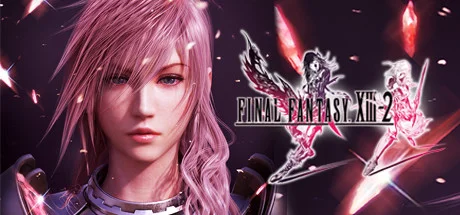
Caius's role within the “Final Fantasy XIII” trilogy is one of the major redeemable highlights of the series; he is a product of watching someone close to him die too many times and has chosen that the timeline must come to an end to finally allow the person he is trying to protect to find peace.
Unlike others within this series, Caius's motivation is apparent because he succeeded. He caused the destruction of the timeline, took part in the death of Etro, and caused chaos to reign across the planet. Rarely does a character within this genre portray such strong convictions and use those to elevate themselves and provide a suitable base for the continuation of this story in “Lightning Returns”.
18. Ghaleon (Lunar: Silver Star Story)

Ghaleon acts as your mentor in life. The Magic Emperor is the most revered and powerful character in the world of Lunar and in the Magic Emperor's game, you can interact with, trust and learn from the Magic Emperor before he betrays you and breaks your trust. The fact that you, as a player, trusted the Magic Emperor makes the betrayal effective; it isn't surprising, as there are clues indicating the Magic Emperor's betrayal. It's just that the game does such a good job of getting you emotionally invested in the Magic Emperor that when the actual act of betrayal takes place, you feel as if your investment in the Magic Emperor has been wasted.
The motivation behind the Magic Emperor is based on the Magic Emperor's genuine belief that Althena was wrong when she became human. Because the Magic Emperor believes a world without the protection of a god (Althena) is a world that is doomed to perpetual suffering, it could be said the Magic Emperor's motivation to protect the world from Althena's decision does have a basis in truth/validity. The fact that you can empathize with the Magic Emperor and yet still have to stop him from killing the god, Althena, is what separates him from many of the other character's that have taken the role as mentor-turned-villain after him.
17. Lezard Valeth (Valkyrie Profile)

Lezard Valeth, the necromancer who is obsessed with the goddess Lenneth, spends two games attempting to possess Lenneth — not to destroy her or defeat her, but to possess her; and while this is romantic fixation taken to an extreme, tri-Ace effectively manages to turn Lezard's obsession into something that is actually unsettling, for the player, as opposed to cartoonish.
Lezard Valeth, in addition to having this obsessive motivation, is also extremely intelligent. His power is not merely a product of his birthright; he is not merely a thief who uncovered an ancient relic; Lezard gained his power through a series of studies and experiments, and he is willing to cross each and every moral line he must to increase his power. As a result of these intellectual studies, and his willingness to experiment, Lezard is able to create homunculi (aka, artificial beings) out of the souls of the deceased; and the manner, in which this act of creating homunculi is presented in the game, plays into the idea of how intelligent individuals can self-destruct on account of single-track thinking.
16. Delita Heiral (Final Fantasy Tactics)
Many players may find it difficult to classify Delita as a "villain," and as a result, that is one reason he is on this list. Although Delita begins as Ramza's best friend, he, like Ramza, is a commoner and his observation of the nobility using and tossing people away, almost like being in a game of Monopoly, serves as an inspiration for Delita's subsequent behavior; and to a large extent, that is a motivator behind Delita's actions on account of the social class in which he was born. When Delita witnesses the death of his sister at the hands of the ruling class, following her death, every single action Delita takes, is a reprisal against the system that rendered him "disposable."
In addition to having a legitimate motivation, Delita's real genius is that he manipulates every faction involved in the War of the Lions, which include the church, the crown and the noble class, in such a manner so as that he is the last man standing at the end of the War of the Lions. As a result of Delita's efforts, he is crowned king; while Ramza, who saved the world and fought against the demon king, was forgotten. This is the very essence of Final Fantasy Tactics illustrating to players that righteousness is not rewarded in the real world, however, strategy is rewarded.
15. Lavos (Chrono Trigger)
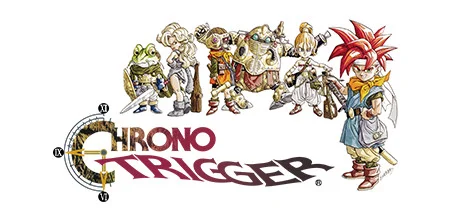
Lavos is not a character, at least not in the way one normally thinks of a character. It doesn't talk, it doesn't plot against others, and it has no real personality; rather, it is a parasitic alien lifeform that crashed into the Earth 65 million years ago and continues to feed off the planet's energy, while manipulating the planet's evolution to generate more energy for it to consume. However, Lavos is one of the most effective villains ever to appear in any JRPG because everything about Chrono Trigger revolves around Lavos' presence.
The various time periods depicted in Chrono Trigger have all been affected by Lavos; the Ice Age, the rise and fall of the Kingdom of Zeal and the apocalyptic future of 1999 are all a result of Lavos sleeping beneath the surface of the planet. The player's realisation that the world's destruction is not going to happen in the future but is an event that has already occurred and that they are merely trying to reverse adds urgency to the player's quest. You don't confront Lavos as a traditional villain; Lavos is the villain that you have lived inside of your entire life.
14. Albedo (Xenosaga)

Albedo Piazzolla is the definition of a person who was given immortality after they explicitly stated they did not want it. When he was born, Albedo was created to be a bio-engineered weapon and, as a result of being incapable of dying, has a heavy psychological burden that has caused him to develop into a truly disturbing character. Albedo's first appearance in Xenosaga Episode I — where he decapitates himself to make a statement — is one of the most shocking villain introductions of any JRPG.
What really makes Albedo an effective villain, in addition to the shock value of his introduction, is his connection to Jr. The character of Dhaos – Like many 'monsters', he is much more than meets the eye. The true goal of Dhaos was to save his world (one in which he was King) through harvesting of 'mana' from another world. So while players see him as evil through the events of the game, they after learn the backstory of why he was trying to harvest mana. While this does not excuse his actions during the game (which could lead one to believe he deserves to be defeated) it creates an understanding that brings into question one's judgement of him.
13. Dhaos (Tales of Phantasia)
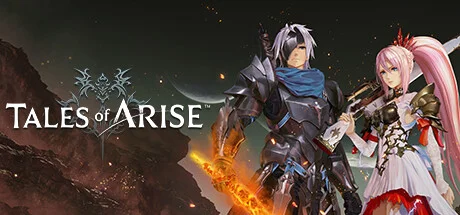
Through the course of the game, you battle Dhaos not once but three times. He is shown to be a tyrant who desires to rule the world. You battle him in the past to stop his plans, he flees to his future, and has a grand finale fight with him.
The point will be made from this twist that it leads to the notion that the overall approach of the tales franchise to all antagonists needs to be looked at as (at least) as complex than was originally thought. For many of the games since that time, it has been noted that there have been the same (or similar) situations involving the primary antagonist presenting themselves as evil through one or more of their actions, to include actions based on their desire to be with a loved one. The fact that Dhaos isn't a 'better' character than others shows that the developers of the game did not give enough time in presenting the views from players perspective before presenting the final twist - however the twist added significant amount of insight into the development process of future games in evaluating the character of the villains. The impact of the situation was so significant it has created some of the most in-depth stories regarding character development to date and will continue to be until the end of game development for this franchise. By the time players encounter Giygas in EarthBound, he has become a swirling mass of chaos and hatred that overwhelms the player and cannot be properly represented on the screen; the screen will distort, the music will turn into noise, and Giygas's dialogue will fragment into nonsensical phrases that wouldn't make sense for any normal human. It is the most unsettling boss fight in all of JRPGs, and it was designed for children.
12. Giygas (EarthBound)
Giygas's brilliance also stems from what he represents. According to Shigesato Itoi, the character was inspired by a traumatic childhood experience from when he accidentally saw a violent scene in a movie. Giygas is not just a villain who has some evil plan; he is instead an abstract representation of insurmountable evil that we cannot understand. The fact that the player defeats Giygas through the act of praying to him by breaking the fourth wall and asking the player to help illustrates that the battle against Giygas is actually a conflict that exists outside of the game. Giygas's boss battle has never been replicated in any other JRPG.
11. Ardyn Izunia (Final Fantasy XV)
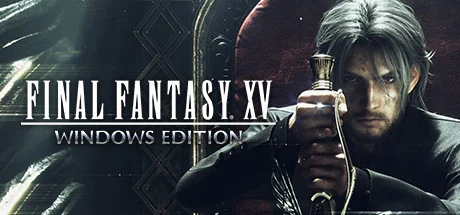
In contrast, Ardyn Izunia serves as a tragic villain whose story is buried beneath the fact that Final Fantasy XV was not able to devote enough time to it. Ardyn was the original chosen king, who absorbed the Starscourge into himself so that all of humanity could live, only to be rejected from the Crystal, betrayed by the gods, and effectively erased from history. After 2000 years of immortality, he becomes the man who engineers the fall of Noctis’s kingdom not for his own gain, but simply so that the gods will recognize what they did to him.
The campfire scene at the end of Final Fantasy XV, where Noctis tells his friends what they mean to him before he walks to his death, is successful because of Ardyn’s manipulation of circumstances around that moment. He engineered the entire journey so that Noctis would be prepared to die when he walked up to the throne. The patience that Ardyn exercised as a villain is impressive, and that manifests by making the final boss fight feel less like a battle between two bosses and more like a confrontation between two men whose fates had already been sealed many years before they were born.
10. Fou-Lu (Breath of Fire IV)
Ryu's partner, or twin, is Fou-Lu. Ryu and Fou-Lu are essentially the same being, but they have been divided into two beings: one raised among humans and learns love; and one who awakens from a long sleep only to find that humans have become as corrupt as he feared they were. Through the course of Breath of Fire IV you play as both characters, and by the end of the game you must choose which character to support.
The tragedy of Fou-Lu revolves around a girl named Mami who shows him kindness, however, the empire captures her and uses her body as a weapon against Fou-Lu; the empire fires Mami's body at him while she is still alive. After this incident, you can see how broken Fou-Lu is and at that moment you should also feel as broken as Fou-Lu. This is because the game has spent so many hours building up the relationship between Fou-Lu and Mami through small, quiet scenes. Once Fou-Lu decides that humans are unworthy of another chance and that he will judge them all, you understand why and may even agree with him.
“Fou-Lu's route is the single best parallel narrative in any JRPG. The Mami scene destroyed me.”
“This game's villain is better written than most protagonists. Capcom had something special here.”
9. Mithos Yggdrasill (Tales of Symphonia)
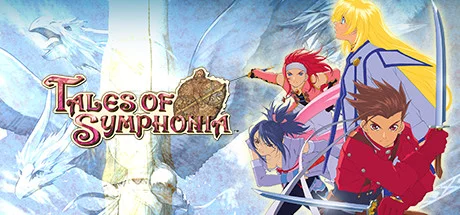
Mithos Yggdrasill is the one who ended a war that was destroying the planet; he brought the two warring factions together, formed alliances with the Summon Spirits, and gave rise to a hero who history would remember. Yet after four thousand years of watching everything he created fall apart due to humanity's inability to stop their hatred of each other, Mithos becomes one of history’s most malevolent villains. The story of Tales of Symphonia positions Mithos as the villain in relation to Lloyd, and throughout Tale of Symphonia the two characters develop their own mythology in parallel; thus the question within the story is whether or not Lloyd will ultimately resemble Mithos. The revelation that Mithos created an infinite cycle of sacrifice to keep his dead sister alive (and split the world in half) is terrifying. The true horror is learning the way that he reached his own solution. He did not begin as an evil entity. He was simply a child who lost his family due to prejudice and wanted to repair the world. The tragedies of 4,000 years and the pain of failure shifted from a desire to help others to a desire to dominate others, which is ultimately more terrifying than any being on a galactic level because it is something that we could all do if faced with a similar situation.
“The moment you realize Mithos IS Lloyd — just broken by time — is the best twist in the series.”
8. The Masked Man (Mother 3)
The Masked Man serves as a cold reminder of how to damage the Pigmask Army and be strong enough to perform that task in Mother 3. He is the most potent enemy in the game's universe, showing no expression of emotion and appearing to exist solely to follow orders. Learning the true identity of the Masked Man changes your perspective on the entire game and creates one of the most devastatingly painful final encounters that can occur in a Japanese RPG.
As I am being cautious about revealing more than I have to at this moment, I will give a little more clarification about the final fight against the Masked Man. The fight cannot be won using the standard method of attacking, as the game has removed your ability to do so and instead challenges you with an alternate method of defeating the Masked Man. The conclusion of the JRPG's story illustrates the main idea of the story. The final battle is a representation of a loving person breaking down and reconciling with an evil person. There has never been a JRPG that takes place within one of the three phases of grief and the final boss battle.
7. Luca Blight (Suikoden II)
Luca Blight is a pure embodiment of evil, and Suikoden II allows for that evil to stand on its own. He destroys entire villages; he forces prisoners to act as if they are nothing more than animals before he kills them; and he finds it entertaining while doing so. In a genre filled with tragic backstories and sympathetic evil characters, Luca Blight reminds us that there are some people who choose to be evil and giving them a sad backstory does not change how evil they are.
There is a sequence in Suikoden where the player engages in three battles with Luca Blight with three separate parties, each consisting of 6 members — a total of 38 members — before allowing one character to duel him alone and win. After all of this effort he is able to say the one of the best lines in video game history and die with dignity.
“No JRPG villain has ever been this terrifying while also being this well-written.”
“Three parties, eighteen characters, a one-on-one duel, and he STILL dies on his own terms.”
6. Kuja (Final Fantasy IX)
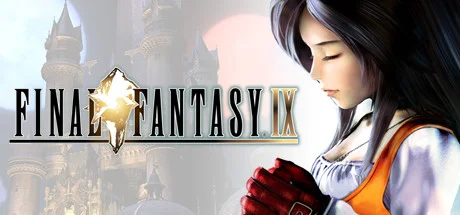
Kuja is a weapon who is created for the sole purpose of being a weapon; however, upon discovering that he has been created with an expiration date and will be replaced by a newer model, the very essence of who he is is destroyed, causing him to decide that if he is to die, everything else should die with him. This is the first and only human reaction that a villain has given in a RPG, and it doesn't come from magic or god.
Final Fantasy IX is about the acknowledgment of mortality and the search for significance in a life that will end; Kuja is the answer to that inquiry. Zidane discovers meaningful relationships, whereas Kuja has nothing but fury. When Kuja experiences Trance in Pandemonium, he screams "I will not allow for myself to be forgotten" demonstrating one of the rawest moments of villain characterization that any Final Fantasy has produced. Kuja is not trying to take over the world; he is having a mental breakdown, at the same time destroying the entire world.
“Kuja is what Sephiroth would be if he had genuine emotions instead of a god complex. The most underrated FF villain.”
5. Grahf / Id (Xenogears)

To explain Grahf and Id it will be necessary to first give an explanation of Xenogears, and in order to do that you would need a document the size of a PhD thesis. The short version is that Grahf is a man who for ten thousand years has been reincarnation, due to feelings of guilt for destroying the world in an earlier life. Now the other part is Id, who is a split personality that belongs to the protagonist Fei, created from childhood traumas that gives him enough power to destroy a civilization. The game takes approximately sixty hours of gameplay time to fully explain how Grahf and Id are interconnected and provide a grand conclusion that is one of the most ambitious villain narratives ever attempted in any medium.
What makes Grahf and Id rank among the top five villains of all-time is the point at which both Grahf and Id finally come together and all their story threads intersect. The climactic confrontation between the four characters – Fei, Id, The Coward and Grahf – to which the player learns the relationships between each are actually the same person, is the height of the Xenogears story. No other JRPG has ever undertaken structuring the antagonist in this fashion and the fact that it has worked predominantly well for Disc 2 being a half-finished product is a tribute to the strength of the underlying story even with the related production issues.
“The therapy scene in Fei's mind is the greatest villain reveal in gaming history.”
“You need a flowchart to understand Grahf. But once you do, you realize Xenogears was doing things in 1998 that games still have not matched.”
4. Takuto Maruki (Persona 5 Royal)
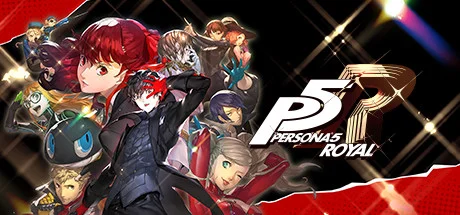
Takuto Maruki is a therapist who has the power to alter reality, and then commits to use that power to allow everyone to have their own best life. You would have your dead friends back. You would heal broken relationships. Suffering would be nonexistent. The question raised by the game is whether or not to destroy all of it and that life without pain does not allow growth to happen. To be happy is to receive what's given to you instead of earning it; true happiness comes from actually earning what you have rather than just receiving it.
As I sat for over fifteen minutes looking at the choice screen for the first time as I played through the story before, I could not come to a conclusion on my decision to accept or reject Maruki's deal. The conclusion I came to is that he is not an inherently bad character—but morally ambiguous—because he is such a good person with such great power and really wants to end human suffering. While his argument about why people deserve the free will to struggle and fail is philosophically valid, it is still emotionally very difficult to accept.
“Maruki's palace in Royal is the single best piece of JRPG storytelling from the past decade.”
“I have never felt this guilty about beating a final boss. Maruki deserved better.”
3. Emet-Selch (Final Fantasy XIV)
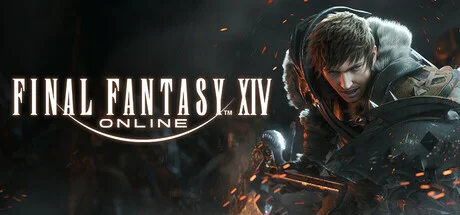
Persona 5 Royal's final semester provides the best content that Atlus has ever produced, and his character plays a very important role in it. You are not fighting against him because you believe he is fundamentally evil; you fight against him because you have something much more valuable to you. Emet-Selch, as an example, has witnessed the destruction of his entire civilization. The Ancients (the very powerful beings with the ability to create anything by will) sacrificed themselves to summon Zodiark in order to prevent the impending end of their world. And then Hydaelyn shattered their civilization into fourteen parts. All the people you encounter in Final Fantasy XIV are but a mere fraction of who the ancients were, with Emet-Selch having tirelessly tried to restore them for 12,000 years by killing billions of beings that are only a portion of themselves to create even just one whole being.
The scene where he builds a replica of the ancient city (Amaurot) in The Tempest and walks through it explaining everything that has been lost is the greatest character development for any villain in video game history. Emet-Selch is not looking for you to join him, he is demonstrating what he is enduring and gives you a reason to understand why one would commit genocide to undo such great pain. His plea for you to "remember us" is not a plea for mercy, but rather a plea for acknowledgment that what has been lost by him means something.
“The Amaurot scene broke me. No other MMO or JRPG has ever made me cry over the villain's backstory.”
“Remember us. Remember that we once lived. That line will stay with me forever.”
2. Sephiroth (Final Fantasy VII)
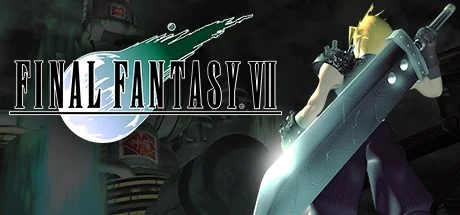
In my opinion, the scene of Sephiroth walking through the flames of Nibelheim is by far the single most memorable introduction of a villain in the history of JRPGs. Prior to this moment, he was a legend, as the strongest member that any SOLDIER has ever had and someone that Cloud idolized. After that moment, he goes from being a hero to a monster, after discovering he was created from the cells of an alien life form and subsequently believes the whole planet is against him. The hero to monster transformation takes place in real-time and the game allows you to experience each transformation step for yourself.
Sephiroth remains my personal number two for villain rankings due to his impact throughout video game culture. Sephiroth is why "One Winged Angel" is so widely regarded it’s considered one of the best and most recognizable pieces of video game music composed to date. Sephiroth is also why every person who has died in a JRPG is compared to Aerith's death and continues to be discussed 30 years after it occurred. Sephiroth was the first JRPG villain with long hair and a god complex and established the template for every JRPG villain after him, none of which have been able to change the way JRPG's view their villains as much as Sephiroth did.
“The Nibelheim flashback is still the greatest villain origin in gaming. Watching him go from hero to monster in real time is unforgettable.”
“One-Winged Angel starts playing and every JRPG fan in the room stops talking. That is Sephiroth's legacy.”
1. Kefka Palazzo (Final Fantasy VI)
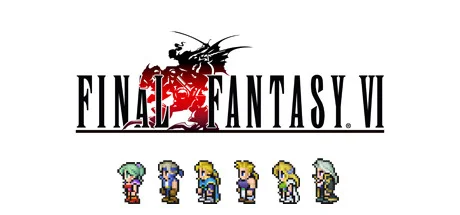
What makes Kefka Palazzo the supreme villain? He wins. Not in a figurative or temporal way, like a majority of villains; he wins by literally destroying the world. Kefka uses the Warring Triad halfway through Final Fantasy VI to absorb magic from the world itself and tear the planet apart. The World of Balance becomes the World of Ruin. The continents split; the oceans flow to new locations; and millions die. When you finally reassemble your party and ascend his tower to confront him, he is seated at the top as an actual god. And his only question to you is why do you even care to be living?
As I play through Final Fantasy VI for the fourth time—on the SNES, GBA, and Pixel Remaster—I am continually struck by the fact that Kefka functions in ways unlike any other video game villain for all time. Kefka has no tragic past that leads him to his behaviour; he has no plot to follow—he has no goals aside from destruction. He acts according to his own nihilism in the most extreme villain arc ever in the history of JRPGs. At the top of his tower, he asks "Why do people create things knowing they will be destroyed?" The game's answer, however, is not found through a cutscene; it is through gameplay. You have rebuilt your party from ashes because hope is a choice—not a guarantee. Therefore, Kefka is the quintessential JRPG villain because defeating him is not about saving someone else (the world has already ceased to exist). Defeating him is proving that even if a god tells you your existence does not carry any importance, your existence holds significance regardless.
“He poisoned a river. He killed General Leo. He moved the statues. He became God. No other villain has that resume.”
“Dancing Mad is not just a boss theme. It is a four-movement symphony about a clown ascending to godhood.”
“The World of Ruin is the greatest second half of any JRPG because Kefka made it personal.”
All JRPG antagonists have one thing in common: they compel their respective protagonists to earn their victory. Luca Blight uses his brute strength to intimidate his opponents into submission, while Maruki challenges them philosophically, and Kefka provides them with total despair; each of these villains signify to their players that JRPGs are defined by their villains. To read additional JRPG content, check out our rankings of JRPGs With The Best Stories, Best JRPG Soundtracks featuring the soundtracks that accompany these battles, or do a deep dive into the Best RPGs Of All Time.
For more JRPG content, explore our ranking of JRPGs with the best stories, the best JRPG soundtracks that accompany these battles, or browse the complete best RPGs of all time.