
I recall a specific moment when I found a love for JRPGs. I was in 1997, sitting for hours as I watched Aerith pray at an altar in Final Fantasy VII. I was 13 years old. I had no understanding of what turn based combat was only a few years prior and I was completely unaware that the game I was playing had years and years of development and design that evolved from the original Famicom. However, the combination of net-based battles, a long story, and the fact the game had characters with real development was something that stood ouy from all the other games I had played on the PlayStation.
This sensation has kept my interest for nearly 30 years. JRPGs started as a strange niche genre but has evolved into an international identity and influence. They have gone through transitions, and identity crises, but have come out on the other side finally becoming what they needed to be. Throughout this history you will see the dry timeline of events develop into a real history of transformation of what Japanese RPGs have become.
Before we get into the history, the most simple explanation of what a JRPG actually is would help. In fact, JRPGs describe a specific design philosophy that is Japanese in essence. They are party based, narrative-driven games that are distinct in their mechanics, from their Western counterparts.
The Roots: Western RPGs and Tabletop DNA
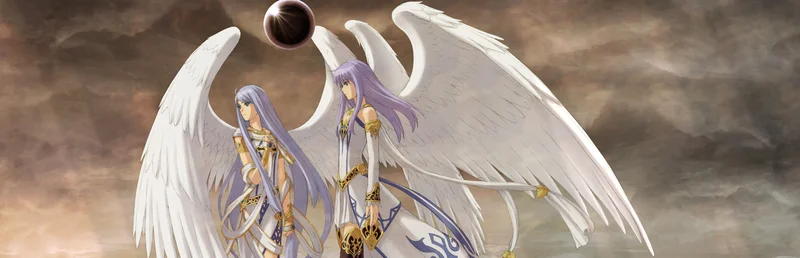
When discussing the history of the Japanese role playing game genre, the first truth that needs to be stated is that the genre did not originate in Japan. The first game to present the concepts of hit points, levels, classes, and random encounters was Dungeons and Dragons created by Gary Gygax and Dave Arneson in 1974. Without Dungeons and Dragons, there is no Final Fantasy.
PC RPG games from the West like Ultima (1981) and Wizardry (1981) adapted the experience of tabletop RPG games into computer games. Wizardry was especially influential on Japanese game developers. Yuji Horii, who would go on to create Dragon Quest, cites Wizardry as the game that got him into first person dungeon crawlers. The game actually did better in Japan than in the United States.
The early western PC RPG games were very complex and demanded a lot of their players. Japanese developers did not create the RPG genre, but rather made it possible for an entire generation of players that had not previously had the experience of playing tabletop RPG games and rolling twenty sided dice to play.
The Birth of JRPGs: Dragon Quest and Final Fantasy
In 1986, "Dragon Quest" came out on the Famicom thanks to publisher Enix. With designers such as Yoshio Horii, artists such as Akira Toriyama (Dragon Ball), and composers such as Koichi Sugiyama, the game had Wizardry-like dungeon crawls, but they were simplified. Players would have just one character, one single-overhead map, and fight monsters like slimes and dragons in turn based combat. While simplistic, the game was incredible commercially. Dragon Quest III is reported to have had school skipping players, and the Japanese government asked for school weekend game releases.
In 1987, Hironobu Sakaguchi's team at Square Enix released Final Fantasy, the first in a now popular game series. With a name based on the hope that Square was going bankrupt, the game became highly popular. While Dragon Quest was more simplistic, Final Fantasy expanded its mechanics and steps beyond the other series by introducing several different classes, allowing for multiple party members, as well as different storylines. The two series were the major defining points for JRPGs for the following decade. Dragon Quest was the populist series while Final Fantasy was the more radical series.
Several other noteworthy titles were Megami Tensei and Phantasy Star, both of which were released in 1987. Phantasy Star introduced Sci-fi, and had a female lead character which was decades ahead of its time. Megami Tensei introduced a moral system, and the ability to summon creatures. These titles were evidence that there were many other relatable genres that didn't share a monolithic design.
The Super Famicom Golden Age

If the Famicom era of gaming was the planting of a crop, the Super Famicom era was the harvest. The 16-bit generation gave gamers, me included, a plethora of gaming franchises and titles that made millions of dollars and certainly created classic gaming moments they will remember forever.
The world of 16-bit gaming was the world of JRPGs. The Final Fantasy (FF) franchise released its two premier titles on the 16-bit console. Final Fantasy IV, which was released in 1991, was the first Final Fantasy game to introduce the Active Time Battle (ATB) system. The ATB system changed the turn based combat in the franchise and made that combat system faster. Final Fantasy IV also created a new benchmark for storytelling in video games with its dramatic character arcs and emotional weight.
Final Fantasy VI (1994) pushed narrative ambition even further. It was the first JRPG to feature an Opera scene, and its villain actually had the power to destroy the world — and did it halfway through the game. The cast featured 14 playable characters, all of whom had their own unique and rich stories that made them important. The World of Ruin twist was more audacious and wild than any other game world before.
The 1995 release of Chrono Trigger (CT) revolutionized JRPGs. The game developed and created by gaming legends like Hironobu Sakaguchi, Yuji Horii, and Akira Toriyama did the world of 16-bit gaming, and RPG titles a service. The CT series changed gaming by removing random combat encounters, adding the ability for characters in the party to perform special attacks together, and adding time travel with multiple game endings, and for the first time in video gaming history, the game was non-linear. The game was also filler free and gave players no combats that require them to do so to progress the game. It was so revolutionary that 30 years later it is still on the majority of lists for the best RPGs of all time.
But it wasn’t only Square and Enix that helped innovate the role-playing game genre in the SNES era. Other titles like the original Breath of Fire (Capcom, 1993), Earthbound (Nintendo, 1994), Lufia II (Neverland, 1995), Secret of Mana (Square, 1993), and Star Ocean (tri-Ace, 1996) all helped expand what was possible in a JRPG. Earthbound is worthy of particular attention for its absurd modern world setup. While many other companies were making JRPGs in medieval fantasy worlds with sorcery and ancient weapons, Shigesato Itoi designed a game about a kid with a baseball bat in a contemporary setting who battles possessed cars. While the game was a commercial failure in the Western world, it became a cult classic and was one of the first influences for indie RPGs in the 2000s.
For many years the role-playing JRPG soundtracks of the SNES games have been some of the best and most loved in gaming history. The soundtracks of the SNES Final Fantasy games (Nobuo Uematsu), Chrono Trigger (Yasunori Mitsuda), and Secret of Mana (Hiroki Kikuta) are some of the best video game soundtracks that have been produced and are some of the most pioneering game soundtracks. They seamlessly merged the line between video game and art.
The PlayStation Revolution
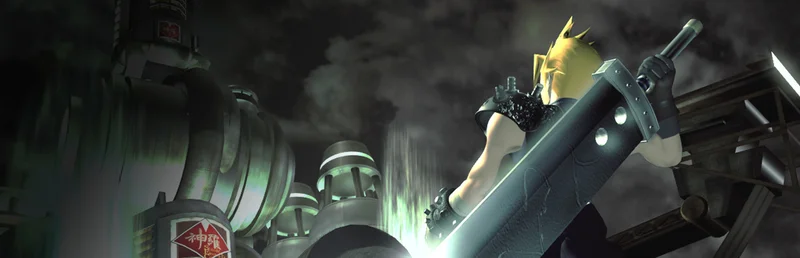
The jump from SNES to PlayStation was huge. Instead of cartridge storage it was CD storage, which meant games now had pre-rendered cutscenes, voice acting, and even scores from orchestras. Instead of gaining sprites in role-playing games, players now had cinematic experiences. This caused the Western world to see RPGs as new and trendy.
The first major game to exploit this new RPG world was Final Fantasy VII (1997). It was marketed in the Western world as edgy and new, with TV commercials showcasing the new CGI pre-rendered cutscenes. The game sold over ten million copies and for most people, it was their first experience with an RPG. Just like the people who bought the game, you didn't even need to know the acronym “JRPG”. You just knew the game was special.
However, the PlayStation era encompassed a lot more than Final Fantasy 7. Xenogears (1998) was able to combine Jungian philosophy, mech combat, and religious thought into a single narrative. And, while this was terribly executed in its second disc, its reach was certainly unforgettable. With a cast of 108 characters that the player could recruit, Suikoden II (1998) told a unique and enthralling story about war, friendship, and political betrayal. Final Fantasy Tactics (1998) managed to combine Matsuno's political intrigue narrative along with some of the best strategy games of that time. Vagrant Story (2000) had the best and most complex combat system of its time and was able to push the limits of PlayStation hardware to an extreme level.
Persona 2 (1999) was the first to introduce a modern day Japanese high school as a setting for a JRPG. There were real high school rumors that had the ability to reshape reality in that world. This was the beginning of what would later become one of the biggest franchises within the genre. The PlayStation library also featured Wild Arms, Legend of Dragoon, Grandia, and the Breath of Fire series, III and IV, along with the Star Ocean series, The Second Story.
This era also saw the beginning for tactical RPGs becoming a genre as its own within the JRPG genre. Final Fantasy Tactics and its Ivalice setting along with Tactics Ogre, Vandal Hearts, and Front Mission 3 were able to provide a home for players looking for more strategic depth.
Another thing that occurred during the PlayStation years that has received little discussion is the variation in quality of localization. Companies like Working Designs, Atlus USA, and the internal localization divisions of Square started to treat translation as an art rather than an afterthought. Translation of JRPGs as functional at best is probably being kind. “You spoony bard!” said an FF4 character. And while that line is charming now, it is not exactly Shakespeare. On the contrary, by the end of the PS1 generation, games like Vagrant Story had prose quality English scripts. This is important because it allowed Western gamers to engage with the story rather than wrestle with the poor translation that used to be the standard.
The PlayStation years also cemented Japan's dominance over RPG music. No longer constrained by MIDI synthesis, and with the availability of redbook audio, RPG music entered a new era. The orchestral score of Final Fantasy Tactics by Hitoshi Sakimoto, Mitsuda's podium with Celtic influence in the score of Xenogears, and the inclusion of real choir vocals in “One Winged Angel” by Uematsu showed that the music of video games could have the same level of ambition and quality as movie soundtracks.
The PS2 Era and the Peak of Ambition
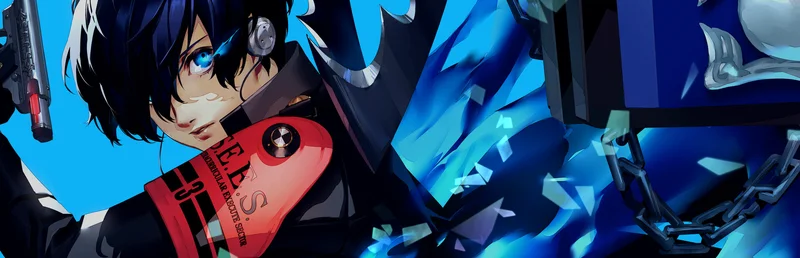
For Japanese RPGs, the PlayStation 2 era marked the peak of their ambition in terms of power of the hardware, growth of the budget, and the willingness to take risks to a high level.
Final Fantasy X (2001) was the first game in the mainline series to add full voice acting and also replaced the world map with a linear pathway. This second decision resulted in the game being divisive in the community. Some people preferred the tighter pacing while others felt more strongly about the loss of exploration. FFX massive success and continued divisiveness earned it three full playthrough replays from me. I still couldn't decide if the linear gameplay was a good thing or a bad thing and it was still a bit of both.
The merger of Square and Enix in 2003 was the result of a combination of the two companies for more than 15 years. The results were very different, and the first of these results was very different from the rest. The first of these was the game Kingdom Hearts (2002) which became a massive hit due to the combination of Disney nostalgia and action-RPG combat. This also was the result of the Final Fantasy XII (2006) game which had a politically dense story line and alienated people due to the MMO inspired Gambit system. I would argue that Final Fantasy 12 was ahead of its time. It would also go on to predict design trends that wouldn't become a standard for a decade.
Atlus was also very quietly developing something amazing. The game Shin Megami Tensei: Nocturne (2003) brought an extremely difficult post-apocalyptic Tokyo and offered a demon fusion system to those who were willing to experiment. Then all of a sudden in 2006, Persona 3 arrived and changed everything. The Social Link system added a high school life simulator to a dungeon crawler which created an incredibly compelling formula that was unlike any that had come before it. It became so profuse that it ultimately launched Atlus from a small niche cult studio to a studio of mainstream significance.
The PS2 era gave gamers titles like Tales of Symphonia, Xenosaga, Shadow Hearts, Rogue Galaxy, Radiata Stories, Valkyrie Profile 2, and Dark Cloud 2. JRPGs of the PS2 era will likely never be matched in quality across a series of titles. If you were to start a list of all the JRPGs worth playing on the PS2, you would essentially run out of time before you ran out of games.
The Identity Crisis: HD Consoles and Rising Costs
The jump to HD consoles may have impacted Japanese developers more than other segments of the gaming industry. Development costs increased across the board, and teams that thrived in making sprite-based games had to develop the same assets as Western developers that employed 3 to 5 times the amount of resources.
The results of these developments were often negative. Final Fantasy XIII (2009) was stunning, but it was boring, and it was described as a twenty-hour linear hallway simulator. The title sold on the name; however, critics and players were highly disappointed, and the backlash was severe. Instead of moving on to a new title, Square Enix decided to continue developing sequels to Final Fantasy XIII.
During this time, Western RPGs were experiencing a boom. Mass Effect (2007), The Elder Scrolls: Skyrim (2011), and The Witcher 2 (2011) made traditional JRPGs feel outdated. They provided open worlds and real-time combat as opposed to turn-based combat and linear storylines that felt stale. The gaming community began discussing the death of the JRPG.
While the critics' diagnosis may have been off, the critics' symptoms may have had some merit. The development of HD posed a problem for the Japanese industry. Japanese studios are organized around smaller teams that build content-dense games on a budget. The jump to HD required Japanese studios to expand their teams, lengthen their development cycles, and build production workflows that Western studios, especially those that use the Unreal Engine, have already adapted to. It was clear that Japanese studios were behind. Despite the effort, games were more expensive and development took longer, yet the games looked old next to their Western counterparts.
It is well documented that Square Enix had its own internal turmoil. Final Fantasy Versus XIII, which was announced in 2006, was a decade-long development cycle through which the game underwent a title change to Final Fantasy XV, and it was finally released in 2016. The company suffered through multiple high-profile titles that all underperformed due to the poor managerial choice of over-allocating company resources toward in-house engine development on the notoriously difficult-to-use Crystal Tools engine. Ambition and execution had the largest disparity that it had ever been.
As the major publishers perceived the maximization of their budgets, smaller publishers such as Atlus, Falcom, and NIS, along with newer, smaller studios, continued to produce good quality JRPGs, but with more reasonable budgets which were oft en released on hand-held consoles. With this focus streamlining of the JRPG production pipeline and this period in the industry. The mid-tier game publishers were ultimately more responsible for the continued survival of the JRPG genre with newer, high-quality games than were the mega publishers with their access to larger budgets. This was a greater "survival" of the genre than what was available with the defined, high-quality, blockbuster franchises of the PS1 and PS2 generations.
But the JRPG didn't die; it migrated. The genre found a new home on the Nintendo DS and the PSP (home to some of the best PSP JRPGs). Here, the development costs were lower for studios, and the audience was as hungry as ever. Dragon Quest IX (2009) on DS sold well over five million copies. The PSP also got Persona 3 Portable, Crisis Core: Final Fantasy VII, Trails in the Sky, and Tactics Ogre: Let Us Cling Together. The top PSP JRPGs rivaled anything available on home consoles in that era, and were forced to employ creative development strategies because of the limitations of the console, which often led to the development of superior games.
Xenoblade Chronicles (2010) on the Wii demonstrated that JRPGs could offer a massive open world while retaining the JRPG soul. Monolith Soft created massive, Western RPG-style open world, while retaining party mechanics and narrative structures. The JRPG genre now had a successful proof of concept, that the genre could evolve without losing its soul.
The Handheld Renaissance

The 3DS also carried the torch. Bravely Default (2012) was a clear homage to the original Final Fantasy games, featuring job systems, turn based combat, random encounters, and sold well, demonstrating that audiences still desired traditional JRPG mechanics. Fire Emblem: Awakening (2012) also saved the Fire Emblem franchise from cancellation, and helped introduce tactical RPGs to a new audience.
Persona 4 Golden, released in 2012 for the PlayStation Vita, became one of the highest-rated games on the platform because of the winning combination of investigation, friendship sim, and dungeon crawling. Every game in the franchise was good, but Golden added an extra layer of greatness. While the Vita itself struggled to find an audience, the library of JRPGs, including The Legend of Heroes: Trails of Cold Steel, Ys: Memories of Celceta, and Disgaea 3 and 4, and Odin Sphere: Leifthrasir, made it a hit within the genre.
The 3DS port of Dragon Quest VIII, the West's adoption of Monster Hunter, and the domination of Yokai Watch in Japan kept the genre thriving on hand-held devices.
The period also witnessed the emergence of smaller studios to fill the spaces left by larger publishers. The Trails series by Falcom interconnected multiple sub-series and built a large world. NIS kept releasing Disgaea games. Compile Heart and Idea Factory served the niche with the Neptunia franchise. The JRPG ecosystem became diversified, and sustained itself with a wide range of mid-tier releases.
The Modern Renaissance

It's a golden age for JRPGs, and I stand by this claim.
Stylishly ambitious and dripping with confidence, Persona 5 (2016) was a pivotal moment for the genre and fingers crossed for the future of JRPGs. With over 3 million sales in its first 12 months, and sales of the PS4 version alone bringing in over $500 million, its clear history was made with this title. Not only did the game prove ATRUS was a house hold name, the game also upped the production value for even western RPGs. The user interface design alone set the standard for the rest of the RPG industry. Upon game release, atrus instantly became a household name. JRPGs had returned to the big leagues in terms of value and cultural impact. It's influence even crossed game genres.
Final Fantasy XV (2016) immediately changed all this with its adoption of a messier, real-time combat system. The industry had endless hope for and immediate need to adopt a more light, fluid system. Gone was the desire to hold on to the older styled, turn based systems. Responses to these new changes were incredibly polar and new genres suddenly flooded the industry.
Games like NieR: Automata (2017) even blended action with philosophy of existence to negative response but was also a massive positive. The title viewed and drew over 7 million customers where Dragon Quest XI (2017) proved simplicity and an absence of reinvention could still be an industry hit. Even Octopath Traveler (2018) leaped 16bit game design with new technology and became a new genre. Even FE: Three Houses became best in franchise after window shoppers turned buyers after utilizing P5 based systems.
The series Xenoblade Chronicles 3 (2022), Final Fantasy XVI (2023), Persona 3 Reload (2024), and Metaphor: ReFantazio (2024) have continued this momentum, showing that the genre is not just surviving, but thriving on many fronts. Action JRPGs, tactical, open-world, turn-based, narrative-heavy, etc. They are all finding their audiences.
Final Fantasy VII Rebirth (2024), might be the most technically ambitious JRPG of all time. Is it the best? That’s up for debate (and I say this as someone who has played it twice) but the scope and production quality is impressive. Square Enix has placed their bets of the future of the franchise on action combat + episodic storytelling and so far, they are right to do so.
Let’s not forget the indie scene. Chained Echoes, Sea of Stars, Cassette Beasts, and Clair Obscur: Expedition 33 demonstrate that JRPG design principles can thrive outside of Japanese studios. The genre is flourishing on a global scale.
Today’s JRPGs have a broad range. In the PS1 era of JRPG, the genre was narrowly focused on, turn based, a party of 4, a world map, and even up to 3 discs. Now, however, we can have Persona 5 and Final Fantasy XVI in the same genre, despite having little similarity in mechanics. Action JRPG's like Ys and tactical like Fire Emblem along with Dragon Quest XI, which is traditional turn based. It’s clear the genre has fractured, and that’s a good thing. It’s a sign that all of the sub genres are thriving.
The business model has also changed. HD-2D remakes like Octopath Traveler, Live A Live, and the upcoming Dragon Quest III, show that the classic JRPG looks can be used the way devs intended as a stylistic choice instead of a budgetary restriction. Remasters and remakes of PS1/PS2 classics such as Persona 3 Reload, Suikoden I&II HD Remaster, and Star Ocean: The Second Story R, are doing better than the original versions. The back catalog of JRPGs is finally being appreciated for the cultural asset it always was.
The target audience is also expanding, especially with the addition of multiple platforms. What were once PlayStation exclusive games are now being released on PC, Switch, and Xbox. This is good news for JRPG fans, as they can now access Steam and carry their Switch with them for gaming on the go.
What Makes JRPGs Endure
JRPGs are 38 years old, and are still popular! What is the reason for their enduring success?
For me, it's three key elements.
JRPG's storytelling techniques (explored in our best JRPG narratives guide) are unique. Western RPG's give players agency to choose their own paths and determine their own outcomes, whereas JRPG's tell a specific story and ask the player to inhabit it as a character. In JRPG's, developers gain total control of the story, and can create a much more powerful experience than is possible in an open ended game.
Next up is an area that is more challenging to define, but just as important: that unrivaled mechanical depth. Job systems, fusion mechanics, social links, gambit boards, materia, junction systems, and brave/default? JRPGs have made the most mechanics of any type of RPG. In any other game, the systems that JRPGs have created would be broken into numerous addictive systems and loops. master your game for hundreds of hours.
Third, the music. No other field of gaming has had so much good music. From Uematsu to Mitsuda to Shoji Meguro to Keiichi Okabe, JRPG music is listened to for decades long after the game is finished. The music of Japan's roleplaying games is so good that the Game Show Tokyo holds symphonic performances and fills the hall.
The JRPG tier list shows you how the genre does today. No matter when you join the group there has never been a better time to be a fan of JRPGs. The JRPGs history contains a lot of stories. The genre has adapted and changed multiple times. It has transformed western games into a simplified adaptation for consoles. After that during the 16 bits era they expanded. After this, they went for a more cinematic experience during the play station. They also tried the HD segments, but they failed, and after that, they found shelter on handhelds. JRPGs have become one of the main genres in the roleplaying game selection.
Conclusion
Each period in time developed original work for its specific genre, but also had moments of difficulty. One of the continuing elements is the way that Japanese game designers discover new ways to develop systems and tell stories that are different from the rest of the gaming world. Their individuality, and their refusal to completely merge into Western design philosophy, is what makes this genre still alive.
I've spend nearly all of my life playing JRPGs. The fourteen-year-old me who saw Aerith kneel at that altar would be amazed at what the genre has developed into. However, I still feel that he would be able to recognize the genre with all of its wonder, and mechanical depth and the undeniable feeling of captivating experience that no other medium can replicate.
The JRPG history is still being written, and that is the best part about it.