
Every JRPG's magic systems serve as the basis for their game mechanics. Final Fantasy has completely redesigned magic systems in almost every one of their numbered entries. Some systems offer the reward of memorization with traditional spell lists connected to character classes. Some systems reward the players with customization where the player creates their own spell book from various modules. Good spell systems should empower both. Good systems offer the reward of memorizing spells without punishing players for experimenting.
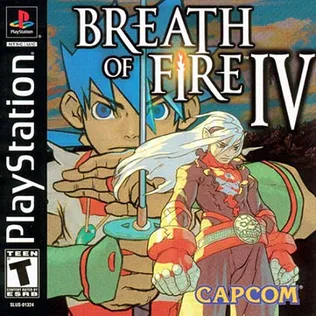
This list attempts to rank the ten JRPG spell systems that best cover the genre over the last three decades. Most of the entries will be Square Enix in the rankings because they created the systems that every other company copies. The list will also include some of Capcom's dragon-transformation experiment in Breath of Fire IV and fairly modern spell systems like Octopath Traveler II's path-action license spells to show that innovation does continue. Each entry has been evaluated based on the systems mechanics, how much player customization the system allows, and the systems impact on the genre of JRPGs as a whole.
Magic systems can hook someone for hundreds of hours and if a game has a good enough magic system, it can turn into an optimization puzzle. The ten games we've listed are the magic systems that the entire JRPG genre has recycled.
How We Ranked the Best JRPG Magic Systems
Magic systems can be ranked in several ways, the most important of which is probably mechanical depth, and in most systems, there will be multiple viable build paths. For example, players can engage in the same campaign with completely different magical loadouts. The systems in Final Fantasy VII and Final Fantasy VIII are perfect scores for customization in combat and for systems that allow players to use their own strategies, as opposed to pre-determined goals for their avatars. Stronger systems contain hundreds of different types of viable build paths. Magic that is associated with a particular character, such as FF III Dragon Quest III or FF IV, performs poorly relative to systems in which any character can learn any spell with sufficient investment. The liberty to test different configurations is what makes JRPG magic systems endlessly replayable. With regard to customizable equipment in Final Fantasy VIII, there is an interesting balance between the notion that character identity matters and the perception that any character in a party can be transformed into almost any character. The legacy that a system leaves behind in the genre is another criteria for helping systems score high on the list. Chrono Trigger's tech combo system has been imitated in dozens of games since 1995. The systems that earned higher slots on this list did so partly because their design language continues to shape new JRPGs released today. For a complete genre overview, our ultimate JRPG guide covers the broader history that produced these innovations.10. Final Fantasy Tactics (1997)
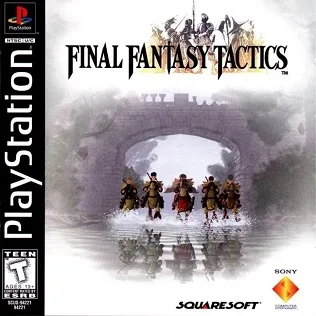
Final Fantasy Tactics came out in 1997 and it was Square's first tactical-strategy game that incorporated the numbered Final Fantasy games magic system within a grid-based combat system. The game has a job-class system and gives each character access to about 20 different classes along with their own unique spells which are unlocked by using action points that are acquired after each battle. A White Mage will learn spells to heal, a Black Mage will learn spells to destroy, a Time Mage will learn spells for Haste and Stop, and a Summoner will learn Espers that are elemental. The genius of the design is that over a lengthy campaign each character can master any number of job classes and then choose to equip the abilities of their primary class and two secondary classes.
For example, the combination options are almost endless. A character with primary class Knight and secondary Black Magic can become a tank that can also cast Fire spells. A character with primary class Summoner and secondary Time Mage can also turn into a battlefield controller that can cast high end spells. The job-class system allows players to fully customize their character's class system. With this system, winning each battle becomes a puzzle to think about which classes the situation calls for. The job class system has been changed when compared to games that came after it such as Tactics Ogre and Disgaea, but the advantages of the first Final Fantasy Tactics have not been surpassed. The PSP remaster War of the Lions is the definitive version of the game as it adds voice acting and more classes for players to choose from.
9. Bravely Default (2012)
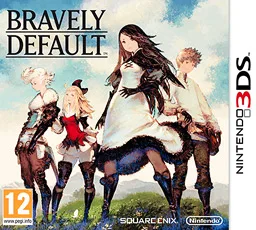
The job system in Bravely Default covers 24 job classes dispersed throughout the campaign, and you can unlock these by defeating the respective Asterisk Holders. From that point, any character can use the customization system and select any primary class from the ones they have unlocked, along with a secondary class from which they can use any abilities. The depth of class customization can rival Final Fantasy Tactics, while also adding another level of complexity with the Brave/Default system. For 2026 players, Bravely Default 2 on the Switch also continues this system while preserving the original game's job system. This preservation of an older Final Fantasy magic system with a new job system gives the series a well-deserved place on modern devices as an homage to the original Final Fantasy V Super Famicom magic system.
8. Octopath Traveler II (2023)
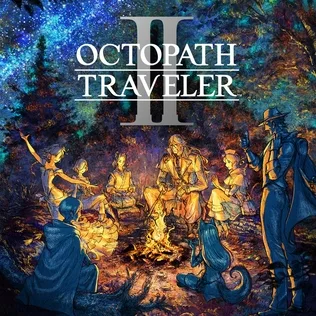
With this system, magic classes can be combined at will. The design lets you build a Cleric with Thief abilities, a Hunter who can cast Apothecary support magic, or a Warrior who throws elemental spells from the Scholar discipline. The combat system layers on top with the break-and-boost mechanic where targeted shield-breaking sets up massive boosted damage windows. The day/night cycle adds another layer where each character has a separate path action available depending on time of day, ranging from intimidation to provoking to luring. Octopath Traveler II earned this slot because it modernized classic JRPG magic philosophy with HD-2D presentation that genuinely respects the source material. For modern players who want classic JRPG magic in a new game, this is the strongest 2020s entry. Our JRPG remakes and remasters guide covers other modern revivals of classic magic systems.
7. Breath of Fire IV (2000)
6. Chrono Trigger (1995)
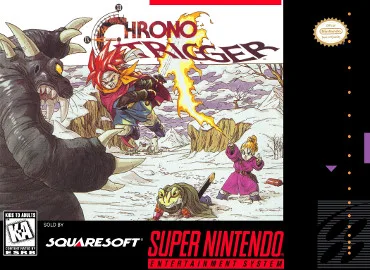
Chrono Trigger’s magic system has a lasting impact because of the simplicity. There is no micromanaging required, such as equipment requirements or MP pools. Techs are learned by leveling and with seven characters, three can be selected to be in the party. The combinations that are given reward good party composition without needing to optimize like a spreadsheet. Sakaguchi and Horii, the leads of Square's design team, saw combat as a collaborative narrative. Each dual tech is an animation in chain and feels like the characters are working together. Over three decades, it has been replicated numerous times in many JRPGs, including Final Fantasy IX, Lost Odyssey, and The Trails in the Sky. For four decades, Chrono Trigger has had its spot for inventing the template that turned the magic system into something that allowed chemistry between characters rather than pure number optimization.
5. Final Fantasy IX (2000)
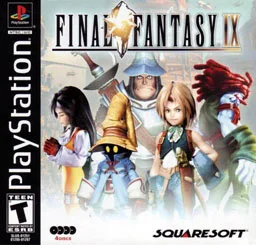
Every magic system involves making a decision on what equipment to use when visiting a store and every magic system involves making a decision on what equipment to use when visiting a store How do I decide which equipment to wear? Do I wear the staff that teaches the spell Cure 2 or do I wear the staff that teaches the spell Reflect? Should Vivi prioritize learning Fire 3 or Blitz 3? In this magic system, players are rewarded for exploring the world, and players are rewarded for exploring the world because they can find hidden equipment that teaches powerful spells. Each character has a trance that is triggered by emotional damage. Final Fantasy 9 has a special place in the hearts of game fans because it is one of the first games to utilize the classical magic system in the Final Fantasy games that started in 1987.
For purists, this is the greatest magic system in the history of Final Fantasy games. Instead of replacing this game, The Pixel Remaster merely reinforces the point that the original PS1 release is the definitive edition.
4. Final Fantasy X (2001)
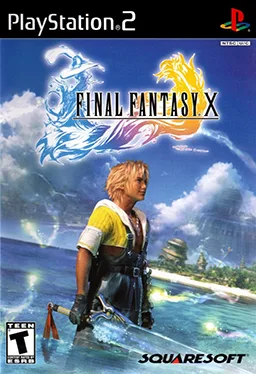
What this means for Yuna is that she can, in theory, go from a healer to also be a black mage or go to the path of a berserker. Each character can summon units called Aeons. Each Aeon has its own AI and spells, and players can customize and stat boost them to make better spells. The combination of a character in the game and the ability to summon spells makes the game rich in magic systems. The Expert Sphere Grid offers an alternate starting layout.
Final Fantasy X has earned this spot because the Sphere Grid has been replicated in Octopath Traveler, Bravely Second, and numerous other JRPGs released since 2001.
3. Final Fantasy VIII (1999)
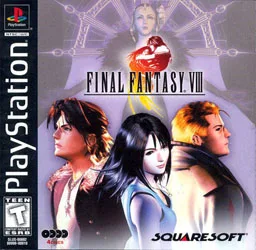
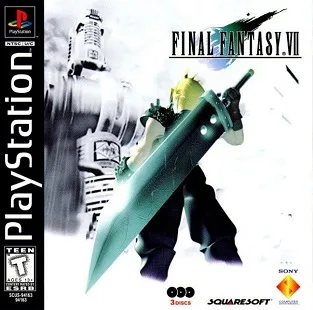
2. Final Fantasy VII (1997)
1. Final Fantasy VI (1994)
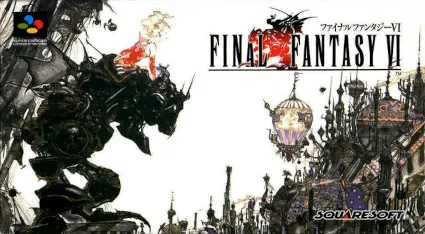
Final Fantasy VI was released in 1994 on Super Famicom and came with the Esper system that set the template every modern Final Fantasy game magic system would iterate over the next thirty years. Each character has a fixed innate ability. Sabin can blitz and throw a spirit. Edgar uses tools. Cyan does Bushido sword techniques. The Esper system adds magic on top of the above identities. Throughout the campaign, you acquire Espers and can equip one Esper to each character. The equipped Esper teaches magic to the character at a configurable rate during combat. Every spell in the game is teachable to every character through equipping Espers.
The implications on design are staggering. You can build Edgar to be a magic powerhouse if you equip him with a high magic stat Esper and prioritize his spell learning. You can keep Sabin as a pure martial fighter by magic skipping. You can make every character good at both physical and magic by rotating Espers throughout the campaign. The Magicite that gives stat boosts at level up adds another layer of control over which character stats to distribute long-term. It set the standard for Final Fantasy VII's Materia, Final Fantasy VIII's Junction, Final Fantasy IX's equipment learning, and even the licensed-class system in Octopath Traveler II. Final Fantasy VI is the original and takes the top position. Every JRPG magic system that traces player customization over fixed character classes goes back to the World of Ruin and Kefka and Terra. With improved graphics and changes to the original translations, the Pixel Remaster recreates the original SNES experience. It is still the defining JRPG magic system.
How JRPG Magic Systems Actually Work Under the Hood
Though four decades of releases have shaped the craft of JRPG magic systems, only some handle the elements of design in a way that makes the system feel tactical and not just a chore to navigate menus. The next section will thoroughly analyze the design systems that make a magic system memorable, while also featuring systems from games not listed in the countdown.
Tier rankings and spell progression are some of the ways magic will scale throughout JRPGs. Many modern RPGs refer to the Final Fantasy series, as it established the canon Fire → Fira → Firaga spell ranking. Each tier in this system has a cost in magical points that translates to useable spells, and deals an increasing amount of damage. This creates a problem in resource management, as low-tier spells can actually deal more damage than a high-tier spell. In our countdown, position six Chrono Trigger was the first to introduce this system alongside Dual and Triple Techs, which are multi-character combo spells. Many modern JRPGs that feature job class systems in best JRPGs use class-based spell unlocks, as opposed to tier progression, creating different optimization paths per build.
Interactivity with various in-game elements is crucial for making combat feel like a puzzle instead of a chore. Games like Pokemon and Shin Megami Tensei use a rock-paper-scissors system which require knowledge of every enemy type, as attacking the right type of enemy causes much greater damage than attacking the wrong type, or even hitting a wall if the enemy is resistant to damage. Shin Megami Tensei V adds a few more elemental interactions for players to consider beyond the basic triangle of the aforementioned Series, and so does Persona 5 Royal, which uses elemental interactions to fuel its turn economy system where hitting a weakness grants an additional action to the player. This concept embodies the layered combat system that is fundamental in many of the best Junior RPGs, as they provide a captivating narrative.
Fusion and spell systems are what we would call high creativity magic systems. An example of this type of magic system is the Junction Draw system, which allows players to strategically set stat boosts on any character by drawing a spell from an enemy and linking it to a specific stat. In the case of Final Fantasy VIII, this system is ranked 3rd among all systems we are covering in the countdown. In the Persona games, players can create new personas with inherited skills through a system called demon fusion. Wonder Persona in Persona 5 Royal also adds to this concept with fusion of party members. Shadow Hearts: Covenant has a Stellar Chart that requires players to physically arrange magic-glyph patterns to unlock spells. Each ranking of the Persona games has this fusion mechanic and we trace its evolution from Revelation to Royal.
Time based mechanics that make players think about where to place their magic are unique to certain games. Grandia II for the Dreamcast and PS2 had something called an IP gauge. This IP gauge prompted the user to think about the possible damage they can inflict as well as the risk of the enemy cancelling their action. Final Fantasy XII is another example, where magic points (MP) recharge over time instead of in real-time, which achieves the same effect. The first example of an Active Time Battle system was Final Fantasy 4 which all other games in the franchise copied. All other game franchises in the same category as Final Fantasy have gone on to make deep combat systems that are very well-received by consumers.
Later game encounters provide a challenge where players have to decide between the economics of area of effect (AF) spells versus targeted attacks. Final Fantasy VI gives an example of an area of effect (AoE) spell that, depending on the situation, and with the right cost, can clear an encounter with trash mobs. The tension of this situation makes players decide their spell load out based on the cost of mp. This philosophy is seen in other Square Enix games where they are known for pioneering the system.
Counter active spells gives players a chance to respond to spells used by enemies. For example, Silence, Mute, and Disable have all been prevalent in PS1 era JRPG games where under leveled groups would lose to the spell damage from enemies. More modern JRPGs that have pixel art, have kept these systems from nostalgia whereas more modern games like Final Fantasy XVI have disabled the silence meta for an action-based combat system.
Honorable Mentions for JRPG Magic Design
The countdown above prioritizes magic systems that teamed up solid mechanics with innovative integration into the combat system and a lasting impact on the genre. Taking historical importance into account, several titles, even if they do not fit the strict ten-position ranking due to platform exclusivity or niche audience receptiveness, or because their core design philosophy has been fully adopted by new titles already on the main list, still warrant some recognition for their magic systems.
Reconciling a completely original system in the genre, Chrono Cross on PlayStation deserves special acknowledgment because of its Element Grid system that completely eliminated MP and instead required players to control (through position on the battlefield) a set of elements, each of which served as a finite combat resource and required players to use the elements with a limited number of active slots. The game still influences indie pixel art releases, including the best pixel art JRPGs.
Shadow Hearts: Covenant on PlayStation 2 demonstrated the Stellar Chart magic system where players positioned certain spells so that each character could cast them in each combat. No other JRPG has attempted the required level of spatial reasoning, and the resulting magic builds felt personal because each player’s geometric preferences dictated how spell layouts were set. The Wild ARMs era of Sacnoth's developer DNA has been influential in experimental JRPG magic design philosophy.
On the GameCube and PS2 Tales of Symphonia and the rest of the Tales franchise used EX Gem socketing to change how each spell worked based on which gems players selected. Instead of just dealing damage, these gems could result in spells doing a variety of different effects. This mechanic encourages players to build their characters differently and is one of the many reasons why JRPGs that have real-time combat systems are so successful. Additionally, this mechanic has been discussed in Final Fantasy ranking lists for any franchise-wide ranking of Square Enix games that uses real-time combat with customization.
In Playstation’s Suikoden II, the Rune system was introduced, where the equipment slots of the characters influence their use of magic. This means players must think strategically about which characters to use before each boss battle. This system, along with many other, applies to what is considered the best JRPGs, that have multiple endings. The choice of Rune system affects the completion of the 108 stars, which in best JRPGs with pixel art narratives, also exhibits the combined ambition of Suikoden II and its Rune system.
Star Ocean The Second Story R is available on modern platforms and has a Sympathy magic system. In this system, the spells a character can use and their relationships with other characters affect what spells they can use. This creates a unique magic system that combines with the social link system from the Persona games. The Star Ocean games are known for creating their magic systems and their structural innovations put them alongside the best Square Enix JRPGs, especially since tri-Ace shares many design veterans with Squaresoft.
On different platforms, Dragon Quest XI has improved their Pep Powers system so that character combinations can trigger unique spells that are only available when certain party members pep up together. This mechanic added an element of controlled randomness which requires players to manage their turns pep-wise, instead of just doing optimizations, and is Square Enix's modern take on cooperative magic systems. For context with the rest of the franchise, history of JRPGs details how Dragon Quest has influenced the development of magic systems in JRPGs in contrast to mainline games since 1986.
The various JRPG magic system innovations among the other games also shows the depth of the genre as it builds on what could have been settled after the core systems introduced in the Final Fantasy series. If readers are looking for more magic systems to be developed in the future, the most anticipated JRPGs of 2027 will feature titles from established creators with strong legacies in magic systems.
For broader genre context on related mechanical patterns, see best JRPGs with job class systems.
For broader genre context on related mechanical patterns, see best JRPG crafting systems.
For broader genre context on related mechanical patterns, see best JRPGs with multiple endings.
For broader genre context on related mechanical patterns, see every Final Fantasy ranked.
For broader genre context on related mechanical patterns, see every Persona game ranked.
For broader genre context on related mechanical patterns, see jrpgs with the best stories.