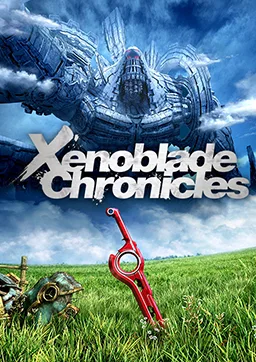
The Xenoblade Chronicles series sits somewhere peculiar amongst modern JRPGs. Final Fantasy chases flashy cutscenes while the Persona series opts for social sim gameplay iterations. Monolith Soft, instead, has spent the last fifteen years building something else. Worlds the size of small countries where you can dedicate dozens of hours just walking, climbing, and discovering what is just over the next ridge. The result is a catalogue of games that require patience, but reward that patience massively. The result is a body of work that has expanded across three console generations and is now one of the defining JRPG franchises of the 2010s and 2020s.
Ranking these games is not straightforward. The mainline trilogy alone has about three hundred hours of content. Two open world spin offs xenoblade chronicles X have two completely different design and gameplay philosophies. Two meaty expansions, Torna and Future Redeemed, stand as full sized adventures of their own. And dono of these would be possible without the ancestors, Xenogears and the Xenosaga trilogy, the experimental works of director Tetsuya Takahashi that started it all.
In total, there are ten Xenoblade-adjacent releases worth your time from the historical oddities to the definitive certified masterpieces. Each entry is a culmination of gameplay refinement, narrative ambition, and cultural significance. If you’ve never played any of the games in the series, the top three are great to start from as they are three completely different but equally valid entry points that can sell you on the franchise within ten hours.
How We Ranked Every Xenoblade Game
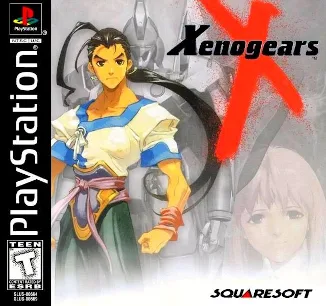
There will be some compromises when categorizing a series with such a wide variety of individual entries. There are four criteria to consider, each of which branches off into many subdivisions. The first battlefield quality of life updates and combat systems are heavily warranted. These games are at their core real time combat with a tagging system which has evolved significantly from Xenoblade's original 2010 combat system. Then there are World and Exploration systems. The identity of this series relies on the player experience of discovery as opposed to a more linear experience. The games that provide that experience are recognized. Out of a series with multiple entries, each ranking must give appropriate credit to the games that provide that experience. Story and emotional payoff are weighed next. Some entries tell a relatively self contained story while others utilize multiple games in the series and drive their story home. Both of these approaches are valid. The end point story in a series that spans hundreds of hours of gameplay with multiple entries certainly penalizes a story when it becomes homework. Lasting accessibility deserves some credit. A number of games here are either retired hardware or Japanese imports. Naturally the The Definitive Editions rank higher because there is no need for emulation or auction sites in order to play them in 2026. The two Takahashi ancestors ranked lower on the list have asterisks. They are still worth playing, just not without that context. For a complete primer on the broader genre, our ultimate JRPG guide covers the historical lineage that produced this franchise.10. Xenogears (1998)
9. Xenosaga Episode III: Also Sprach Zarathustra (2006)
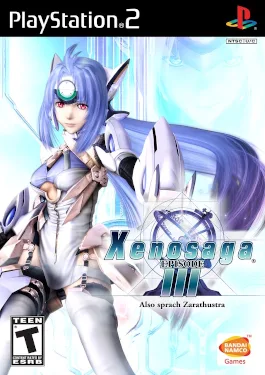
Out of the trilogy, this title is the most similar to Xenogears, providing some of the most deliberate callbacks to the game that they nearly cross over to a soft sequel. This is also the game that provides the best take on the protagonist, KOS-MOS, where she is stoic and emotionally wounded as she develops into the moral center of the party that includes a literal angel as well as several other characters whose identities are kept secret until the final hour of the game. The ranking penalty is real because playing Episodes I and II is almost a necessity for following the plot, and they both have not aged well. Yet for franchise scholars, Episode III is the destination that is more than worth the journey.
8. Xenoblade Chronicles (2010)

The protagonist in Xenoblade is Shulk who has a vision of the future. The game is set in a futuristic world built on two deceased titans. The Mechonis and Bionis (the two titans) are the names of the two colossal titans. Xenoblade Chronicles also features a real-time combat system which includes auto attacks and a variety of skills that can be used by players to entice strategic placement of themselves as well as their teammates. The Definitive Edition of Xenoblade Chronicles has been released and is ranked higher than the original in gaming competitive ratings. The Bionis and Mechonis are the titans and their design is breathtaking and is unlike any other in the gaming world. Remember that this is where it all started, the franchise was born here.
7. Xenoblade Chronicles X (2015)
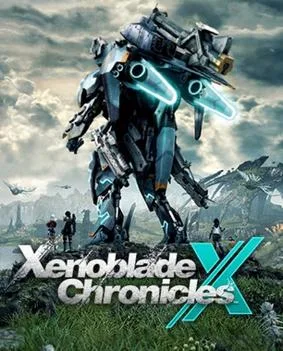
Mira's open world is meant to be explored for several hours prior to gaining access to the mechs called Skells that will allow players to traverse the world in whatever direction they want to go. This will greatly accelerate the pace of players' exploration as the world of Mira is designed for players to have rapid movement via these mechs. Skells are designed to allow players to traverse the maps at whatever speed players desire unlike the slower pacing of Skells that will provide a faster pace for players to enjoy the world of Mira. This is a combat driven title that offer players the choice of class, weapons, and a unique combat system that utilizes a rhythm game component. This allows any players to gain the buffs from their teammates. The Wii U release is for completists and historians. This will allow all players to access all of the story content that was cut from the original game. This will allow the players to have the new content that was added in the 2025 release. This is content that was removed from the game in order to provide the definitive edition.
6. Xenoblade Chronicles 3: Future Redeemed (2023)
With roughly thirty hours of content, the expansion is clearly longer than most full-priced JRPGs that were released in the same year. It has a ton of great combat mechanics that may make it an obvious contender for game of the year. Heroes now have streamlined jim quests, and affinity charts make their return, all of these from previous titles in the franchise. Unity combo arts allows for devastating coordinated combos. The game has no microtransactions or in-game stores, which goes to show the developers really did care. For anyone who has played the mainline trilogy, Future Redeemed is essential.
5. Xenoblade Chronicles X: Definitive Edition (2025)
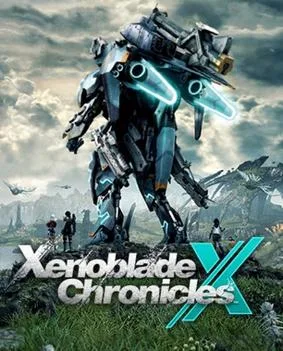
The open world improvements and story are not the only reasons that make this version of Xenoblade Chronicles X remarkable. Mira remained a planet in the Xenoblade Chronicles X game that will give the player an out of this world experience. Weather systems that ruin your exploration plans, Ecosystems complete with living creatures that are independent of your presence and will hunt each other, and creatures that will spawn and create a battle in a region that are controlled by a night and day cycle. You will be able to fly after roughly 40 hours of gameplay, and the battle system of the game has been improved. You will have a world that you can only understand at that scale. You will experience improved combat with faster auto-attacks, better AI in your partners and an improved skill tree. After a decade, Xenoblade Chronicles X is finally getting the version that it deserved.
4. Xenoblade Chronicles 2: Torna ~ The Golden Country (2018)
Originally, Torna ~ The Golden Country was meant to be a small DLC addition to Xenoblade Chronicles 2, but it ended up being large enough to warrant a standalone release. The story takes place 500 years before Xenoblade 2, and follows a younger Addam and Mythra during a war referenced in the main game, but never shown. There is a 30-hour story campaign that has a smaller cast than the main game, allowing each character to have a fully developed story arc.
In the expansion, combat has been modified and is much more distinguishable with greater clarity than its predecessor. You will have the ability to control each character in real-time, with the back row being support/defense, and the front being the attacker. The ability to fuse and mix with your Driver and Blade makes for great satisfaction when you achieve the ideal combo. There is an inevitable tragedy that is foreshadowed that makes the story hit harder at the climax, especially for players who completed Xenoblade 2. This is a great entry for the people who say Xenoblade is too long, as it is only a third of the playtime and still manages to tell a complete story. The character writing for Jin and Lora in particular is so good it makes the parent game cliffhanger feel so earned.
3. Xenoblade Chronicles 3 (2022)
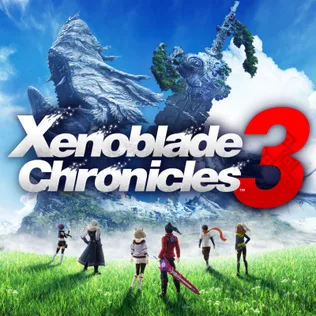
At this point, it is worth examining the game’s combat system, which most eloquently illustrates and demonstrates the series' lengthy process and ongoing improvements over the last 10 years. In each battle, there is the potential for up to six party members to participate at the same time and each of them is provided with two of the ninety different classes that characters are able to unlock as they progress through the game. In addition, a system referred to as 'Ouroboros' is integrated where, for a predetermined duration, two characters are able to combine and act as a single combatant to deliver overwhelming damage. This introduces a new level and style of combat not found in previous installments. To advance the world of Xenoblade Chronicles 3 beyond what is included in the main story, a new type of Hero Quest was integrated as a multi-layered method for including side characters into the active party. This method has a bonus of providing a degree of world development that previously has only existed in single multi-hour Hero Quests in previous installments. With a total campaign time in the range of 70 hours, the level of combat refinement is far superior to that found in Xenoblade Chronicles 2 which was notorious for having combat mechanics that created a truly endless expanse of gameplay. The game ranked three with the only reason being the games ahead of it simply expressed a more succinct and more refined version of a different thesis.
2. Xenoblade Chronicles 2 (2017)
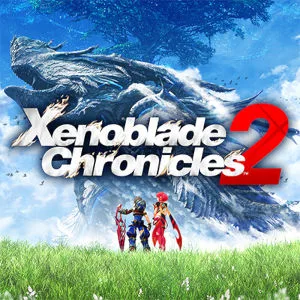
Many fans regard Xenoblade Chronicles 2 as their favorite game in the franchise, but it remains a highly divisive title. The game was released as a launch title for the Switch back in 2017, making some very bold, and highly divisive, decisions. These include the hyper anime art style, the gacha style blade collection mechanic, a combat system tutorial that only finishes after the player hits the 30 hour mark, and an uneven opening that very nearly loses the player before the story starts to progress. The fans who managed to power through these rough edges were rewarded by getting to experience one of the most emotionally devastating jrpgs of the generation.
The story of the game follows a young salvager named Rex who, after some events, finds himself bonded to a blade named Pyra, who is considered legendary, and whose existence is wanted by other people for possession, or even destruction. The relationship between Rex, Pyra, and her other persona, Mythra, is the most emotionally invested relationship throughout the entirety of the game. The depth of the combat system is even greater than the first game to a point where it is almost a different franchise. Once the combat system finally clicks, she rest of the people in the party can make element pass through driver-blade combo assigned to different players, and can do really cool attacks to finish the game. The game world of Alrest is a world with people and entire civilizations living on giant, sleeping titans. The world of Alrest is more visually inventive than almost every other JRPG. The flaws of the game are definitely real, but the highs are more than almost every other game in the genre.
1. Xenoblade Chronicles: Definitive Edition (2020)