
I have been playing every single one of the main games in the Tales franchise since it came to the GameCube in 2004. The Tales games have offered myriad experiences: fast-paced real-time battle systems, lengthy (and sometimes deceptive) skit sequences, and the overused and often just plain bad cooking systems (and yes, I have seen endgame sequences that were cringey due to dialogue that was translating while their translator was on break!). There are no JRPG franchises that are more inconsistent than Tales, considering the emotional journey each title provides, since they allow you to experience some of the greatest highs (pleasure) and also many of the most forgettable experiences in the same title and the series as a whole (I still love them all).
I will now rank every mainline Tales title I have played (there are eight). All titles listed here are exclusive to mainline entries (no direct sequels), no mobile entries, no crossover fighting games (each completed at least once). Now, let the rankings begin. Check out guides to the best Jrpg Games available on PS5, Nintendo Switch, Steam PC, Xbox, PS4, PS2, PS1, SNES, PSP, GBA, DS, 3DS. Also, see the Best JRPGs for PS Vita guide as well as the JRPG Tier List and Top 10 RPGs Of All Time for more of my thoughts on this.
As you look for table-top and game platform information for JRPGs, search for games listed under PS5, Switch, Steam, Xbox, PS4, PS2, PS1, SNES, PSP, GBA, DS, 3DS, and the Vita. All JRPG tier lists can be accessed through the cross-platform tier list, ranking all JRPGs at the same time and showing the top JRPGs of all time. See the Best Jrpgs On Ps5 guide. See the Best Jrpgs On Nintendo Switch guide. See the Best Jrpgs On Steam Pc guide. See the Best Jrpgs On Xbox guide. See the Best Ps4 Jrpgs guide. See the Best Ps2 Jrpgs guide. See the Best Ps1 Jrpgs guide. See the Best Snes Jrpgs guide. See the Best Psp Jrpgs guide. See the Best Gba Jrpgs guide. See the Best Ds Jrpgs guide. See the Best 3Ds Jrpgs guide. See the Best Vita Jrpgs guide. See the Jrpg Tier List guide. See the best RPGs of all time guide.
8. Tales of Zestiria (2015)
Zestiria has been doomed since the start. It would be the 20th anniversary of the franchise. The marketing advertised a return of old features and a new sense of adventure, along with the largest world yet. However, the game had bad design choices such as, a camera that spins out of control, character customization that removes half the cast of characters, and paid DLC to unlock playable characters. Despite marketing Alisha as a key character, she has the least amount of development throughout the game, leaving the character to be unplayable at the end. Zestiria’s poorly thought out story, poorly designed world, and combination of misleading advertising leave it as a low point of the whole franchise. The main character was a shepherd, which was an interesting concept, but the game was a poor execution sample and left the franchise on a low point.
Zestiria made me want to give up on the series. The Armatization system looked good in theory because you could combine with your Seraphim partners for new skills. In practice, it was just party members disappearing off-screen and not coming back to the fight. Not to mention the open-world version of this game had so little to do. To put it simply, the combat camera is terrible in narrow hallways because you can't see what's happening in combat mode. At first the prologue seems to have a decent story with a chosen one hero, then it just drags on. While Edna was developed, the rest of the characters felt really lacking overall.
Rose is certainly a character, but she has had basically no character development. Sorey is just a boring and uninteresting persona. Mikleo is far too “good” of a person for this game and although I do believe the equip skill system, a system that merges equipment to provide grid based passive bonuses, adds some potential to the game; in truth, the equip skill system offers very little in terms of gameplay.
7. Tales of Graces f (2012 / Remastered 2025)
I had to finish Zestiria before starting Berseria because I expected Berseria to be better.
The combat system of Graces is unparalleled in the whole franchise, and deserves no less than the highest grade possible. The use of CC, or Chain Capacity, instead of traditional TP (a.k.a. Turn Points) promotes an aggressive and fluid style of play. The system is designed so that close range A-Artes and long range B-Artes can be combined to create exciting Artes. CC also makes dodging more responsive, and overall adds a fluidity to combat that increases the enjoyment of gameplay. While there is an initial investment of time required to learn all the different combinations, it is well worth the effort.
6. Tales of Xillia (2013)
It's almost a compliment to say that Graces's combat system is a shining example of the Linear Motion Battle System. Sadly, everything not related to combat are the game's shortcomings. The game's main character, Asbel, is a contender for the most boring protagonist ever in a JRPG. He's basically a friendly neighbor with no character arc. Let’s try to ignore that the main campaign is a friendship story with zero emotional impact as it had no character development in the leads. The future arc epilogues added more than 20 hours of playtime that were entirely redundant. The 2025 Remaster will likely shift the game's graphics to a higher quality, but it certainly will not address any narrative issues. Graces had the best battle system and the worst story in the series, which sums up Graces in six words.
The dual protagonist mechanic in Xillia was developed mid way through the game. In this way, the player is given the option to choose to play as either Jude or Milla, and experience the same story but from different views. Jude and Milla differ in that Jude is an inexperienced, youthful medical student who is rather inquisitive and asks a lot of questions. Milla on the other hand, is a very serious and determined deity on a mission, and is not the type to participate in frivolous activities.
5. Tales of Symphonia (2003)
The Link System allows players to link two characters so that they can use their combined abilities to support each other and attack the same enemy, adding a new layer of strategy for players to control their partner all the time, a feature unseen in the series before. Overall, the world design of Xillia is one of the negative aspects of the game. Most of the world design features long corridors and expansive spaces connected by a limited number of unique environments. The game’s second half was rushed, and that, combined with the multiple storylines, means that players don’t have the time to grasp any of the stories because the second half is rushed. The main antagonists have interesting ideas (technological spirit energy and the natural exploitation of technology, life forms). Still, the way they justify their actions isn't explained, so players will never understand their reasoning. I remember enjoying the game, but I can’t recall when, and it’s clear that I no longer look fondly upon it.
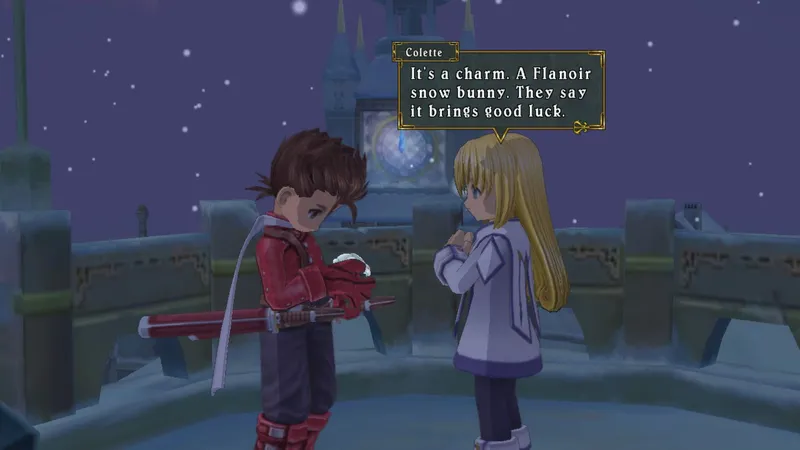
Since many people in the West play Symphonia, they also experience the series and story for the first time, so this introduces bias as they may not be able to judge the story objectively. The original idea of the classic dual world story is great, but numerous other games have used the same concept which diminishes the excitement for it. The 2003 title did have a revolutionary battle system for Action Role Playing games that has now become boxy and linear in comparison to other games. While the series seems to have a lot of talented characters, not many can rival Lloyd for best protagonist and Kratos has one of the best transformations of an enemy to an ally in JRPG history. The game also tackles themes of racism and discrimination in the story of the half-elf which adds a lot of depth that many JRPGs do not have. Given all of this, the game is rightfully placed where it belongs considering what it means in relation to Symphonia and how it has aged over time.
My guess is that like most fans of JRPGs in North America, i think that JRPGs are defined by the 'Tales of' series, and it's most likely the series that shaped our collective vision of the genre's potential. Lloyd is your garden-variety main-stream protagonist who saves the world and tries to eliminate the world's duality by merging both worlds in the process. Without a sophisticated story, the game manages to touch your heart and inspire love for the characters. Colette’s secret, Zelos’ betrayal, Kratos... These examples are just a few of the shared experiences that players have.
4. Tales of Arise (2021)
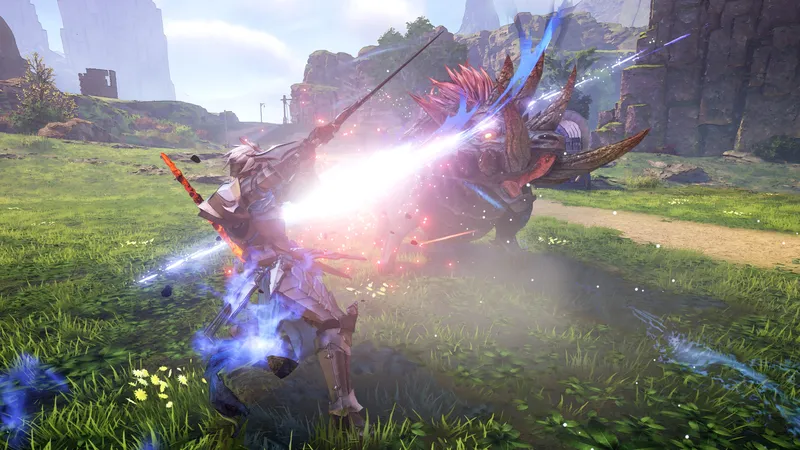
The game's combat system was revolutionary for its time. But now, after a couple of games released after Symphonia like Berseria and Arise, combat feels sluggish due to how arte recharge times and how the vertical axis of combat work. Symphonia is a prime example of how poorly ported PC JRPGs are, as it caps at 30 fps and has a total of 30 JRPG PC features. Nevertheless, it's still on par with the rest of the franchise. Additionally, the game has arguably one of Motoi Sakuraba's best soundtracks, "Fatalize." The nostalgia for Symphonia is almost palpable for me compared to the rest of the genre and that is the reason I placed it here. Check the guide for Ep 50 Tales Of Arise 15 Hours In. Check the Best Action Jrpgs guide.
The second most divisive title is actually two games stuck together and the first 30 hours of the story is split across five realms — each with their own visual aesthetics and localized conflicts, and a free form progression system with the two protagonists making for one of the most fluid experiences in the entire genre. One of the most action packed and fluid JRPG experiences ever created, the game melds beautifully the Boost Attack System, aerial attacks, and individual resource (CP) management to deliver what is arguably the most responsive and addictive battle system in entire Tales From The NT franchise. Shionne is one of the best female characters in modern gaming and the UE (Unreal Engine) latest development platform boosts her to the next visual graphics generation.
3. Tales of the Abyss (2005)
The second half of Arise has strayed so much from the original themes of the story that I can only classify the game as average. The dungeons feel like you are just walking through hallways, and the bosses that you fight are merely health bars. I feel like the overall product is just depleted. When comparing the two halves, the first half of Arise is far superior. From my two playthroughs, I would rate the game a 5 out of 5, a score that I feel is more deserving of the first half, which I would rank an 8, and in the second half I would rate it an average score of 5. While it is definitively among the best of the series, it was extremely disappointing given the almost thirty hours of play time.
Luke fon Fabre is one of the most important characters in the development of Tales of the Abyss. At first, Luke is an extremely spoiled person who is arrogant and self absorbed. He has an extreme sense of entitlement and is obnoxious and selfish. Halfway through the game, a particular event occurs that is the starting point for Luke to begin to understand the consequences of the negative attitudes he has had throughout the beginning of the game. Luke starts out as a spoiled and arrogant child, but finishes the game as a truly sorry and regretful person. Luke's change will give long time players of the series a chance to experience something they have wanted to for a long time, and that is redemption. Luke and the rest of the cast surrounding him especially Tear, Jade and Guy, make up one of the strongest support casts of all time. This game adds the free run battle system, which allows players freedom of movement in a 3D space and has been a staple of the franchise (other than Destiny 2) up until now. With this game comes the field of fonons, which allows players to stand on certain elemental rings and change their artes, increasing the options players have to operate tactically within the already established tactical system of the game. Despite all of that, the games pacing is still the biggest weakness. Many players will continue playing due to the extensive length of playtime that rivals Final Fantasy titles. The highly extended gameplay through Act III really confuses players and doesn't offer much direction, and Luke's character development is even a reason I would consider playing through the game a second time just to see him get his hair cut.
2. Tales of Vesperia: Definitive Edition (2009 / 2019)
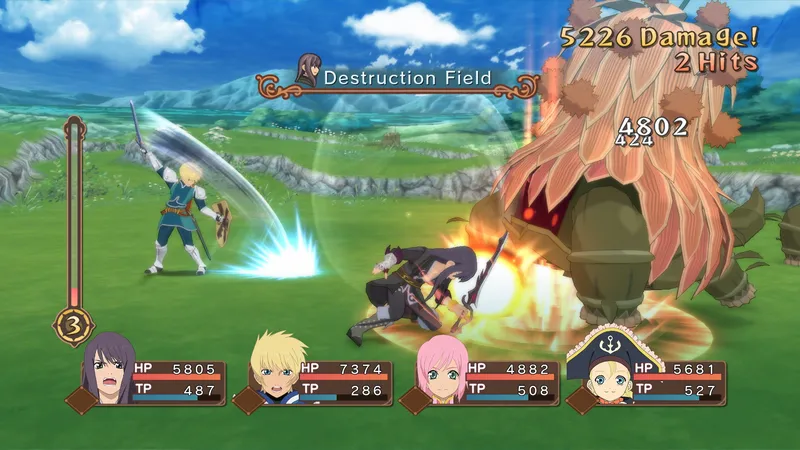
Yuri is by far the most essential lead character in the Tales franchise. Most other main characters have the wish to find the “right thing” and take actions aligned with the ethics and laws of the society they are living in, while Yuri is the complete opposite. He’s an anti-hero (if that’s generous) and the game doesn’t really frame him as particularly good or bad. The game’s moral ambiguity is what separates it from “good” to “great” (for more, see the Best RPGs of All Time guide). The recently re-released party scenes of Patty and Flynn in the Tales of Berseria Definitive Edition don’t have a lot of the original 3rd act content, so there is a lot to be desired when it comes to how the original narratives have been constructed. Some of them appear to be less than typical for this definitive version.
To some extent, Zestiria created a world that felt disconnected. Sorey felt like an untouchable warrior. However, Berseria gave the opposite sensation and, in contrast, gave the player an incredible open world experience. In comparison, the setting in which the players would interact with the characters and the world was rather phenomenal, or at least presented more opportunities for player agency than in prior titles. Each character boasted their unique style of combat, with an emphasis on the player's ability to master the character, unlike previous iterations. The feeling of agency in the gameplay was reflected in the refined dungeons; rather than striving for an open world feeling in the dungeons, the designers focused on creating smaller, more purpose-driven, enclosed environments. The dungeons abandoned the former open world philosophy. In the collection of dungeons, players would encounter a myriad of combat and game mechanics customized for each character and the character's role in the gameplay, which was the antithesis of the closed, single character, gameplay common in prior title inter-character combat. For more, check the best RPGs of all time guide.
1. Tales of Berseria (2016)
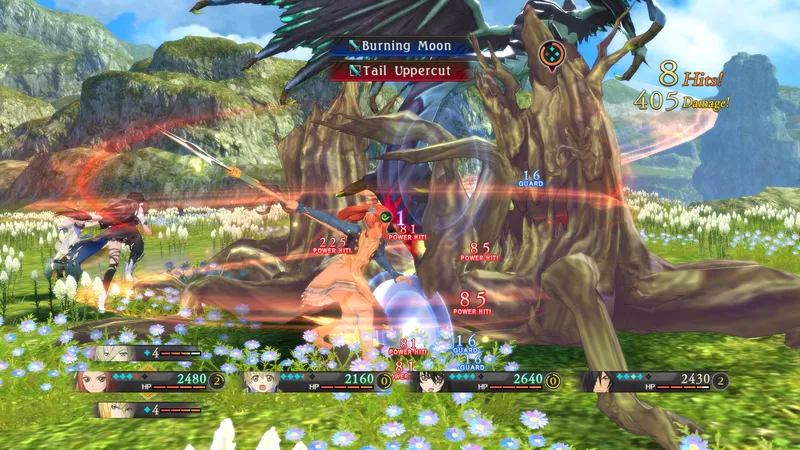
Velvet Crowe's character is both self-serving and destructive but also sympathetic, showcasing something many JRPGs don't even attempt to do. Because of this boldness, I would argue that Berseria is the only Tales game that deserves to top the list.
Unlike the other Tales games, I developed a stronger connection to the combat and the character progression while having fun playing this installment. Velvet Crowe's encounters with various characters made her feel like she was part of a family and that connected her to the greater goal of their shared journey.
Like Zestiria, which is where the combat systems both started and stopped when brought into the game, the game improves on the Combat System with the Soul Gauge system and further improves on player engagement by adding Break Artes/Fatal Blasts/Mystic artes that allow emphasis on relationship development, making it easier to motivate players to get involved with all aspects of the game.
Due to being a prequels to Zestiria, Berseria's ending is more impactful than its predecessors. In addition to character affectiveness, Velvet has a much higher emotional investment than any previous Tales title as while she's experiencing personal growth she is also fighting for something greater.
The Ranking at a Glance
'Tales of Berseria' is the most realistic and darkest JRPG I have ever played. A year after playing the game I still think of the game. If I could recommend one JRPG for past Pellegrini, it would without a doubt be Tales of Berseria. I assume the majority of you, if not all by now, are in full agreement with this. For those who want tips on how to start delving into the wonderful world of JRPGs, here are some of my guides: Best JRPGs On Nintendo Switch, Best JRPGs On PS5, and Ep 50 Tales Of Arise 15 Hours In.
Best JRPG's On Nintendo Switch Best JRPG's On PS5 Another must-see guide is Tales of Berseria Contact Guide for All Locations and Tips.
For now, my last stop is Tales of Berseria, but I am willing to discuss other future franchises. The only thing that will convince me to change my mind about a future franchise is a reasoned debate about which one will improve and/or elevate the franchise. (Tales of Arise on Steam)
All Logos and Images released are under the ownership of Namco Bandai Games and its Title. Check the Best Jrpg Battle Systems guide. Check the Best Jrpg Soundtracks guide. Check the Jrpg Meaning guide. Check the shorter JRPGs guide. Check the Jrpg Recommendations 2026 guide. For more narrative-focused content, check our ranking of JRPGs with the best stories.
What is the best Tales of game?
Tales of Berseria (2016) is the best Tales game. Its revenge-driven story with Velvet Crowe, the Soul Gauge combat system, and the morally complex cast make it the most emotionally compelling entry in the franchise. Berseria sits at #1 on this ranking for combined narrative ambition + combat depth + character writing — three criteria where it consistently outperforms the other 7 mainline entries.
What Tales game should I play first?
Start with Tales of Arise (2021) for the most modern and accessible experience — it has the best visuals and most refined combat. If you want the best story, start with Tales of Berseria. If you want a classic JRPG entry-point, Tales of Symphonia (2003) is the foundational Tales experience that defined the modern franchise template. Avoid starting with Zestiria or Graces f — both have known pacing issues that may discourage newcomers.
Is Tales of Arise worth playing?
Yes, with a caveat. The first thirty hours of Tales of Arise — covering five realms with distinct conflicts — are genuinely excellent, with the best action combat in the franchise. The second half suffers from pacing issues common to Tales entries, but the character chemistry between Alphen and Shionne carries the slower stretches. Available on PS4, PS5, Xbox, PC, and Switch. The Beyond the Dawn DLC adds a 15-hour epilogue worth playing if you connected with the cast.
How does Tales combat differ from other JRPGs?
Tales pioneered the Linear Motion Battle System (LMBS) in 1995 — a sideways-scrolling real-time action combat layer that feels closer to fighting games than to traditional turn-based JRPGs. Each character has unique combo strings, special arts that consume TP/CC/AG depending on the entry, and the camera locks onto enemies for tactical positioning. Tales of Arise modernized this into full 3D arena combat. The combat system is the franchise's primary differentiator from Final Fantasy, Persona, and Dragon Quest entries that use turn-based or ATB systems.
Which Tales games are available on Nintendo Switch and modern platforms?
Tales of Symphonia Remastered (2023) and Tales of Vesperia: Definitive Edition (2019) are both on Switch alongside PS4/Xbox/PC. Tales of Arise launched on PS4/PS5/Xbox/PC in 2021 and is the most modern entry. Tales of Berseria is on PS4/PC (not Switch). Tales of Xillia and Tales of Graces f are PS3-era games that haven't been remastered for modern platforms as of 2026, though a Graces f Remastered was announced for 2025. The franchise is gradually consolidating onto modern platforms but legacy entries still require PS3 emulation or backward compatibility.
What's the difference between Tales of Symphonia and other entries?
Tales of Symphonia (2003 GameCube) is the franchise's foundational modern entry — it established the dual-world structure (Sylvarant + Tethe'alla), the 3D-rendered exploration model, the cooking system, and the affection-based character relationship mechanics that later Tales games refined. Symphonia is more JRPG-traditional in pacing (40-50 hours main story) compared to modern entries like Arise (40 hours) or Berseria (50 hours). For franchise history purposes, Symphonia is essential reading. For first-time players, Arise or Berseria are easier entry points with more refined combat.