
Atlus is the most consistent JRPG developer working today. While other studios chase trends or stumble through identity crises, Atlus has spent three decades building a catalog that ranges from demon-negotiating dungeon crawlers to high school social simulators to a puzzle game about a man afraid of commitment. What holds all of it together is a refusal to play things safe — every Atlus game has an edge to it, a willingness to be strange, difficult, or emotionally uncomfortable in ways that most developers avoid.
I have been playing Atlus games since Persona 3 consumed an entire summer of mine in 2007, and the studio has not released a single game since then that I would call boring. Flawed, sometimes. Niche, often. But boring? Never. This ranking of the twenty best Atlus games considers the full catalog — Persona, Shin Megami Tensei, Etrian Odyssey, Vanillaware collaborations, and the oddities in between — and ranks them by quality, impact, and how well they represent what makes this studio irreplaceable.
For more JRPG rankings, see our Persona ranking, the best JRPG stories, our soundtrack picks, or browse the complete best RPGs of all time and JRPG tier list.
20. Trauma Center: Under the Knife

The games marketing team seems to have gone completely bonkers, because this game appears to have nothing to do with the actual product, which seems to be a pseudo-anime surgery simulator that has been included in countless 'weird game' lists on the internet. This game seems to be made for the zoomers that have been cutting on the DS for ages. Using the DS to perform surgery through insane modes of emergency surgery, cut and stitch, drain and laser through obstacles, the player must complete the operation, boss fight style, and with a curved difficulty to boot. This game seems to get developed by the team of crazies that keeps making games with the same mystery illness outbreak and a story that is fully insane and most likely only licensed by Atlus. In essence, the game's achievements might be the same as the ones developed for all other companies that have a very blatant disregard for market expectations. They made a super weird surgery game with an anime story, cut-scenes, and crazy difficulty made thirty something year old grown adults chuck their DS across the room. That is sheer undiluted creative design, which makes Jardines face Atlus against all other Japanates.
Wayfarers of Time is sort of the secret game that is passed around the atlus community. This is a tactical RPG with really time-based combat, and story branches that are very reliant on the players chosen relationships with time and space, i.e. socializing with certain characters to unlock certain narrative strands. It's action RPG with an added layer of strategic depth, because at the end of the day, placement and timing are always going to matter more than the raw computed stats.
19. Growlanser: Wayfarer of Time

Few gamers likely know when the title was released. While the game came out in 2012, it was released on the PSP, a system that by that point was dead in the West. But for those who care enough to track down a copy, Growlanser IV shows that for better or worse, Atlus is willing to localize even the most niche Japanese titles that go unnoticed by other publishers. That dedication to the underserved niche is a large reason for their loyal fanbase.
Odin Sphere Leifthrasir is the most beautiful game published by Atlus. Environment and character assets are hand drawn and each frame looks like a painting. The game was developed by Vanillaware and they are given a chance to show that their art direction is unparalleled. These hand-drawn assets are combined with 2D backdrops and characters fight in layered battlefields that are parallax scrolling like a stage in a theater.
18. Odin Sphere Leifthrasir

The game offers five epic indiviudal design stories that are all interlaced to form a single Norse-inspired cataclysm. Each protagonist is a different angle to provide a veiled prespective to the entire cataclysm. Each protagonist's story is distinct from the others. Even the Leifthrasir's cooking system is absurdly over. It is a world better than the original. If you have yet to experience a Vanillaware game, this is the perfect opportunity. Because Atlus thought this game deserved to be localized, you may play this title in English.
Dragon's Crown Pro is a side-scrolling beat-em-up with RPG elements, and the closest thing to a modern Golden Axe we've got. It features six character classes, each with a distinct playstyle and differing RPG elements, loot drops, and even boss fights that take coordination to win when playing with friends. There are mixed opinions about the art style and design of Vanillaware games, especially with the exaggerated character proportions, but the game play is solid.
17. Dragon's Crown Pro
What gets it on this list is the co-op experience. Playing Dragon's Crown with four players is chaotic, satisfying, and infinitely replayable. The post game dungeon The Tower of Mirages is a true challenge that will put even maxed out parties to the test, and the randomly generated dungeon paths ensure each run is different. It's not Atlus's most complex game, but it could be their most enjoyable.
Etrian Odyssey is the franchise that shows that Atlus doesn't need an interesting story to create an interesting experience, because the story in Etrian Odyssey is nearly absent. You assemble a group of adventurers, don your best explorer's hat, and descend into a labyrinth, then map it out using the document and sketching sheet provided. The appeal is purely in the gameplay - party composition, managing limited resources, and the satisfaction of mapping out every inch of the labyrinth one floor at a time.
16. Etrian Odyssey HD
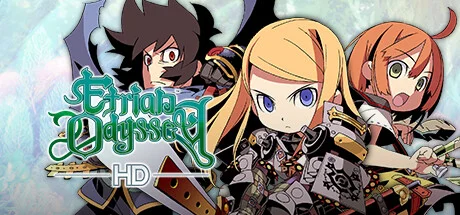
The Switch HD remasters include updates like new illustrations, re-recorded soundtracks, and the ability to change the level of difficulty to create a more user friendly experience while still keeping the tension. If you're curious to experience the raw, unrefined, and tougher experience then Etrian Odyssey is the answer. It might also just be the game you'll play for the next few months.
Along with the rest of the Shin Megami Tensei series, Devil Survivor 2 has a system where demons can be summoned to fight as well as a bevy of other features. That means there are multiple layers of depth with regard to party composition, as there are human characters as well as demonic ones. Then, to add even more complexity to the game, there is a social linking system lifted from the Persona games. On top of that, the game features a branching story that allows the player to experience multiple endings, making it one of the best games on the 3DS.
15. Devil Survivor 2: Record Breaker

Instead of simply remastering the game for the Triangulum arc of Devil Survivor 2, the game achieves the perfect combination of remaster and expansion pack. It features a story that, depending on your viewpoint, can have either an alien invasion or invasion of aliens that is in place of an invasion of a more traditional alien invasion narrative. Still, the game has a combination of solid features, so it has plenty to be viewed as less than absurd, even if the entire premise is. For me, Devil Survivor 2 is the title I point others towards if they want a package title for the whole Persona series with the added expectations of having to engage in tactical combat.
An embarrassment of riches allows for Atlus to compete with the all-time classic Chrono Trigger with Radiant Historia. The title winner, Stocke, is a spy in the middle of a conflict between two nations, and he is in possession of a book that allows him to traverse between two timelines. Completing one timeline provides the means to previously unreachable endpoints in the other, and the game masterfully has a simplistic "beautiful" node map that spreads like wildfire to document your choices every step of the way.
14. Radiant Historia: Perfect Chronology

Some people might see the added third timeline and new ending for the 3DS version of Perfect Chronology as an extension of the software, and others might see it as a waste of development resources. However, there is no question about the quality of this title — solid writing, an innovative battle system and an emotional story that does not rely on cheap genre tricks. Few people seem to appreciate Radiant Historia as one of the best time travel JRPGs, and that is a shame.
Tokyo Mirage Sessions is the game that all Atlus fans pretend does not exist, and that is a pity, for it is one of the best. It may sound like a parody however the game does not wink at the user at any time. In this game you play as Japanese pop idols who team up with Fire Emblem characters to fight evil through the power of performance.
13. Tokyo Mirage Sessions #FE Encore

The real star of the game is the battle system. It is visually pleasing to perform a lot of actions in one combo, and the system that is designed to take advantage of all the weaknesses of all the other participants in the fight is capable of achieving this. The dungeon design is colorful and inventive, the difficulty is tuned well, and the game maintains a pace that never drags. Tokyo Mirage Sessions deserved better sales, and anyone who dismissed it based on the concept is missing one of Atlus's most polished combat systems.
Catherine isn't even an RPG! It's a puzzle game where you help a character (who's name is Vincent) cheat on his girlfriend and have nightmares where he has to climb towers made of blocks or else he dies. The fact that this was even made and sold well enough to get a remaster says everything about what kind of ambitions this studio has. No other major Japanese developer would ship a game about relationship anxiety where all of the gameplay consists of block puzzles and the story asks really uncomfortable questions about commitment and honesty.
12. Catherine: Full Body
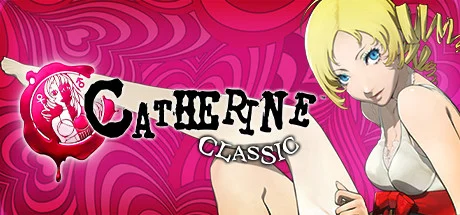
Full Body has a new story, new puzzle types, and an additional route that surprisingly adds a third option to Vincent's romance crisis. The multiplayer Babel mode is also really fun, and surprisingly competitive block climbing is more fun than it rightously should be. This game is a risk, and the fact that it pays off is fantastic. This studio is really good at making the player care about the things that you otherwise would not care about, and they really hit it out of the park this time.
Metaphor: ReFantazio is Atlus showcasing the ability to create a franchise and make it feel like it has already been around for twenty years. The game takes the calendar system from Persona and puts it in a Western fantasy world where you travel through a kingdom to become its ruler. The Archetype system replaces the Persona system and has job classes that change based on your relationships and decisions, and the combat combines turn based with real time for weaker enemies.
11. Metaphor: ReFantazio
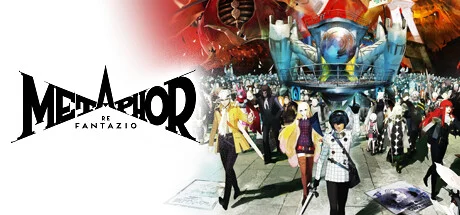
What stops Metaphor from ranking higher is that sometimes it feels like Persona in a costume. The social system, calendar system, anime archetype characters, they are all here just in fantasy costumes instead of school ones. But the world building is great, and the ambtion is clear. Also the fact Atlus has a brand new IP of this quality in 2024 is surprising. Most studios would have made Persona 6 instead.
The most brutal title from Atlus, without question, is Digital Devil Saga. Your party isn't just a gang of demon summoners — they become the demons. Each of the characters can transform into a demon and absorb enemies, and the game is gloriously unapologetic about the horror of that concept. The setting of the game takes place in an endless wasteland of purgatory called The Junkyard. It is richly detailed, immersing the player into its hellish world, and rife with story potential.
“It is Persona meets Fire Emblem meets Tactics Ogre, and somehow it works. Atlus took a massive swing and connected.”
10. Digital Devil Saga

The story is expanded upon in two games. The first game establishes the context, sets the goals, and creates the characters, and then ends on a shocking cliffhanger that completely changes the scope of the whole game. In the second game, the goals become a sprawling cosmic scale. Coupled together, they contain one of the most underrated humanistic narratives in any Atlus title. It is fascinating to see a story where the characters are literally discovering and feeling emotions for the first time, and they explore what it means to truly be human.
The most bold narrative from Atlus is possibly the most unique of any game in the industry: 13 Sentinels: Aegis Rim. Thirteen protagonists, five time periods, and an incomprehensible mystery with time travel, aliens, and simulated realities. Every character brings a new perspective on the same story, and the intertwining plots unfold with a staggering complexity and wonderfully intricate design that demands the player replay scenes multiple times to truly appreciate each of the layers.
“The Junkyard is the best setting Atlus has ever created. And they made you eat people in it. Peak Atlus.”
“If you only play one non-Persona Atlus game, make it Digital Devil Saga. Both parts.”
9. 13 Sentinels: Aegis Rim
The RTS sections in the game are a bit contentious; while people who appreciate the depth enjoy it, those who dislike it feel it takes focus from the story. And yet, the other half of the game is done fantastically. The 2D art from Vanillaware sets a tone that changes from pseudo high school romance to a kaiju based destruction without losing its quality. The writing shows confidence and expects people to juggle 13 plot lines to the conclusion. 13 Sentinels is as unique as the other games in its catalog and that is why it belongs.
Nocturne is the game that taught the SMT franchise to the Western audience. The player is a high school student who survives the end of the world and wakes up in the Vortex World. The Vortex World is a hollow sphere that is populated by demons as well as waking up in a world populated by demons. Most of the game takes place outside of the “safe” areas of the starting zone and within the competing factions that contain former schoolmates whom are attempting to reshape reality in accordance to their philosophies. There are no right answers. Each ending concerning alignment has solid reasoning yet terrible outcomes, and the game expects players to feel the weight of those decisions.
“I have never played a game that made me feel smarter for finishing it. Every loose thread connects.”
“13 Sentinels makes every other non-linear narrative in gaming look like a first draft.”
8. Shin Megami Tensei: Nocturne HD
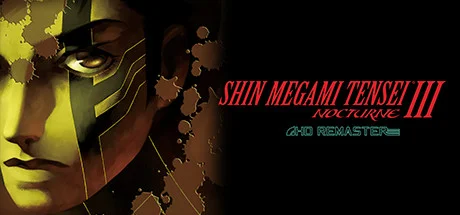
The Press Turn system is the greatest of its kind. It's elegant, demands players to use their skills, and became the building block of all Atlus games to come. The HD Remaster has been altered to include voice acting, suspended saves, and a controllable difficulty for the players that want the story and none of the combat. The combat is what is most important. Nocturne is the most uncompromising game.
Etrian Odyssey IV is one of the best games in the Dungeon crawling franchise and when it was released on 3DS it was super amazing because of the hardware \\"map-drawing system\\" because it made the game super immersive. Players could draw the maps themselves on the stylus and use the navigation on the top screen. Also the overworld made the player feel like they were actually exploring an overworld with their airship. The game even has a class system with tons of different compositions and the FOE system made players have to think a lot to find the best path to avoid the floor threats.
“Matador is still the greatest difficulty wall in JRPG history. If you can beat him, you can beat the game.”
7. Etrian Odyssey IV

EOIV stands above the rest of the games because it is the best balanced. The game has super good post game content and an endgame challenge that is cooldown and does not feel like it is dragging on. The game is 60 hours and it maintains the excitement for the players. It has no competitors even not including other games and Etrian Odyssey IV is now one of the best and more definative first person dungeon crawling games.
Persona 3 Reload is what happens when Atlus applies seventeen years of refinement to the game that started it all. The original Persona 3 invented the calendar-driven social simulation that defined the franchise, but it was rough — Tartarus was repetitive, you could not control party members directly, and the Social Links were uneven in quality. Reload fixes all of it while preserving the story's emotional core: a group of teenagers who summon their Personas by shooting themselves in the head and spend their final year of high school fighting Death itself.
“The airship exploration is the best overworld system the franchise ever had. EOIV is the complete package.”
6. Persona 3 Reload
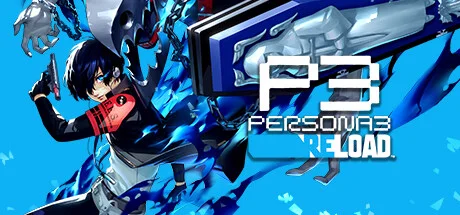
The revamped Social Links are the most notable improvements. Characterization has always been a weak spot for the series, especially for the male party members, but now they have some of the most compelling arcs in the game, on par with the best content of Persona 5 Royal. The revamped battle system, along with the P5R styled UI and Baton Pass, makes exploring Tartarus an actual fun experience instead of a chore that you have to do to progress the story. Reload shows that the themes of connection and transience present in Persona 3 are still relevant today, and the game deserves a worthy presentation of these themes.
Shin Megami Tensei V: Vengeance features one of the best pure battle systems in gaming, and is arguably the best battle system that Atlus has created. The Press Turn system has never been so good - deep demon fusion, resource management through aggressive play, and aide boss mechanics that scream puzzle game design. The game Da'at overworld encounters become challenges because of the design, meaning, and effort to minimize random encounters.
“They finally gave Junpei the Social Link he deserved. Reload makes the original feel like a prototype.”
“I cried at the ending in 2006 and I cried again in 2024. Some stories do not expire.”
5. Shin Megami Tensei V: Vengeance
The Canon of Vengeance path adds depth to what was considered the original game's biggest flaw — the story. Vengeance fleshes out a previously thin tale with cutscenes, new characters, and added moral complexity, bringing it closer to what fans of the franchise expect. Vengeance also adds open world exploration, allowing players to explore vast, brand new wasteland environments filled with demons and treasures, shifting away from the linear corridors of previous titles. Overall, SMT V: Vengeance is the game that should have been the original.
Persona 4 Golden brings warmth and positivity compared to what the darker Persona 3 offered in terms of story. Through the lens of transience and sadness that the third installment of the franchise adopted, fourth stepped thematicaly into the realms of promise and opportunity by focusing on the bonds made through friendship and self election. This aspect of relationship construction, of being, non-instrumentally bound by an obligation of a determined role and class in an organization, voluntary participation to solve a social mystery, and non-destiny driven, fundamentally alters the nature of the relationships and of social links in P4 Golden. This is why P4 Golden is still able to offer the gold standard of social links and why it still holds the standard for social links after 15 years of games being released in the franchise.
“Vengeance fixes everything wrong with the original. The Canon of Vengeance route is the best SMT story since Nocturne.”
“The demon fusion in this game consumed three weekends of my life. No regrets.”
4. Persona 4 Golden

In our Persona ranking, I mentioned P4G, and I still think this is the most emotionally honest game that is developed by Atlus. The rainy days in Inaba, hanging at the Junes food court, the school camp trip — these are all not side activities, these are the game. While the framework is the murder mystery, the real substance are the friendships. It’s extremely satisfying to watch the train pull away from Inaba station at the end and the Investigation Team run after the train. That scene rewards you for every hour you put in.
Shin Megami Tensei IV shows what the SMT franchise does more uniquely than any other JRPG, and that is to pose moral questions to the player, and not give them the answer. Instead of simply making the player choose one of three paths, the alignment system, Law, Chaos, and Neutral, gives players the ability to answer the political and philosophical questions posed by the game. However, these questions do not have clear conclusions. Each ending of the game is terrible, yet some portray the world in a way that is tantalizing. The only way to classify an ending as ‘good’ is to consider the player’s ability to live with its repercussions.
“P5R is the better game mechanically. P4G is the better experience. There is a difference.”
“I bought a Vita for this game. I would buy another one tomorrow if I had to.”
3. Shin Megami Tensei IV

The gameplay is just as uncompromising. The Smirk system builds on Press Turn by granting critical hits a temporary boost, potentially turning a winning battle into an overwhelming loss, or wiping your entire party if the enemy gets it first. The refined version of negotiation returns, the fusion system is deep enough for hundreds of hours of optimization, and the difficulty curve is steep, but never unfair. SMT IV is the game I bring up when people ask why Shin Megami Tensei deserves to stand next to Persona instead of in the shadows.
Some might argue that Persona 5 is the best polished-out JRPG. Every menu transition is animated. Every victory in battle has an added flourish. Each piece of UI design has its own personality. And the Phantom Thieves aren't just characters in the game; they're a brand. That said, Persona 5 Royal is committed to the brand and aesthetic of the game to an extent that makes almost every other JRPG look boring and bland. It's a game where the style is the substance. And that substance is 130 hours of engaging turn-based social combat, social simulation, and palace exploration. That never loses.
“The descent from Mikado is the greatest single moment in Atlus history. The game earns it.”
“No other JRPG makes me agonize over dialogue choices the way SMT IV does.”
2. Persona 5 Royal

Atlus has outdone themselves in the detail and care of the added 'third semester' of 'Persona 5 Royal.' This semester centers around Dr. Maruki, a therapist who has the power to rewrite reality. He uses that power to give people perfect lives. He even goes as far as to heal broken relationships and bring people back from the dead. The game poses a moral question that challenges the player; a life without obstacles or struggles is meaningless. Persona 5 Royal is not just a stylish game, it is a game that trusts the player to take on the challenge and wrestle with the moral dilemmas presented.
“I have never played a game that looked this good while also being this long and this deep.”
“The third semester alone justifies the Royal upgrade. Maruki is the best villain Atlus has ever written.”
“Every JRPG released after P5R has to answer one question: why does your menu look worse than theirs?”
1. Persona 3 FES

Persona 3 FES is the most important game Atlus has ever made. Not because it is the most polished — Persona 5 Royal surpasses it mechanically in every way — but because it invented the formula that transformed a niche studio into one of the most influential RPG developers in the world. Before Persona 3, the franchise was a cult series about demon summoning with modest sales and minimal Western recognition. After Persona 3, it became a cultural force that redefined what a JRPG could be about.
The concept of using an evoker — a gun-shaped device pointed at your own head — to summon your Persona is still the most audacious design choice in JRPG history. It is a mechanical metaphor for confronting your own fears, and the entire game orbits that idea. The Dark Hour, the Tartarus tower, the Social Links that measure the time you have left against the connections you choose to make — every system in Persona 3 serves the same thematic purpose. You are a teenager counting down to an ending you cannot avoid, and the game asks you to find meaning in the time you have left.
I played Persona 3 FES for the first time during the summer of 2007, and I have carried it with me since. The ending does not cheat. It does not flinch. It delivers exactly what the story promised from its opening hour, and the fact that it still moves people who know what is coming is proof that some games transcend their mechanics. The Answer — a thirty-hour epilogue included in FES — forces you to sit with the consequences of that ending, and it is one of the most emotionally intense experiences Atlus has ever created.
Persona 3 FES is number one on this list because without it, modern Atlus would not exist. Every game ranked below it exists because Persona 3 proved that this studio could make something that mattered beyond the audience that was already paying attention. Persona 5 Royal is the more refined game. Persona 4 Golden is the warmer one. But Persona 3 FES is the one that changed everything.
“I played Reload and loved it. Then I went back and played FES, and I understood why people will never let this game go.”
“P5R is the best Atlus game. P4G is the most lovable. P3 FES is the one that matters most.”
“The Answer is forty hours of grief disguised as a dungeon crawler. Atlus does not let you recover from the ending.”
Atlus has spent thirty years proving that niche does not mean lesser. From the demon corridors of Nocturne to the pop idol stages of Tokyo Mirage Sessions, from the surgical nightmares of Trauma Center to the philosophical impossibilities of Persona's final bosses, this studio makes games for people who want more from the genre than spectacle. For more JRPG content, explore our best JRPG stories ranking, the best JRPG soundtracks, or browse the full best RPGs of all time.