
The classic tales of past generations were once thought of as "legends." At the time these legends were created, they would serve as benchmarks for future generations and ultimately serve to create a great example of what a true Legend is. When it comes to Romance RPG's, there are three such titles that are often referred to as the "Holy Grails" of the RPG genre. These three titles are those that I believe exemplify the most beautiful storytelling, provide the most depth of character development, and the most profound ability to create a true feeling of empathy for the relationships between characters, despite the fact that these relationships are based on fictional representations of life. It is not the fact that these Romance RPG's contain Romance as a part of the overall game; it is because of the fact that Love, Connection and Heartbreak form a core element of the actual game. I have devoted hundreds of hours to each of these games and have replayed each title a minimum of three times - it generally occurs as a result of staying up all night, trying to figure out the best way to respond to different characters, or reloading my game save prior to making a poor decision about one of the characters that I have become so attached to. So, what are these three RPG's? Here they are:
For information related to specific platforms for JRPG video games, see our PS5, Switch, Steam, Xbox, PS4 and PS2 video game directories. The JRPG Tier List page will provide tiered rankings of the best JRPG Video Games across multiple platforms. The Best RPG Games of All Time article contains details concerning the best ever made RPG Video Games. The Final Fantasy VIII video game story is centered around whether a person with no emotion can learn to love. Squall's transformation from being in a deep "bubble" of loneliness to being able to hear Rinoa declare her love for him in the vast emptiness of space when he tries to find her is one of the best experiences of vindication we've ever received from a video game: to see a protagonist prove he deeply loves someone, even at the risk of being hurt by them. The moment that Rinoa speaks the words "Eyes On Me" to feel as if she is dancing with Squall, as well as the way that Rinoa and Squall's connection grows and develops through obstacles and struggles, is one of the greatest love stories of all time and is inscribed into our hearts forever. See the Best Ps1 Jrpgs guide. See the Best Snes Jrpgs guide. See the Best Psp Jrpgs guide. See the Best Gba Jrpgs guide. See the Best Ds Jrpgs guide. See the Best 3Ds Jrpgs guide. See the Best Vita Jrpgs guide. See the Best Rpgs Of All Time guide.
Final Fantasy VIII — The Love Story That Saved the Universe
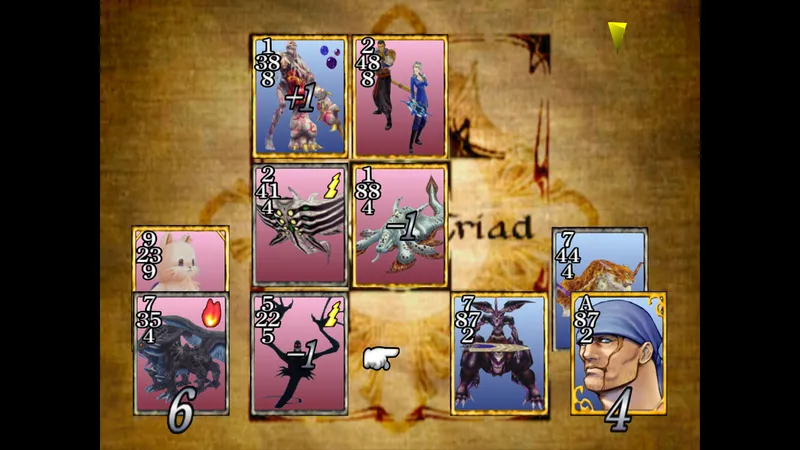
What makes the love story told throughout Final Fantasy VIII different from every other love story found in the many Final Fantasy titles is that Squall and Rinoa do not use large romantic gestures to express their feelings towards one another. Instead, they build their relationship through a series of small interactions that feel earned due to the difficulty with which Squall expresses himself towards Rinoa. The ballroom dance is an obvious focal point of the love story, but the true foundation of their relationship lies in the juxtaposition between Squall's internal thought process and his external dialogue. The player sees both Squall's internal and external self at the same time, and that is where most of the development of the love story occurs. Therefore, when Squall ultimately chooses to find Rinoa during the ending sequence, it feels like a natural conclusion to the love story and not a result of a forced romantic ending.
The Junction system of Final Fantasy VIII has received criticism for its complexity, but it provides a unique and powerful context for depicting the love story of Squall and Rinoa that most gamers fail to recognize. The entire system of magic is built on drawing upon power from external sources and then becoming bound to that power. Squall actually grows stronger through attachment to things that exist outside of his own being. The game does not beat around the bush with this metaphor. There is no question as to whether or not FFVIII believes in the reality of Love as a source of power; it creates mechanics and a story based on that belief. Other RPG's have not demonstrated this level of commitment.
What sets apart the presentation of Love in FF8 from other games is that throughout the entire 40+ hours of gameplay, Squall is unwilling to express or experience any kind of emotional connection to other characters or his environment. When he finally decides to lean on Rinoa for help, roughly 40 hours into the game, there does not feel like a "forced" moment within the plot to push him towards that point; rather it is as if an actual wall has just been torn down. The scene in space is so amazing because there has been 50 hours of the game spent building that wall, and Rinoa has been immensely patient for that wall to finally begin crumbling down. No other RPG has developed a climax of gameplay through such a long-term avoidance of emotional connections and has then culminated in an experience that threatens to destroy one's very soul.
P4G did what P3 began and perfected the use of romance by allowing the player to not only engage in romantic relationships in-game but to also feel as if they are much like the protagonist when they engage in such romantic relationships instead of feeling completely disconnected. Players with the SS system of Persona 4 Golden can select who they would like to spend time with, who they will confess to, and which character’s Christmas Event they will participate in: Resei's fun-loving persona; Yukiko's nurturing presence; Naoto's uncertainty; Chie's excitement around the protagonist. Each of these characters brings many differences to each other, providing the necessary foil or bridge for the romance paths in P4G; however, as people who live in a small town such as Inaba, the love interests in your particular case are influenced by the concept of living in a small town in Japan - as opposed to having two world-saving heroes falling in love at the end of the apocalypse. Refer to the Every Persona Game Ranked analysis for further details.
Persona 4 Golden — The Romance That Feels Like Your Own
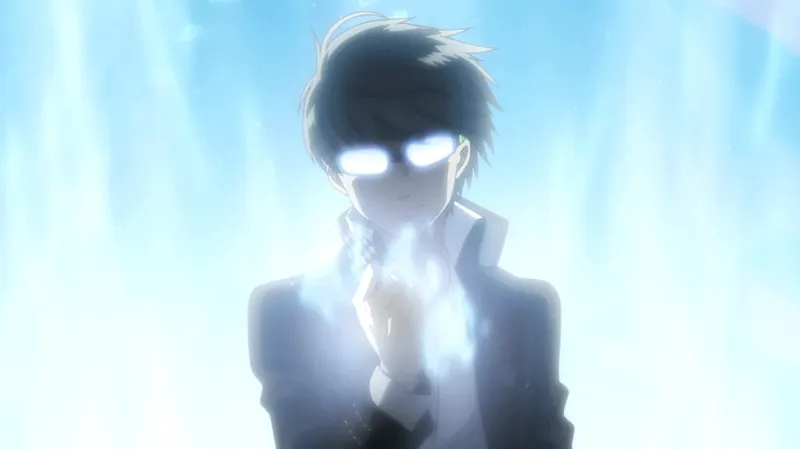
Persona 4 Golden does an excellent job of creating romantic relationships because it recognizes the way people become attracted to one another by having shared experiences and living within close physical proximity of one another. You build the social link with the Investigation Team while participating in a year-long investigation following the murder of your friend. Then the social link relationship evolves into genuine friendship and eventually into something romantic as a result of the amount of time spent together building intimacy and trust within the context of developing a platonic relationship. You are not just selecting a potential romantic partner from an a la carte menu to choose from but rather you are spending time with individuals, addressing their problems, assisting them in resolving their crises, and ultimately determining whether you will pursue a romantic relationship with them. The game does provide a unique environment whereby it does not rush you into entering into a romantic relationship; therefore, the romantic relationships developed within the game develop much more meaningfully as a result. See the Every Persona Game Ranked guide.
In summary, the Inaba setting lends so much more support to all types of relationships (platonic, romantic, or otherwise) within the game. An RPG based in a large city cannot achieve the same level of intimacy and connection between characters as an RPG set in a small town, like Inaba, can due to the overwhelming size of a large city diminishing that connection as a player must travel far distances between characters. Inaba has a strong rhythm to the game and the way that friendships develop; the player frequently visits the same locations and runs into the same people consistently. You go to school with your friends; you hang out with your friends in the shopping district; you eat lunch with your friends in the Junes food court - these locations do not serve as significant plot points but rather as small moments during a Tuesday afternoon that are more important to the player's character than the majority of the climactic boss battles in other RPG games.
The romance mechanics in P4G breathe life into the town of Inaba and make it feel real. Junes on a rainy day, summertime festivals, and studying for tests on Dojima's table create a sense of home and comfort that high-fantasy RPGs cannot recreate due to their focus on epic struggles across many locations. For example, your relationship with Rise and Yukiko is not built upon world-saving acts about the help of other NPCs to save the world; it is built by the player and Rise or Yukiko sharing a school-rooftop lunch together, walking home together in the rain, and doing absolutely no activity on a Sunday. P4G shows that love is not created in the big moments of life, but in the small, normal moments that take place before those moments occur. The game offers players many daily experiences to help cultivate a sense of the love story between Estelle and Joshua over two games (Trails in the Sky: FC and SC). I feel confident standing up for my assertion that Estelle and Joshua's love story is the best ever found in a JRPG if someone disagrees. FC takes 40 hours to create a solid friendship that culminates in the last 10 minutes of the game as the love that develops to its natural conclusion once the game ends, feels like a culmination of the romance plot instead of a shock. SC then takes 40 more hours to provide more stressors on the love relationship by separating the two characters, creating new forms of betrayal, and providing the characters with consequences for Joshua's past. Over the course of both games, Falcom has provided ample time to allow gamers to build an emotional connection to Estelle and Joshua as characters through the development of their love relationship. After a combined game time of 80 hours with Estelle (FC) and Joshua (SC), the ending of the game has the same emotional impact on the player as Estelle's and Joshua's joyful moments combined. What sets Estelle's and Joshua's love story apart from other JRPGs is that the structure of their love relationship is very intentional. Falcom spent the first 40 hours playing the role of best friends, so Estelle's and Joshua's first love story doesn't begin until the final cut scene of the first of the two stories. Their first story is not a subplot of another story; rather, it is the unique joint creation of their love story. The next development of their love story occurs in the second story (Chronicles II) when they face additional trials of their love and the betrayal of their respective characters and whether or not Joshua is worthy of the chance to have the life with Estelle following his past wrongdoings.
The mechanism that makes FC and SC a good love story for Estelle and Joshua is that Falcom devoted hundreds of hours to establishing the love relationship between the two characters through shared experiences before creating romantic moments. Therefore, most of the time spent in FC will not seem like the start of a romantic relationship. Many players will realize that Estelle and Joshua share a strong friendship with their playful banter, travel together in a car, solve problems in small towns, and develop emotionally as they spend time together. The emotional relationship between Estelle and Joshua is so gradual that many players will not even recognize their emotional development was taking place until the climactic point in the end of FC. The ending climax will feel much more impactful than it would if Estelle and Joshua's love relationship had taken place over 40 hours of gameplay prior to being separated in the end of FC.
Trails in the Sky FC + SC — The 80-Hour Slow Burn
The SC series takes an emotional route that leads to a payoff deserving of all 60 hours. The reunion scene is one of the most beloved scenes in the entire JRPG genre largely because Falcom did not cheat out of doing the emotional work. The journey Estelle takes to find Joshua is like the player's investment into that relationship. By the time they finally reunite, you have spent more time with these characters than most people do on an entire trilogy of video games. This investment pays off in a way that 20 hr JRPG's just can't match. See the Trails Kiseki Games In Order guide.
I also give some background on other romantic JRPGs besides just the 3 I listed in my guide to media in JRPGs (over 25 titles with dating mechanics). There are certainly many other games with great romance, including Final Fantasy X, Persona 5, Fire Emblem: Three Houses, and Xenoblade 2. However, the 3 games that formed the backbone of my argument all feature one commonality that makes them stand out: Romance is not just an element of the game, it is the foundation on which these 3 games were built. Remove Squall and Rinoa from Final Fantasy 8 and you have an empty shell of a video game. The removal of the social links in Persona 4 renders the game a simple dungeon crawler with no potential for other types of gameplay experiences. For example, if you removed Estelle and Joshua from the Trails (Kiseki) series, the entire series would not constitute emotional investment as all Trails experiences build upon the established relationships between the two characters throughout the series.
Romance in role-playing games affects the entirety of the approximately 100-hour experience; therefore, there hasn't been a game released since 2004 that can take a separate footing from or build upon any of these titles. A complete guide outlining all the emotional/romantic role-playing games can be found in the JRPGS WITH GREAT LOVE STORIES OR ROMANCE OPTIONS.
All romantic RPGs I've played borrow from one or more of these three examples: Final Fantasy 8 (VIII) shows that the main character's internal struggle against love can create the centerpiece of the game's (AAA) plot; Persona 4 shows that dating sim games can create authentic relationships based on more than just transactions; and Tales of Symphonia (FC+) and Tales from the World (SC) show that extended times of familiarization will add more value to a romantic relationship than shorter periods.
Why These Three?
Games like Fire Emblem Three Houses, Xenoblade Chronicles 2, and Mass Effect are all excellent examples of how well these three principles are used in the development of romance in role-playing games. By incorporating elements from each of the three templates outlined here, you can gain insight into how well ROMANTIC RPGS work and if they will. See the Jrpgs With Great Love Stories Or Romance Options guide.
By playing these three games sequentially (Final Fantasy 8, Persona 4 Golden, Trails FC and SC), you will understand how far RPG romance has grown since 2004. FINAL FANTASY VIII demonstrates that romance can be the core of a AAA game; PERSONA 4 GOLDEN shows players how they can customize their experiences within romance by getting involved in the narrative of their respective experiences; and TRAILS FC and SC demonstrate that developing a romance over time can create a strong emotional connection between the player and the game characters that cannot be created in shorter games.
Although all romantic RPGs released after 2004 built off at least one foundation established by these three games, most of them were built based on them all three. See the Jrpgs That Will Make You Cry guide. See the Best Rpgs Of All Time guide.
I updated the charts for the best battle systems and the best JRPG soundtracks on April 1, 2026. The JRPG Media Meaning Guide I wrote explains the history of Japanese role-playing games (JRPGS); a guide for short JRPGs (20 hours or less) for finding additional short games you may like; and a list of suggestions for those new to Japanese role-playing games (JRPGS) in 2026.
The influence of these three games extends far beyond their own franchises. Modern games like Fire Emblem: Three Houses borrowed Persona 4's social system and applied it to a war story where your romantic choices carry political weight. Xenoblade Chronicles 2 attempted the FFVIII approach of weaving a love story into the core mechanics, with mixed results. Even Western RPGs like Mass Effect and Baldur's Gate 3 owe debts to the template that Persona 4 established, where the player builds relationships through repeated meaningful interactions rather than dialogue wheel flirtation.
What unites FFVIII, Persona 4 Golden, and Trails in the Sky is that none of them treat romance as a reward. In too many RPGs, romance is something you unlock after completing enough side quests or saying the right things in conversation. These three games understand that love in fiction works the same way it works in life. It takes time, it requires vulnerability, and it only means something if both characters have to give up something to make it work. Squall gives up his isolation. Yu gives up his transience. Estelle gives up her certainty that the world is simple. Those sacrifices are what make these love stories stick with players years after the credits roll.
Romance in RPGs is hard to get right because the medium asks players to invest dozens of hours before the emotional payoff arrives. These three games proved that the investment is worth it when the writing commits to treating love as something that changes the characters involved rather than something that happens to them. That distinction is why they remain the standard against which every romantic RPG is measured.