
I don't cry easily. Not at movies, not at funerals, not at weddings. But JRPGs have broken me more times than I'd like to admit — controller in hand, alone at 2 AM, tears running down my face because a fictional character made a choice I couldn't stop them from making. The genre has a unique power to earn emotional devastation: sixty hours of party building, relationship development, and shared combat creates attachment that a two-hour film can't replicate. When a JRPG kills a character you've spent fifty hours leveling, it hits different. These are eight games that hit the hardest. Spoiler warnings are inevitable — I'll keep them as vague as possible, but some of these games can't be discussed without acknowledging what happens.
Final Fantasy X (2001) — The Ending That Earns Every Tear
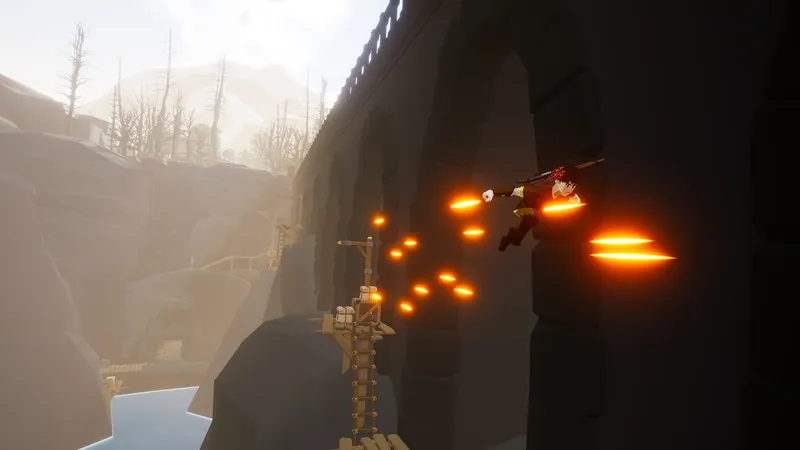
I've written an entire review of FFX and still couldn't fully articulate why the ending breaks me every time. The short version: sixty hours of walking toward a destination you gradually realize is a funeral. Yuna's pilgrimage is structured so that every beautiful moment — the Macalania spring scene, the campfire laugh, Tidus's dumb jokes that make the party smile — is shadowed by what's waiting at the end. When it arrives, you've known for thirty hours and it still destroys you. The Sending scene in Kilika prepares you emotionally for a game that never stops asking what you're willing to sacrifice for the people you love.
FFX doesn't cheat its ending. No sudden tragedy, no unexpected twist death. It walks you there deliberately, holds your hand, and lets you feel every step. That's harder to execute than a surprise gut-punch, and it's why FFX's ending outlasts every other Final Fantasy moment in memory.
NieR: Automata (2017) — Route C and the Weight of Meaning
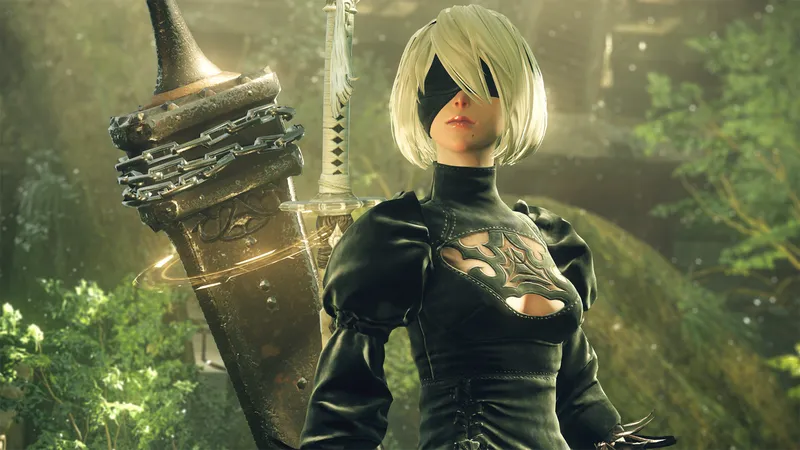
The first two routes of NieR: Automata are a good action RPG. Route C is where Yoko Taro rips your heart out, feeds it through a meat grinder, and asks you philosophical questions while you're still bleeding. Everything you assumed about the world, the characters, and the war between androids and machines gets dismantled in the final ten hours. 9S's descent. A2's choice. The Tower sequence. And then Ending E — the real ending — asks you to make a sacrifice that costs you something real, not just in-game.
I won't spoil Ending E's mechanic. But I will say this: it's the only time a video game has made me cry not because of what happened to a character, but because of what the game asked me to do for a stranger. That's Yoko Taro's genius — he uses the medium itself as an emotional weapon. Play it on Steam or PlayStation. Don't read spoilers. Don't stop at Ending A.
NieR Replicant ver.1.22 (2021) — A Brother's Futile Love
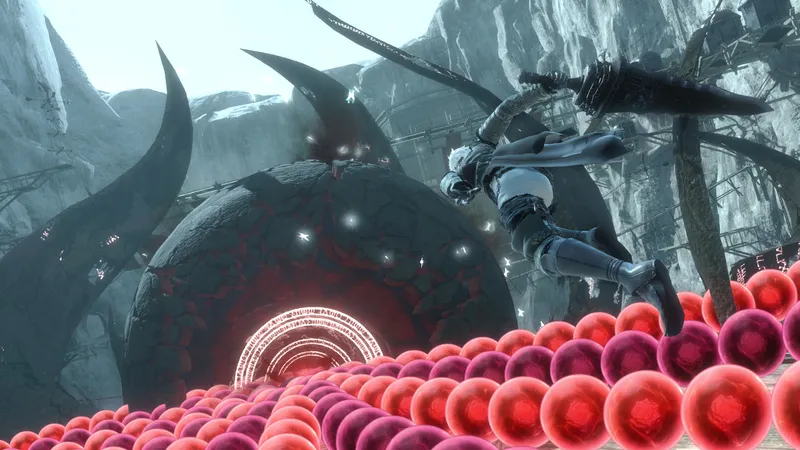
If Automata's sadness is intellectual — existential, philosophical, about meaning in a meaningless world — Replicant's sadness is primal. A brother trying to save his terminally ill sister. That's the whole game. Every dungeon, every fetch quest, every hours-long detour is motivated by one person's desperate love for another. The rebuilt version (2021) added modern combat and a new ending that connects to Automata, but the emotional core hasn't changed since 2010: you will do anything for the people you love, and the game will show you exactly what "anything" costs.
The Shadowlord's Castle sequence — when you finally reach the end and understand what you've actually been doing for forty hours — is the single most devastating narrative recontextualization in JRPG history. Kainé's story. Emil's sacrifice. The weapon stories that you read in the menu and wish you hadn't. Replicant isn't a subtle game. It's a sledgehammer wrapped in melancholy, and it earns every swing.
Persona 3 Reload (2024) — The Answer Was Always There
Persona 3's ending is the most thematically complete in the franchise. The entire game is about death — Memento Mori, the Dark Hour, Shadows born from humanity's suppressed fear of mortality — and the protagonist's final choice is the logical conclusion of everything the game has been building toward. Reload (2024) rebuilt the game with modern Persona 5 presentation, and the updated voice acting and visual direction make the final month hit harder than the PS2 original ever could.
What makes P3's ending devastate rather than merely sadden is the graduation ceremony. After everything — a hundred hours of Social Links, Tartarus grinding, learning to care about SEES as individuals — the game gives you a scene of absolute normalcy. Friends gathering. Promises made. A rooftop. And then it lets you understand what the protagonist chose, and why, and the weight of it lands because you spent a hundred hours building the life he's giving context to. The best Persona game isn't the most fun. It's the most honest about what it means to be alive.
Crisis Core: Final Fantasy VII Reunion (2007 / 2022) — Knowing Doesn't Help
You know how it ends. If you've played Final Fantasy VII — or even if you've just absorbed the cultural osmosis — you know Zack Fair doesn't make it. Crisis Core is a prequel. The ending is predetermined. There is no twist. And it still destroys people. The Reunion remaster (2022) upgraded the PSP original with modern graphics and rebuilt combat, and somehow made the ending hit even harder because you can see every expression on Zack's face in the rain.
The genius is in the DMW system — a slot-machine mechanic during combat that randomly shows flashback scenes of Zack's memories with the people he loves. As the game progresses toward its conclusion, the slots start breaking. Faces disappear. Memories corrupt. The mechanical degradation mirrors Zack's physical deterioration, and by the final fight, when the DMW is reduced to static and broken images, you're not just watching a character die — you're watching a game system die with him. It's the most creative use of mechanical storytelling I've ever seen in a JRPG.
Dragon Quest V (1992 / DS 2009) — Eight Years of Stone
DQV doesn't go for spectacle. It goes for accumulation. You play through the hero's entire life — watching your father murdered as a child, choosing a bride as a young man, being turned to stone for eight years while your wife is kidnapped and your children grow up without you. The sadness isn't in any single moment. It's in the passage of time, the things that happen while you can't act, and the quiet horror of waking up in a world that moved on.
The stone imprisonment is what gets me. Eight years. Your children find you as a statue and free you without knowing who you are at first. The world changed. People you knew are older or gone. And the game doesn't skip over that displacement — it makes you walk through it, talk to NPCs who remember you differently, and rebuild a life that was stolen. DQV's emotional ambition is staggering for a 1992 game. Play the DS version — the localization is extraordinary.
Mother 3 (2006) — The Sunflower Field
Mother 3 opens with a family. A mother, a father, twin boys, a dog. Within the first three chapters, that family is torn apart in ways that a GBA game with chibi sprites has no right to make you feel this deeply about. The sunflower field scene — you'll know it when you see it — is the single most emotionally devastating moment I've experienced in any video game. It's silent. It's simple. It uses the limitations of GBA hardware to strip away everything except the emotion, and what's left is unbearable.
Nintendo has never officially localized Mother 3 into English. The fan translation (by Tomato) is excellent and freely available. The game costs nothing to play on original hardware with a patch, and it contains more emotional intelligence than most AAA releases with hundred-million-dollar budgets. The final boss fight — what it asks you to do and how it ends — is proof that games are art. If you play one game from this list that you haven't played before, make it this one.
Xenoblade Chronicles 3 (2022) — "Don't Forget Me"
Xenoblade Chronicles 3 is a game about people who live for exactly ten years. They're born from pods, they fight a war, and when their time runs out, they're "sent off" in a ceremony that the game frames as both beautiful and horrifying. Noah is a soldier who plays the flute at these send-offs. Mio is a soldier from the opposing side with nine months left to live. They meet, defect together, and the rest of the game is about whether life has meaning when it's this short — and whether fighting for more time is worth the cost of what you lose along the way.
The party members' side stories — the "Hero" quests — are where XB3 earns its tears. Dozens of characters, each living under the ten-year clock, each finding their own answer to the question of what makes a short life worth living. Some answers are triumphant. Some are tragic. All of them contribute to a final act where Noah and Mio's choice carries the accumulated weight of every story you've witnessed. The flute melody that plays during the ending will make you cry. Not because something sad happens — but because something true does.
Why JRPGs Hit Different
Movies get two hours. Books get your imagination. JRPGs get sixty hours of your hands on a controller, making choices, building a party, watching characters grow from strangers into people you'd fight for. When a game asks you to spend that much time with someone and then takes them away — or asks them to give something up — the grief isn't parasocial. It's earned. You were there. You leveled them up. You chose their equipment. You won fights together. The attachment is real because the investment was real, and no other medium replicates that specific formula of time plus agency plus loss.
Start with whatever resonates. FFX if you want earned devastation. NieR if you want existential crisis. Mother 3 if you want to ugly-cry at a GBA game. They're all worth it. Bring tissues.
All images are official screenshots from their respective publishers and developers. Published March 27, 2026. For more JRPG context, see our complete RPG ranking.