
A princess watches from her castle tower as the wind falls silent. Below her, a buccaneer stands befuddled as her ship's sails stop flapping. Across green plains, a young adventurer named Bartz notices the tapering breeze. And at a meteor impact site, an amnesiac man named Galuf joins the party because he can't remember why he shouldn't. Final Fantasy V's opening is a fairy tale — four strangers, four crystals, a world in peril — and the characters know it. Bartz is cheerful and uncomplicated. Lenna is earnest. Faris is a pirate princess with a secret. Galuf is a lovable old man hiding a king's burden. They feel like a D&D group having genuine fun, and that lightness is intentional: the story is a canvas. The Job system is the painting.
The Job System: Twenty-Six Classes of Pure Freedom
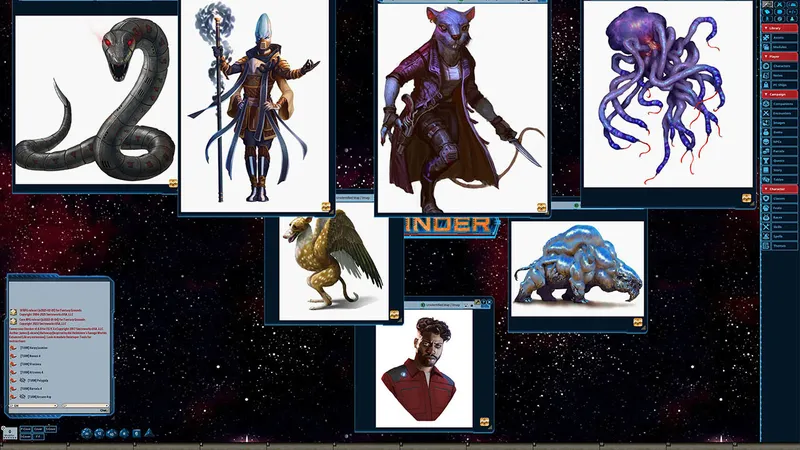
FFV's answer to the grind-frustration inherent in random encounters is making every battle a laboratory. Twenty-six Jobs — Knight, Thief, White Mage, Black Mage, Dragoon, Summoner, Berserker, Samurai, and eighteen more — each with learnable abilities that can be cross-equipped onto any other Job. A Knight who casts White Magic. A Thief who counter-attacks with a katana. A Monk who summons Bahamut. The possibilities are overwhelming, and the game knows it, so it never punishes experimentation. Switching Jobs is free, instant, and carries no penalty. The statistical differences between the four heroes are negligible, meaning any character can excel at any role. It's a liberating concept where the vanilla cast and "defeat-the-mega-villain" structure serve as an inviting canvas for customization.
Why Every Battle Matters
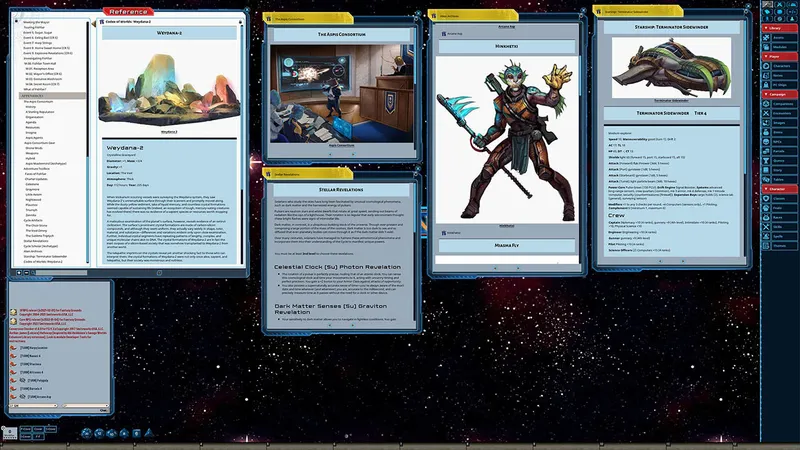
Most JRPGs train you to dread random encounters. FFV makes you want them. Every fight earns ABP (Ability Points) that unlock new skills for your current Job, and the drip-feed of new abilities keeps the feedback loop tight: fight five battles as a Monk, learn Counter. Switch to Knight, equip Counter as a secondary ability, now your Knight retaliates automatically. Switch again — the Knight's Cover ability on a Black Mage means your spellcaster absorbs hits for allies while counter-punching. The combinatorial depth is staggering for a 1992 SNES game, and it's the reason FFV has the most dedicated optimization community in the franchise. Speedrunners, Four Job Fiesta challenge runners, and min-maxers all gravitate here because the system rewards creative thinking in a way that no other Final Fantasy replicates.
The World: From Crystal Caves to Haunted Libraries
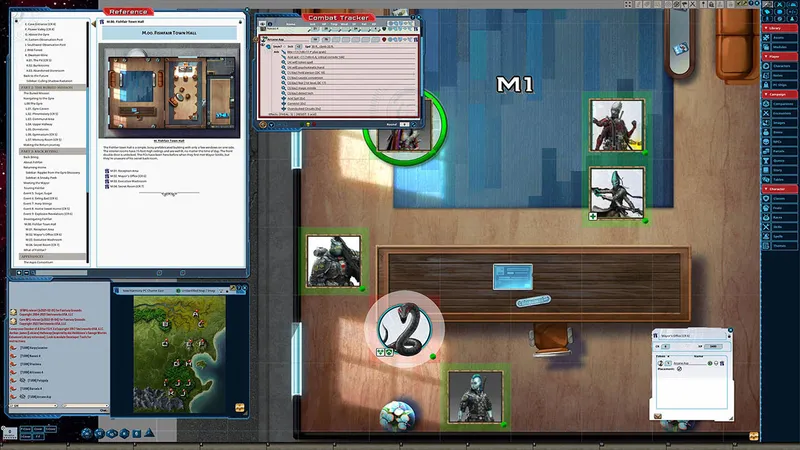
FFV spans two worlds that merge into a third, each with escalating dungeon complexity that demands you engage with the Job system rather than brute-force your way through. Underwater caverns require specific elemental coverage. Haunted libraries have shifting bookcases that change the dungeon layout. A desert pyramid punishes physical attackers, rewarding magic-heavy compositions. The dual-world structure creates a sense of scale that the lighter story can't — and the game compensates by loading each environment with reasons to return to the menus and try new approaches. A new axe for your Berserker. New beasts for your Summoner. New magic for your mages. And a slew of secret challenges that the game barely hints at, including an end boss who is completely vile in the best possible way.
The Story: Simple by Design, Not by Accident
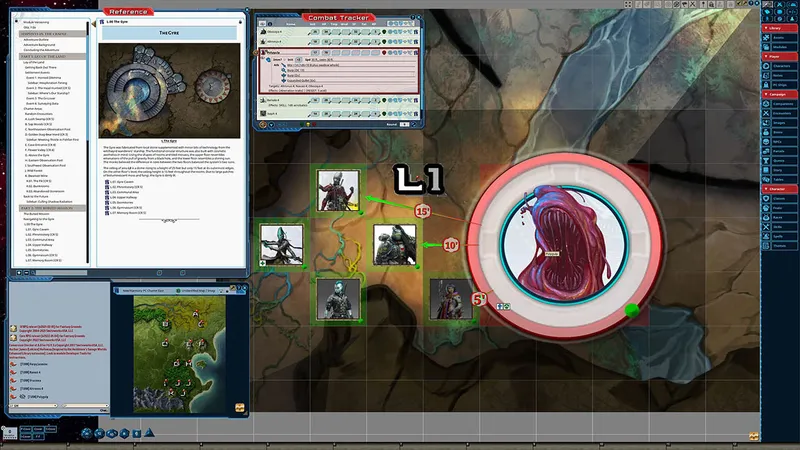
FFV's narrative is often cited as the franchise's weakest, and that's fair if you're measuring against VI's opera house or VII's Midgar. But FFV's simplicity is a design choice, not a limitation. The story exists to move you between dungeons efficiently, to give your party reasons to enter new environments where the Job system shines. Galuf's arc — his sacrifice at the end of World 2 — is genuinely moving precisely because the game doesn't oversell it. The emotional moments land because the lightness makes them unexpected. You're laughing at Bartz falling off a chocobo, and then someone dies, and the tonal whiplash hits harder than any orchestrated tragedy.
The Gilgamesh Factor: Comedy in a Simple Story
Gilgamesh is the best recurring character in Final Fantasy history, and he started here. A minion of the villain Exdeath who keeps showing up to fight you and keeps losing, Gilgamesh is simultaneously threatening and hilarious — he collects legendary weapons but can't tell the real ones from the fakes, he gives dramatic speeches before being humiliated, and his genuine affection for the heroes (which he'd never admit) turns his final sacrifice into one of the most unexpectedly moving moments in the franchise. His battle theme — "Clash on the Big Bridge" — is one of the most iconic pieces of music in Final Fantasy, an adrenaline rush of drums and horns that makes every Gilgamesh encounter feel like an event even when the outcome is never in doubt. The FFV cast doesn't have the narrative depth of FFVI or VII, but Gilgamesh proves that a well-written comic rival can carry more emotional weight than a dozen brooding antiheroes.
The Four Job Fiesta: Why the Community Still Plays
Every summer since 2011, the FFV community runs the Four Job Fiesta — a charity challenge run where players are randomly assigned four Jobs and must complete the entire game using only those classes. Some combinations are trivial (Knight/White Mage/Black Mage/Ninja). Some are nightmarish (Berserker/Bard/Dancer/Geomancer). The Fiesta has raised hundreds of thousands of dollars for charity and keeps FFV relevant thirty years after release. No other Final Fantasy has a community event like this because no other FF has a system flexible enough to support it. The Job system's depth isn't theoretical — thousands of players prove it every year by completing the game under absurd restrictions and documenting their strategies. That's the strongest endorsement a gameplay system can receive: people voluntarily handicap themselves because the system is fun enough to make failure entertaining.
The Verdict: The Best Gameplay in Final Fantasy
FFV has the best gameplay in the series. Period. The Job system is the template that every class-based RPG since — from Tactics Ogre to Bravely Default to Octopath Traveler — has been inspired by, reacting to, or trying to surpass. The story is simple. The characters are charming but shallow. The music is excellent (Gilgamesh's battle theme alone justifies the purchase). And every single random encounter is an opportunity to test a new hypothesis about how abilities interact. Play the Pixel Remaster on Steam or mobile — it's the definitive version, with reorchestrated music and quality-of-life improvements. If you've ever complained that JRPGs don't give you enough mechanical freedom, FFV is the thirty-year-old game that already solved the problem.
All images are official screenshots from their respective publishers. Originally published 2016. Updated March 31, 2026.