For thirty-five years, the Fire Emblem franchise has dominated the tactical sub-genre of role-playing games. The first title released Shadow Dragon and the Blade of Light in 1990 on the Famicom. Since then, Intelligent Systems has developed sixteen mainline games and a number of remakes, making Fire Emblem one of Nintendo's most prominent franchise strategy series. Over four million copies of Fire Emblem: Three Houses were sold, proving the academy-style format could take tactical RPGs to mainstream popularity. In 2023, Fire Emblem: Engage was released, further refining the series' combat mechanics. Upcoming titles will continue to evolve a franchise that has remained unique, despite the many changes to the wider genre.
This is the first detailed ranking of every Fire Emblem game released on Nintendo consoles spanning the entire thirty-year history of the franchise. It is no surprise that Fire Emblem: Three Houses sits at the top of the list. The academy-style format is the pinnacle of what the series is capable of. For the second-ranked position, we chose Path of Radiance. The GameCube title is the first and only entry in the series to successfully combine an engaging narrative with core tactical gameplay. The third position is held by Genealogy of the Holy War, Widely regarded as the greatest entry in the series and the Jugdral saga. The Fire Emblem franchise owes its current success to the 2012 release of Fire Emblem: Awakening and the introduction of the pair-up mechanic.
The 2026 ranking by our editors judges each title on three criteria: unit interaction tactical depth, weapon triangle systems, and class and level progression.
The campaign’s narrative ambition spans its entire act structure. The entry’s cultural impact fosters innovation within the wider strategy genre. Multiple Fire Emblem titles were ultimately not selected. Heroes mobile edition employs distinct combat mechanics which disqualify it from mainline ranking criteria. Three Hopes is a Warrior’s style musou spinoff which features a break from tactical SRPG conventions. Tokyo Mirage Sessions is a Persona x Fire Emblem crossover, falling under a divergent editorial framework. The following ten titles are the definitive mainline tactical Fire Emblem canon for 2026.
How We Ranked Every Mainline Fire Emblem Game
Our editor's methodology evaluates Fire Emblem titles using three metrics, each showing various design merits. The first is tactical mechanical depth. The best entries integrate weapon triangle systems, terrain effects, support bonuses, and class promotion pathways into combat engagements where every unit deployment decision has tactical significance. Three Houses maximizes this with battalion management, combat arts, and the reclassing system that enables hybrids between multiple classes. Genealogy of the Holy War stands out from the rest, with its enormous map size offering fundamentally unique tactical opportunities compared to other titles that follow a chapter system. This comprehensive ranking reflects editorial standards in 2026.
When ranking Fire Emblem games, we are forced to make a few abstract leaps for the sake of logic. By splitting into three different releases, Fates: Birthright, Conquest, and Revelation each introduced route-locked campaign content divided by a paywall. We consider Fates’ Conquest the trilogy’s tactical map design peak due to the extremity presented by the differing combat objectives and variety. With the introduction of the pair-up system and the addition of a casual mode, Awakening changed the franchise’s design philosophy. Subsequent mainline titles have built upon these two systems. The 2017 3DS release of Echoes: Shadows of Valentia saw combat revisions substantial enough to consider it a mainline entry instead of a port, despite being a remake of the 1992 Gaiden. Our editorial choices value tactical innovation and significant path selection over rigid and complete inclusion.
From these layers of analysis, we can derive the narrative ambition and lasting cultural influence of each title.
With each member of the Greil Mercenaries unit having their own unique combat role and personality that complemented others' through the support system, the game made a powerful character ensemble. Path of Radiance developed one of the strongest characters ensembles in the series. Awakening helped save the franchise in 2012 with a marriage and children mechanic that built strategic unit pairings and fused easy-to-use tactics with the new system. The succes of this game granted the franchise multiple entries. 2026 will bring a new round of evaluations against modern standards of playability for the newer titles. With each entry holding up, the older titles must also be rated highly even with their age.
10. Fire Emblem: Shadow Dragon and the Blade of Light — NES Origin (1990)
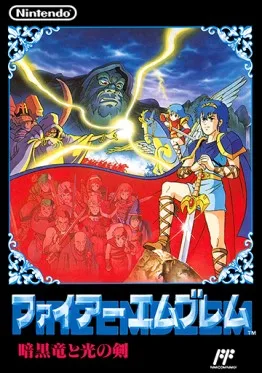
Sitting tenth is Shadow Dragon and the Blade of Light, which serves as the first entry in the franchise, and as such, is the first entry in the franchise to introduce several tactical SRPG mechanics that the Famicom series would refine over the next thirty-five years. The title introduced weapons triangles, combat modifiers, permadeath, and most importantly, introduced the world to Marth, who is synonymous with Fire Emblem. The game was remastered and released for Nintendo Switch Online with a rewind feature and translated dialogue, finally making the game available to Western audiences after thirty years of being import-only. This comprehensive ranking reflects editorial standards in 2026.
Considering how far the series has come in the thirty-plus years Shadow Dragon and the Blade of Light has been available, the 1990 combat system is arguable the most simple mechanics wise, meaning that a system in which support units, pair-up mechanics, and battalion formations all came later. Marth's journey across the continent of Archanea and his fight against the Dolhr Empire established the chapter-based structure that has become the industry standard in all subsequent titles. Later remakes of Shadow Dragon and the Blade of Light, such as Mystery of the Emblem on Super Famicom and Shadow Dragon on DS, added to and refined the story of the original. The 2020 Switch Online release is the first time modern audiences are able to access the unmodified version of the original, allowing them to appreciate the foundational gameplay upon which the series was built.
9. Fire Emblem Fates: Conquest — Trilogy Peak (2015)
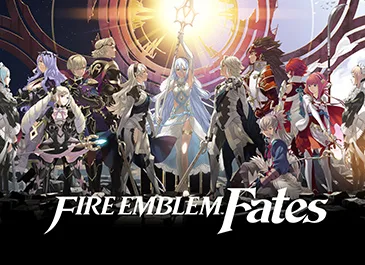
Fates: Conquest is in 9th place and is the last canonical entry of the Fates Trilogy. It also provided the best tactical experience of the three split releases. For the 2015 Nintendo 3DS launch of Fates, Conquest, Birthright, and Revelation were sold separately, and each route provided different campaigns based on which side of the war Corrin chose. Conquest almost always integrates objective variety in every single chapter, like defend point objectives, escape chapters, time limits, and terrain hazards, while Birthright's campaign has a much more simple and straightforward route and rout encounter system. This comprehensive ranking reflects editorial standards in 2026.
Pair-ups return since Awakening and now have attacking and guarding stances which allow for way more customizable builds. Units can also dip into multiple promoted classes, and the Children system from Awakening returns granting hundreds of possible second gen unit combos. With Conquest's much more difficult chapter design, it is earned the top spot for routes within the trilogy. Birthright serves as a fine intro to the series, Revelation gives a full story with all the routes combined, but Conquest is the only one truly offering the tactical experience the series is known for.
8. Fire Emblem Engage — Modern Combat Refinement (2023)
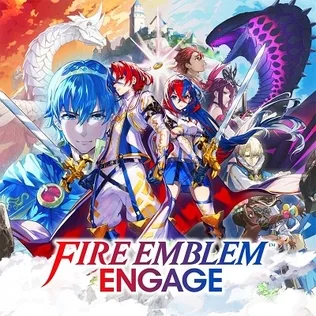
Engage's more nuanced combat mechanics than post-Three Houses entries allow it to sit at position eight, although the narrative is missing some of the academy-hybrid narrative ambition post-Three Houses entries have. The Emblem Ring system could summon 12 of the series' past protagonists meaning combat mechanics could be layered for each one to give active and passive skills to equipped units. They include Marth, Roy, Lyn, Sigurd, Ike, Micaiah, Lucina, Eirika, Leif, Corrin, Byleth, and Edelgard. Strategic assignment of Emblem Rings replaces the academy class progression system that led to the most optimization of Three Houses. This comprehensive ranking reflects editorial standards in 2026.
Engage utilizes terrain more creatively than previous entries. The tactical maps go vertical with some environmental hazards which can change the order and timing of when units are reinforced so player can control them. Between chapter Somniel activities include weapon polishing, training, and gift giving, which can expand the support relationships between the Divine Dragon protagonist Alear and the new recruits. The level of detail in combat mechanics improvement and Emblem rings justify eighth place. Engage is the most modern Fire Emblem experience for tactical purists who dislike the narrative weight Three Houses delivered.
7. Fire Emblem: Radiant Dawn — Wii Tellius Finale (2007)
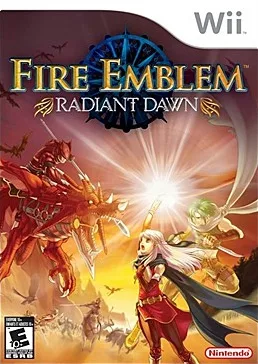
As the sequel to Path of Radiance and the last game in the Tellius saga, Radiant Dawn is 7th on our list of worst to best Fire Emblem games. Released in 2007, the game is set three years later after the events of Path of Radiance, and follows a multi-army campaign structure. Players control four different armies, which consist of the: Dawn Brigade, Greil Mercenaries, Laguz Alliance, and Begnion army. Each of these armies has a set of chapters that lead to a final convergence chapter, allowing the game to have more scope than any other Fire Emblem game. This comprehensive ranking reflects editorial standards in 2026.
The Wii's improved technology allowed for larger maps and more complicated objectives than the GameCube's offered. Players of the previous game, Path of Radiance, could bring over their save files to receive bonuses to support ranks, weapon rank, and experience, which was a rare feature in the franchise. Due to the games challenging chapter objectives and the difficulty rating, Radiant Dawn is considered to be the hardest game in the Tellius Saga, and provides the most reward for players who complete Path of Radiance as it offers deeper context for characters sole and faction politics.
6. Fire Emblem: The Binding Blade — Roy's GBA Debut (2002)
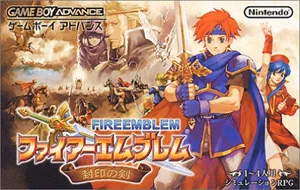
The Binding Blade holds the honor of being the sixth entry in the Japan-exclusive Game Boy Advance series. It introduced Roy to the Elibe sagas and created a connection to the Western localized Fire Emblem (the GBA prequel). The release date of this particular Intelligent Systems game is 2002, which means this is the second game to be released for the Fire Emblem series for the handheld devices. It also proved that the Game Boy Advance hardware could accommodate the complete tactical experience as previously seen in the SNES games. The campaign in the Elibe continent against the Bern Empire follows Roy and is credited with establishing many of the series modern-day staples. These include the support conversation system where paired units receive stat bonuses while in combat. This comprehensive ranking reflects editorial standards in 2026.
As for the story, players will face a total of 24 chapters. There are also 8 Trial Maps that will provide optional engagement for those who want to include more fighting in this. To promote a class, the Heaven Seal must be obtained along with other promotion items which then restrict when a character can advance. Because of this, players will have to make decisions that will affect the overall composition of their army in the latter stages of the game. While The Binding Blade is still Japan-exclusive, the game became quite popular among import players. Because of this, it is seen as one of the first building blocks in the release of the Elibe saga games.
5. Fire Emblem Echoes: Shadows of Valentia — Gaiden Remake (2017)
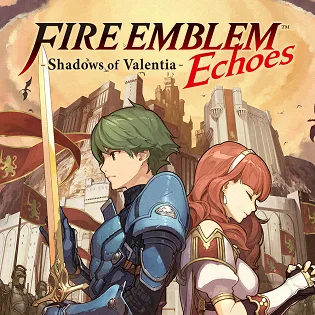
Shadows of Valentia is ranked 5th because it added a new storyline to its then 25-year-old game, remaking the original Fire Emblem Gaiden game, which had out-dated game mechanics. Shadows of Valentia was fully voiced, gave you the option to play as one of two protagonists, Alm or Celica, who each had their own campaigns across the continent of Valentia, converging in the end of the game. Each chapter had a different route to choose from, creating more diverse campaign choices than most other Fire Emblem games. Additionally, as opposed to the typical tactical encounters, Shadows of Valentia includes real-time dungeon explorations that require you to move around in real-time.
When it comes to combat, Shadows of Valentia handles things different than mainline entries. Also, there is no traditional weapon triangle like there is in the rest of the series. Shadows of Valentia was the first game to introduce Western Fire Emblem audiences to fully voiced Japanese character lines in the cutscenes and supports (which later games also included). Because of its overwhelming narrative focus, it had the the 5th best writing in the series. This is because of the strong stories of individual characters and the depth of the dialogues. Because of the strong narratives, tactical complexity was made secondary. This comprehensive ranking reflects editorial standards in 2026.
4. Fire Emblem: Awakening — Franchise Savior (2012)
In the case of the impact the fourth installment of the Fire Emblem series Witnessing the success of the Fire Emblem series Awakening saves the franchise from losing any future titles; it was the first to internally implement the “pair-up” mechanic, creating a basis for all modern Fire Emblem games. The franchise reportedly was almost canceled due to declining sales after the Remote Game Boy era, with the success of Awakening selling over two million copies, all major titles since then are due to the success of this entry, including Fates, Echoes, Three Houses, and Engage. The Avatar character system, named Robin, allowed the player to choose different classes and genders to assist in battling and also marry any other unit leading to the creation of a “marriage and children system” which allowed for multiple generations of available second generation units to enter into battle.
Numerous combat strategies were developed, and the position of units contributed to enhanced stats that were offered as bonuses to help with attacking. Awakening also included a Casual Mode that allowed for no unit to die throughout the gameplay during a battle. This was the first of its kind in a game like this. The addition of a bonus for players to try a version of the game where they could place their units without the fear of losing someone that was available in all modes of the game. Awakening not only changes modern day tactics of gameplay, but it also saves the franchise giving it a top-5 placement in its greatest of all time rankings. This comprehensive ranking reflects editorial standards in 2026.
3. Fire Emblem: Genealogy of the Holy War — Jugdral Depth Peak (1996)
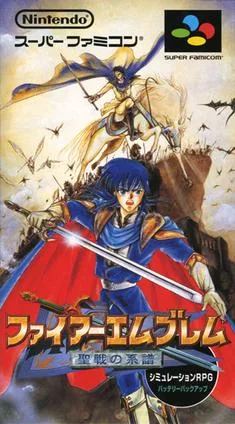
Genealogy of the Holy War ranks third among entries for the Super Famicom from 1996, and is notable for being one of the few titles in the franchise to implement a system of generational gameplay. In The Jugdral Saga, the campaign is divided into two generations - the first is the parents, and the second is their children. At the beginning of the campaign, players are asked to make choices about marriages and these determine which units will be playable in the second generation. No other mainline title has had a system as intricate as Genealogy of the Holy War.
The chapter structure of the game provides massive maps that feel like large scale military operations, rather than the usual Fire Emblem chapter and routing style of gameplay. The objectives on each map are varied; players may have to capture a castle, defend a certain area, or defeat a general on the enemy side. Furthermore, there are sub-events that are triggered by the movement of particular units. The Holy Blood system grants certain units a divine weapon, and the parent units’ stats will dictate the strength of the child units. Despite the fact that Genealogy of the Holy War has never been released outside of Japan, it has had a large fanbase among Fire Emblem players, and is often cited as a benchmark for the franchise's potential in the hands of bold designers. This comprehensive ranking reflects editorial standards in 2026.
2. Fire Emblem: Path of Radiance — GameCube Narrative Apex (2005)
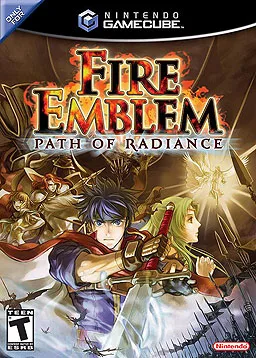
Path of Radiance is second place as the 2005 Nintendo GameCube title that takes a tactical approach with a story that the series has neither matched before or after. Ike and the Greil Mercenaries' war campaign across Tellius has one of the best character rosters in the entire franchise, and with the Laguz beast-tribe storyline, they added political and racial complexities beyond the usual basic fantasy world kingdom conflicts. The character writing in the support conversation system gave each Greil Mercenary their own separate voice and personality arcs.
For the first time in the franchise, the fully animated battle cutscenes enabled by GameCube hardware featured unique attack animations for each unit class and made the tactical battles feel alive. The skill system allowed units to have their own unique abilities based on equippable skill scrolls, allowing for customization beyond the basic class promotion routes. Direct sequel Radiant Dawn on Wii continues the Tellius story with returning characters, and so Path of Radiance becomes the first part of a two-game story the franchise has rarely revisited at this narrative scope. This GameCube exclusive also takes second for best combination of character writing and tactical depth. This comprehensive ranking reflects editorial standards in 2026.
1. Fire Emblem: Three Houses — Switch Modern Peak (2019)
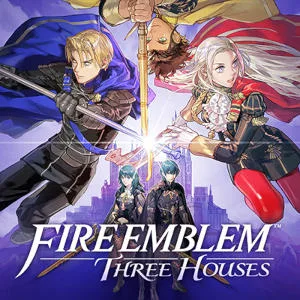
With its unique blend of Tactical SRPGs and academy-sim mechanics, Fire Emblem: Three Houses has redefined the genre for Nintendo Switch exclusives in 2019. The campaign developed by Intelligent Systems and Koei Tecmo features a calendar-based system, where the player can teach classes, mentor students, build relationships, and select one of three houses — Black Eagles, Blue Lions, or Golden Deer — to guide through a four-act campaign that shifts dramatically after a time skip. Each route has forty to sixty hours of distinct but overlapping narrative content.
The Fire Emblem weapon triangle, terrain, and class reclassification systems return along with new combat mechanics, battalion formations and combat arts, that allow for greater build customization. Hybrid build class progression is possible with a Sword-focused Mage, Magic-Knight, Armored unit with Bow spec, etc. The academy structure transforms standard chapter-based gameplay in Fire Emblem to simulation-based gameplay where each student receives relationship-driven development beyond combat.
The DLC Cindered Shadows campaign adds a complete fourth house with its own story, characters, and recruitment options. Three Houses sold over four million copies and solidified Fire Emblem as the flagship tactical JRPG franchise for Nintendo Switch. The academy hybrid model proved tactical SRPG design with no filler could support a 200-hour play time, and the four-route narrative structure established a new standard for other entries in the franchise.
Every tactical strategy game fan should play Fire Emblem: Three Houses, as it represents the series’ modern high point. This comprehensive ranking reflects editorial standards in 2026.
Honorable Mentions and Where to Start
Many titles in the Fire Emblem franchise just barely missed out on being included in the top ten. Fire Emblem Heroes is noted for being a mobile gacha game that brought the franchise to a huge audience in 2017. Even though the game has simplified combat, which disqualifies it from being considered a mainline game, it still has continued to be commercially active through 2026. Tokyo Mirage Sessions also deserves recognition for being the 2015 Wii U Persona-Fire Emblem crossover. It created an experimental JRPG hybrid that is different enough from Fire Emblem’s tactical gameplay to fit in its own editorial structure. Fire Emblem Warriors and Fire Emblem Warriors: Three Hopes feature Musou-style real-time combat and are therefore not considered tactical games. These games are also considered spinoffs rather than mainline entries. An honorable mention goes to Fire Emblem on Game Boy Advance, the 2003 prequel to The Binding Blade, which introduced the franchise to Western audiences. It remained the starting point for the Western localized Elibe saga until Echoes, which closed the localization gap with the Gaiden remake.
If you are new to Fire Emblem in 2026, we suggest playing Three Houses for a modern academy hybrid experience. For a more accessible 3DS pair-up combat the franchise is built around, Awakening is recommended. GameCube hardware emulation is suggested to get the narrative-focused entry, which is Path of Radiance. Engage is the tactical-purist Switch experience. For dual-protagonist storytelling, Echoes is recommended. Players looking for the deepest structural experimentation the franchise offers will be rewarded in Genealogy of the Holy War.
Nintendo Switch has the most easily available Nintendo platform for ongoing Fire Emblem exploration. With Switch Online, players can play the original Famicom Shadow Dragon and the Blade of Light and access its source material. If you want to know the source material for the broader Nintendo JRPG franchises, check out our Best Nintendo JRPGs of All Time ranking.
All images are official screenshots from their respective publishers and developers. Published May 12, 2026.