Tactical RPGs (SRPGs) reward patience over reflexes — every move on a grid is a small bet, every positioning choice a tiny gamble against AI that punishes mistakes for hours. This 2026 ranking covers the 10 best tactical RPG strategy games we'd hand to a JRPG fan asking where to start, what to play next, and which entries earn the genre's hall-of-fame slots.
From Fire Emblem's permadeath calculus to Final Fantasy Tactics' Ivalice depth, from Tactics Ogre: Reborn's branching faction warfare to Triangle Strategy's moral-axis council votes, modern tactical RPGs split into distinct schools. Each entry below earned its rank against the others — playtime, replay value, story depth, mechanical satisfaction. No filler, no platform-bias, just the strategy RPGs that matter in 2026.
10. Disgaea 5 Complete

Disgea 5 is the game for people who want to completely break the game. The damage numbers can reach the billions. It has a longer post game than most games have entire campaigns. Nippon Ichi built a system to invite all kinds of exploitation. The joy of the game comes from figuring how far you can go.
I spent 80 hours in the game before touching the post game. I barely even touched the system that exists in every piece of equipment called the Item World. The Item World is a dungeon system that is randomized. There’s a dungeon in every piece of equipment. You take a sword and then fight and go through the generated floors of the dungeon and then after all that you get a more powerful sword. It’s absurd and addictive and only exists in this game series.
The story has always been the weakest element. The humor gets a few good laughs if you have been playing the series you probably have come to expect this. The revenge system that was added in this game is when allies die in battle and your character has to collapse. The character who collapses gets powered up. This system has not been seen in previous versions of this game. This is the complete game because it has all the DLC released for this game.
“Disgaea 5 is what happens when a developer asks what if numbers could go higher and never stops.”
9. Triangle Strategy
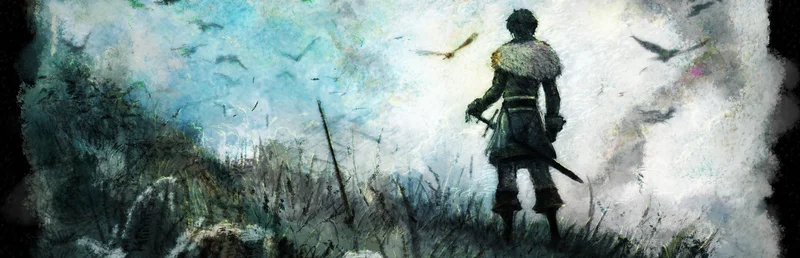
Triangle Strategy is the closest title to a successor to the Final Fantasy Tactics franchise from Square Enix. The game has a unique system surrounding political decisions where players can make decisions that will restrict certain locations and alter the events of the story. Your party members ``vote'' via the Scales of Conviction system and as the player, you must persuade them by way of collecting evidence from the map. This is a great example of a unique system to the SRPG genre.
I personally played the title two times to experience each major branching path, and the second round was almost like a different title. The titles characters steer many of the events different from other branching routes. Depending on the vote, a different chapter can occur. The tactical combat is great and the story combat tied together leaves all the players with variables and great political outcomes.
As has been noted, the title uses the HD-2D graphical style from Octopath Traveler. The art style gives a unique identity to the game. The Title has many multi-tier maps that reward players who use height. The battle story driven challenges will force players to feel the weight of thier political decisions.
“Triangle Strategy took FFT\'s political storytelling and gave it real consequences. Three playthroughs in.”
8. Tactics Ogre: Reborn
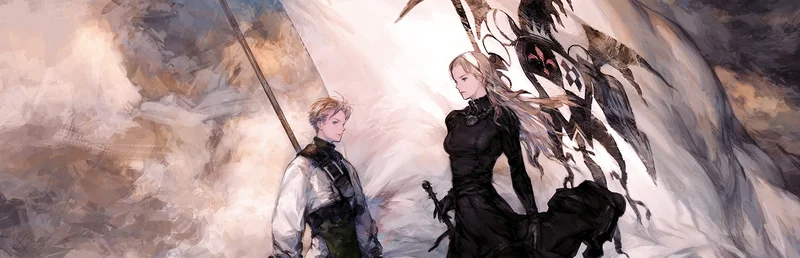
Tactics Ogre is the original game that Final Fantasy Tactics borrowed from. Both were directed by Yasumi Matsuno, and you can tell from their class-based systems, political story and grid combat systems with elevation. However, while FFT polished these ideas to make them more user friendly, Tactics Ogre: Reborn retains the rougher edges that make the original feel more like a war simulator rather than a strategy game.
I played the original Let Us Cling Together on PSP and found it extremely punishing in ways that modern SRPGs have learned to avoid. Reborn smooths out a few of those edges, like with smarter AI, a revamped leveling system, and a replacement for older crafting systems with a card-based buff system. However, the moral complexity of these choices is still present, and actively making decisions in the story's many branches still has a weighty feel to it, a)rectly influencing the ethnically divided land, the Valerian Isles.
In Reborn's WORLD system, you can revisit certain decision points to see how a story might change and even take different routes without needing to erase your save and start a new game. This gives the player the opportunity to see different routes. Matsuno is giving the player needed the hint that there is not enough time to see everything there is to offer in one playthrough, as there are three overarching routes in the story, and each one only hints at parts of the central war.
“Tactics Ogre: Reborn is the SRPG equivalent of a great war novel. It does not flinch.”
7. Fire Emblem: Three Houses

Fire Emblem: Three Houses takes the classic tactical combat of the series, and adds a social simulation layer that changes the experience from battle to battle. You take on the role of a teacher at a military school, and the students you recruit and train become your soldiers that you lead into battle. In the school phase, you are able to form bonds to create a more emotional attachment to the characters, which then adds weight to their loss in battle.
For my first playthrough, I decided to go with the Blue Lions because I thought Dimitri was the most interesting out of the other lords, and I still do. His character development is from a loyal prince to a far darker role, and that is one of the best developments in the Fire Emblem series. However, the real strength of the game comes from the fact that the three houses and the secret fourth one allow you to change perspectives of the same war and that no single path tells the entire story.
Engaging in tactical combat is now more approachable than it has been in years since Awakening. The addition of battalions gives a new touch to area-of-effect abilities, while class changes let you build almost any character into any class. In addition, Classic Mode, where character deaths are permanent, is by far the most exciting way to play the game. Training a character over the span of hours only for them to be lost is a sensation of a lost relationship that you just can’t feel in Casual Mode.
“Three Houses made me care about every student. Losing one in Classic Mode felt like a personal failure.”
6. Valkyria Chronicles
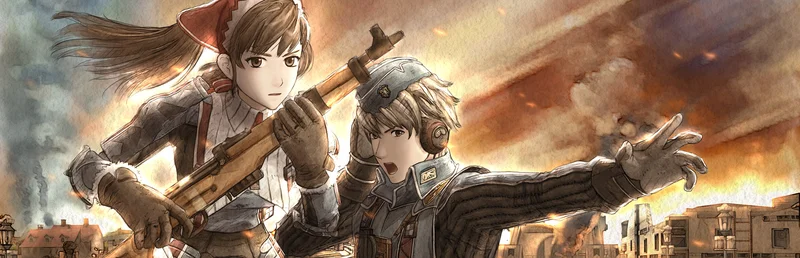
No one has been able to replicate the combat system that Valkyria Chronicles created. The BLiTZ system takes a real-time, third-person shooting perspective and combines that with a more classic, turn-based strategy. When you command a unit on the supplied overhead battle map, you then “drop into” the perspective of that unit. In real-time, you shoot the unit and according to the enemy, they will respond accordingly and shoot you while you are trying to kill them. It’s an incredible sensation and quite unique to this genre.
The first time I tried the new hybrid system, I was a little nervous. In pure SRPG games from the olden days, action was typically turn-based. In Valkyria Chronicles, the BLiTZ system works better for that than anything else. It is personal, rather than just a simple unit across a grid or turn order like some RPG. The player is the decision maker, and they feel a visceral sensation rather than an abstract one.
This narrative takes place during World War II in Europa, where a small country is fighting back against an imperial invasion. Because of the game's watercolor design, it looks like a children's storybook. This design helps the player take the focus a little of the harshness of war, while still making sure that the story is not taken lightly. The character writing seems inconsistent. Some members of the squad don't get enough written about them and just end up feeling like an archetype. However, the revelations about the Valkyrur are very intriguing and provide a strong emotional center to the story, particularly with the strong emotional narrative surrounding Welkin and Alicia.
“Valkyria Chronicles\' BLiTZ system is proof that tactics and real-time tension can coexist.”
5. Fire Emblem: Genealogy of the Holy War

Given the fact that Fire Emblem: Genealogy of the Holy War has still not received an official English release, it is one of the greatest tragedies of the genre. It is one of the most ambitious Fire Emblem installments that has been made, and it is still one of the most ambitious Fire Emblem installments to this day. The game spans two generations, and every pairing you make in the game affects the stats, skills, and classes of the children in the next generation. The marriage system is a core part of the game's strategy.
It has a unique experience in playing Genealogy of the Holy War due to the fan translated patch, and the scale of the maps exceeds every other game in the Fire Emblem series. Each of the chapters has multiple castles to capture and end up lasting over an hour long. Compared to more modern Fire Emblem games, it is also much slower paced, but it makes up for the pacing in narrative payoff. The Chapter 5 twist is one of the most impactful moments in the entire sub-genre of strategy RPG and more than justifies the pacing of the game.
With the storytelling found in Genealogy of the Holy War, Kaga set the stage for complex political narratives in both Tactics Ogre and Final Fantasy Tactics. Kaga’s script touches on elements such as political marriages, holy bloodlines, and the cyclical nature of tyranny. Such elements were remarkably mature for 1996, and they’re just as relevant today. Genealogy boasts one of the most intricate narratives in the genre, but you’ll need to be patient (and brave) enough to endure the subpar SNES interface. For more similar experiences, check out our guide on the best PS1 JRPGs to get the good old JRPGs experiences on older systems.
“Genealogy treats war as generational trauma, not a power fantasy. The Chapter 5 twist changed how I see the series.”
4. Vandal Hearts

Vandal Hearts is the most underrated title in the genre, and it’s disgusting that it’s received so little attention as it does a lot of things better than the more recognized contemporaries in the genre. Class systems are simple and well defined as each character has a determined and defined role and moving up ranks is logical. Each of the levels contains genuine levels of strategy with the inclusion of elevation changes, choke point, and breakable terrain. The story, while still not being as intricate as Tactics Ogre and FFT, does a good job of handling class warfare and revolution in a far more sincere manner than one might expect from a Konami title from 1997.
In 2009, a forum post led to my favorite find for the PS1, Vandal Hearts. Like many titles on the first Sony console, it has a reputation for being fairly simple. However, it’s later chapters ramp up significantly. If you’d been coasting through the game, later chapters keep you on your toes. The game's secret class, the Vandalier, can be unlocked through gameplay specific conditions. The process is widely regarded as one of, if not the most, rewarding secrets in SRPG history.
While the game’s graphics, as well as, its characters, may not be pretty by today’s standards, its combat animations are a bit over the top, and the art may be a bit rough around the edges, it’s core tactical gameplay is sound. Taking around 25 hours to complete, it is one of the most accessible titles in the genre. Vandal Hearts is an excellent entry into SRPGs.
“Vandal Hearts is comfort food SRPG. Not the fanciest, but everything is cooked right.”
3. Front Mission 3

It may be a hot take given the thousands of games that have released since, but the best mech SRPG is Front Mission 3, astonishingly, a PS1 game released in 1999. The Wanzer customizing system let me build mechs from separate arms, legs, torsos, weapons, and targeting computers. Each part affected combat performance in a specific way. The arms of an enemy mech may be rendered useless if destroyed. Legs can be destroyed to limit movement. The targeting system made every combat encounter feel like a tactical decision, instead of just a damage calculating exercise.
1999 was ahead of its time with its built in internet browser simulation called the Network where players can read emails and browse made up websites.
Front Mission 3 was the first game I ever played that had a built in browser and it was 1999.
The game has 2 sides of 1 geopolical war and the time taken to play through both game sides is about 100 hours.
In the game, a player can go through 2 branches, go Emma's route or Alisa's route. This is a choice that must be made in the first hour and almost entirely determines the game campagin moving forward.
The game proves that a great strategy role playing game does not need a fantasy setting.
The tensions dictated by real world politics offer the same plats as a contrived fictional world.
“Front Mission 3 has the best mech customization in any SRPG. Ripping off an enemy\'s arm never gets old.”
2. Fire Emblem: Path of Radiance
Fewer titles best serve the franchise as a whole than Fire Emblem: Path of Radiance does. The story is unrivaled. A cast of mercenaries is caught in a continent spanning war. Lead by Ike.
He is the greatest example of a JRPG protaganist to not be born with some hidden power that determines his success and place in the world. He earns his power through growth.
The support conversations in the game manage to not be centered around romance. The map design is consistently excellent.
I played Path of Radiance on a borrowed GameCube in 2006, and Ike's journey from son of the commander to leader of the army felt more earned than most other RPG protagonists. The game showed the racism from the war of the laguz and the beorc, but it did so with a little more nuance than one would expect, and the late-game revelations add some moral grey to the evil isingood side spectrum of the story, and if one were to look at the story's beginning, it would appear to be a straight good versus evil story with a simple plot.
The series is at it's most balanced here. Each of the unit types has a clear role and counter among them. The biorhythm system adds subtle shifts to the stats, which causes the player to not be able to use the same strategy repeatedly. The bonus experience system allows the player to assign experience to the underleved units between chapters, so that they do not have to grind a unit up to that level. Unlike Three Houses, which has a lot more ambition, but also a lot more issues, and unlike Genealogy, which is more experimental, Path of Radiance has consistency.
“Path of Radiance is what happens when every element works at the same time. No gimmicks, just excellence.”
1. Final Fantasy Tactics

Without any caveats, Final Fantasy Tactics is the best strat RPG of all time. It is a political tragedy hidden behind a fantasy adventure. It is a tale of class warfare, and religious corruption, as well as a hero whose deeds are lost to history. The Job system is unmatched even among the most flexible job systems in all of SRPG history.
I’ve played FFT four times. Once on the PS1, twice on the PSP (Conflict of the Lions), and once on mobile. I get new strategic possibilities each time. A Monk with White Magic? A Thief with Time Magic? A Calculator who can finish the battle in one turn by hitting ALL the enemies (at the right time, of course)? The game is bottomless with its strategic depth, and most SRPGs don’t reward creativity in this way.
The Lions version features the new re-translated script, and the way that it transforms the already good story into a literary masterpiece is incredible, the animated cut scenes allow for the player to connect even more emotionally to these key moments throughout the story, and the difficulty is punishing, but completely fair across the board. Possibly the most punishing of these encounters is Wiegraf from Riovanes Castle, and for that encounter, as punishing as it may be, is a perfectly designed skill check that actually makes you engage with the Job System at the most...
FFT is the original game that brought about the evolution of the SRPG genre, and actually a thirty years later, it is still unmatched. Without a doubt, every other game on this list is created in its shadow, and most likely, it would not exist. For how this masterpiece fits into the broader canon of RPGs, check out the best RPGs of all time.
“FFT is not just the best SRPG — it is one of the best games ever made. Nothing else is even close.”
What Makes a Great SRPG?
The best SRPGs all share key features. The first one is effective positioning. In a good SRPG, which units you control is less important than which ones you control. Elevation, Terrain, Facing, Range, and other Spatial factors create Tactical challenges that a pure Stat grind just can't reach.
The best example of this is Fire Emblem and how a loss can feel significant. Even in FFT, the stakes created by the difficulty and restriction of resources create a sense of high stakes for every encounter.
To enable good narrative integration, systems in an SRPG should be married with story elements, and in this regard, Triangle Strategy is an excellent example, as on the map, your political choices affect how difficult the map is, and in Genealogy, who you marry determines the next generation of units, and in Front Mission 3, the story branches and as a result, you fight different wars. When story and tactics remind you of one another, it is a greater experience than the story or tactics alone.
Conclusion
These ten SRPGs are the best of the best when it comes to the tactical ability within the RPG genre. From FF Tactics with its bottomless Job System to the ambitious generational system of Fire Emblem: Genealogy, to the hybrid systems of Valkyria Chronicles, to the absurdly large Disgaea 5, they show that rather than grid-based combat being a limitation, it is a canvas for endless possibilities. For more on how combat systems define the genre, check our JRPG battle systems guide.
I've spent thousands of hours on tactical grids, and the reason why I keep coming back is the same as to why I started, every single fight is a puzzle, and every single puzzle has more than one solution. This is the promise of a great SRPG, and these ten games give it to you more than any others.
Read more in our Best Tactical Strategy JRPGs.
FAQ — Tactical RPGs in 2026
What's the difference between SRPG and tactical RPG?
The terms SRPG (Strategy RPG) and tactical RPG are used interchangeably in 2026, but historically tactical RPG emerged from Japanese arcade-strategy lineage (Tactics Ogre 1995, Final Fantasy Tactics 1997) emphasizing grid-based per-character turns. SRPG is the Western shorthand. Both refer to the same genre — character-controlled units on tactical grids with permadeath, class systems, and turn-based combat. Fire Emblem, Final Fantasy Tactics, Triangle Strategy, Tactics Ogre, Disgaea — all SRPGs and all tactical RPGs simultaneously.
Are tactical RPGs the same as turn-based strategy games?
No — distinct genres. Turn-based strategy games (Civilization, XCOM, Into the Breach) operate at army or unit-group scale with abstract resource management. Tactical RPGs control individual named characters with RPG class progression, equipment, story arcs, and party-management — closer to JRPG party combat than to grand-strategy. XCOM occupies a hybrid space (single units with RPG progression, but no overworld JRPG framing). Triangle Strategy and Fire Emblem are pure tactical RPGs; XCOM is tactical strategy. The line: tactical RPGs have named characters with permanent stats and story; pure tactical strategy treats units as expendable.
What's the best tactical RPG for beginners in 2026?
Triangle Strategy (Switch / PC 2022) is the cleanest 2026 entry-point — sharp pixel-art presentation, 50-hour story-driven structure, branching faction politics that teach SRPG strategic thinking without overwhelming systems, and accessibility settings that ease permadeath anxiety. Fire Emblem: Three Houses (Switch 2019) is the alternative entry path for players who prefer modern 3D presentation and relationship-management depth. Both teach grid-tactical fundamentals plus permadeath stakes without the steep learning curves of Final Fantasy Tactics (job system depth) or Tactics Ogre: Reborn (faction branching complexity).
Which SRPG has the deepest strategy systems?
Final Fantasy Tactics (1997 original, modern re-release as FFT: The Ivalice Chronicles 2025) holds the consensus "deepest job system" crown — 20+ unlockable classes with cross-class ability inheritance, equipment-affecting stat formulas, and a brittle balance that rewards system mastery. Honorable mentions: Disgaea 5 for absurd late-game depth (level 9999 grind, item-world dungeons, Magichange fusion), Tactics Ogre: Reborn for faction-branching narrative + class-tree complexity, and Triangle Strategy for elevation-aware positioning + voting branches. Each represents a different "deepest" axis — FFT for class systems, Disgaea for post-game grind, Tactics Ogre for branching narrative, Triangle Strategy for tactical terrain.