
The Nihon Falcom Trails series (in Japan: Kiseki — "Trajectories") is the JRPG genre's longest-running interconnected narrative franchise. 12 mainline entries spanning 20+ years (2004-2024), three story arcs across the Zemuria continent (Liberl Kingdom → Crossbell → Erebonian Empire → Calvard Republic), 600+ hours of total franchise runtime, and one of the deepest sidequest-narrative-payoff systems any JRPG series has produced. Icicle Disaster has reviewed and ranked over 250 JRPGs since 2017 (see our comprehensive JRPG rankings) — and the Trails franchise sits in a tier of its own for franchise-narrative ambition.
This is the definitive 2026 ranking of every mainline Trails entry: from Trails in the Sky FC (2004 PSP origin) through Trails through Daybreak II (2022) and beyond. Each entry ranked on narrative depth, mechanical innovation, character cast quality, and contribution to the broader Zemuria franchise lore. The honest verdict: Trails of Cold Steel III sits at #1 because the Erebonian arc's emotional payoff after 60+ hours of setup represents JRPG narrative engineering at its peak. Trails in the Sky SC earns #2 because it's the franchise's most-cited "all-time best JRPG" pick among long-form players. From there, the ranking reflects both per-game quality and franchise-position weight.
Every Trails Game Ranked — The 2026 Definitive Order
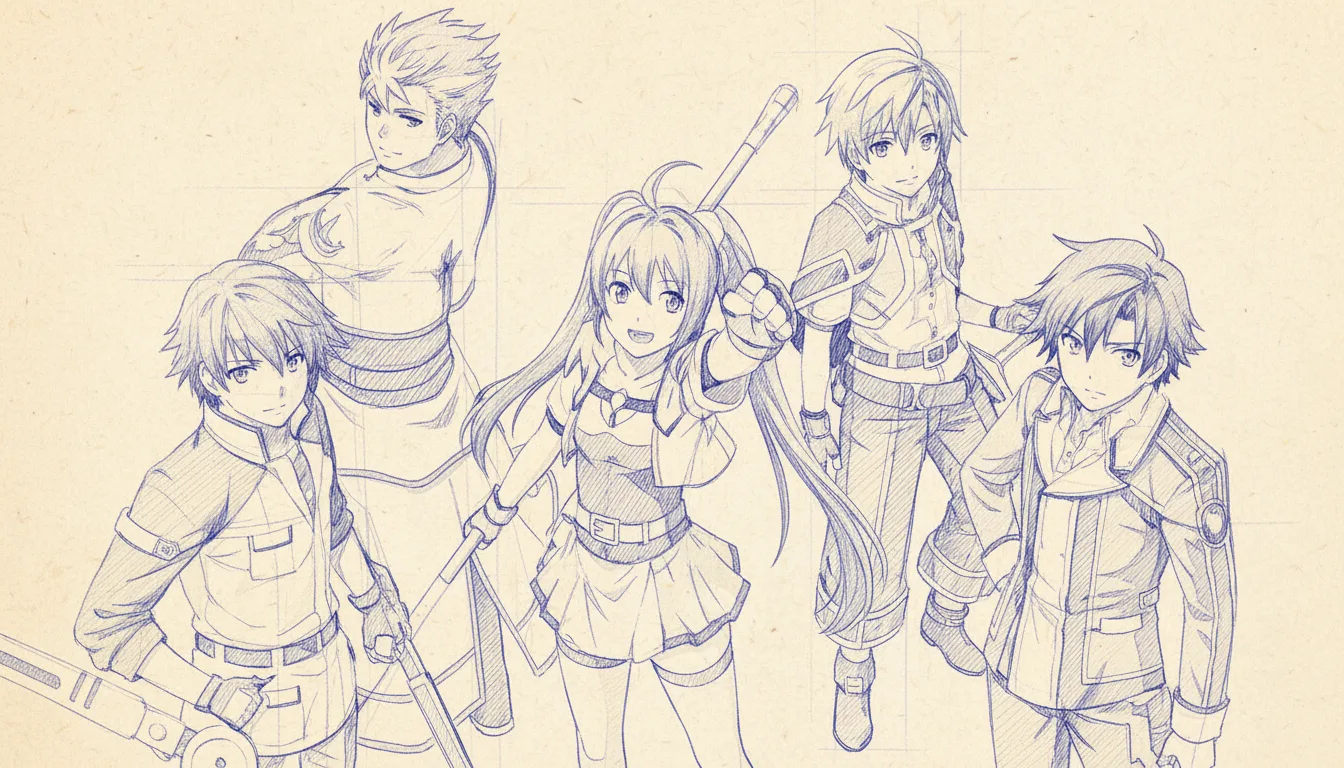
Where to start in 2026: Trails in the Sky FC (PSP/PC) remains the canonical franchise entry point. The 600+ hour franchise commitment is the deepest JRPG investment available (see our best JRPGs for 100-hour completionists ranking — Trails leads the franchise-depth category). Modern accessibility has finally improved: most entries available on Switch, PS4/PS5, PC via Steam, with the long-awaited Trails Beyond the Horizon (Kai no Kiseki) reaching Western audiences in 2026. The franchise rewards commitment — choices in Sky FC pay off in Cold Steel IV 15 years later. No other JRPG series operates at this scale of interconnected character + plot continuity.
1. Trails of Cold Steel III (2017)
Trails of Cold Steel III is the franchise's emotional peak — the Erebonian Empire arc's mid-quadrilogy convergence point where character arcs setup across Sky/Zero/Azure/Cold Steel I-II finally pay off at scale. Rean Schwarzer's New Class VII at Thors Branch Campus teaches younger generations while past Class VII members return as faculty and supporting characters, creating cross-generational character continuity that no other JRPG franchise has matched. The campaign's mid-game emotional climaxes + the cliffhanger ending into Cold Steel IV represent franchise narrative engineering at peak ambition.
Mechanically, Cold Steel III refines the ARCUS combat system + Master Quartz + Link System + Brave Order tactical options to franchise-deepest depth. Combat depth supports 80-100 hour completionist runs with sidequest density rewarding multi-character bond development across the Branch Campus social-sim layer. The Switch port (2020) + PS4 original + PC release (2019) provide cross-platform availability.
Cold Steel III earns #1 because no other Trails entry combines franchise-level emotional payoff with peak-execution combat mechanics. The Erebonian arc spans 4 games (Cold Steel I-IV) totaling 350-400 hours when completionist-played; Cold Steel III is the inflection point where the franchise commitment justifies itself. Available on PS4, PS5 (BC), Nintendo Switch, PC (Steam). For franchise commitment context, see our 100-hour completionist roundup — Trails is the deepest entry-by-entry franchise on that list.
2. Trails in the Sky SC (2006)
Trails in the Sky SC (Second Chapter) is the franchise's most-cited "all-time best JRPG" pick among long-form players. Estelle Bright's continuation of the Liberl Kingdom arc started in Sky FC delivers one of the genre's most emotionally complete protagonist arcs — Estelle's transformation from naive Bracer apprentice to seasoned defender of Liberl across the campaign's 50-60 hour runtime remains the franchise's most-cited character development achievement. Joshua Bright's parallel arc + the Ouroboros Society antagonist setup that would echo throughout the next 18 years of franchise lore make Sky SC the foundational Trails experience.
The Sky trilogy combat system (turn-based with Orbment customization + Crafts + S-Crafts limit breaks + Combo Crafts paired attacks) established the mechanical template that all subsequent Trails entries would refine. Sky SC's specific mechanical contributions: expanded Quartz combinations + Combo Craft system depth + final dungeon optional content that rewards completionist exploration with character-specific dialog scenes unavailable in other paths.
Sky SC is the most universally-recommended Trails entry by long-time franchise fans. The 50-60 hour campaign requires Sky FC playthrough first (Sky FC is functionally "Volume 1" of a 2-volume novel), but the combined Sky FC + SC experience (100+ hours) is one of the genre's most rewarding JRPG investments. Available in 2026 via Steam (PC) + PSP original (collector market). Sky SC remake confirmed for 2026 Switch/PS4/PS5 release — the modern accessible way to experience this masterpiece.
3. Trails to Azure (2011)
Trails to Azure (Ao no Kiseki) completes the Crossbell duology started in Trails from Zero — Lloyd Bannings + the Crossbell Police Department Special Support Section's continued investigation of the Crossbell State's political corruption finally pays off in the franchise's most narratively dense single-game conclusion. The Crossbell arc (Zero + Azure) is the most political Trails sub-arc, dealing with criminal organizations + corrupt politicians + the early-stage seeds of the Erebonian Empire's later invasion of Crossbell that drives Cold Steel III's main conflict.
Azure's combat system refinements (Burst Mode + Master Quartz introduction + S-Break system) influenced every subsequent Trails entry's mechanical design. The 50-70 hour campaign rewards completionist sidequests with bond-development scenes between SSS members + cameo appearances by Sky trilogy characters that hint at the broader Zemuria continent's interconnected narrative.
Trails to Azure finally received official English release in 2023 (PC/PS4/PS5/Switch via NIS America) after 12+ years of fan-translation-only availability. The 2023 official release brought updated UI + English voice acting + Switch portability that the PSP original lacked. Azure remains essential for Trails completionists; non-completionists can skip Crossbell duology and jump from Sky SC directly to Cold Steel I, but the Crossbell political context informs Cold Steel III's later events significantly.
4. Trails of Cold Steel IV (2018)
Trails of Cold Steel IV concludes the Erebonian Empire arc — Rean Schwarzer + Old Class VII + New Class VII + Crossbell SSS + Sky trilogy returning characters + virtually every named Trails character from 14+ years of franchise history combine into a single 80-100 hour final-act campaign. The 50+ playable character roster + multi-protagonist perspective shifts + the Great Twilight crisis convergence make Cold Steel IV the franchise's most logistically ambitious entry.
Mechanically, Cold Steel IV's True Reverie Corridor post-game + endgame side-content add 30-50 hours beyond main story for completionists. The combat system refinements (Brave Order expansions + Cross-Order team attacks + multi-perspective party management) cap the Erebonian arc's mechanical evolution. The cliffhanger ending sets up Trails into Reverie (2020) as the franchise's mid-point convergence entry.
Available on PS4, PS5 (BC), Switch, PC (Steam) since 2019 (Western release). Cold Steel IV is the Erebonian arc's narrative payoff — players who committed to Cold Steel I + II + III have Cold Steel IV as the campaign that justifies the 300+ hour franchise investment. The honest critique: pacing in the first 20 hours suffers from multi-protagonist juggling overhead; once the party reunifies post-act-1, the campaign accelerates into franchise peak intensity.
5. Trails from Zero (2010)
Trails from Zero (Zero no Kiseki) opens the Crossbell duology with Lloyd Bannings + the Crossbell Police Department Special Support Section investigating the city-state's complex criminal-political ecosystem. Zero's tone shift away from Sky's lighter optimism toward Crossbell's politically grayer setting establishes the franchise's mature-narrative direction that Cold Steel + Daybreak would later inherit.
The 50-60 hour campaign introduces the Master Quartz system (precursor to Cold Steel's mechanic) + the Bond Event system for character development + the Detective Notebook sidequest tracker. Combat retains Sky's turn-based foundation while introducing tactical refinements (multi-target Crafts + Combo Crafts evolved). The Crossbell setting (a single city-state setting rather than Sky's nation-spanning travel) creates a uniquely dense exploration loop.
Zero received official English release in 2022 (PC/PS4/PS5/Switch via NIS America) after 12+ years of fan-translation-only access. The 2022 release is the canonical modern way to play Zero — UI improvements + English voice acting + cross-platform availability. Essential for Trails completionists committed to franchise depth; Crossbell arc context informs all subsequent entries' political backdrop.
6. Trails in the Sky FC (2004)
Trails in the Sky FC (First Chapter) is the franchise's foundational entry — Estelle + Joshua Bright's Bracer apprenticeship across the Liberl Kingdom established the template every subsequent Trails entry would refine. The franchise's interconnected-lore design started here: Estelle's apparently-routine sidequests in Sky FC pay off across Sky SC + Cold Steel III + later Erebonian arc 15+ years later. Sky FC requires patience (the campaign builds slowly across 40-50 hours) but rewards every hour with franchise-foundational context.
Mechanically, Sky FC introduced the Orbment system (Quartz-equipped combat customization), the Bracer system (sidequest-driven progression), and the Trails of franchise's distinctive turn-based combat with Crafts + S-Crafts limit breaks. Modern players coming from Cold Steel's polished combat may find Sky FC's mechanics dated; the franchise rewards starting here regardless because the narrative foundation is essential.
Available on PC (Steam) since 2014 + PSP original (collector market) since 2004. Sky FC remake for Switch/PS4/PS5 confirmed 2026 release — modern accessible way to experience the franchise origin. For 2026 newcomers: Sky FC remake (when available) is the canonical entry point. For PC players willing to accept dated UI: Steam version remains accessible. Sky FC is the franchise's "you must start here" entry — every Trails fan agrees on this even when ranking later entries higher.
7. Trails into Reverie (2020)
Trails into Reverie (Hajimari no Kiseki) is the franchise's mid-point convergence entry — bridging the Erebonian arc finale (Cold Steel IV) with the Calvard arc beginning (Daybreak). Three protagonist perspectives (Rean Schwarzer + Lloyd Bannings + masked C) intertwine across a 60-80 hour campaign that brings every previous Trails arc's loose ends into a single conclusion.
The Trails into Reverie Corridor (post-game extended dungeon spanning hundreds of randomized floors) added 50-100 hours of optional content for completionists wanting maximum mechanical depth. The mainline campaign's multi-protagonist structure can feel disorienting for players accustomed to single-protagonist entries, but the convergence payoff in the final act justifies the structure.
Available on PC (Steam) + PS4/PS5 + Switch since 2023 (NIS America Western release). Reverie is the franchise's "you've completed everything before this" entry — playing Reverie without completing Sky trilogy + Crossbell duology + Cold Steel quadrilogy loses 80% of the emotional payoff. For franchise completionists, Reverie is essential narrative + mechanical content; for casual Trails players, can be optional skip.
8. Trails of Cold Steel II (2014)
Trails of Cold Steel II picks up Rean Schwarzer's arc immediately after Cold Steel I's cliffhanger ending — the Erebonian Civil War's mid-conflict period where Class VII operates as guerrilla resistance against the Noble Alliance. The 60-80 hour campaign delivers the franchise's most action-driven combat sequences while developing character arcs across the 9-member Class VII party.
Mechanically, Cold Steel II refines the ARCUS combat system + Link System + Master Quartz + Order Mode tactical options established in Cold Steel I. Combat depth supports completionist play with sidequests rewarding multi-character bond development. The Salt Pale crisis setup in Cold Steel II's final act drives the entire subsequent Cold Steel III + IV narrative arc.
Available on PS3 (original 2014), Vita (2015), PC (2018), PS4 (2019), Switch (2020). Modern players coming to Cold Steel arc in 2026: Cold Steel II is required playing immediately after Cold Steel I (the two together function as a single narrative unit). The 120-160 hour combined Cold Steel I+II investment is the bridge to Cold Steel III's franchise-peak payoff.
9. Trails of Cold Steel I (2013)
Trails of Cold Steel I opens the Erebonian Empire arc with Rean Schwarzer + Class VII at Thors Military Academy — the franchise's first major shift toward school-academy social-sim hybrid combat. The Bonding events between Class VII members + Field Studies expedition framework + permission-based dialogue options establish the social-sim layer that Cold Steel II + III + IV would all build on.
Mechanically, Cold Steel I introduces the ARCUS system + Link System + Combat Link tactical combat foundations. Combat depth is more accessible than Sky trilogy + Zero/Azure due to the streamlined ARCUS interface, but lacks the maturity of Cold Steel III's refined systems. The 60-80 hour campaign rewards sidequest completionists with Bond scenes between Class VII characters.
Available on PS3 (2013 Japan, 2015 West), Vita (2015), PC (2017), PS4 (2019), Switch (2020). Cold Steel I is the franchise's most accessible entry point for modern audiences (more so than Sky FC's dated 2004 systems), but starting here loses Sky trilogy context that Cold Steel arc occasionally references. Recommended modern starting points: Sky FC remake (when released) OR Cold Steel I (if accepting some lost Sky context).
10. Trails through Daybreak (2021)
Trails through Daybreak (Kuro no Kiseki) opens the Calvard Republic arc — the franchise's first major arc shift since Erebonia (Cold Steel I-IV). Van Arkride + the Arkride Solutions Office investigate Calvard's underground criminal-political ecosystem with tonal seriousness exceeding even Crossbell duology. The 50-70 hour campaign introduces real-time hybrid combat (mixing turn-based foundations with action-RPG combat in certain encounters) — the franchise's first major combat system departure since the Sky trilogy's origin.
Mechanically, Daybreak's Action-Field Battle system + Shard system + Daybreak's new character roster represent Nihon Falcom's commitment to franchise evolution rather than mechanical stagnation. Combat depth is initially controversial for franchise purists (action-RPG hybrid breaks turn-based tradition) but proves itself as legitimate Trails mechanical evolution by mid-campaign.
Available on PS4, PS5, PC (Steam) since 2024 (NIS America Western release). Switch release pending in 2026. Daybreak represents the franchise's modern era — recommended for players willing to commit to a new arc without requiring the 600+ hour previous-arc context. For franchise completionists: essential continuation of the Zemuria narrative. For new players: viable entry point if Sky/Crossbell/Cold Steel commitment feels excessive.
Trails Series Strategic Context — Where to Start + What to Skip
The Trails franchise's 600+ hour total runtime + 12+ mainline entries can feel overwhelming for newcomers. Strategic recommendations for different player profiles:
Maximum-commitment franchise completionists: Start with Trails in the Sky FC (2004 PC/upcoming 2026 remake) and play in release order through Trails through Daybreak II (2022) → Beyond the Horizon (2024 Japan, 2026 Western). Total commitment 600+ hours. The franchise rewards this commitment with cross-arc character continuity no other JRPG series matches. Recommended path for any player who has 1-2 years to dedicate to a single franchise.
Time-constrained Trails-curious players: Skip directly to Trails of Cold Steel I (2013 PC/PS4/Switch) — the Erebonian arc functions as a soft reboot accessible without Sky trilogy context. The 4-game Cold Steel quadrilogy (~300 hours) delivers the franchise's narrative peak without requiring earlier-arc commitment. Players who finish Cold Steel I-IV often return to Sky trilogy retroactively for foundational context. Realistic 6-12 month commitment.
JRPG-curious players who want to sample the franchise: Play Trails in the Sky FC (50 hours) standalone — get a complete Liberl Kingdom adventure that hints at the broader franchise without requiring continuation commitment. Sky FC ends in a cliffhanger that pushes players toward Sky SC, but the FC standalone experience is satisfying. Alternative: play the Daybreak (Calvard arc) entry which functions as the franchise's modern accessible entry point.
What to skip if franchise commitment is limited: Spin-off entries (Trails Mobile JP-only Heroes of Atelier collaboration + Akatsuki no Kiseki MMO) are skippable. Trails into Reverie requires substantial earlier-arc completion to deliver narrative payoff — skip if not committing to franchise-completionist path. The PSP-era Sky 3rd (intermission entry) is essential context but can be skipped on first franchise pass if pacing feels excessive — Sky 3rd's character vignettes pay off in Sky SC sequel sidequests but aren't required main-narrative reading.
The Trails franchise represents JRPG narrative engineering at peak ambition — and Nihon Falcom's commitment to interconnected lore across 20+ years makes it one of the genre's most rewarding franchise investments for players willing to commit. See our Switch JRPG ranking for Trails Switch-specific entries (Sky FC remake 2026, Cold Steel I-IV all on Switch, Daybreak Switch 2026), our PSP JRPG ranking for the franchise origin entries (Sky FC/SC/3rd + Zero/Azure all PSP), and our PS5 JRPG ranking for Daybreak's modern hardware showcase. For franchise comparison with other JRPG epics, see Final Fantasy series ranking and Lost Odyssey review — both narrative-ambitious franchise comparables.
Frequently Asked Questions
Where should I start with the Trails / Kiseki series?
Trails in the Sky FC (2004 PSP origin, PC via Steam since 2014) remains the canonical franchise entry point — even with dated 2004 UI vs modern Cold Steel polish. The franchise rewards starting here because Sky FC sidequest character development pays off across Cold Steel III + IV 15 years later. Alternative entry for modern players: Trails of Cold Steel I (2013 PC/PS4/Switch) functions as soft reboot accessible without Sky context — lose 20-30% emotional payoff but gain modern combat UI. For franchise-curious players: Sky FC 50-hour standalone delivers complete Liberl Kingdom adventure. The 2026 Sky FC remake (Switch/PS4/PS5) when released will be the canonical modern entry point.
Which Trails game is considered the best?
Trails of Cold Steel III (2017) earns #1 consensus among long-form franchise players — the Erebonian arc's mid-quadrilogy emotional convergence point where 14+ years of franchise setup finally pays off at scale. Strong runners-up: Trails in the Sky SC (2006, the franchise's most-cited 'all-time best JRPG' pick) and Trails to Azure (2011, Crossbell duology narrative conclusion). All three deliver franchise-peak narrative weight. The 'best Trails' question often depends on which arc resonates: Sky for foundational emotional impact, Crossbell for political-mystery depth, Cold Steel III for narrative convergence payoff.
How long does the complete Trails series take to play?
600+ hours for full mainline franchise completion across all 12 entries: Sky trilogy (FC + SC + 3rd = 150+ hours), Crossbell duology (Zero + Azure = 100-130 hours), Cold Steel quadrilogy (I + II + III + IV = 300-400 hours), Reverie (60-80 hours), Daybreak duology (100-150 hours). Per-entry completionist runs average 50-80 hours; speedrun-style 'main story only' shaves 20-30% per entry. This is the deepest single-franchise JRPG commitment available — see our best JRPGs for 100-hour completionists ranking where Trails leads the franchise-depth category. Realistic franchise commitment: 1-2 years dedicated play time.
Can I play Trails of Cold Steel without playing Trails in the Sky first?
Yes, but with 20-30% reduced emotional payoff. Cold Steel arc was designed as franchise soft-reboot accessible to newcomers — the Erebonian Empire setting is functionally independent of Sky's Liberl Kingdom + Crossbell duology. However, Cold Steel III + IV reference earlier-arc characters and events that pay off enormously for players who completed Sky and Crossbell. Recommended for time-constrained newcomers: start with Cold Steel I, finish Cold Steel quadrilogy + Reverie, then optionally backtrack to Sky trilogy + Crossbell for retroactive context. Sky-first remains the canonical recommendation for maximum franchise emotional payoff.
Are the Trails games available in English officially?
Yes, as of 2026 all mainline entries have official English releases: Sky FC (2014 PC/Steam) + Sky SC (2015 PC/Steam) + Sky 3rd (2017 PC/Steam) + Zero (2022 NIS America) + Azure (2023 NIS America) + Cold Steel I (2015) + II (2016) + III (2019) + IV (2020) + Reverie (2023) + Daybreak (2024) — all on PC, Cold Steel/Reverie/Daybreak also on PS4/PS5/Switch via NIS America. Trails through Daybreak II (2022) Western release confirmed for late 2026. Beyond the Horizon (Kai no Kiseki, 2024 Japan) Western release 2026-2027. The franchise's previously-Japan-only entries (Zero, Azure, Sky 3rd remasters) finally received official English releases between 2022-2023 after years of fan-translation-only access.
What platforms have the most Trails games?
PC (Steam) has the most complete Trails library — all 12 mainline entries available with English releases. PlayStation has Cold Steel I-IV + Reverie + Daybreak (no Sky/Crossbell official ports as of 2026). Nintendo Switch has Cold Steel III + IV + Reverie + Daybreak (Sky FC remake confirmed 2026). PSP era games (Sky FC/SC/3rd + Zero/Azure original releases) are collector-market only — modern remakes/ports cover all PSP content with improved presentation. Recommended platform for 2026 Trails commitment: PC for full library access; Switch for portable franchise play once Sky FC remake ships.