
Monster Hunter Wilds is Capcom's Monster Hunter World based evolution for 2025, following expansions Iceborne, and Sunbreak. The last fifteen years of the franchise has helped Capcom find the balance between harsh systems and welcoming new players. This confidence is reflected in Wilds. Since 2017 Icicle Disaster has reviewed over 250 JRPGs, and we rank all of them. Wilds is in the top tier of Monster Hunter's strongest entries, and despite the genre purist argument, we consider Monster Hunter a JRPG. We address the wider genre framing in our jrpg meaning piece.
Short answer for players in 2026: yes, Monster Hunter Wilds will be worth your time if you are an action-RPG fan inclined to spend 100-200 hours learning the game's systems. Capcom provided a launch that has less mechanical roughness than World had at the same point in its lifecycle, the Seikret companion mount changes traversal in ways previous entries never could, and the focus mode plus offset attack additions will give depth to weapons that veterans will love while keeping them accessible to new players. The series rewards mastery and Wilds is the best current example of that.
Capcom's 2025 Evolution Built on Iceborne and Sunbreak Data
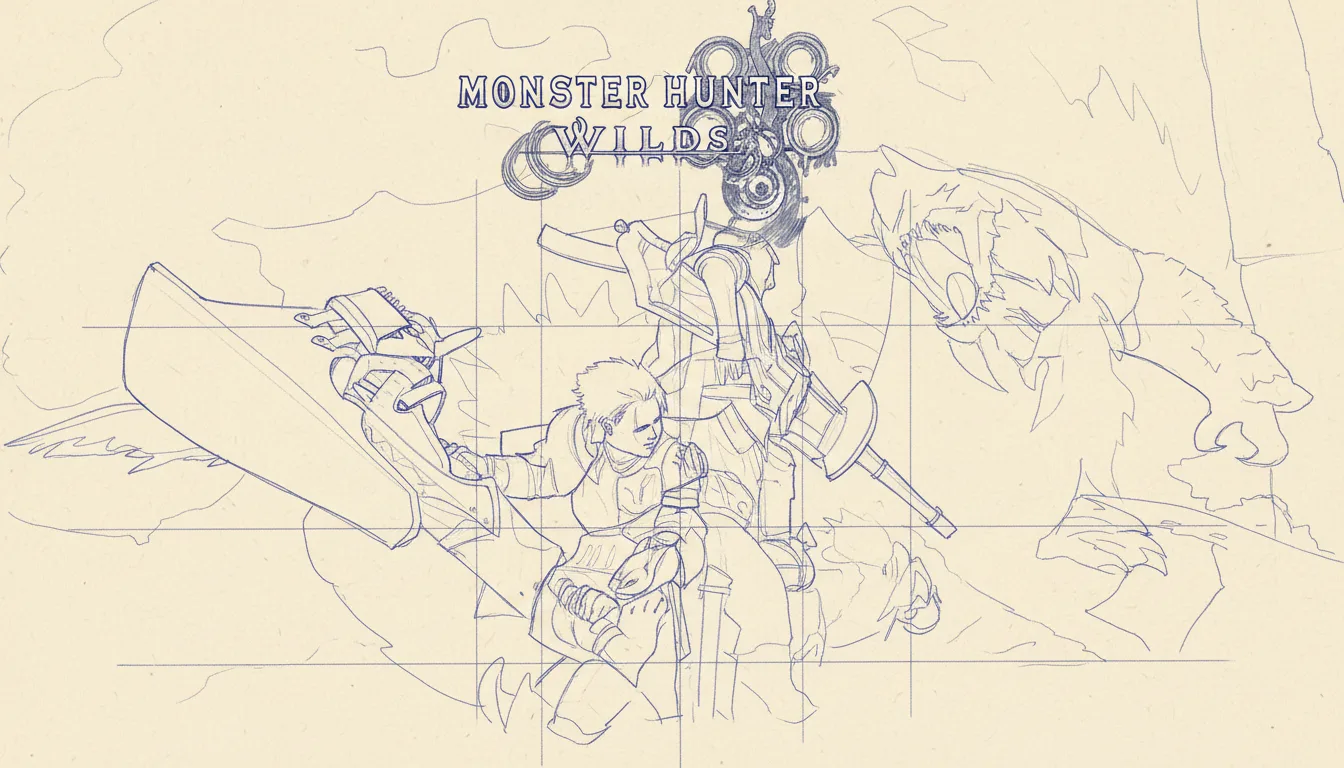
Monster Hunter Wilds is Capcom’s most ambitious project since Resident Evil Village, and it launched at the end of February 2025. The developers had access to the Iceborne and Sunbreak data which provided player behaviours (expansions and weapon choices). This helped inform the design decisions of Wilds. This resulted in a release that tackles the documented Monster Hunter World pain points (multiplayer SOS flare delays, camp management, map transition delays) whilst keeping the depth of combat the franchise is known for.
Several significant improvements have been made to the fourteen returning weapon classes. Rather than redesigning them, the focus was placed on mechanical refinements. As an example of this, each weapon class will have a new focus mode toggle feature that will bring up “Precision Targeting Overlays” for weapon attacks during designated windows of an attack. This will allow players to perform Focus Strikes on the weak points of monsters, which will deal extra damage and increase the amount of stagger that can be inflicted. New Offsets have also been added. Aside from the great sword, hammer, and lance, which will now have the ability to counter monster charges, all other weapons will be able to perform “attack additions.” These will serve as “timed mastery windows that will reward skilled players and not punish new players.” Lastly, the refinements made to the Switch Axe and Insect Glaive will address the most predominant community feedback issues stemming from Iceborne and Sunbreak.
The best part of the new traversal mechanics in the game is the Seikret companion. The Seikret will follow you around in between hunting zones, and you can stow away your weapons and enter combat while riding your Seikret. Additionally, your Seikret can hold a secondary weapon for you, which enables you to make mid-hunt swaps. This new addition completely changes the pace of exploration in the game as compared to previous Monster Hunter titles. In those games, you would either have to fast travel, which breaks immersion, or you would have to run through zones, which kills the pacing of the game. Wilds, however, does come close to perfect game pace with the Seikret riding mechanic. The secondary weapon swapping will be appreciated by veteran players, while new players will appreciate the simplified zone traversal.
The Forbidden Lands Biome Variety and Weather Systems
The Monster Hunter series has never had such a variety of biomes as the Forbidden Lands. The Windward Plains features a beautiful setting to start the campaign. Scarlet Forest has high elevation with thick low-lying vegetation for explorer rewards. The Iceshard Cliffs and Oilwell Basin have combat positioning environmental hazards like clouds of sulfur and blizzard whiteout. Wyveria offers the deepest dungeon that Monster Hunter has created for an endgame area. Each biome has its own ecosystem where large monsters interact with small wildlife and the surrounding environment.
Capcom created each biome in the Forbidden Lands based on different weather systems and how they impact the behavior of monsters within the area. For example, in the Windward Plains in the Plenty weather state monsters will gather at watering holes. When weather transitions to the Inclemency state in the Scarlet Forest, Apex Predators are summoned (these are the franchise’s versions of apex predator ecology). During Fallow droughts, monsters are forced to enter into territorial disputes which players can use to their advantage. Weather systems do more than just change the scenery. They influence quest spawn rates, monster aggression, and density of encounters within the ecosystem.
The biggest alteration to Hunter customization since World has been revealed. You can now upgrade your decoration slots through the Smithy crafting menu. Because of this, endgame builds no longer require RNG from Charm farming. Furthermore, the Armor skill builds now have better customization due to the Group Skills system. This allows passive bonuses to be activated when certain armor pieces are equipped together. Improvements to the behavior tree of the Palico companion AI have made solo hunts less taxing compared to those at the launch of World.
Combat Depth and Multiplayer Hunt Structure
Combat depth in The Wilds rewards mastery as a single player and as a multiplayer unit. The Wound system returns from Sunbreak, this time, it’s expanded for all weapon classes. Wounding certain spots on a monster’s body creates openings to deal extra damage during some combo chains. The new Clash mechanic also allows a weapon to trade hits with a monster’s charge attack, within a certain time window. If done correctly, a huge amount of stagger is dealt. Veterans will be spending hundreds of hours mastering Clash on all large monster classes.
Multiplayer hunts have undergone a complete overhaul! No more delays for SOS flares. Joining hunts mid-quest is instantaneous, and players can set their SOS flares to auto-broadcast for certain quest types! Cross-platform play between PS5, Xbox Series X|S, and Steam is seamless with no friend code issues. The Link Party system allows you to create persistent teams of up to 4 hunters that carry over between sessions. Unlike World, cooperative play finally feels designed here.
On the PlayStation 5 and Xbox Series X, Performance Mode allows lessened resolution and stable 60fps. Quality Mode 30fps targets 4K, with greater texture detail. The PC Steam version, depending on hardware, allows DLSS Frame Generation at 8K and high-end graphics settings. Capcom addressed the initial PC port stability issues within the first month post-launch. The PC build as of 2026 is stable with DLSS Frame Generation, enabling high-end visual settings on mainstream hardware.
Endgame Content and 100-200 Hour Investment Timeline
Endgame content is focused on the Wyveria region and the Tempered Investigation quest line. The tempered monsters are the highest difficulty tier in the franchise and require mastery of each weapon system for their damage and HP pools. The grind for World endgame decoration upgrades returns, but this time with deterministic upgrade paths that are more respectful of your time. The G Rank equivalent content (named Threat Tier in the Wilds) offers hundreds of hours of completionist gameplay, and check out our 100-hour completionist roundup to see the rest of the long-form action-RPG investments Wilds is alongside.
There is a large variety of new quests for The Investigation. Cross zone hunts are the first of their kind and each of the Forbidden Lands biomes requires the player to develop a strategy to complete their hunt. The addition of multiple large monsters for players to hunt at the same times means that the players need to coordinate the hunt as a team. Apex Predator fights are an endgame territory capture event where players fight against and defeat a monster, all while another monster is circling them. These fights are considered to be the most chaotic in the series. Endgame content is very replayable and gives great value to the time players spend invested in the game, which is around 100-200 hours.
Monster Hunter Wilds vs Monster Hunter World — Generational Comparison
When compared to Monster Hunter World at launch, Wilds is a more refined product in every way possible. The starting frame rate is more consistent, the multiplayer systems are improved, weapon balance is better, and the story around the hunts is deeper. World needed the Iceborne and Sunbreak expansions to reach its peak potential. Wilds gives peak potential at launch with the implied promise of more expansion content. Capcom learned a lot from the previous generation. For broader franchise depth context see our Final Fantasy series ranking and Lost Odyssey review covering long-form action-RPG comparables.
The Verdict — Capcom's Strongest Monster Hunter
Monster Hunter Wilds earns required reading status for action-RPG fans with an interest in honing skills in a specific weapon system. The franchise rewards mastery and Wilds is the cleanest current showcase of why Capcom is the genre’s deepest design house. Rating 9.0 out of 10. Some story beats hit softer than the campaign setup suggests, there were PC port stabilization delays, and some weapon balance patches were still active in mid-2026. None of these critiques diminish the core proposition. Wilds is Capcom’s best Monster Hunter and the time it demands is justified.
Frequently Asked Questions
Is Monster Hunter Wilds worth playing in 2026?
Yes — Monster Hunter Wilds is essential reading for any action-RPG fan willing to commit 100-200 hours to mastering its systems. Capcom delivered a launch with fewer rough edges than Monster Hunter World had at its equivalent point, the Seikret companion mount transforms exploration, and focus mode + offset attack additions give weapon depth that veterans appreciate while remaining accessible. Cross-platform availability on PS5, Xbox Series, and PC Steam eliminates hardware barriers. Rating 9.0/10. The franchise rewards mastery and Wilds is the cleanest current showcase of why.
What's new in Monster Hunter Wilds vs Monster Hunter World?
Three major additions define the Wilds evolution: (1) Seikret companion mount — your Seikret follows between zones, lets you sheath weapons mid-combat by mounting, and carries a secondary weapon swap mid-hunt; (2) Focus mode — precision targeting overlay during attack windows for focus strikes on monster wound spots; (3) Offset attacks — great sword, hammer, lance counter monster charges with timing windows that reward mastery. Plus the Forbidden Lands biome variety surpasses World's setting design, weather systems directly affect monster behavior (Plenty/Inclemency/Fallow states), and multiplayer SOS infrastructure delay frustrations are gone.
Which platform is best for Monster Hunter Wilds in 2026?
PS5 + Xbox Series X for stable 60fps Performance Mode + smooth controller input + 4K Quality Mode option. PC Steam version supports DLSS Frame Generation enabling high-end visual settings on mainstream hardware (the launch PC port stability issues were patched within the first month — the 2026 PC build is stable). Cross-platform play works seamlessly between PS5, Xbox Series, and PC with no friend code complications. Recommendation: PS5 if you have one, PC Steam if you want maximum visual fidelity with DLSS hardware.
How long does Monster Hunter Wilds take to beat?
Main campaign 40-60 hours for a focused playthrough. Reaching the endgame Tempered Investigation quest line plus mastering a single weapon class to Threat Tier difficulty pushes to 100 hours. Full completionist run (all weapon classes mastered, all Tempered monsters defeated, all Decoration upgrade paths maxed, all multiplayer Link Party content cleared) reaches 200+ hours. The franchise rewards committed completionist play (see our 100-hour completionist roundup for the broader action-RPG bracket Wilds belongs alongside). Wilds delivers value commensurate with the time invested.
What is the Seikret companion mount in Monster Hunter Wilds?
The Seikret is your personal mount that follows between hunting zones — Wilds' standout traversal addition. The Seikret lets you sheath weapons mid-combat by mounting up, transports you across zones without immersion-breaking fast travel, and provides an in-combat resource via the secondary weapon swap mechanic (the Seikret carries a second weapon you can swap to mid-hunt for tactical flexibility). This single mechanic transforms the franchise's exploration pacing. Previous Monster Hunter entries required either fast travel or zone running — Wilds threads the needle with the Seikret loop.
Is Monster Hunter Wilds cross-platform multiplayer?
Yes — full cross-platform play between PlayStation 5, Xbox Series X and S, and PC Steam works seamlessly with no friend code complications. The Link Party system lets you form persistent groups of up to four hunters that carry across sessions. SOS flare instant-join means joining a hunt mid-quest is immediate (the World era SOS delay frustration is gone). Cooperative play feels intentional rather than the World launch afterthought. Cross-platform multiplayer infrastructure is one of Wilds' clearest improvements over Monster Hunter World.