
I wanted to love Valkyria Chronicles more than I did. The watercolor art style is gorgeous. The premise — a small neutral country fighting an imperial invasion with a militia of college students and farmers — hits that David-versus-Goliath note that anime does better than anyone. And the BLiTZ combat system, which mixes turn-based strategy with real-time third-person shooting, is one of the most original tactical designs I've played. But somewhere between the brilliant gameplay ideas and the execution, Valkyria Chronicles trips over its own writing, stumbles into AI problems it never fixes, and lands on a game that's charming, dumb, and frustrating in roughly equal measure. I've played it twice — once on PS3 in 2008, once on the PC remaster in 2021. Both times, same verdict: brilliant concept, uneven delivery.
The CANVAS Engine: Watercolor War Has Never Looked This Good
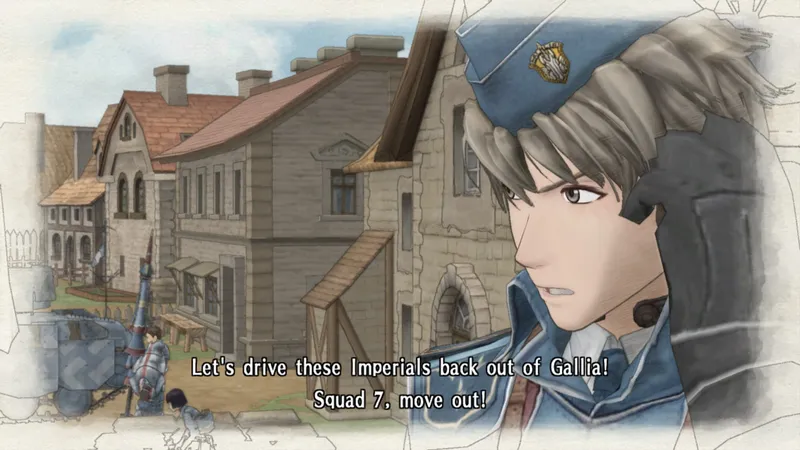
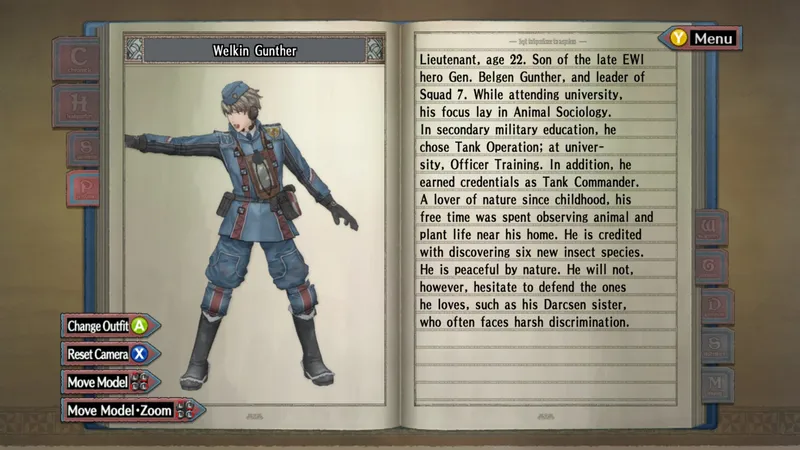
The first thing anyone notices about Valkyria Chronicles is the art. The CANVAS engine renders everything in a hand-painted watercolor style — pencil sketch outlines on character models, soft pastel backgrounds, hatching textures on shadows — that makes the whole game look like a storybook brought to life. Gallia's rolling hills, cobblestone towns, and wheat fields feel warm and nostalgic in a way that photorealistic war games can't replicate. The presentation carries this further: the entire story is told through chapters of a book, with pages you flip to select missions, cutscenes, or character profiles. It's a beautiful framing device that positions the game as a memoir rather than a campaign.
The visual design also creates a tonal identity that separates Valkyria Chronicles from every other WWII-inspired game. This isn't Saving Private Ryan. It's Miyazaki making a war movie — all the horror filtered through a lens that's simultaneously soft and sincere. The contrast between the gentle art style and the violence of the subject matter should feel dissonant. Instead, it creates something unique: a game about war that looks like a painting, which makes the moments where the painting gets stained by loss hit differently than they would in a grittier game.
The BLiTZ System: Brilliant Idea, Broken Execution
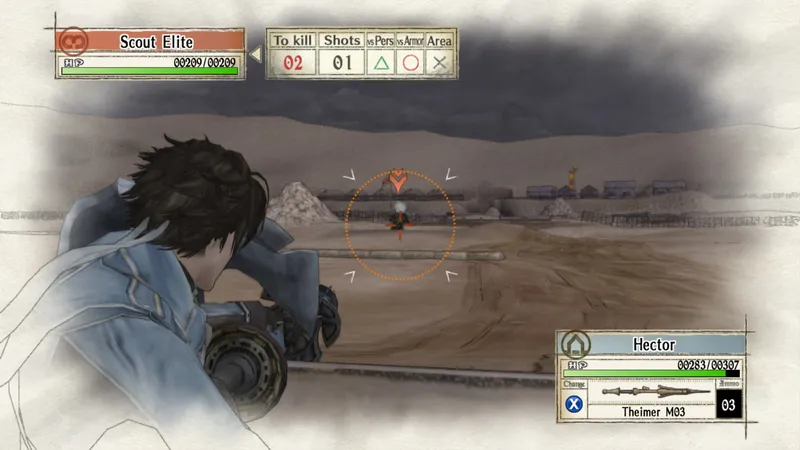
Here's where Valkyria Chronicles is genuinely innovative. The BLiTZ system works like this: you spend Command Points from an overhead map view to select a unit. The camera then zooms down to a third-person view where you directly control that soldier — running, taking cover, and aiming in real time. Enemy units fire at you as you move (interception fire), so positioning and route planning matter. When you stop to aim, the game pauses, and you manually place your crosshair for body shots, headshots, or environmental targets. Spend your action, return to the map, pick the next unit.
It's a system that blends the thinking of tactical SRPGs with the physicality of a shooter, and when it works — when you're flanking a machine gun nest with a Scout, calling in mortar support from a Lancer, and pushing your tank through a barricade — it feels like nothing else in the genre. The five unit classes (Scout, Shocktrooper, Lancer, Engineer, Sniper) each have distinct roles, movement ranges, and weapon types. The problem is that the balance between them is wildly off, and the mission design rarely demands that you use them all.
The Scout Problem (And Why Strategy Doesn't Matter)
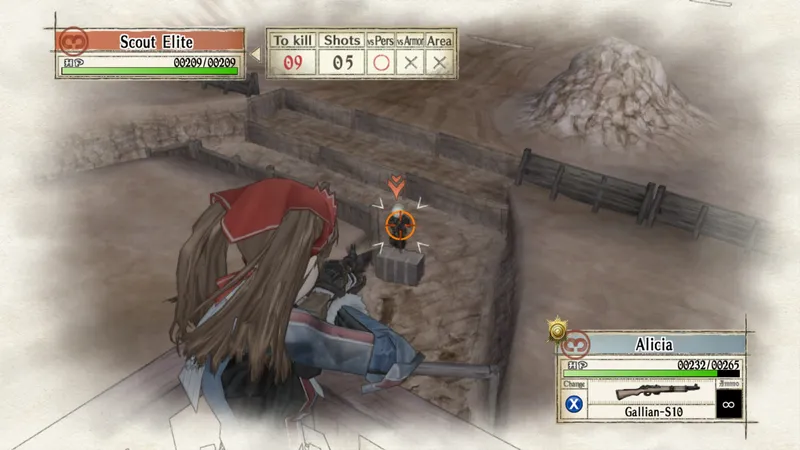
Scouts break the game. They have the longest movement range, decent accuracy, and enough health to survive interception fire on most maps. The optimal strategy for the majority of missions is: give one Scout all your Command Points, sprint to the objective, capture the enemy base. Done. A-rank. The game grades you primarily on speed (fewer turns = higher rank), which means the "correct" way to play actively discourages the careful tactical positioning the BLiTZ system was designed for. Why set up a crossfire with Shocktroopers when one Scout can blitz the objective in two turns?
The Potentials system — personality traits that trigger during combat, like "Allergy" reducing accuracy near flowers, or "Fancies Women" boosting stats near female squadmates — is a charming idea that never matters enough mechanically. The stat modifiers are too small to build strategy around, and the difficulty is low enough that you rarely need to think about unit synergy. You can issue the same Command Point to the same unit multiple times per turn, which means sending one soldier on a solo rampage is almost always better than coordinating a multi-unit assault. The tactical depth exists in the system. The game just never forces you to use it.
The Story: Sesame Street Goes to War
Welkin Gunther is a nature-loving college student who becomes a tank commander because his dad was famous. Alicia Melchiott is a baker-turned-militia-girl who serves as the love interest and the squad's moral compass. The Empire is evil because it's the Empire. The Darcsen (the game's Jewish-coded minority) face discrimination that's resolved when a prejudiced character sees oppressed people coughing in a cabin and immediately does a 180 on her worldview. The romance subplot plays out with the sheepish, awkward energy of a high school dating sim where both parties are in their twenties but act like they're fifteen.
I'm being harsh because the game asks me to take this seriously. Valkyria Chronicles wants its war drama to carry emotional weight — characters die, sacrifices are made, the underdogs persevere — but the writing undercuts every dramatic beat with dialogue so heavy-handed that it reads like a children's primer on "war is bad." Welkin's "genius" battle plans include driving tanks underwater to avoid a defended bridge. Characters stare at sunsets and recite the evils of conflict with the subtlety of a pamphlet. The darkest moments are immediately softened by tone-deaf comedy or melodramatic speeches that don't trust the audience to feel anything without being told exactly what to feel.
The villains are the exception. The Imperial generals — particularly Selvaria Bles, whose Valkyria powers make her a one-woman army and whose loyalty to Maximilian is tragically genuine — are written with more complexity than the entire hero cast combined. When the game focuses on the Empire's internal politics and Selvaria's conflicted servitude, it briefly becomes the war story it thinks it is the rest of the time.
The Edelweiss: Your Tank, Your Liability
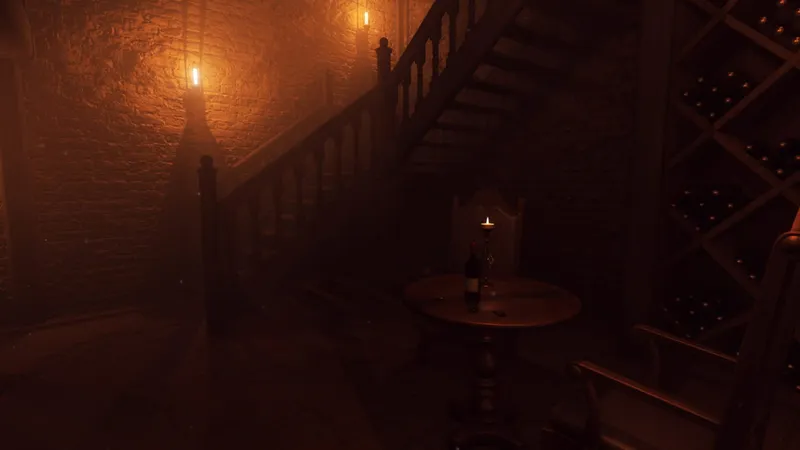
The Edelweiss — Welkin's inherited tank — is simultaneously the squad's greatest asset and its most annoying constraint. It's powerful, can crush barricades, and provides mobile cover for infantry. It also gets Welkin killed instantly if it's destroyed, ending the mission regardless of how well the rest of your squad is doing. The tank controls are clunky, its turning radius is terrible in tight spaces, and it draws every enemy Lancer on the map like a magnet. Managing the Edelweiss is less "commanding a war machine" and more "babysitting an expensive liability that you can't leave at home."
The upgrade system at HQ — where you spend Ducats to improve weapons, armor, and accessories — is functional but shallow. Unit upgrades apply to entire classes rather than individuals, which simplifies management but removes the personal attachment that games like Fire Emblem create through individual growth. Your Scouts get better because all Scouts get better, not because this specific Scout you've been using for twenty missions earned something unique. The Potentials are the only individual element, and as discussed, they don't matter enough.
The Verdict: Beautiful, Innovative, Frustrating
Valkyria Chronicles is a game I recommend with a paragraph of caveats. The CANVAS art style is timeless — it looked good in 2008, it looks good on PC in 2026, and it'll look good in another decade. The BLiTZ system is one of the most creative tactical combat designs in any SRPG, combining the thinking of Fire Emblem with the physicality of a third-person shooter. The Potentials system, the storybook presentation, the orchestral soundtrack — there's real craft here, and you can feel the ambition in every brushstroke.
But the Scout rush problem means most missions have a trivial optimal solution. The AI is too passive to punish aggressive play. The story treats its audience like children who need war explained to them in simple words and sunset monologues. And the tank is annoying. These aren't subtle flaws — they're the experience for most of the game's thirty-hour runtime.
Play it anyway. Play it for the art, for the BLiTZ system's best moments, for Selvaria, and for the handful of missions where the design clicks and you genuinely feel like a militia commander holding a line against impossible odds. Then play Tactics Ogre or Fire Emblem for the tactical depth Valkyria Chronicles promises but never quite delivers. Available on Steam, PlayStation, and Switch.
All images are official screenshots from Valkyria Chronicles (Sega). Originally published January 2016. Updated March 30, 2026.