
The emergence and dominance of three innovative and creative forces inside JRPGs during the 2010s not only shaped the identity of JRPGs in the last decade but set the tone for JRPGs in the current 2020s decade as well. Beginning with the Atlus social simulation games, the Persona series has defined the genre from Persona 4 Golden to Persona 5. This advanced the FromSoftware Soulslike genre and subverted the JRPG genre with the Square Enix HD-2D art style and revival of the genre with the Octopath Traveler series. These three movements expanded the boundaries of the genre away from simple, traditional, turn-based combat mechanics toward hybrid systems including action-RPGs, more in-depth philosophical multi-route narratives, and improved visuals and overall design (aesthetic refinement). The following comprehensive 2026 retrospective will capture the 10 JRPGs from the 2010s that will help define the decade and provide the genre's most contributions. This curated guide, updated in 2026, reflects current editorial expertise.
Three criteria/filters were used to produce this ranking. The original release must be from 2010-2019 meaning editions or ports are only accepted if the core release is from the 2010s. The mechanical depth of the game must stand up to the current, contemporary standards of 2026 and show that the original release has stood the test of time. Lastly, the cultural footprint of the game should reach beyond the year of the release and show that the game has engaged a community for multiple years in the 2020s. This shows the meaningful impact of the game across the decade. Ranking first is Persona 5, which released in 2017 and defined a modern social-simulation JRPG template. It's 2019 Persona 5 Royal enhanced edition has continued to dominate the franchise discourse and will do so well into 2026 as will Xenoblade Chronicles for the same reason. Also, for being a social simulation JRPG as well as for being a pioneer in the open-world, action-based, role-playing video game driver that Monolith Soft refined with their later entries in the franchise.
NieR: Automata placed 3rd as it has implemented a one of a kind approach for storytelling with philosophical depth as a 10/10 game would. It uses multi-route narratives in the direction of Yoko Taro, who started the trend.
Between 2010 and 2019, there were multiple JRPG releases. All of which spanned multiple generations, starting from the late PS3 and Wii era, then crossing to Nintendo Switch, and ending with the PS4. The releases that shaped this decade for JRPGs were the modern Persona titles from Atlus, Square Enix's Modern DQ and Dragon Quest XI 2017, The First of Many Souls Like Games: Dark Souls 2011, Octopath Traveler 2018, Revamped FFXIV, Naki N Kuni 2011, Bravely Default 2012, and Xenoblade Chronicles 2010. For more JRPGs dated to the 2010s and for a wider range of JRPGs see our Ultimate JRPG Guide hub.
How We Ranked the Best 2010s JRPGs
For the ranking of 2010s JRPGs, our Editorial Team used a three-dimensional model to quantify each entry’s unique contribution to the genre. The first attribute is cultural significance, and Persona 5 takes the crown. The 2017 release by Atlus set the standard for social simulation-based RPGs, and as a result, many rival companies incorporated social simulation systems into their JRPGs. Xenoblade Chronicles is noted for being the first game in the franchise to implement and refine an open-world JRPG design, and as a result, the series has become a flagship franchise for Nintendo during the Switch era. Finally, NieR: Automata is recognized for being the most philosophically driven JRPG of the decade and is noted for having a multi-route structure (Routes A-E), a narrative design that JRPGs did not attempt to replicate at the time.
The second attribute we focused on is the mechanical innovation during the 2010s. The Dark Souls series is credited for establishing an entire sub-genre, the ‘Soulslike’ sub-genre, which set the standard for action-combat mechanics within JRPGs for the entire decade. Bravely Default showed that turn-based mechanics and the job-class system were still commercially viable on the Nintendo 3DS, even though the mainline Final Fantasy series abandoned the system. Finally, Ni no Kuni is a collaboration with Studio Ghibli, and it is the first JRPG to present itself as an anime with a high level of cinematic quality.
Naoki Yoshida's redevelopment of Final Fantasy XIV: A Realm Reborn has lifted the series' most profitable title of the decade, salvaging the unsuccessful 2010 Final Fantasy XIV launch.
The long-term cultural impact and playability into 2026 serve as the third filter. All titles listed below will still be genuinely playable in 2026 thanks to modern hardware ports, definitive editions, or backwards compatibility. Persona 4 Golden had its audience extended when it made the jump from PS Vita to PC and Switch during the 2020-2024 port period. Dragon Quest XI received a Definitive Edition port in 2019-2020, expanding its availability across Switch, PC, Xbox, and PS5, ensuring users can play the 2010s decade JRPG catalogue without needing to commit to era-specific hardware preservation. Octopath Traveler started the HD-2D style that Square Enix has used for Triangle Strategy and the Live A Live HD-2D remake, establishing what is now their signature retro-tribute style, and Dragon Quest XI's Definitive Edition also received the port.
10. Persona 4 Golden — PS Vita Atlus Handheld Masterpiece (2012)
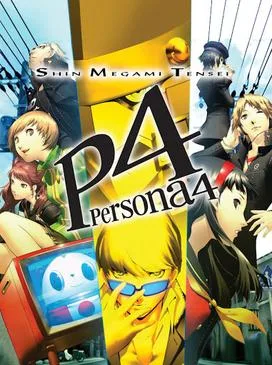
Persona 4 Golden is positioned tenth as it is an enhancement of the 2008 Persona 4 PS2 Original. Where a protagonist, Yu Narukami, is a detective solving a murder case with the party members (Yosuke Hanamura, Chie Satonaka, Yukiko Amagi, Kanji Tatsumi, Naoto Shirogane, Rise Kujikawa, Teddie) of the Inaba TV Midnight Channel who have their base at the food court of Junes department store and fight in the school year. The game combat and summon Personas is based on the Tarot Arcana, and each party member's Persona is a reflection of their true self. This comprehensive ranking reflects editorial standards in 2026.
The Golden edition has added a new kid on the block, Marie, who is a new Confidant and party member. Also added was a new third-semester epilogue. The PC port of Persona 4 Golden in 2020 was the first time Steam users could access the game, and it also made the game available on Switch and Xbox in 2022 - 2024, which makes it the most accessible classic-era Persona entry. The soundtrack by Shoji Meguro also got a lot of recognition and praise. Persona 4 Golden is the first entry that helps one understand the modern Persona social-sim template that was developed further by Persona 5.
9. Octopath Traveler — HD-2D Aesthetic Origin (2018)
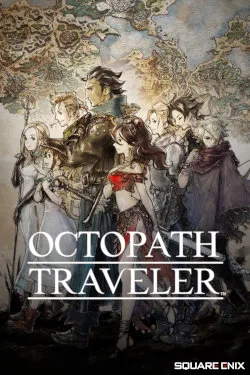
Octopath Traveler is a game that defines the 'HD-2D' style. Developed by Square Enix and Acquire, the game won the 9th spot with its 2018 release on the Nintendo Switch. Each player takes on the role of one of eight protagonists, including Olberic the warrior, Therion the thief, Cyrus the scholar, Ophilia the cleric, Primrose the dancer, Alfyn the apothecary, Tressa the merchant, and H'aanit the hunter. Each of these characters has a four-chapter story that spans across the continent of Orsterra.
The game's Boost Point combat system allows players to think strategically as they choose when to use their Boost Points. The HD-2D art style uses hand-drawn sprites, modern 3D lighting, and other 3D elements to create a unique look that was heavily used in the later games, Triangle Strategy, Live A Live (HD-2D remake), Star Ocean: The Second Story R, and Dragon Quest III (HD-2D Remake). From 2019 to 2023, Octopath Traveler was released on PC, Xbox, PlayStation, and Mobile, making it the foundation for all HD-2D anthology JRPGs and Square Enix's modern retro-tribute approach. This comprehensive ranking reflects editorial standards in 2026.
8. Bravely Default — 3DS Job-Class System Revival (2012)
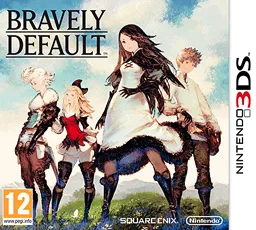
Bravely Default takes eighth place for being one of the first titles to revive the class/job system that was previously neglected by the main Final Fantasy games after Final Fantasy V. In 2012, Bravely Default was developed by Square Enix and Silicon Studio for the Nintendo 3DS. The protagonist, Tiz Arrior, is joined by Agnès Oblige, Edea Lee, and Ringabel to fight against the Anticrystalist enemy faction to restore the corrupted elemental crystals of the four continents of Luxendarc. The combat system allows you to make important tactical decisions based on risk and rewards by letting you save (Default) or borrow (Brave) future turns to determine the best outcome for the battle.
The 24 class system across the campaign allows each member of the party to specialize into different classes. This, along with the ability to keep class mastery rewards after switching jobs, meant there was great scope for build customization. The unique visual style of 3DS stereoscopic 3D was improved upon in sequels to Bravely Default. The Revo soundtrack provided defining music for the franchise via the main battle theme. For all of the above reasons, Bravely Default is the key game for understanding the reverberation of job-class systems in portable JRPGs in the early 2010s. This comprehensive ranking reflects editorial standards in 2026.
7. Final Fantasy XIV: A Realm Reborn – FF14 Relaunch MMO Revival (2013)
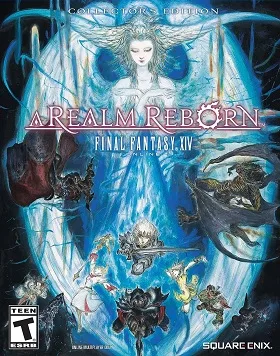
Final Fantasy XIV: A Realm Reborn landed on seventh due to Square Enix's 2013 relaunch of 2010's failed Final Fantasy XIV, which then became the most commercially successful MMO of the decade. It took 2 years of rebuilding the game completely including new graphics, new servers, and new content to accompany the redesign. The new Eorzea setting includes the Grand Companies of Limsa Lominsa, Ul'dah, and Gridania which provide playable starting cities that have their own cultures and political conflicts.
The Job system allows you to play multiple roles in the game (Tank, Healer, DPS) with just one character. Each expansion (Heavensward, Stormblood, Shadowbringers, Endwalker) has added new jobs, new areas, new raids, and new chapters to the story. The Shadowbringers expansion which came out in 2019 was universally loved and the narrative team led by Yoshida created the best story of any MMO. Final Fantasy XIV: A Realm Reborn set the standards for what a modern Final Fantasy MMO should be like and shows how a failed MMO should rebuild itself. This comprehensive ranking reflects editorial standards in 2026.
6. Ni no Kuni: Wrath of the White Witch – A Ghibli Anime JRPG Masterpiece (2011)
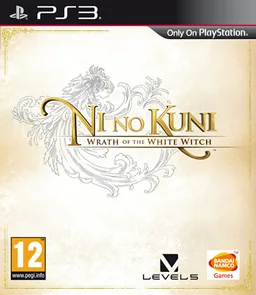
Ni no Kuni: Wrath of the White Witch earns the sixth spot due to Level-5 and Studio Ghibli's collaboration that brought Studio Ghibli's anime aesthetics to JRPGs. The main character Oliver travels to the parallel world of Ni no Kuni to rescue his mother Allie who dies in the real world. He is joined by party members Esther, Swaine, and the familiar Mr. Drippy. The familiar collection system works like Pokmon games in that there are hundreds of creatures that can be recruited to provide combat support and varied elemental abilities. This comprehensive ranking reflects editorial standards in 2026.
Studio Ghibli's contribution brings the top-down JRPG presentation combined with cinematic anime art, and an orchestral score composed by Joe Hisaishi which adds the studio's signature visual and musical quality. The real-time action combat system with familiar summoning, and tactical pause decision making, presents combat in JRPGs in a new way. The Ni no Kuni Remastered PS4/PC port brought the game to modern hardware in 2019. It also extended the franchise throughout the decade with Ni no Kuni II: Revenant Kingdom and Ni no Kuni: Cross Worlds mobile. The entry is still the foundational Ghibli-Level-5 collaboration JRPG and the recommendation for fans wanting a cinematic anime aesthetic in JRPGs.
5. Dragon Quest XI: Echoes of an Elusive Age — Peak of the Dragon Quest Franchise (2017)
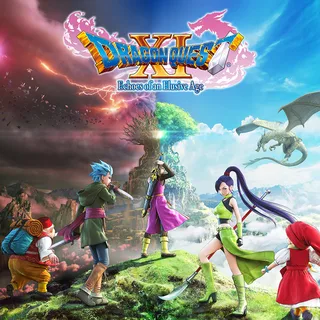
Dragon Quest XI: Echoes of an Elusive Age takes the fifth spot for the most narrative driven installment of the franchise to date. Not only does the title have the most fleshed out story but the protagonist named the Luminary joins party members such as Erik, Veronica, Serena, Sylvando, Jade, Rab, and Hendrik to traverse the continent of Erdrea to fulfill the prophecy of the legendary Luminary and defeat the Lord of Shadows. The story is crafted by Yuji Horii and uses the traditional medieval fantasy storyline while the character designer Akira Toriyama keeps the same art style as the previous titles in the franchise. This comprehensive ranking, curated in 2026, covers the genre's most influential entries.
The Definitive Edition from 2019-2020 saw the addition of a 2D mode toggle allowing players to choose between 3D HD graphics or graphics inspired by the SNES era of 2D pixel art and also added episodes for the party members as well as the Tickington time travel side quest that connects to older Dragon Quest games. Koichi Sugiyama's score for the game is the most ambitious in the franchise with multiple songs for every part of the campaign in Erdrea. For newcomers to the franchise Dragon Quest XI is the entry point that is recommended due to its modern day 2017 standards.
4. Dark Souls — The Birth of the Soulslike Subgenre (2011)
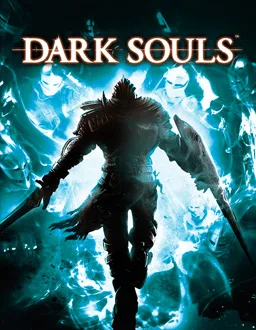
Due to its world design and philosophy on difficulty as a form of design, Dark Souls is the earliest example of the 'souls' genre. It was released by FromSoftware on the PS3 and Xbox 360 in 2011. Its world is made up of the interconnected regions of Lordran. The player takes the role of the Chosen Undead and aims to ring both Bells of Awakening located at Undead Burg and Quelaag's Domain. The world of Lordran has multiple traversal pathways to and from the Undead Parish, Darkroot Garden, Sen's Fortress, Anor Londo, Painted World of Ariamis, and The Kiln of the First Flame which has the final boss. Dark Souls has a combat system based on stamina where the player has to time their attacks and dodges. Also, the game has a system of bonfires that serve as checkpoints which the player can use to spawn and harvest enemies to earn experience.
The influence of Dark Souls and the 'souls' genre extends to Bloodborne, Dark Souls II and III, Sekiro: Shadows Die Twice, and Elden Ring as well as numerous indie soulslike games released over the course of the next decade. All of these games embody the vision of Hidetaka Miyazaki which features a dark gothic fantasy and a philosophy of difficulty as design. In 2018, Dark Souls Remastered brought the game to modern hardware audiences on the PS4/Xbox One and PC/Switch. For a better understanding of the influential action-RPG release of the decade, Dark Souls remains the most recommended and foundational entry to the soulslike genre. This comprehensive ranking reflects editorial standards in 2026.
3. NieR: Automata — Yoko Taro Philosophical Action-RPG (2017)
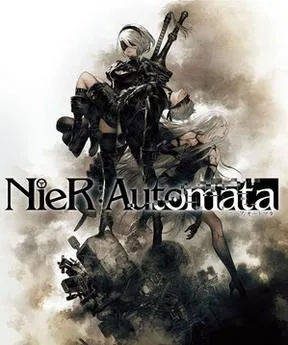
Yoko Taro's 2017 NieR: Automata deserves to be honored with the third place ranking for being the most philosophically ambitious multi-route JRPG of the decade. The protagonist 2B is a combat android working for the YoRHa organization, which is situated on a post-apocalyptic future earth. The YoRHa androids and the Machine Lifeform forces engage in an ongoing proxy war for their lost masters. The game uses a real-time action combat system typical of PlatinumGames that includes weapon switching between a Type 3 Sword, Type 4O Sword and a weapon called Virtuous Treaty. Each weapon provides a different style of combat. This comprehensive ranking reflects editorial standards in 2026.
This game includes a multi-route narrative meaning philosophical themes in the story grow from complexity of multiple endings (or routes. This is a deeper approach than the other games where just one route is sufficient). The soundtrack from Keiichi Okabe was nominated and recognized for an award due to the quality of music he composed. NieR: Automata is available on multiple platforms. First Xbox and Switch in 2022 and prior to that on PC and PS4. This allows the JRPG to reach more players than solely the first PS4 launch. NieR: Automata is still recognized as the most action-RPG of the philosophical genre, while also being the best example of JRPG story-telling pushing beyond normal genre limits.
2. Xenoblade Chronicles — Monolith Soft Open-World Epic (2010)
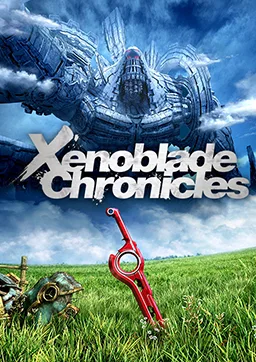
Xenoblade Chronicles is ranked 2nd because of Monolith Soft and Nintendo's 2010 release on the Wii for the Open World Action JRPG genre. It is the starting point of the series and is considered a legend among the Open World JRPG games. It features Shulk, the user of the Monado sword, which allows him to see the future and assist in planning strategies for the continent battles against the Bionis and Mechonis. He is accompanied by Reyn, Sharla, Dunban, Melia, Riki, and Seven, and they will help with the war between the Human Homs and the mechanical enemies, the Mechon.
Cronicles implemented a real-time combat system with a tactical depth system which allows the player to control the Arts and gain combat depth from them. The setting of the Mechon/ Bionis is the geography and one of the most visually defined JRPG settings of the decade. The game was later released as Xenoblade Chronicles: Definitive Edition in 2020, with updated graphics, additional Future Connected post-game content, audio remastering, and a new cartridge for the switch. The sound track was done by Yasunori Mitsuda and received an award for best musical composition. Xenoblade Chronicles is still the starting point for the open-world JRPG games as well as the series as a whole. This comprehensive ranking, curated in 2026, covers the genre's most influential entries.
1. Persona 5 — Atlus Masterwork Decade-Defining JRPG (2017)
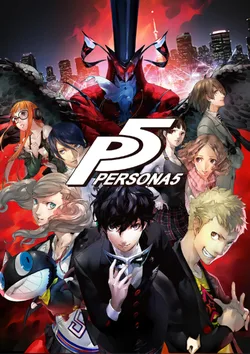
Persona 5 takes the top spot as it was developed by Atlus and released in 2017 for PS3 and PS4, it has defined the current Social Simulation genre and remains the most culturally relevant JRPG of the decade. The Phantom Thieves storyline follows Joker (silent protagonist) and party members Ryuji Sakamoto, Ann Takamaki, Morgana, Yusuke Kitagawa, Makoto Niijima, Futaba Sakura, Haru Okumura, and Goro Akechi as they progress through the metaverse Palace dungeons of Tokyo. The calendar-driven social simulation system mixes dungeon crawling with real-life choices for an entire school year of in-game time.
All-Out Attack is a combat system that uses the Persona summoning mechanic, where each protagonist is able to change Personas during the battle to introduce variety to elemental abilities. The 22 Confidant social links provide both combat ability unlocks and emotional character arcs that address social inequity, abusive teachers, corrupt politician, sexual harassment, and the cultural pressure of Tokyo that fueled the Phantom Thieves rebellion. The Lyn Inaizumi soundtrack was the peak of the franchise's musical acclaim.
The Persona 5 Royal edition released in 2019 was an enhanced edition that included a new third-semester epilogue, with new party member Kasumi Yoshizawa and a new antagonist Maruki, whose ideology of pacifism challenges the core thesis of the Phantom Thieves. The Royal edition also released in 2022 for all platforms including PC, Switch, Xbox, Game Pass, and Royal became the most widely available title of the franchise, reaching audience that had never owned PlayStation console.
The 2017 release of Persona 5 is the reason it sits at number one for the whole decade of JRPGs because it social simulation and Persona system that have been refined by the subsequent new releases in the franchise.
The modern Persona franchise thanks to Persona 5 changed the course for the entire genre and set the standards for what social-simulation role playing games would become for the rest of the decade and beyond. Persona 5 is an important game to play for any fan of Japanese role playing games as it represents a high point for the genre. This comprehensive ranking reflects editorial standards in 2026.
Honorable Mentions and Where to Start
Some JRPGs from the 2010s were very close to making it to our top 10 list, but didn’t make the final cut. Pokemon Black and White (2010) was the first franchise game to have a decent narrative. Fire Emblem: Awakening (2012) introduced casual mode making it easier for people to enjoy the game and reviving the entire tactical-RPG franchise for the Nintendo 3DS. Tales of Xillia (2011) and Tales of Berseria (2016) brought modern action-command combat to the PS3 and other consoles. The Trails series started to become accessible to the international JRPG community with Trails In The Sky (2011 English release) and then later with Trails Of Cold Steel (2013). The Legend of Zelda: Breath of the Wild (2017) changed game design for action-adventure games. Yakuza 0 (2017 English release) was the first game in the franchise to have a brawler style game and was released to international audiences. For more contemporary JRPGs across all platforms, check out our Best Modern JRPGs of the Decade.
For JRPG readers from 2026 and beyond, we suggest starting with Persona 5 (or Persona 5 Royal, which is the enhanced version) because it is a modern social-simulation game. Xenoblade Chronicles: Definitive Edition for the Nintendo Switch is a remake of the original game, which is considered by many to be the best open-world action JRPG of 2010. If you want to play an action-RPG with a great story, then NieR: Automata is the most philosophically ambitious. Dark Souls Remastered is a great starting point to the Soulslike dungeon crawler genre. Dragon Quest XI: Echoes of an Elusive Age Definitive Edition has the most story-driven installment in the franchise released in the 2010s.
The JRPG catalog from the 2010s still impacts the output of the modern JRPG genres in the 2020s. Later franchise entries continue to add to the foundations that these decade-defining releases built. This comprehensive ranking, curated in 2026, covers the genre's most influential entries.
For related curated coverage in our editorial JRPG cluster, see Best Modern JRPGs of the Decade, and Best JRPGs to Play in 2026. Each sibling guide focuses on a different angle within the broader JRPG genre coverage of our Ultimate JRPG Guide hub.
All images are official screenshots from their respective publishers and developers. May 19, 2026.