Since 1991, Camelot Software Planning has been anchored RPG design across two different franchise lineages. The Shining series began with Shining In The Darkness on Sega Genesis, then established tactical SRPGs with Shining Force II in 1993, and reached its peak with Shining Force III in 1997-1998 on Sega Saturn. Later, The Golden Sun series began on Game Boy Advance in 2001 with Golden Sun, and continued with The Lost Age and Dark Dawn on Nintendo DS in 2010 to complete the trilogy. The following is a 2026 ranking of the ten RPGs by Camelot Software that show the most mechanical depth, and the most impact culturally and through the years of RPGs.
Camelot Software Planning's RPG catalog has three filters for this ranking. The first is that it must be from the previously mentioned RPG catalog to separate it from the Mario Sports entries. The second is that with the addition of modern remasters the game remains under appreciated, and the final criteria is that the game has a vast cultural footprint beyond the company. The top position is for Golden Sun: The Lost Age due to the 2002 sequel completing the original arc and the franchise's most ambitious elemental Djinn system. In the second position is Golden Sun on Game Boy Advance due to the original game defining the elemental Djinn system that inspired handheld JRPG design for over 20 years.
Since Camelot Software has rarely engaged with tactical SRPG design at the level of the three scenario release for the Sega Saturn, Shining Force III earns a place at number three. This comprehensive ranking reflects editorial standards in 2026.
The catalogue is affected by the studio's moves between Sega and Nintendo platforms. Shining games 1991-1998 were published by Sega and so were confined to their Genesis and Saturn. Golden Sun games 2001-2010 were published by Nintendo, so were confined to their Game Boy Advance and DS. Beyond the Beyond in 1996 was Camelot's Sony PlayStation entry that bridges the Sega and Nintendo eras. Recent Camelot output has been Mario Sports games on Nintendo platforms. With Mario Golf: Super Rush in 2021, we get a glimpse of the studio's RPG-adjacent Adventure Mode that is infused with elements of the Camelot RPG design philosophy. For those investigating Camelot Software's RPG legacy in 2026, the following games are the best places to start within three decades of console and handheld systems.
How We Ranked Every Camelot Software RPG
In constructing measures to gauge the activities of the software gaming company Camelot, our editor uses three separate techniques to assess the varying design strengths different entries exhibit. The first being the depth of elemental and class progression. The best entries feature Djinn assignments, Psynergy abilities, and combat encounters that add strategic weight to each member of the party and their deployment. Of all the entries, Golden Sun: The Lost Age does this the best with the original game's Djinn roster being carried over to the sequel where new Djinn are unlocked, offering players the most elemental customization available by Camelot. Among the three discs of the SRPG Shining Force III, the last disc offers the most expansive elemental customization available by Camelot with the ability to carry over characters between different scenarios.
The further one goes in ranking the software gaming company, Camelot, the more philosophical it becomes. The series of Shining games encompasses first-person dungeon crawlers like Shining in the Darkness (1991) and Shining the Holy Ark (1996), tactical SRPGs beginning with Shining Force and continuing with Shining Force II and Shining Force III, and actin-RPGs in which the series diverges from the tactical RPG genre with Shining Wisdom (1995). On the other hand, the Golden Sun series remains consistently within the realm of turn-based JRPGs and utilizes a Djinn elemental system. In the Beyond the Beyond game, Camelot submits its entry into the pantheon of classical, turn-based JRPGs on the Sony PlayStation. This leads us to Mario Golf: Super Rush, which we include as the most contemporary RPG-adjacent entry by Camelot in which players can maintain character progression, unlock new abilities, and encounter bosses all within the framework of a sport game. These seemingly hybrid entries reflect our intent to honor Camelot's legacy as a developer over simply classifying its entries along restrictive lines.
The historical importance and exclusivity to certain platforms serve as the third layer of filtering. The first four entries in the Shining series from 1991-1995 were released only on the Sega Genesis and the Sega Saturn and they defined the tactical RPG identity of Camelot before they moved on to developing titles for Nintendo consoles.
The years 2001-2010 Golden Sun titles became Camelot's Nintendo platform flagship spanning the GBA and DS hardware generations. Beyond the Beyond 1996 is the Camelot PlayStation outlier that connects the Sega-to-Nintendo era transition. All entries below have been assessed for contemporary playability standards through 2026. Entries that still hold up are ranked highly even when they predate the widespread remaster and modern emulation accessibility. This comprehensive ranking reflects editorial standards in 2026.
10. Mario Golf: Super Rush — Adventure Mode — Modern Camelot RPG-Adjacent (2021)
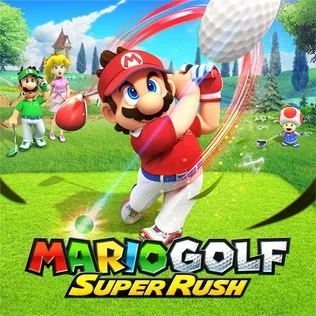
Mario Golf: Super Rush sits at number ten with a release date of 2021 for the Nintendo Switch for what is now the "modern RPG adjacent output" of Camelot Software. The user-made Mii character is received by the Adventure Mode campaign and is sent through various regions themed around golf. During the mini-golf themed regions of the campaign, the Mii character unlocks abilities such as Super Sprint and Super Strike. These abilities are very similar to sports game versions of Psynergy abilities known from the game series Golden Sun. Super Rush uses a character progression system which includes the RPG elements like, stat distributions, the unlocking of equipment, and branching off skill trees. The rest of the elements of the RPG design philosophy of Camelot stay with in the framework of Mario Golf. This comprehensive ranking reflects editorial standards in 2026.
Golf challenges against NPCs that are rivals function as a form of a dungeon boss challenge like those that were created during the Shining period of the Camelot tactical SRPGs. The campaign offers about 15 to 20 hours of gameplay for those who intend to complete every side quest and optional golf courses that will be available. Mario Golf: Super Rush establishes itself as a modern Camelot flagship because of how it connects the RPG legacy with sports games, and is the most RPG-like compared to the rest of their games. This game still holds the title as the current closest related RPG to be available experience from the now current hardware offered from Nintendo.
9. Beyond the Beyond — Camelot's Sony JRPG (1996)
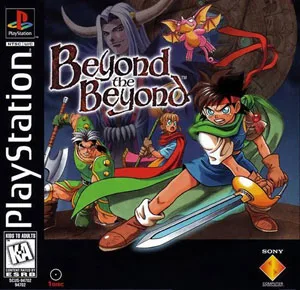
Beyond the Beyond is a 1996 RPG from Camelot Software that placed ninth among the company's first entries for the PlayStation. It also remains their only RPG title to be released exclusively for Sony platforms. Sony Computer Entertainment published the title as the company's first self-published RPG. This title was also North America's first computer role-playing game released a year prior to the blockbuster Final Fantasy VII. The game employs a turn-based party combat system as part of a feature they called Active Play Response. This system facilitates a timed button press to either perform attacks or to defend during enemy attacks. This is a precursor to the action-command system adopted by Super Mario RPG and Paper Mario games.
The game features five playable characters, including Finn the human knight, Annie the bird-like Eolian, Tont the rat-like creature, Edward the human prince, and Galahad the lion-like warrior. This eclectic party collection provided Beyond the Beyond with unrivaled visual diversity as compared to its 16-bit JRPG contenders that were rapidly approaching obsolescence. The game did not receive critical acclaim at launch but it did inspire a significant cult following that solidified its importance as the earliest pillar of gaming history for Camelot. Beyond the Beyond has been overlooked by many and provides avid fans of the studio's catalog archives with the most valuable rediscovery of the most Camelot RPG titles. This comprehensive ranking reflects editorial standards in 2026.
8. Shining Wisdom — Camelot Action-RPG Departure (1995)
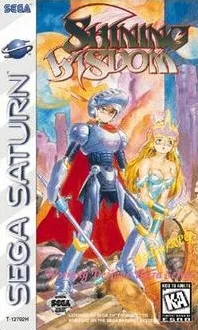
Shining Wisdom is one of the first games that takes the franchise away from tactical SRPGs, which Camelot Software has been doing since the beginning of the series. Instead of grid-based movement and turns with real time overworld and dungeon movement and hack and slash fights against groups of enemies, you control Mars the main character for a total of 12 hours in dungeons and forests as well as deserts (during the dungeon/ruin fights) until you finally fight the Dark Tribe which is the antagonist group. Mars also has access to sword strikes, magic, and other items that can be used to cast spells, which is an example of how the game’s combat system mirrors the revolutionary Saturn controller that was used to make many action RPGs. This comprehensive ranking reflects editorial standards in 2026.
Shining series fans were split over the Wisdom release and the departure from tactical gameplay. On one side of the divide, Tactical SRPG fans believed the action game did not honor the core principles of the Shining Force games. On the other side, action-RPG fans appreciated the willingness of Camelot Software to try new things, rather than use the established formula for the series again. The Saturn had far superior sprite, combat, and environment capabilities than the Genesis games, allowing significantly larger and more complex combat systems. Shining Wisdom is the action RPG title that Camelot Software chooses as their first major release, awarding them the ability to show how they wanted to expand the Shining games to more progressive combat systems, before they moved to Golden Sun and other Nintendo games 6 years later.
7. Shining the Holy Ark — First-Person Dungeon Crawler (1996)
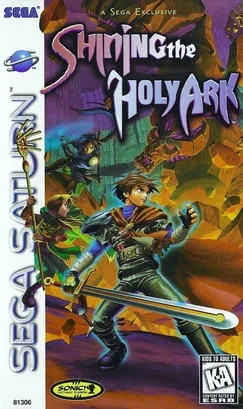
Shining the Holy Ark is located in the seventh spot at Camelot Software's 1996 Sega Saturn, which is a return to the first-person dungeon crawler format. The Shining series began in 1991, with the first game, Shining in the Darkness, entering the series on the Genesis hardware with static screens. The Saturn allowed for true 3D dungeons including real-time rotational camera controls. Players would control a party of seven characters, with each character being able to assume a different role when entering combat. The characters are Arthur the human warrior, Forte the human archer, Melody the Vandal bard, Basso the dwarf warrior, Rodi the wolf-like Brawl, Lisa the wolf-like Brawl, and Akane the human mage. Different thematic dungeons host the turn-based monster encounters. This comprehensive ranking reflects editorial standards in 2026.
The Pneuma system implemented the use of ethereal companion ghosts who assisted the player in battle. The Saturn hardware gave the developers the means to create larger overworld towns and NPCs with whom players could interact, allowing for a more expansive world than the Genesis version of Shining in the Darkness. Shining the Holy Ark is a crucial part of the series and is considered by many to be the best of its' kind. It is one of Camelot's first major titles, and is the first to show significant advancement from Shining's original design goals.
6. Shining in the Darkness — Camelot RPG Origin (1991)
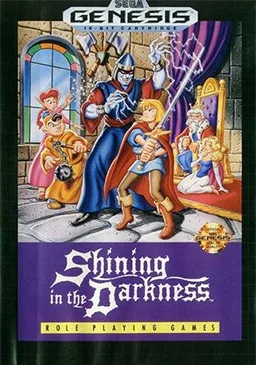
The 1991 Sega Genesis release of Shining in the Darkness is the sixth game in the Shining series and the first game of Camelot Software Planning’s RPG catalog. The game adopts the first-person dungeon crawler format and guides players through the sprawling maze-like dungeons beneath the kingdom of Storm to battle the demon Dark Sol alongside the hero, Pyra (a human female warrior), and Milo (a human male mage) as part of a three-character team. The game’s combat is turn-based and utilizes classical menu-driven systems for attacks, spells and items which set the standard for all subsequent Shining series games.
While the Genesis’s hardware limitations placed restrictions on the graphical presentation, the innovation displayed by Camelot defined what to expect from their studio in the years to come. Features such as randomized dungeons, concealed treasure chambers, side quests, and a magic system that incorporated elemental affinities alongside character class promotions all stemmed from the Genesis title. Other than the Genesis titles that preceded them, the 1991 original has influenced the structure of the subsequent Shining Force games by incorporating a labyrinth design. For these reasons, Shining in the Darkness is deserving of praise as the starting point of nearly thirty years of history in Camelot’s RPG catalog. This comprehensive ranking reflects editorial standards in 2026.
5. Golden Sun: Dark Dawn — Series Finale (2010)
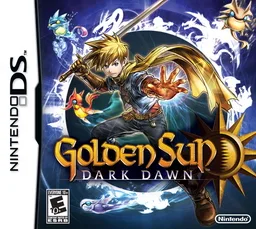
Being released in 2010, Golden Sun: Dark Dawn is the third entry in the mainline Golden Sun series, and is also the fifth game overall from Camelot Software. Dark Dawn closes the story that first began with the Game Boy Advance (GBA) title Golden Sun, launching the franchise's first entry 30 years ago. The game features the same Djinn elemental system as the first two games, allowing for customization in assigning Djinn to the Adept characters Matthew, Karis, Tyrell, Rief, Amiti, Sveta, Eoleo, and Himi. The Nintendo DS technology allowed for the overworld and battle screens to be displayed on the two separate screens, and the use of the stylus to solve Psynergy puzzles in the dungeons. This comprehensive ranking reflects editorial standards in 2026.
The story takes place thirty years after Golden Sun: The Lost Age and features the original protagonists as adult NPCs. Their children carry the story from here. The Adept progression system maintains the elemental class structure (Venus, Mars, Jupiter, Mercury) of the original GBA games. New class combinations can be achieved through the reallocation of Djinn across the eight protagonist party. Dark Dawn's ending was very controversial among Golden Sun fans, as it has been left unresolved by Camelot with no fourth main series game released to date. This game continues to be the flagship DS title for Camelot RPGs, and holds the record as the most recent mainline Golden Sun title, having released 16 years ago.
4. Shining Force II — Tactical SRPG Legacy (1993)
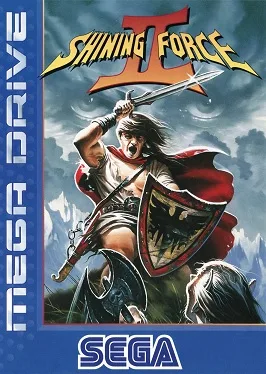
The Genesis game that set the stage for the tactical SRPG genre was released in 1993 as Shining Force II, a game that extends the series of Shining Force titles developed by Camelot Software. From a vantage point of grid-based tactical combat, the player assumes the role of Bowie as he travels the Granseal Empire over the course of twelve chapters, ultimately building a party of thirty unique playable characters. Shining Force II features a class promotion system that allows previously recruited party members to upgrade to advanced combat classes that provide combat advantages in the later levels of the game.
The game makes great use of the 16-bit Genesis hardware by including different battle animations for each class of combat unit. Among the classes are horse-mounted centaurs, dragon-knights, mages, and a typical warrior class. Shining Force II has influenced many tactical SRPG franchises that later evolved including Final Fantasy Tactics, the modern entries of Fire Emblem, and Vandal Hearts. It has earned the title defintive tactical SRPG for the 16-bit era and continues to influence newer iterations of tactical SRPG design. Emulation and Steam compilations of the Genesis game are readily available to the broad public and display numerous instances of Camelot's chapter and promotion foundational template. This comprehensive ranking reflects editorial standards in 2026.
3. Shining Force III — Camelot Tactical Peak (1997)
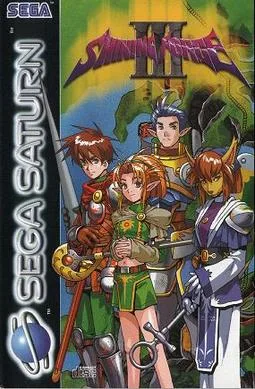
Shining Force III ranked third for being the best game for Camelot Software and their Sega Saturn release of 1997-1998. With the Saturn's hardware limitations, there had to be a campaign split into 3 discs that were released in Japan in '97 and '98. Each disc contains a different protagonist and their individual stories trickle into each other and meet in the final scenario. Each of the three cases has a different main character, campaign, and story. Case 1 has Synbios and the Republic Forces campaign. Case 2 has Medion and the Empire campaign. Case 3 has Julian and the Bulzome cult campaign. With the multiple scenario possibilities, New Force III has the best narrative out of all Camelot tactics games released.
The 3D hardware allowed for Shining Force to create an entirely new experience for battles unlike the old top-down view of Shining Force 1 and 2. The old school view is gone and in its place, there are new rotating camera angles. The class system from Shining Force II has been expanded on with a promotion system for advanced classes, alignment options for promotions, and new Mastery weapons to customize your end game party. Scenario 1 is the only released in English and as a result, Western players had to rely on translation for Scenarios 2 and 3. Shining Force III is the best game to reignite the passion that tactical fans have for the games and rediscover the games before the Golden Sun era. This comprehensive ranking reflects editorial standards in 2026.
2. Golden Sun — Defining Camelot RPG (2001)
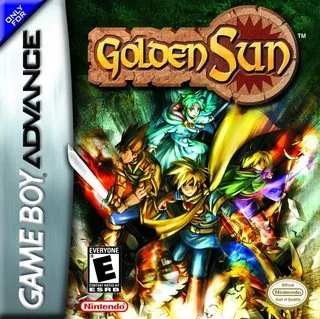
Golden Sun is Camelot Software's second title, releasing in 2001 with the Game Boy Advance alongside its defining of the Djinn elemental system that became synonymous with Camelot's RPG identity. The four-character party of Isaac the Venus Adept, Garet the Mars Adept, Ivan the Jupiter Adept, and Mia the Mercury Adept trek across the continent of Weyard to retrieve the elemental lighthouses that control the world's magical balance. Each character is assigned to a specific Djinn elemental system that comes with elemental sprites that provide Psynergy power along with a boost to all party members' stats, and trigger Summon spells, which are the most powerful spells in the game during battle. This comprehensive ranking reflects editorial standards in 2026.
The Djinn assignment system creates a complex of hundreds of party configurations since each Adept can hold several cross-class Djinn. This allows for dynamic role changes during battles due to the real-time djinn system. The dungeons are enhanced with Psynergy abilities like Move to lift stones, Frost to freeze water, and Growth to sprout vines, which were ahead of their time in comparison to the Zelda series for JRPG hybrids. The original 2001 GBA title ends on a cliffhanger, which made the original a mechanical text for the entire Camelot catalogue, Golden Sun is the defining Camelot RPG, and the most advanced handheld JRPG progression system that was able to be played on Game Boy Advance hardware.
1. Golden Sun: The Lost Age — Camelot RPG All-Time Peak (2002)
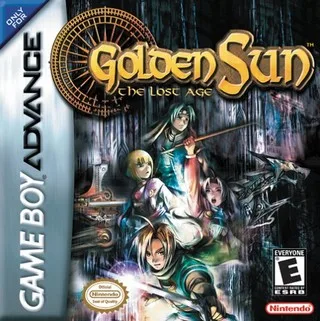
Camelot Software's Golden Sun: The Lost Age is the studio's highest-rated RPG out of all their Golden Sun and Shining series. As a sequel to Golden Sun, The Lost Age continues from the original cliffhanger. Players assume the role of the former antagonists, the Adepts of the Venus, Mars, Jupiter, and Mercury Elements (Felix, Jenna, Sheba, and Piers respectively). This narrative reversal provides a perspective on the original Golden Sun that no other RPG by Camelot dared to explore.
Players who imported their Golden Sun saves could carry Djinn to The Lost Age, allowing for complex combinations of Djinn (up to 36) spread across the eight Adept members of each game. Additionally, The Lost Age built upon the original game's elemental classes by introducing new Djinn and expanded build options. The game also features enhanced puzzle dungeons using new Psynergy abilities like the manipulation of water, weather control, and ship piloting, allowing players to explore open oceans for the first time.
The dungeons of The Sol Sanctum, Air's Rock, and Atteka Inlet pushed the GBA to its limits with their multi-level designs and unique environmental Psynergy puzzles that other handheld JRPGs of the time did not match.
As the last battle with Doom Dragon ends, it signifies the end of the original Golden Sun + Lost Age duology, and this is a chapter that Camelot won’t be revisiting until Dark Dawn 8 years later. Golden Sun: The Lost Age is the pinnacle of Camelot RPGs. It is the most recommended title for fans of the studio’s catalogue to begin with for the best insight into what Camelot Software’s three-decade legacy of RPGs has to offer. This comprehensive ranking reflects editorial standards in 2026.
Honorable Mentions and Where to Start
A few of Camelot Software's releases were almost included in the top ten, but ultimately did not make the final list. However, Mario Tennis Aces Adventure Mode, released on Nintendo Switch in 2018, is noteworthy as it can be considered Camelot's predecessor to Mario Golf: Super Rush Adventure Mode, due to its tennis-themed campaign and similar RPG-like character progression. In 2014, Mario Golf: World Tour was released on Nintendo 3DS and is considered to have launched what is now modern sports RPGs by Camelot with the Castle Club career mode that Super Rush expanded on. The Shining Soul series on Game Boy Advance is another example of spinoff RPGs published by Sega and developed by different teams, while continuing the Shining franchise brand without any direct involvement from Camelot. From a completionist point of view, Beyond the Beyond is Camelot's only entry on the PlayStation. It's ranked number 9, but it still deserves a look from fans completing their collection of games published by Camelot. The Best Nintendo JRPGs of All Time ranking is where you'll find some of the broader context for Nintendo's JRPGs across franchises. This comprehensive ranking reflects editorial standards in 2026.
For readers new to RPGs developed by Camelot Software in 2026, we recommend Golden Sun and Golden Sun: The Lost Age on Game Boy Advance, which is available via Wii U Virtual Console or original handheld emulation, as the duology epitomizes what Camelot's philosophy toward RPGs is. Shining Force III on Sega Saturn can also be played via emulation and is considered one of the best tactical S-RPGs, offering a completionist timeline of over 100 hours with its three-scenario structure.
Shining Force II for the Sega Genesis is the easiest access point to 16-bit tactics gaming and offers a look at the last 20 years of tactical SRPG development. If the original GBA duology got you interested in the Djinn elemental system, then Golden Sun: Dark Dawn on the Nintendo DS is your modern handheld continuation. Mario Golf: Super Rush on the Switch is the modern flagship for Camelot and gives fans an understanding of how the studio’s design philosophy applies to current sports RPG-like games. Over the past 30 years, the Camelot Software catalog has spanned the Sega Genesis, Sega Saturn, Sony PlayStation, Nintendo Game Boy Advance, Nintendo DS, and Nintendo Switch.