
Fantasian Neo Dimension is the 2024 console-and-PC remaster of Hironobu Sakaguchi's 2021 Apple Arcade exclusive — and it's the most underrated JRPG release of the modern era for one simple reason: most JRPG fans don't own iPhones, so when Fantasian launched as an iOS-exclusive in 2021, the entire console-PC JRPG audience missed it. Neo Dimension finally corrects that mistake, bringing the Mistwalker founder's most ambitious post-Lost Odyssey project to PS4, PS5, Switch, Xbox Series X|S, and PC. Icicle Disaster has reviewed and ranked over 250 JRPGs since 2017 (see our comprehensive JRPG rankings), and Fantasian Neo Dimension belongs in the same Sakaguchi-Uematsu-Mistwalker pedigree conversation as our Lost Odyssey review (the studio's previous masterpiece).
The verdict in 2026: yes, Fantasian Neo Dimension is essential JRPG reading for any fan who hasn't played the Apple Arcade original. The Sakaguchi-directed campaign + Nobuo Uematsu soundtrack + hand-crafted physical diorama backgrounds (literally photographed real-world miniature sets used as in-game environments — a JRPG production technique no other studio has attempted at this scale) + the Dimengeon random-encounter management system combine into one of the most mechanically inventive turn-based JRPGs of the 2020s. Neo Dimension adds quality-of-life improvements + dual-language audio + cross-platform availability that the 2021 Apple Arcade release lacked.
Mistwalker's Most Ambitious Post-Lost Odyssey Project
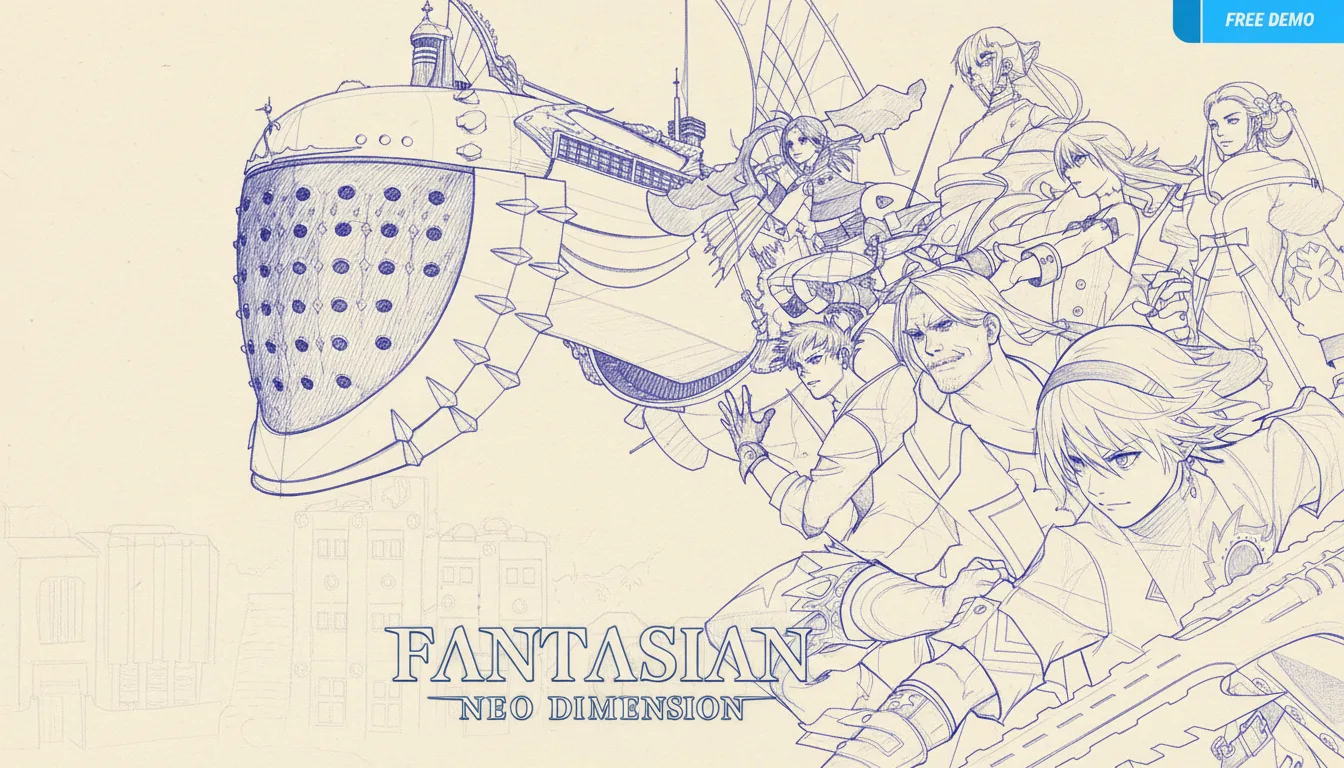
Hironobu Sakaguchi founded Mistwalker in 2004 after leaving Square — Lost Odyssey (2008 Xbox 360) was the studio's first major project + the closest thing to a Final Fantasy spiritual successor any studio has produced (see our Lost Odyssey review for the full Sakaguchi post-Square context). After Lost Odyssey, Sakaguchi went relatively quiet on console JRPG releases, focusing on mobile + Apple Arcade exclusives that the broader JRPG audience largely missed. Fantasian (2021 Apple Arcade) was Sakaguchi's most ambitious post-Lost Odyssey project — a full traditional turn-based JRPG built around the most distinctive production technique any modern JRPG has attempted.
That technique: every in-game environment in Fantasian is built from hand-crafted physical miniature dioramas, photographed at high resolution, and used as 2D backgrounds with 3D character models composited on top. This means every dungeon, every town, every overworld scene started as a real-world handmade miniature set built by professional diorama artists. The visual identity that emerges is unmistakable — Fantasian looks like nothing else in the JRPG genre because nothing else uses physical-set production. The dioramas read as both nostalgic (recalling pre-rendered backgrounds of FF7/FF8/FF9 era) and entirely modern (no other studio attempts this technique in 2026).
Nobuo Uematsu (Final Fantasy soundtracks I-X) composed Fantasian's full score — his most recent major game soundtrack work as of 2026. The Uematsu-Sakaguchi reunion that defined Lost Odyssey continues in Fantasian, with the score delivering the orchestral emotional weight that defined Uematsu's Square-era peak. For JRPG fans curious about what Sakaguchi + Uematsu produce when given full creative control without Square Enix corporate oversight, Fantasian (alongside Lost Odyssey) is the answer.
The Dimengeon System — Random Encounter Management Reinvented
Fantasian's most-cited mechanical innovation is the Dimengeon system — a creative solution to the JRPG genre's long-standing random-encounter friction. Rather than fighting every random encounter as they occur (the traditional JRPG approach that creates pacing issues during exploration), Fantasian lets you activate a Dimengeon Machine that automatically captures random encounters as you move through the dungeon. Encounters accumulate inside the Dimengeon dimension — up to 30 enemies at a time — and you battle all of them at once in a single combined-encounter when the Dimengeon fills (or whenever you choose to enter it).
The Dimengeon system solves three problems simultaneously: (1) eliminates exploration-pacing friction (you traverse dungeons without combat interruption), (2) creates strategic combat density (when you do enter the Dimengeon, you're managing 30 enemies simultaneously with terrain-based AOE positioning), (3) rewards build-planning (your party composition + ability selection matter much more when fighting 30 mixed-enemy encounters than fighting one 5-enemy encounter at a time). This is genuinely creative JRPG design — most studios would have just added a "skip random encounters" toggle. Sakaguchi designed a deeper mechanical system that transforms random encounters into a tactical mini-game.
Combat outside the Dimengeon system is traditional turn-based JRPG with classes + magic + party-of-six tactical positioning + summons. The system rewards classic JRPG players who appreciate turn-based depth (see our 100-hour completionist roundup for the broader bracket of mechanically deep turn-based JRPGs Fantasian belongs alongside). Combat depth in Fantasian sits between FFX's Conditional Turn-Based Battle simplicity and Lost Odyssey's Ring system aim-timing complexity — accessible but mechanically interesting.
What Neo Dimension Adds Over the 2021 Apple Arcade Original
Fantasian Neo Dimension (2024) is the console-and-PC remaster Sakaguchi promised when the Apple Arcade exclusivity period ended. The Neo Dimension version adds: (1) cross-platform availability on PS4, PS5, Nintendo Switch, Xbox Series X|S, PC via Steam — eliminating the iPhone-only barrier that prevented most JRPG fans from playing the 2021 original, (2) dual-language audio with full English voice acting + Japanese voiceover option that the Apple Arcade release lacked, (3) improved combat balance + difficulty tuning based on player feedback from 3 years of Apple Arcade play data, (4) controller-native UI redesign (the Apple Arcade original was touchscreen-first design — Neo Dimension is controller-first design), (5) higher resolution + improved framerate on modern console hardware vs Apple Arcade compressed delivery.
The campaign content is functionally identical to the 2021 Apple Arcade original — Neo Dimension is a polished remaster rather than expanded content. Players who completed Fantasian on Apple Arcade in 2021-2023 will encounter the same story + characters + dungeon design + Dimengeon mechanics in Neo Dimension, just with controller-native presentation. For console-and-PC JRPG fans who missed the Apple Arcade exclusive in 2021, Neo Dimension is the definitive way to experience Sakaguchi's most ambitious post-Lost Odyssey project.
Modern accessibility (2026): available cross-platform on PS4, PS5, Nintendo Switch, Xbox Series X|S, PC (Steam). For Switch portable play: Fantasian's diorama art renders beautifully on the handheld form factor (see our Switch JRPG ranking for context on the platform's JRPG-specific strengths). For PS5 visual fidelity: native 4K/60fps with DualSense haptic feedback during combat encounters. PC version supports modding and full graphics customization. No PSP/Vita port (the 2021 Apple Arcade exclusivity period prevented earlier PSP-era ports the franchise's design might have supported).
Fantasian Neo Dimension vs Lost Odyssey — Sakaguchi-Uematsu Pedigree Continuity
Fantasian Neo Dimension and Lost Odyssey (2008 Xbox 360) share the Mistwalker-Sakaguchi-Uematsu pedigree that defines the studio's strongest work. Both deliver the traditional turn-based JRPG combat + Uematsu orchestral soundtrack + Sakaguchi-directed narrative ambition that the broader JRPG genre rarely matches outside the Final Fantasy franchise itself. The honest comparison: Lost Odyssey is the more emotionally complete narrative experience (the Thousand Years of Dreams short stories elevate it beyond standard JRPG narrative into literary territory), while Fantasian is the more mechanically inventive game (Dimengeon system + diorama art innovation create unique mechanical + visual identity).
For new players curious about Mistwalker's catalog: start with Lost Odyssey (Xbox BC) for the narrative-ambition experience, or Fantasian Neo Dimension (cross-platform) for the mechanical-innovation experience. Both are essential reading for Sakaguchi-Uematsu pedigree fans. The combined 100-150 hour Mistwalker experience represents the strongest non-Square JRPG canon any single studio has produced.
Where Fantasian Neo Dimension sits in the broader modern JRPG landscape (see our Final Fantasy series ranking for context on Sakaguchi's pre-Mistwalker Square work + our Trails franchise ranking for the genre's other defining modern franchise): Fantasian is the most distinctive single-game JRPG of the 2020s by significant margin. No other studio has attempted the physical-diorama production technique at this scale; no other 2020s JRPG combines turn-based depth with mechanical innovation like the Dimengeon system. Fantasian Neo Dimension is the canonical answer to "what's the most creative JRPG released in the 2020s."
The Verdict — Essential Sakaguchi-Uematsu JRPG Now Accessible to Everyone
Fantasian Neo Dimension is essential JRPG reading for any fan who hasn't played the 2021 Apple Arcade original. The cross-platform 2024 remaster eliminates the iPhone-only barrier that prevented most JRPG fans from experiencing Sakaguchi's most ambitious post-Lost Odyssey project. The combination of Mistwalker pedigree + Uematsu soundtrack + diorama art innovation + Dimengeon system + 60-80 hour campaign delivers the most distinctive single-game JRPG release of the modern era.
The honest critique: Fantasian's narrative is more conventional than Lost Odyssey's emotional ambition — Sakaguchi prioritized mechanical innovation + visual experimentation over narrative-density experimentation. Players approaching Fantasian expecting Lost Odyssey-level narrative weight may find it more mechanically focused. That's not a criticism of Fantasian (different design priorities are legitimate creative choices), just context for managing expectations. For JRPG fans approaching from the Mistwalker pedigree direction: Fantasian delivers different excellence than Lost Odyssey.
Rating: 8.5/10. Fantasian Neo Dimension is the most underrated JRPG release of the 2020s — the Apple Arcade exclusivity period created a massive accessibility gap that the 2024 console-and-PC remaster finally corrects. For Sakaguchi-Uematsu pedigree fans: essential reading. For diorama-art curiosity: only JRPG attempting this production technique at scale. For Dimengeon-system mechanical innovation: most creative random-encounter solution in modern JRPG design. Buy it, play it, finish it. The 60-80 hour campaign rewards every hour.
Frequently Asked Questions
Is Fantasian Neo Dimension worth playing in 2026?
Yes — Fantasian Neo Dimension is essential JRPG reading for any fan who hasn't played the 2021 Apple Arcade original. The cross-platform 2024 remaster eliminates the iPhone-only barrier that prevented most JRPG fans from experiencing Sakaguchi's most ambitious post-Lost Odyssey project. Mistwalker pedigree + Nobuo Uematsu soundtrack + diorama art innovation + Dimengeon random-encounter management system + 60-80 hour campaign deliver the most distinctive single-game JRPG release of the modern era. Rating 8.5/10. Essential for Sakaguchi-Uematsu pedigree fans.
What is the Dimengeon system in Fantasian?
The Dimengeon is Fantasian's most-cited mechanical innovation — a creative solution to JRPG random-encounter friction. Rather than fighting every random encounter as they occur, Fantasian lets you activate a Dimengeon Machine that automatically captures random encounters into a Dimengeon dimension (up to 30 enemies). You battle all of them at once in a single combined-encounter when ready. This eliminates exploration-pacing friction + creates strategic combat density (managing 30 mixed-enemy encounters with terrain-based AOE positioning) + rewards build-planning. Genuinely creative JRPG design that no other studio has attempted at this scale.
How is Fantasian different from the 2021 Apple Arcade original?
Fantasian Neo Dimension (2024) is the cross-platform remaster Sakaguchi promised when Apple Arcade exclusivity ended. Adds: (1) cross-platform availability on PS4/PS5/Switch/Xbox Series/PC (eliminates iPhone-only barrier), (2) dual-language audio with full English voice acting + Japanese voiceover option, (3) improved combat balance based on 3 years of Apple Arcade player feedback, (4) controller-native UI redesign (Apple Arcade was touchscreen-first; Neo Dimension is controller-first), (5) higher resolution + improved framerate on modern console hardware. Campaign content identical — Neo Dimension is polished remaster, not expanded content.
Who made Fantasian? Is it really by Sakaguchi?
Yes — Fantasian was directed by Hironobu Sakaguchi (creator of Final Fantasy at Square in the 1980s, founder of Mistwalker after leaving Square in 2004). Mistwalker also produced Lost Odyssey (2008 Xbox 360) — see our Lost Odyssey review for the studio's pedigree context. Nobuo Uematsu (Final Fantasy soundtracks I-X) composed Fantasian's full score. The Sakaguchi-Uematsu reunion that defined Lost Odyssey continues in Fantasian. This is Sakaguchi's most ambitious post-Lost Odyssey project + arguably his most creative work since leaving Square.
Why are Fantasian's backgrounds so unique?
Every in-game environment in Fantasian is built from hand-crafted physical miniature dioramas — literally photographed real-world handmade sets used as 2D backgrounds with 3D character models composited on top. Every dungeon, town, overworld scene started as a real-world miniature built by professional diorama artists. No other modern JRPG attempts this production technique at scale. The visual identity reads as both nostalgic (recalling pre-rendered backgrounds of FF7/FF8/FF9 era) and entirely modern (the physical-set production creates unmistakable aesthetic that 3D-rendered alternatives can't replicate).
How long does Fantasian Neo Dimension take to beat?
Main story: 50-60 hours focused playthrough. Completionist run (all sidequests + optional content + post-game): 60-80 hours. The Dimengeon system makes exploration significantly faster than traditional turn-based JRPGs (since random encounters can be accumulated rather than fought one-by-one), which keeps the campaign pacing brisk despite the substantial runtime. The 60-80 hour range fits the modern JRPG bracket between compact under-30-hour JRPGs and longer 100+ hour completionist epics.