
Mina the Hollower was released on May 29 by Yacht Club Games, the developers of Shovel Knight. This is a top-down Action Adventure game with a Game Boy Colour style looking pixel art which is also set in a gothic Victorian era. The game is NOT a JRPG, so do not try to go into it expecting that.
The game is a draw for JRPG fans because of the context surrounding the release. Tetracast 444 reviewed Mina the Hollower and dedicated almost 35 minutes of the podcast talking about the game, which is a level of attention that is usually reserved for JRPG adjacent podcasts that recognize an honest to goodness level of quality in a release. Here’s the honest truth about it if you want to go out of your way and interrupt your campaign for the game.
What Mina the Hollower Actually Is
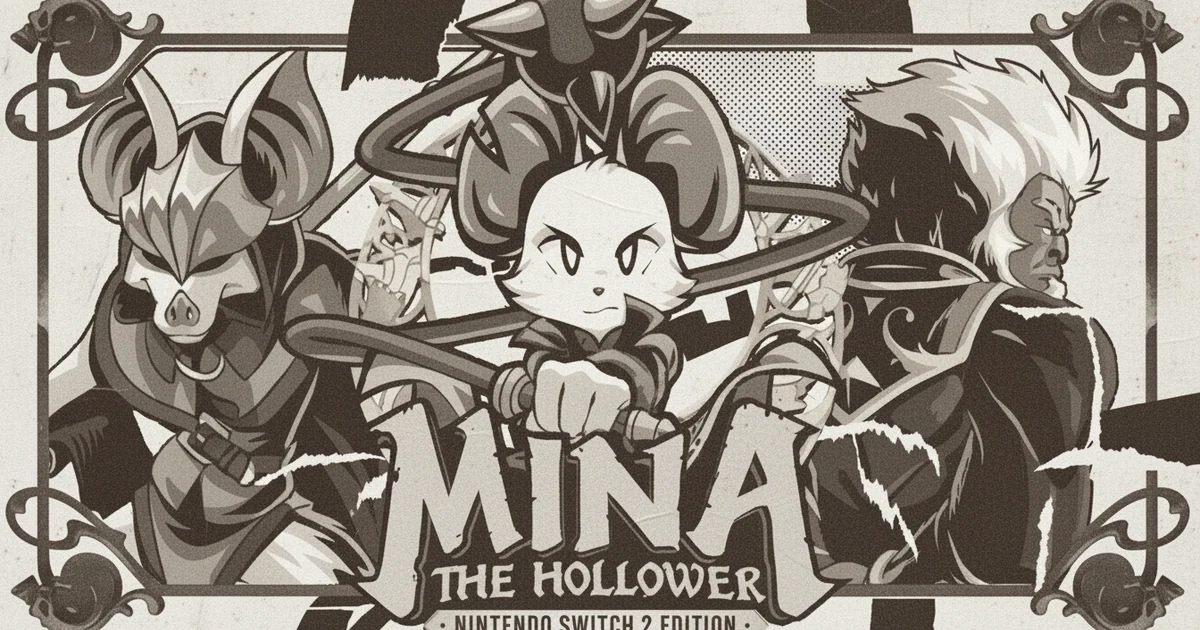
Mina the Hollower is an example of a top-down action-adventure game that features whip mechanics and a gothic Victorian style world. Yacht Club has opted for a retro style graphics presentation reminiscent of early Game Boy Color graphics. The pixel art, use of colors, and screen size framing, appear as a deliberate love letter to the hardware era, rather than a stylistic shortcut.
The core loop is an example of the games primary hooks. Additional tools aside from Mina's whip, which is instrumental for dealing damage and traversing levels, will be unlocked through the campaign. With each new unlocked tool, new areas can be accessed and explored creating a hub area that is in the shape of a Metroidvania. Major areas will be bookended with Bosses, who often exemplify the design ethos most distinctly.
Launch platform will span PC(Steam), Nintendo Switch, PlayStation 5, Xbox Series S|X, and Nintendo Switch 2. Whatever you already own can run it, which lowers the friction for a curiosity purchase considerably. There is no exclusivity period and no platform stratification beyond the standard performance differences you would expect across that hardware range.
Yacht Club Games' Pedigree Matters Here
Shovel Knight is one of the great indie success stories of the decade. Upon release, they followed through with their promise by offering several expansions that bettered the game, which is an incredible feat for an indie studio. They also achieved cross-platform release without losing quality across any of the platforms. Most indie studios do not have this level of experience.
Yacht Club Games launched the Kickstarter for Mina the Hollower in 2022. An indie team developing for four years is a rare occurrence, and in this case, it's a long enough duration to indicate that they are truly crafting something special and are not following a market trend to optimize their studio's brand. Yacht Club Games is one of the very few studios in this segment of the gaming industry to take the time they need to develop a game, and release when it is ready.
That reputation alone means very little when it comes to the final product. Studios do miss the mark time and again, so it would be foolish to assume they won't miss again. However, the body of work they've put into this title allows them the benefit of the doubt. Because of this, the JRPG-adjacent media are paying attention to the title instead of dismissing it as a side title. Tetracast's 35-minute review of the game is the most recent example to illustrate that respect.
Where Mina the Hollower Sits Next to JRPGs
To clarify the game, Mina the Hollower has no party systems, no turn-based combat, no character classes, and no JRPG style 60-to-80-hour campaign arcs. The estimated game runtime is around 12 to 15 hours, combat is real-time, and the narrative is structured for discovery rather than the heavy expository cinematic cutscenes JRPG players are familiar with.
The most similar games to JRPG fans are CrossCode and the lightest Trails moments. These are top-down action games with RPG mechanics, secret driven exploration, and a sense of a hand-crafted world instead of a procedurally generated one. Mina’s retro style shares some visual DNA with Sea of Stars and Chained Echoes, but those are turn-based JRPGs and their surface aesthetics happen to overlap with Mina.
A more honest way to put it is that Mina is a game from a different genre that has some similar aesthetics and audience overlap with JRPGs. It is more adjacent than central. This is important for setting expectations.
Why JRPG Fans Should Still Care
There are four reasons this launch deserves attention even from the strictly JRPG-focused. The first is aesthetic. The pixel retro style Mina uses is similar to the one used in Chained Echoes, Sea of Stars, and Octopath Traveler II. While those are different gameplay styles, they all share a consistent visual style that JRPG fans have bought over the past few years. If that aesthetic appeals to you in a turn-based way, it will likely appeal to you in an action-adventure way.
The second is runtime. 12-to-15-hour action adventures fit perfectly in between JRPG campaigns when you want something complete but don’t want to start a JRPG that will take 60 hours. Mina fits that niche perfectly, avoiding significant competition with your next major RPG purchase.
The third is the pedigree mentioned before. Shovel Knight earned the trust; Mina is about as close as an indie release can offer for a guarantee.
Lastly, there is the social signal. Tetracast is a podcast that spends 35 minutes on a non-JRPG release in a JRPG-adjacent space. What they’re telling their audience is that the game is worth attention. That is a rare signal and very much worth consideration.
Tetracast 444 Quick Context
The whole Tetracast 444 episode is worth listening to even if you’re skipping the Mina section, as there’s lots of good info for JRPG fans. The Mina the Hollower review occurs from about 1:57 to 36:36 when the episode turns to Utawarerumono Past and Present Rediscovered, news on Dragon Quest XII: Beyond Dreams, Dragon Quest Monsters: The Withered World, and discusses Dragon Quest XI S.
That’s a JRPG-heavy episode by all accounts, and the Mina review at the top shows how the broader JRPG-adjacent media are situating the game. If you want audio for context on the extremities of the whole JRPG release calendar this week, the entire episode is the clearest single source.
Should You Buy It This Week?
As for the question’s answer, it varies depending on where your game rotation sits. If you are between campaigns and Yacht Club's track record appeals at all, this is an easy yes. It’s a game with multi-platform availability, a respectful runtime and a studio that has earned the benefit of the doubt over the last decade.
This case is weaker if you’re mid Trails arc, mid Persona run, or otherwise deep into a long-form JRPG campaign. If a tonal detour into Western indie action-adventure would break your immersion, then wait for a sale, save it for between campaigns, and pick it up when the slot opens.
It goes without saying that if you are a Shovel Knight completionist or you backed the original Mina Kickstarter, this is an obvious purchase you already knew you were making before this post even existed.
Coverage referenced Tetracast 444: The Storm Before the Storm on rpgsite.net.