
With almost three decades of experience playing JRPGs, nothing pulls me in quicker than an active, breathing world. A world that is not merely a backdrop for fighting or story sequences, but one that has its own rules, a meaningful history, and a real, tangible presence. The type of world that causes you to stop and take in your surroundings. A world where random NPCs discuss events that you haven’t even completed. Where multiple beliefs and different people are shown through varied constructions in different areas.
In terms of JRPGs, world-building is much more than just attractive visuals. With powerful graphics combined with a strong understanding of political structure, the visual world really comes to life and plays a role in the differing real-world economies present in the game. The JRPG world is an active and curious-space. It's layered and complex, and when designed well, the world is one that, even after multiple trips, will contain elements that remain undiscovered.
This list showcases the 10 JRPGs that outshine competitors in terms of world-building. If you want stories that develop alongside their character, check out our guide to the JRPGs with the best stories, or our full JRPG tier list to see how these games fit in the overall genre.
10. Xenoblade Chronicles
Monolith Soft offered a landmark first for JRPG genre with Xenoblade Chronicles- creating a living and breathing world inhabited by and built around a civilization set on the colossal remains of two gods. The Bionis and Mechonis are not just creative story entries, they are the world itself. The narrative experience and the gameplay experience become inseparable. The Bionis is portrayed in stunning detail and you walk across its massive kneecap looking up to witness its head shrouded in the clouds. The sense of scale is remarkable.
The first time the camera zoomed out to show the entire Bionis' leg, I was speechless. I distinctly remember the five minutes I spent just moving the camera around Gaur Plain. The detail and care given to the Bionis ecosystem was unparalleled, and I was able to easily identify each creature in its habitat. There were insects in the swamps, grazing creatures in the plains, and predators near the cliffs. Each zone was unique and had its own wildlife, climate, and community of battling NPCs.
The world-building is more than just geographical, Sylvia versus the Mechons is a conflict of philosophy, and a important driving force of the entire story. The High Entia capital is a brilliant architectural design, and utterly imperial, and sort of fragile. Monolith Soft gets it, great world-building is making each and every place feel like it exists for more than “the player needs to move on.”.
“I've played a lot of open-world games, but Xenoblade is the only one where I felt like the world had a heartbeat. Everything connects.”
9. Final Fantasy XII
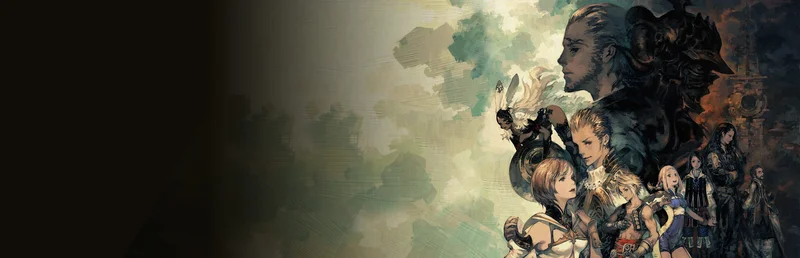
Final Fantasy XII is massively underrated for its world-building. It's well governed, and actively traded Ivalice, with multiple empires. Real world border disputes with militaristic consequences. Actual political discourse at the senate level. It's a world connected by power structures, not a collection of castles and kingdoms like most jrpgs.
Matsuno designed Ivalice at Square Enix as a consistent world across several games; FFXII, Final Fantasy Tactics, and Vagrant Story. It's a world full of details, not just the surface level, like most games. I spent a long time reading the bestiary during my time in the Jagds, the zones where airships can't fly are full of creatures that have adapted to the area, with a long history surrounding them.
The Zodiac Age is the best version. It's the same world, but the new combat system and the reworked License Board each make for a new, more rewarding, experience when exploring. Ivalice remains at the top of jrpgs for it's political detail, and not just the flashy stuff.
“FFXII's Ivalice feels like a real place with real problems. The politics aren't window dressing — they ARE the story.”
8. Xenoblade Chronicles X

Xenoblade Chronicles X is very different from the previous games in the series. Instead of walking on the Lost Gods, players crash land on the alien planet Mira. Mira is a planet with ecosystems made to kill players, emergent species with politics of their own, and a human colony that is one major crisis away from extinction. The developers have made some of the fight mechanics and environments in a way that they don't give the players the answers.
One of the big changes that Mira has is that the players are allowed to discover answers on their own instead of the game handing it to them. There are probes that players can place and discover new areas to explore and also new equipment to use. Of the five continents, they can have their own unique areas to explore, and each of the continents also has environments that change based on time of day and the current biome. Of any other game I think that my favorite area is the bioluminescent forest of Noctilum.
New Los Angeles is a great piece of world building and is the centerpiece of the game. The colony has districts, political factions, BLADE divisions, alien immigrants, and also infrastructure challenges. The side quests are often about cultural clashes, trade agreements, and zoning disputes, and the planning needed for them is very intricate for a game on the Wii U system.
“XCX is the most underrated world in gaming. Mira has more environmental storytelling in one continent than most games have in their entire map.”
7. Final Fantasy XIV
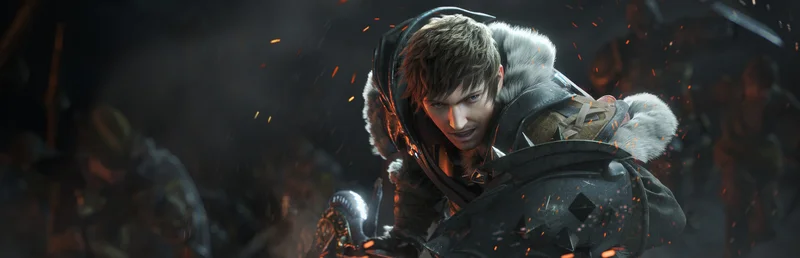
Final Fantasy XIV has the advantage of time. Across its four major expansions -Heavensward, Stormblood, Shadowbringers, and Endwalker- the world of Hydaelyn (now Etheirys) has been constructed, reconstructed, and expanded into one of the most detailed settings in all of gaming. Not just JRPGs, all of gaming.
While the scale is obvious, the depth is really what separates the experience. Each new expansion adds more than just new zones, but also, new cultures, new political dynamics, and a new historical contexts that reframes what you thought you knew. In Heavensward, Ishgard has a thousand-year war with dragons that influences every single element of its society, from its theocracy to its class system. The Eorzean city-states are distinctly different from one another because of the variation of their architecture, music, and dialogue and how they all build into different cultures.
I have played FFXIV for over 2000 hours and I'm still finding bits of lore that I missed, the sidequests are better than the main scenario content in most games. The comedy of Hildibrand’s quests is in the same world as the Shadowbringers existential tragedy and somehow it works.
For the graphics the PS5 and PC version is the best but for the writing there is not a massive difference. If you are looking for a version recommendation for PlayStation, just check our PS5 JRPG picks.
“FFXIV's world-building puts most single-player RPGs to shame. The fact that it's an MMO just means there's more of it.”
6. Xenoblade Chronicles 2

Monolith Soft's special interest seems to be creating worlds on top of living beings. Expanding on the concept in the first game, Xenoblade Chronicles 2 adds dozens of Titans that each carry an entire nation on their backs. The Cloud Sea acts as a means of separation between the Titans and serves to create a fragmented and politically tense world.
Each Titan holds an identity of its own. Gormott is lush and green and feels like a Studio Ghibli paint coming to life. Mor Ardain is covered in smoke and factories and feels industrial and militaristic. Tantal is frozen and secretive. This variety extends beyond the visual as each nation is governed separately and they all relate to the game’s key mechanic- the Blades- in different ways. They also all have their own reasons for being suspicious of outsiders.
While the Switch's hardware may limit visual fidelity, it more than makes up for it in art direction. They have the ability to create a huge, vivid world without the adhering to the limitation of a high polygon count. Games designed under these limitations can be found in our best Switch JRPGs. Final Fantasy IX is also one of those games.
“Walking across a Titan that's slowly dying while a civilization pretends nothing is wrong — that's world-building that punches you in the gut.”
5. Final Fantasy IX
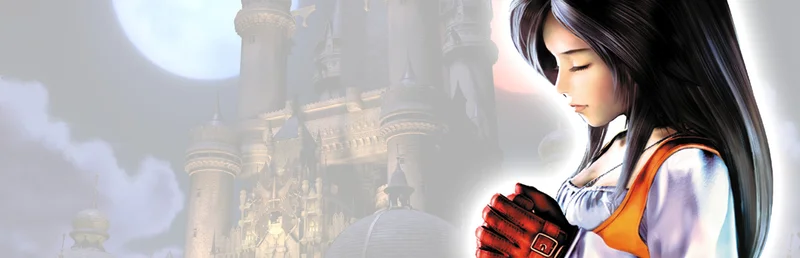
Of all Square's fantasy worlds, Final Fantasy IX is the most complete. There are towns with unique personalities. Lindblum is an industrial city that has an airship docking bay and a culture centered around festivals. Burmecia is a kingdom of dragon knights that is perpetually shrouded in rain. Cleyra is hidden in a protctive, swirling sandstorm. Black Mage Village is a community of artificial beings trying to understand mortality.
What makes the world-building in FFIX unique is the consistency. The mist isn't used as a plot device or just a game mechanic, but as an actual resource the powers the continent, fuel's the airships, and drives people insane in concentrated doses. Everything in the world revolves around mist. Once you understand that, the world makes sense.
I've played FFIX 3 times and it wasn't until my 3rd playthrough that I noticed each town's unique architecture. The town's design is a reflection of how close or far they are from the mist, so towns above the continent look different from towns below. Most players never notice this, but it makes the world feel alive.
“FFIX built a world that felt like a fairy tale but treated its own rules seriously. That's rare.”
4. Persona 5 Royal
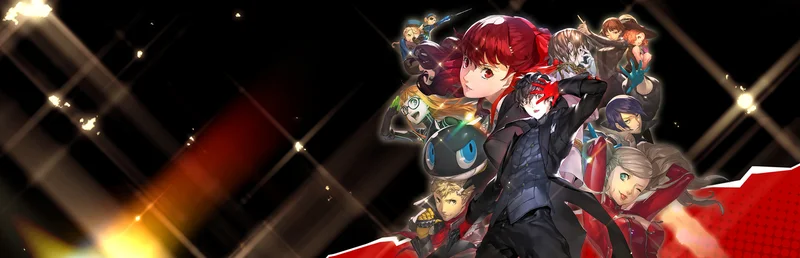
Unlike P5, FFIX uses a fantasy world. P5 makes the real world. And not just any real world. They perfectly recreated Tokyo, and it shows. The level of detail in the city is unmatched, complete with every back alley, inner city road, and pathway. The world is large enough that every part of it serves a different purpose. Combine that with the daily grind of the game and the city comes alive like no other.
The game's supernatural dimension, the Metaverse, works because it is based on the real world. Each Palace is a warped representation of how a given adult might see their workplace through a corrupt lens. For example, a perverted teacher might see his school as a castle. A crime lord would see his territory as a bank vault. The Metaverse has a close connection with the real Tokyo, as the entire thematic focus of the game relies on the fact that the real Tokyo is created with sufficient detail to ensure that the contrast is justified.
I have completed Persona 5 Royal two times. For my second playthrough, I especially appreciated the work that the designers put into creating the environments. For example, the crowds of Shibuya and how they thin out during exam time, or the back streets of Yongen-Jaya, which are quiet and calm compared to the neons of Shinjuku. It's a small world, but it is extremely dense.
“P5R didn't build a world — it replicated one and then twisted it. The Metaverse works because the real world is so grounded.”
3. Chrono Cross

Using the approach that time and dimensions can be manipulated, Chrono Cross provides the player two alternate realities, or “worlds,” and encourages the player to draw comparisons between both of them. Though they initially present the dimensional tool as a story plot twist, doing so encourages the player to compare the worlds in exactly that way. Each world features the same set of locations, but features vastly different conditions, and encourages the player to draw their own conclusions regarding the different worlds. For example, a npc character may appear alive in one world, while the other world features the same npc character deceased.
The use of this dimensional tool when exploring the El Nido archipelago is a welcome change as it makes the archipelago feel larger than it really is. Every time you cross one of the boundaries between each of the two worlds, it feels like you are doing so between different realities. In addition to the differences between the two worlds, the plentiful amount of changes and interactions keeps you engaged. Fort Dragonia, Chronopolis, and the Dead Sea are only a few examples of the places that exist within the two world dimensional tool.
Both the Radical Dreamers Edition and the El Nido archipelago are available as remastered editions for the Switch and PC. The remaster, however, is unfortunately only a minor visual upgrade. Fortunately, no matter the visual limitations, the world building is some of the best in the modern game era.
“Chrono Cross turned “what if” into an entire world design philosophy. No game has done parallel worlds better.”
2. Dragon Quest XI S
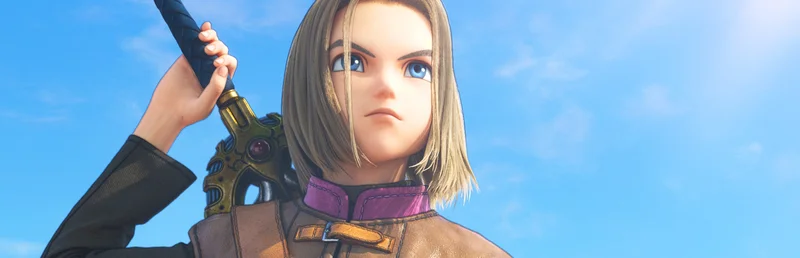
In addition to having some of the best world building in the modern gaming era, Dragon Quest XI also does a good job at constructing simple and warm communities in the towns scattered throughout the open world region of Erdrea. One example of this is Hotto, which appears to be a standard Japanese onsen hot spring town. Other examples of warm towns are Gondolia, which features a merchant culture that smells like salt and money, and Phnom Nonh, where the music turns unsettling and eerie as a jungle settlement is located in the immediate vicinity.
What makes DQXI unique is how every location is a self contained story. You don't just walk through a town on the way to the next dungeon, you arrive, you meet the locals, you learn about a problem unique to that community, and you resolve it. Each town has a self-contained story and the world feels episodic in the best sense. Each self-contained narrative contributes to the overarching plot in a thematic way but not in a mechanical way.
In addition, The S: Definitive Edition allows the player to switch to a 2D mode, which makes the game feel like a SNES game. The world architecture in both 3D and 2D modes showcase the game design in both perspectives, and confirms the spatial design.
“DQXI's world is comfort food. Every town feels like somewhere you'd want to live. That's harder to design than people think.”
1. Trails in the Sky FC
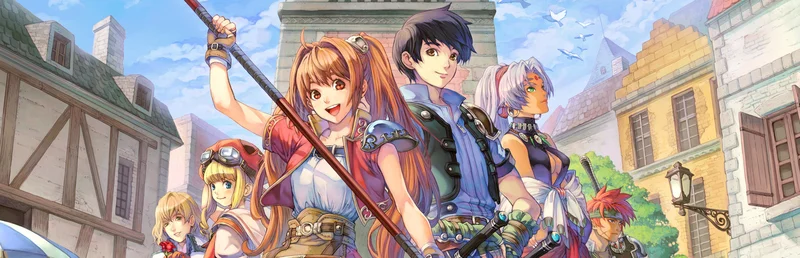
The Trails series by Falcom is the gold standard in JRPG long-form world building. In just Trails in the Sky FC, the author builds the entire Kingdom of Liberl with a level of detail that is uncommon. Each named NPC has a schedule, and they all have dialogue that updates after every story event. No hyperbole, fans have documented NPC dialogue updates across the entire game, and it is comparable to a series of novels.
Liberl is a small country, but it's very dense. The five major cities embody a different facet of the kingdom’s culture — Rolent is for agriculture, Bose is commercial, Ruan is coastal and academic, Zeiss is industrial and technological, and Grancel is the political capital. The Bracer Guild functions like a government, and connects them all. By the time the credits roll, you get how Liberl functions as a society.
The most important part of Trails is that it’s more than just one game. The world-building from Sky FC continues into Sky SC, Sky the 3rd, the Crossbell duology, Cold Steel 1-4, and the Kuro games. What starts off as a tiny story in a small kingdom eventually grows into a continent-spanning political story. But it’s the base in Sky FC that makes everything else feel important.
“Trails built a world where I know the name of the bakery owner in every city. No other franchise comes close.”
What Makes Great JRPG World-Building?
After rating all 10 games, we can see the trends. The greatest JRPG worlds have three things in common, the first being internal consistency. The rules of the world apply everywhere. If Mist powers airships in FFIX, then the towns above the Mist Continent shouldn’t have airship docks. If Titans carry nations in Xenoblade 2, then the world’s politics should revolve around Titan migration and resource scarcity. Rules create consequences, and consequences create stories.
Second, environmental storytelling. Instead of just information dumps, the best worlds express the story (and the world, or part of the world) through architecture, weather, NPC behavior, and spatial design. In FFXII, you can walk into a town and figure out its political alignment without talking to anyone. The visual contrast between Yongen-Jaya and Shibuya in Persona 5 Royal Tokyo tells you everything you need to know about its themes.
Third, the curious are rewarded. The best worlds are honest with the player. The deeper secrets are often layered, and only revealed if you take the time to look for them. In FFXIV, the lore is found in sidequests and item descriptions. NPC dialogue in Trails is where the character development is hidden. Chrono Cross places its most significant narrative elements in the disparities between the parallel worlds.
Each game on this list deserves its spot for the world density, not the world size. A small world built with care beats a world built with templates every time. For the wider ranking of the genre's all-time greats, check out the best RPGs of all time.
Conclusion
This list shows some of the best world-building JRPGs have to offer. Whether it’s the living building of the Xenoblade games, the political web of Ivalice, the alternate dimensions in Chrono Cross, or the cozy setting of Dragon Quest XI, each game proves that a great world is more than just a map. A great world is a system, a culture, a place you want to visit time and time again.
These are some of my favorite worlds in gaming, with some giving me hundreds of hours in the game. I have played each of these games multiple times, but it isn’t the combat or leveling systems that keep drawing me back. Environments feel almost alive and continue existing even when you are taking a break, and that is the true sign of great world-building. That’s exactly what makes these JRPGs stand out, and it shows that a great world is a living place.