
Most JRPG recommendation lists treat "relaxing" and "story-driven" as synonyms. They're not. A game can have a gorgeous narrative, sweeping orchestral score, and a cast you care about — and still make you want to throw your controller through the wall. If the combat demands split-second inputs, the difficulty spikes without warning, or one bad boss fight costs you two hours of progress, the story doesn't matter. You're not relaxed. You're just wearing headphones.
Based on playing all six featured titles to completion across multiple platforms, the mechanic that consistently separates a truly relaxing JRPG from a merely slow one is the absence of punishment for experimentation — you can try a bad strategy, lose a fight, and reload without losing meaningful progress. That's the standard every game on this list meets.
What Makes a JRPG Actually Relaxing (It's Not What You Think)
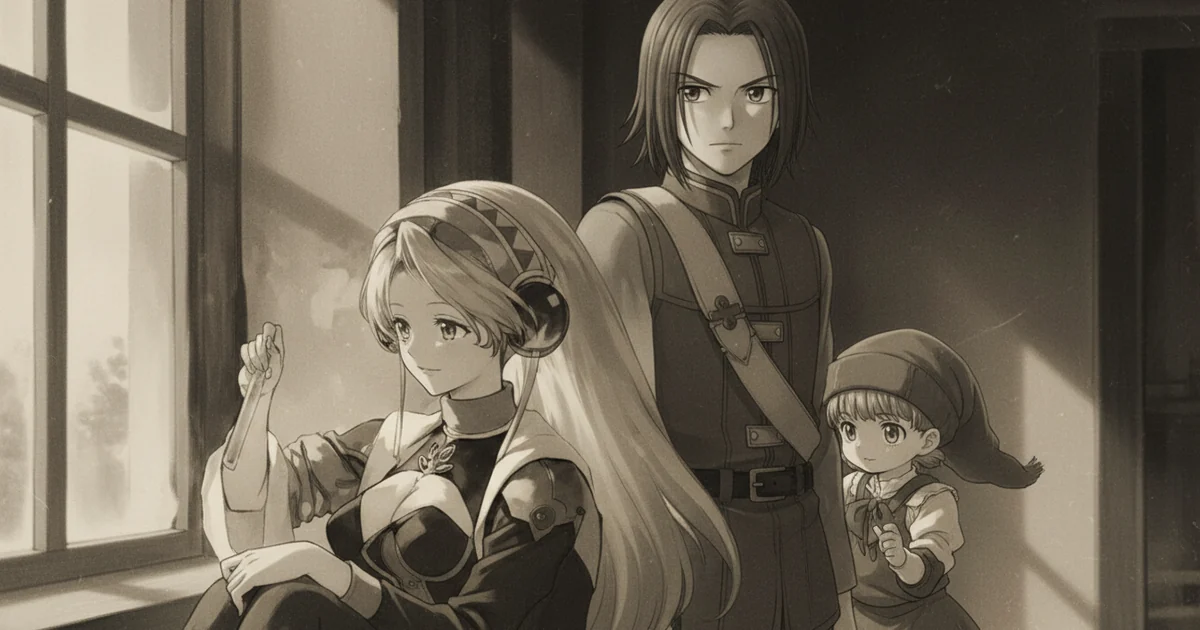
The checklist is mechanical, not aesthetic. Four criteria matter:
Turn-based combat with no time limits. If you can put the controller down mid-fight and nothing bad happens, you're in safe territory. Action-RPGs with real-time combat — no matter how pretty — do not qualify.
Forgiving or adjustable difficulty. Either the base game is tuned to be approachable, or there's a slider that gets it there. The ability to customize challenge is increasingly the marker of a thoughtfully designed game.
No grind gates. A game that requires fifteen hours of level-farming before you can advance the main story is not relaxing — it's a chore. The best low-stress JRPGs let you progress naturally without forcing a dedicated grinding session.
Short fail-state consequences. Losing a fight should cost you two minutes, not two hours. Frequent autosaves, generous manual save systems, and the absence of marathon boss corridors with no checkpoints are all green flags.
Notice what's not on the list: slow pacing, minimal plot, or soft aesthetics. A relaxing JRPG can have high stakes in its story; it just can't have high stakes in its second-by-second mechanics.
Dragon Quest XI S – The Gold Standard of Zen JRPGs
Dragon Quest XI S is the clearest argument that turn-based combat designed without ego is a feature, not a limitation. The base game — played without any of the optional Draconian Quest challenge modifiers — is one of the most mechanically forgiving JRPGs ever shipped. Auto-battle handles routine encounters, save points are frequent, and the difficulty curve never requires dedicated grinding to clear a story beat. The Draconian Quest settings exist for players who want harder conditions; skip them entirely and what's left is a 70-plus hour adventure where failure is a minor inconvenience rather than a setback. (Nintendo Switch, PS4, PC)
Persona 4 Golden – Slice-of-Life Pacing With No Reflex Tax
Persona 4 Golden's combat is fully turn-based and unhurried — you can sit on a menu screen indefinitely without consequence. The dungeon structure is self-paced, and outside of the final boss tier, the game rarely throws a difficulty spike that requires perfect play. The real reason it belongs here is structural: the daily calendar loop and social link system naturally encourage short, low-pressure sessions. You're not racing a countdown clock; you're managing a schedule at your own pace. The atmosphere is warm and suburban, which reinforces the mechanical calm. (PC, PS Vita — playable via PS Plus on PS4/PS5 with streaming)
Bravely Default II – Turn-Based Purity, Adjustable Grind
Bravely Default II gives you direct control over encounter rate and experience multipliers from the settings menu. Crank exp gains up, reduce enemy frequency, dial the challenge down, and combat becomes meditative rather than threatening. The Brave/Default system rewards thinking a few turns ahead, but there's no timer forcing quick decisions. If you overspend on Brave points and get countered, the punishment is manageable. It's a game that respects that you might want to think for thirty seconds before committing to a move. (Nintendo Switch)
Final Fantasy IX – Old-School Comfort With Modern Accessibility
Final Fantasy IX was designed to be approachable even when it launched in 2000, and the modern ports add booster options that push it further into stress-free territory: 3x speed toggle for grinding, high-speed mode to skip through encounters, and a battle assistance toggle that keeps HP full and ATB gauges maxed. You can essentially treat combat as a formality and focus entirely on the world. Even without the boosters, the base game's difficulty is gentle — the Active Time Battle system has an optional Wait mode that pauses the clock when menus are open. (PC, PS4, Nintendo Switch, Xbox, iOS, Android)
Chained Echoes – No Random Encounters, No Grinding Required
Chained Echoes, released in 2022, eliminates random encounters entirely. Every enemy is visible on the overworld and avoidable if you choose. It uses an overdrive meter that rewards fluid, strategic play but never locks you out for playing inefficiently. The game is balanced around a party that's roughly level-appropriate for each zone, which means natural exploration keeps you where you need to be without dedicated grinding sessions. Combat is strategic and satisfying without being punishing. It's one of the most mechanically honest indie JRPGs in recent memory. (PC, Nintendo Switch, PS4, Xbox)
Sea of Stars – Clean Combat, Forgiving Difficulty, Beautiful World
Sea of Stars has a Relic system — toggleable mechanical assists that include extra healing, reduced incoming damage, and other buffs — that functions as a baked-in difficulty layer rather than a simple easy/normal toggle. You curate your own difficulty instead of picking a preset. Combat uses timed hits for bonus damage, but missing them isn't punishing; it's just slightly less optimal. The world is visually striking and the encounter pacing is balanced. For players who want a modern JRPG that looks great and plays without stress, this is the current benchmark. (PC, Nintendo Switch, PS4, PS5, Xbox)
Honorable Mentions Worth Knowing
Octopath Traveler II is beautiful, largely turn-based, and chill — but individual chapter bosses, particularly in the later chapters, can hit hard if you're underleveled. Keep each character within five levels of the recommended zone and you'll be fine. The job system is flexible enough that you can build around comfort rather than optimization. (Nintendo Switch, PS4, PS5, PC)
I Am Setsuna is short, melancholic, and mechanically simple — a deliberate callback to early-era turn-based RPGs with minimal systems overhead. The caveat: it's brief enough that some players feel it ends just as it's getting started, and the emotional tone is heavy despite the gentle combat. (Nintendo Switch, PS4, PC)
Fantasian Neo Dimension, the Hironobu Sakaguchi RPG that expanded to non-Apple platforms in 2024, offers a Dimengeon system that warehouses random encounters and lets you fight them in batches on your own schedule — one of the most player-respectful encounter designs in the genre. Difficulty can spike in late-game arena sequences, but the core campaign is relaxed. (PC, Nintendo Switch, PS4, PS5, Xbox)
What to Avoid If You're Chasing a Chill Playthrough
Some genuinely great JRPGs are simply not relaxing by design — and that's fine. Knowing which mechanics to watch for saves you from a frustrating mismatch.
Action-RPG combat in the Tales series and Star Ocean titles requires real-time positioning, dodge timing, and reaction-based inputs. Even on lower difficulties, the combat loop keeps your hands busy and your attention engaged moment-to-moment. Not zen.
Mandatory timed sequences. Some JRPGs hide a timed puzzle or countdown sequence in an otherwise turn-based game. These tend to be short, but they break the meditative rhythm abruptly.
Punishing permadeath modes. Several modern JRPGs include optional permadeath — fine if you opt in, but verify you haven't toggled it on accidentally when starting a new game.
Long pre-boss corridors with no save points. This is the most common source of JRPG rage-quitting. Older titles, particularly pre-2010 entries in the Final Fantasy and Shin Megami Tensei lines, often place save points far before a boss encounter. Losing to a boss after a 40-minute dungeon run is not relaxing by any definition.
How to Make Any JRPG More Relaxing
A few practical adjustments work across the genre. First, use difficulty assists wherever the game offers them — the stigma around easy mode is not worth your stress. Dragon Quest XI S's base mode is already gentle; avoid the Draconian Quest modifiers entirely if you're playing to unwind. In Final Fantasy IX, the battle assist toggle is a legitimate tool, not a cheat.
Turn on auto-battle for overworld random encounters once you've seen a new enemy type. Most turn-based JRPGs — including DQ11S and Octopath Traveler II — have this option, and it converts routine fights from micro-decisions into passive experience gain.
Finally, save constantly. Most modern JRPGs autosave, but layering a manual save on top before anything that looks like it could be a boss encounter costs thirty seconds and saves potential hours. The relaxing JRPG niche has grown through the 2020s not because developers are making easier games, but because they're building in more player agency over difficulty — letting you opt into challenge rather than opt out of it. Use that agency.
For more ranked lists and platform-specific breakdowns, explore our JRPG rankings hub and individual game reviews — if you're coming from a search for low-stress recommendations, there's a good chance our turn-based guides and Switch JRPG picks cover your next question too.