
The Ivalice strategy role-playing games (SRPGs) set by Yasumi Matsuno and the Ivalice Chronicles remaster provides depth to JRPG fans similar to what the the PD/SD series and the Monica series provide. Matsuno also provides depth to JRPG fans in his works through character designs by Akihiko Yoshida and soundtracks by Hitoshi Sakimoto that set the roles in the Ivalice games. Matsuno's depth also comes through structural complexity in his games. The remaster is the 10th title in the series. The remaster, due to the Ivalice games release timeline, is a sequel to the first 9 games in chronological order of release. In total, this ranking entails the five Final Fantasy Tactics (FFT) games (War of the Lions, Advance, A2, and the PS1 original) and five Ivalice-themed games (both versions of FFXII, Vagrant Story, Tactics Ogres Reborn, and Revenant Wings) on a scale from best to worst. Matsuno games are ranked holiday-season-jrpg fan-analyst-vision-judgement style. I will provide Ivalice-system-canonical placement for each game along with the Matsuno canon and the game's disappointing delivery as a Jrpg.
How We Ranked Every FFT & Ivalice Game
I evaluated the five entries based on the following criteria: story arc complexity, character development, evolution of the tactical system, peak Sakimoto soundtrack, and accessibility to modern JRPG fans. The five strict FFT entries are benchmarks on the original tactical JRPG framework Matsuno developed. The five expansions of the Ivalice setting are assessed on how they expand or recontextualize that framework. While Vagrant Story is a real-time tactical (as opposed to turn-based) game, its Ivalice setting and Matsuno team development make it canon.
Tactics Ogre Reborn is included as number 10 because it is Matsuno's 1995 SNES prototype that evolved into Final Fantasy Tactics two years later. Playing Reborn first is the most archaeologically honest way to understand what FFT inherits. The Final Fantasy XII count is separate from XII: The Zodiac Age because the addition of the Zodiac Job System in TZA significantly altered the experience. FFT Ivalice Chronicles 2025 is ranked in relation to WotL despite being newer because the improvement is incremental rather than generational.
10. Final Fantasy XII: Revenant Wings (2007 DS)
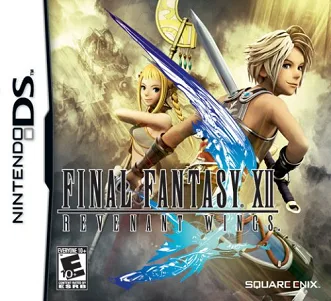
Revenant Wings has ranked at the lowest position because compared to its advertised competition for the format, it simply did not earn the FFT-tier comparison. Revenue Wings, which was sold as the direct DS sequel to Final Fantasy XII, uses sky-pirate Vaan as the protagonist and expands the Lemures floating islands to further Ivalice geography, and uses the music of Sakimoto and Kenichiro Fukui. The ambition the developers had did not match the end results. Because the control scheme is even more touch based compared to the gambit system, the unit-management system is going to feel more imprecise. Additionally, the real-time strategy system lacks the depth required to make it compelling as an FFT-style game entry.
Revenue Wings is at the bottom of the list because it has some minor contributions to the Ivalice canon. The story continues what happens to Vaan and Penelo after XII, brings to the forefront the Aegyl race that XII only hinted at, and adds details regarding the Cataclysm of Ulda which other Ivalice materials have referenced. It is a minor Ivalice completionist footnote, and for tactical JRPG fans, the other nine choices are much better options.
9. Final Fantasy Tactics Advance (2003 GBA)
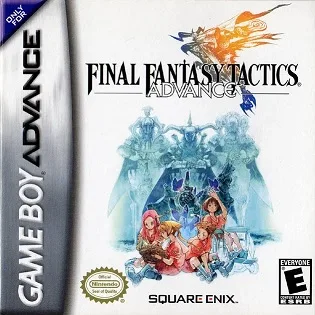
FFTA is ranked 9th for it being the "lighter" Tactics-template and settlement against the original FFT's tonal weight. Marche Radiuju and his classmates are sent to a starring role in real world St. Ivalice to a dream Ivalice and adventure under the Jagd judge-and-law system, which limits combat to certain laws per encounter. The job system grows from FFT's existing frameworks to include race-locked classes --- Bangaa, Nu Mou, Moogles, Viera --- each centreing their own respective closed job pools. It creates a tactical sandbox that is far more extensive than the original 22 job FFT. However, it is aimed at a younger audience without the story political thriller which was the anchor of the 1997 original.
FFTA's greatest strength is the job class customization systems that underpin its design. You will build genuinely interesting creations when you successfully navigate the laws. The GBA delivered the closest we will get to compositions that are Sakimoto-adjacent (Hitoshi Sakimoto credit confirmed), that are on the whole better than the vast majority of RPGs from 2003 considering the hardware's portability. The story is naturally and understandably lesser than FFT but the systems are FF-DNA-honest. At rank 9, it demands less from its players with its tonal lightness and that reduces its replay value.
8. Final Fantasy Tactics A2: Grimoire of the Rift (2007 DS)
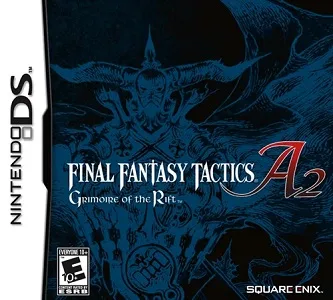
FFTA2 places 8th because it builds on the FFTA formula using the right touch screen mechanics, yet does not escape the "lighter Tactics" critique that has hampered the first GBA entry. Luso Clemens takes the place of Marche as the human protagonist who gets taken to Ivalice (this time Jylland not Loar), the clan system returns with a more refined progression system, and the job system increases massively to over 50 jobs across 4 races and has more meaningful crossover between job types than was allowed by FFTA. The Cid Moogle Scribe framing device that treats the entirety of FFTA2 as Luso's diary provides a narrative voice that was absent in the first Advance game.
The combat is without a doubt the best in the sub-series. Touch controls map perfectly to the battlefield grid, the laws have been relaxed into more interesting variants, and the sheer volume of sidequests provides a sandbox for content completionists to go crazy. The reason FFTA2 places 8th instead of higher is the continuing Advance story commitment. Luso's story resolution is very clean and in contrast to the political drama that Matsuno's original FFT had. A JRPG fan looking for an Ivalice entry is going to place the Vagrant Story-XII-FFT axis above Advance.
7. Tactics Ogre Reborn (2022)
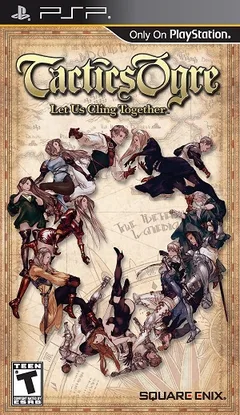
Tactics Ogre Reborn is 7th due to being Matsuno's first tactical JRPG that set the groundwork for Final Fantasy Tactics in 1997. Matsuno's first game was Tactics Ogre: Let Us Cling Together which is a SFC game released in 1995. Matsuno pioneered a branching narrative, player character permadeath, and a class system. Reborn is a 2022 remaster for modern consoles (Switch, PS4, PS5, PC) and has fully voiced cutscenes, a re-orchestrated Sakimoto soundtrack and rebalanced modern pacing combat (the grind or stall difficulty curve of the original is gone due to unit-level removal).
For JRPG fans, Reborn is the real way to first experience FFT. Matsuno refined the design patterns he built upon for the game between 1995 and 1997. Walter Denim's Knights of Lodis arc is one of the most memorable fully branching narratives in tactical JRPGs with 3 major moral-path endings that significantly change unit roster. We placed it 7th because FFT improved the template with the Zodiac Stones plot, the Ramza-Delita parallel arc, and the more refined job system. Reborn is essential context, and not the peak of Matsuno's development.
6. Final Fantasy XII (2006 PS2)
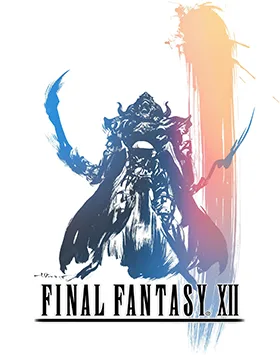
The sixth spot for FF XII is well earned, and is also definitive. Its reputational complexity is the Ivalice gamernets' deepest world building. Matsuno's produced and co-directed until health issues backed him away; it's completed by Hiroyuki Ito, whose influence is felt on the License Board and final combat tuning. This creates a game feeling unlike a mainline FF title – as there isn't any authentic ATB turn order, random enemy encounter phases, or menu driven combat – and yet has the greatest Ivalice realization. From Rabanastre as a city, and the Necrohol of Nabudis, to the Pharos at Ridorana, and the Henne Mines, these places have the weight that FFT and FFTA could only gesture to.
Vaan is the weakest character out of all protagonist decisions (Basch was supposed to be the main character from the start, but marketing said to put a younger character as the lead). However, with Balthier, Ashe, Fran, and Basch in support, it pushes the political thriller plot higher than most people would reasonably expect from XII. The gambit system is where you have to stick to it if you want to enjoy real depth and earn the system mastery from the late-game (Hell Wyrm, Yiazmat, Omega). The Original 2006 Version releases worse than the Zodiac Age remaster (which sits at 5) & is the better starting point for newcomers. FF XII is thus ranked at 6 because of the original 2006 License Board.
5. Final Fantasy XII: The Zodiac Age (2017)
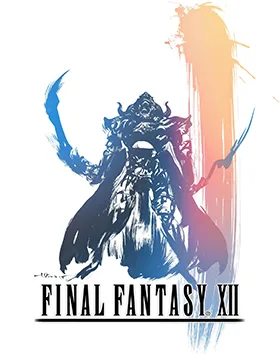
FF XII: The Zodiac Age is a remaster of a classic PlayStation 2 JRPG game, and it currently ranks as the 5th best FF XII experience, as well as the best entry point for modern JRPG fans. The Zodiac Age offers the first international release of this title's unaltered Zodiac Job System. With this system, players can assign each playable character two jobs from a total of twelve (Knight, Monk, White Mage, etc.). This dual-job system turns character building from a flat system to a real specialization puzzle within an RPG that makes the composition of your party matter. The remaster also has a host of quality of life improvements, including a high res remaster that renovates the beautifully rendered world of Ivalice. The game also has a speed up mechanic, modernized controller mapping, and the addition of a hundred tier trial mode as a victory lap after the main story is completed. Fans of JRPGs looking at Ivalice will find that FF XII is the recommended starting point, while it's 2006 release is reserved for hardcore completionists. The game ranks at number 5 because the gambit system asks more from the audience than what many turn based FF fans are willing to give. Additionally, the protagonist of the game is Vaan and that decision weakened the game overall, even with the remaster.
4. Final Fantasy Tactics: The Ivalice Chronicles (2025)
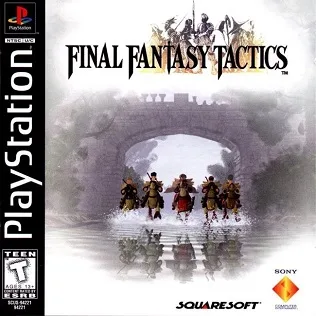
FFT: Ivalice Chronicles will be #4 for the most recent definitive-Final-Fantasy-Tactics for new FFT players in 2026. Ivalice Chronicles will be the first time even December 2025 players can play Ivalice Chronicles on Switch, PS5, PC (Steam), and Xbox Series with September 2025 release. Ivalice Chronicles remasters FFT: War of the Lions PSP version with Tom Slattery's translation, Shakespearian dialogue, and two new jobs (Onion Knight and Dark Knight). Ivalice Chronicles will come to modern devices with HD assets, voice acting, modern controller/mouse mapping, plus quality of life improvements like battle speed-up, auto save before encounters, and late game Lucavi fight difficulty changes.
For any North American 2026 JRPG fan, Ivalice Chronicles will be the most straightforward first-FFT to recommend: modern controls, dub, retranslation of the WotL, across all platforms, no obscurity tax. We've ranked #4 for the new story and tactical system from 1997 but remastering the original 10/10 for the 1997 original, we have 10/10 for remastered excellent the original FFT. The gap for Ivalice Chronicles and FFT 1997 is not generational but incrementally polished.
3. Vagrant Story (2000 PS2)
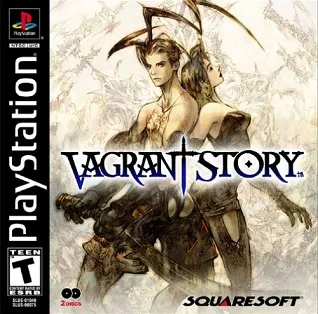
Matsuno's Vagrant Story is number 3 in my ranking of games in the Ivalice universe. It is the third greatest game in terms of story and gameplay mechanics. It was released on the PS1 in 2000. I say technically PS1 as the game was played on the PS2 (backward compatible). The player takes control of Ashley Riot as he tries to deal with the cult of Cardinal Sydney Losstarot in the cursed city of Leá Monde. It uses the world of Ivalice, which was also used in FFT and FFXII. It also contains many references to those games. The primary combat system is called the Risk Meter, which measures your risk (and ultimately your success) in relation to the location of the character, the type of weapon you have equipped, and the amount of monster classes you have defeated. There are many games that use the idea of combat chains, but none use it as much as Matsuno.
In addition, Akihiko Yoshida's character design work has never been better. Ashley Riot's design set the bar for future character designs in Final Fantasy XII. Hitoshi Sakimoto's music for the game is also considered to be among some of the best music work for PS1 RPGs. Vagrant Story has been out for almost 20 years and still asks much of is players due to the difficulty curve and depth of its combat. Matsuno's team has created the best JRPG combat system ever. I'd recommend the FFT and Ivalice Chronicles games before playing Vagrant Story as they are designed for first time players in the Ivalice universe.
2. Final Fantasy Tactics: The War of the Lions (2007 PSP)
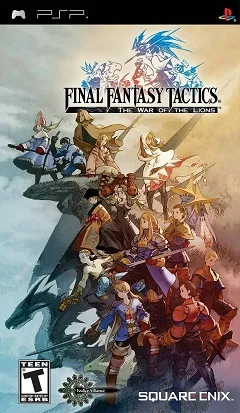
FFT: The War of the Lions is second only to Final Fantasy Tactics Advance as the most definitive experience for players looking to play on portable devices or even modern PSP emulators, and it was also the first edition to set the post-1997 canon. Released for the PSP in 2007, WotL added two new jobs (Onion Knight as the ultimate Generic-class endgame, and Dark Knight as the corrupted-paladin counterpart to the Holy Knight), voiced cutscenes for the major story beats (including Delita's coronation, Wiegraf's confrontation, and the closure of the Ramza-Delita arc), and a full-motion-video opening cutscene using the Akihiko Yoshida illustrations. The retranslation by Tom Slattery is the canonical version, as the original 1997 PS1 localization was infamous for its translation blunders, and the dialogue was incredibly stilted. WotL's Shakespearean-style rewrite transformed the political-thriller plot into what is considered the most respected story in the entire franchise.
The structural criticism of WotL is justified; the PSP port was released with major slowdowns when there were a lot of visual effects happening in battles (this was a frame rate problem that was fixed in the Ivalice Chronicles 2025 remaster), and there was a platform-availability tax, which made it less recommendable than the original PS1 release for many years. However, for JRPG fans, WotL is the FFT release that built the modern reputation of the game, even if it was ranked #2 in the series because the 1997 PS1 original (which featured the broken translation and considerably inferior production quality) earned that honor for its structural-design-purity. The WotL additions are mostly good, but they do not fundamentally alter what the 1997 game already offered.
1. Final Fantasy Tactics (1997 PS1)
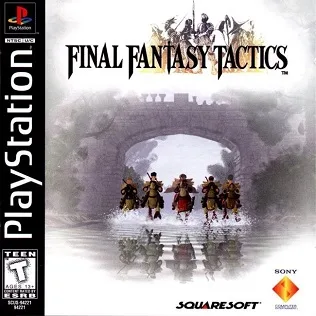
FFT 1997 is 1st place because it attained the consensus 1st place finish with arguments that nothing else in Ivalice or tactical-JRPG history even comes close. Starting with the 1997 Japanese release and 1998 North American release (the same year as the global release of FF7), FFT featured director Yasumi Matsuno, composers Hitoshi Sakimoto and Masaharu Iwata (two of the big three), and character designer Akihiko Yoshida. These people defined the Ivalice aesthetic for twenty years. Matsuno is known for multiple, parallel character arcs in a collapsing political system. Here we see the origin of the Zodiac Stones, the Lucavi demon hierarchy, and every story beat fans of the genre use to reference his best work. FFT largely created the tactical-JRPG genre with its job system and class progressions. 22 jobs, a JP-driven class system, and secondary job slots revolutionized granular control over character builds. Added to this mix were the Zodiac system (cryptic relationships between combatants), and the beloved/broken Calculator job. Late-game confrontations with Lucavi, and the Wiegraf vs. Belias fight (the toughest fight of the genre) defined tactical RPGs to be as challenging as the systems allow. Newer FFT releases (like WotL retranslation and Ivalice Chronicles modern remasters) are better productions. However, the 1997 release is the canonical work while the remasters can't match the original PS1 release in structure.
The FFT & Ivalice Series at a Glance
Matsuno's tactical JRPG entries from Tactics Ogre Reborn (1995, remastered 2022) and Final Fantasy Tactics (1997) to Ivalice Chronicles in 2025 along ten franchise entries show the Matsuno line of tactical JRPGs world building consistency. The Matsuno line for Final Fantasy Tactics branches from the FFT original 1997, Advance, A2, WotL PSP, and Ivalice Chronicles 2025. Notable tactical RPG advancements come every two decades, making the Ivalice Chronicles 2026 the best entry point for new players. The Ivalice setting also incorporates Vagrant Story, FF XII, and FF XII: The Zodiac Age, Revenant Wings, and Matsuno's aesthetics, even when the combat systems change, which broadens the context of the franchise Matsuno's design philosophy is exemplified by.
Entering Ivalice and Matsuno's story, JRPG fan rankings start with FFT: The Ivalice Chronicles (#4, modern hardware), then for Ivalice geography lore go FF XII: The Zodiac Age (#5), and finally peak Matsuno combat with Vagrant Story (#3) if tactical depth holds. There you can finish the FFTA-FFTA2 Advance branch for completionist sandbox. Ivalice canon completionists who have played all of FFT, for historical context Tactics Ogre Reborn explains the origins of the tactical JRPG template Matsuno's design philosophy across two decades produced a body of work that is structurally cohesive for gaming in 2026, something very few PS1-PS2 era JRPG franchises can boast.
Which Final Fantasy Tactics game should I start with?
Final Fantasy Tactics: The Ivalice Chronicles (2025) is the cleanest first-FFT pickup for new players in 2026. It is the most modern definitive release available on Switch, PS5, PC, and Xbox Series, includes the Tom Slattery retranslation that established the modern canonical dialogue, voiced cutscenes throughout, and quality-of-life additions like battle speed-up and encounter autosave. For Ivalice canon purists with PS1 hardware or emulator access, the original 1997 release remains the canonical work.
Are Final Fantasy XII and Vagrant Story part of the FFT universe?
Yes — all three games share the Ivalice setting established by Yasumi Matsuno. Final Fantasy Tactics (1997) introduced Ivalice as the political stage for the Ramza-Delita arc, Vagrant Story (2000) extended the setting through Leá Monde with shared place names and lore artifacts, and Final Fantasy XII (2006) became the most fully-realized Ivalice geography with cities like Rabanastre, Bhujerba, and the Pharos at Ridorana. Matsuno directed FFT and Vagrant Story and co-directed XII before health issues forced him to step back.
Is Tactics Ogre Reborn worth playing before Final Fantasy Tactics?
For JRPG fans interested in tactical-RPG history, yes. Tactics Ogre: Let Us Cling Together (1995, Super Famicom) is the Matsuno foundation that became Final Fantasy Tactics two years later. The 2022 Reborn remaster (multi-platform: Switch, PS4, PS5, PC) is the most accessible way to play it, with voiced cutscenes, rebalanced combat, and Sakimoto soundtrack re-orchestration. Playing Tactics Ogre first surfaces the design patterns FFT inherited. For players starting with FFT directly, Tactics Ogre Reborn is still worth a follow-up pickup to understand where the template originated.