
I never played the original Seiken Densetsu 3. Dropping fifty dollars on what looked like a budget JRPG during a global pandemic didn't seem smart. But the lockdown was long, my backlog was short, and Angela's outfit on the store page made me curious enough to click. Five years later, Trials of Mana is one of my favorite action JRPGs of the PS4 generation — a game that shouldn't work as well as it does, carried by charm, tight combat, and the sheer audacity of its fairy-tale confidence.
This is a review of the 2020 remake. You don't need to play the first two Mana games beforehand — I didn't, and it was fine.
Budget Aesthetics, Butter Gameplay
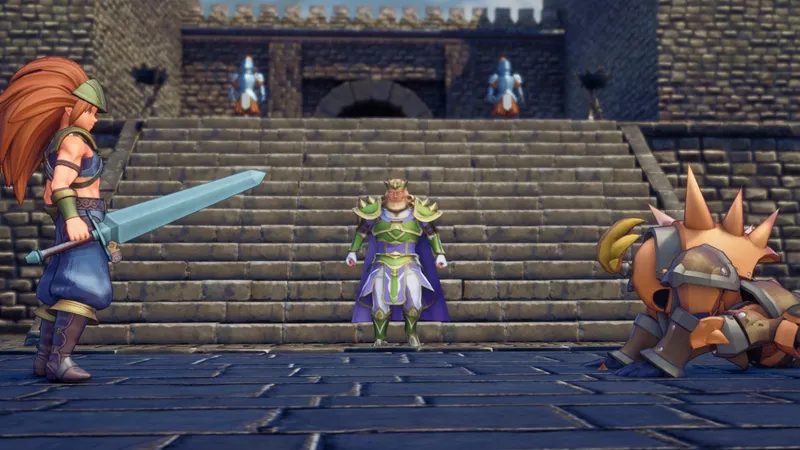
Let's get the obvious out of the way: Trials of Mana looks cheap. The cutscene animations have a limited range — characters gesture stiffly, facial expressions cycle through maybe four presets, and the camera framing during story beats feels like it was set up by someone who ran out of time. It's a AA game at a AAA price point, and the seams show. If you're coming from Final Fantasy VII Remake or Persona 5 Royal, both of which launched the same month, the visual gap is enormous.
But here's the thing — the game knows what it is and leans into it. Charlotte replaces consonants with W's ("I had a dweam that..."), and it's either endearing or insufferable depending on your tolerance. Angela, the sorceress I chose as my main character, delivers every line with a hilarious valley-girl accent that turns exposition into comedy. Combined with her barely-there outfit and a walking animation that belongs in a fashion show, she's the kind of character design that a focus group would kill in five minutes. I loved every second of it.
You choose three characters from six at the start, each with their own opening chapter — a tragedy or mystery that drives them onto the road. From there, Trials of Mana becomes a series of town-hopping between dungeons and winding paths through forests, deserts, volcanoes, and frozen peaks. Standard JRPG structure. What makes it work is the moment-to-moment feel.
The Combat That Surprised Everyone

It probably hit me when an NPC offered to shoot me out of a cannon to reach the next town. That's the energy of Trials of Mana — a lovable absurdity that the fairy-tale framework earns. And once you stop judging the production values and start playing the actual game, something clicks. The combat is clean. Not "clean for a budget game" — clean, period. Responsive dodging. Melee cancels that feel intentional. Buttery menus that slide you points and items after each encounter. Beautiful colors pouring out of every spell effect.
A few hours in, the difficulty elevates perfectly. Early encounters are button-mash territory, but mid-game bosses demand that you pay attention to your party composition, class abilities, and the action combat's dodge timing. Enemies telegraph abilities with red zones on the field — stand there and you eat a massive hit, dodge out and you get a punish window. It's not Soulslike depth, but it's enough to make every boss encounter feel like a genuine fight rather than an HP race.
The boss fights are the highlight. There's a door demon that turns the entire room into spike traps. A dragon that requires aerial positioning. A golem where you need to break limbs in the right order. Each one teaches you something about the combat system that regular encounters don't, and the difficulty curve rewards players who experiment with class abilities rather than grinding levels.

The AI Problem (And Why It Barely Matters)
The one genuine flaw: your AI party members are suicidal. You control one character in real-time and can swap between all three on the fly, but the two you're not controlling will stand in red zones, refuse to dodge telegraphed attacks, and occasionally run face-first into bosses during their wind-up animations. In harder fights, I often won with only one character left alive — not because the boss was overtuned, but because my AI allies treated danger like a suggestion.
Here's the counterintuitive solution: stop trying to keep them alive. Once I accepted that the AI was going to eat hits regardless of aggression settings, I started building my own character as a self-sufficient damage dealer and treated the AI as disposable support. It sounds terrible on paper, but in practice it turned every boss fight into an intense solo challenge where the AI occasionally helped — and when they did contribute, it felt like a bonus rather than a baseline. Not ideal design, but workable.
For everything else, the AI is serviceable. You can set aggression levels, switch characters freely, and the class system gives you enough build variety to compensate for the tactical limitations. Swapping from Angela's magic to Duran's tanking mid-fight to draw aggro while your healer recovers — that flow of character management is where Trials of Mana's combat shines brightest.
Class Changes and the Power Fantasy Payoff
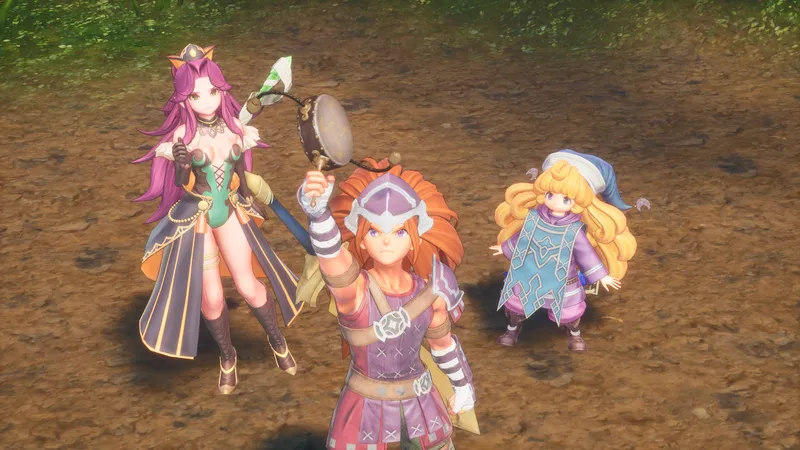
The class system is where Trials of Mana transforms from "charming budget game" to "I can't stop playing this." Each character has four class tiers with Light and Dark branches at each fork, creating build variety that rewards replay. Angela can go full offensive mage (Dark path) or support-oriented elemental specialist (Light path). Duran can tank or become a paladin healer. The choices feel meaningful because they change your spell list, your stat growth, and your role in the party — not just your costume, though the costumes are excellent.
When you hit Tier 3 and suddenly your class build comes online — spells chaining, passive abilities stacking, raw damage numbers climbing — the power fantasy is intoxicating. Trials of Mana nails the curve from "this is tough" to "I am unstoppable" in a way that most action JRPGs fumble. The post-game adds a Tier 4 class unlock that extends the build experimentation even further.
Trials of Mana in 2020 felt nostalgic even for someone who never played the original. In 2026, it feels like a hidden gem that most people walked past because it launched next to FF7 Remake. If you want an action JRPG that respects your time (twenty-five hours for one playthrough, sixty for all three routes), delivers satisfying combat, and wraps it all in a fairy-tale aesthetic that never takes itself too seriously — give it a shot. It's on Steam, PlayStation, and Switch.
All images are official screenshots from Trials of Mana. Trials of Mana is a registered trademark of Square Enix. Originally published April 2020. Updated March 2026.
I played the original with a friend years ago. I would get the game but unfortunately it’s a Square-Enix game so they love their DRM (Denuvo). Hopefully they remove it eventually so I can consider purchasing it.
Ah yeah, understandable. Square removes Denuvo at some point. They did for Octopath and FFXII for example, so hope you get to try it out eventually!
I hope you’re right