Square Enix's Switch 1 to Switch 2 cross-generation rollout has settled into a pattern. The pattern is that there isn't one. Different titles in the same publisher's 2026 lineup get wildly different treatment when it comes to save-data transfer, upgrade pricing, and physical-versus-game-key-card distribution, and the inconsistency is the actual story.
The title that comes out worst from this rollout is Dragon Quest XI: Echoes of an Elusive Age — Definitive Edition. If you finished it on Switch 1 and bought a Switch 2 expecting a clean carry-over, the news is bad. If you haven't played it yet and were planning a Switch 2 purchase, the news is also bad, just in a different way. Here is the honest read on what Square Enix actually offered DQ XI players and why it stands out as the most-disadvantaged title in the lineup.
The DQ XI Switch 2 Verdict: Bad News First
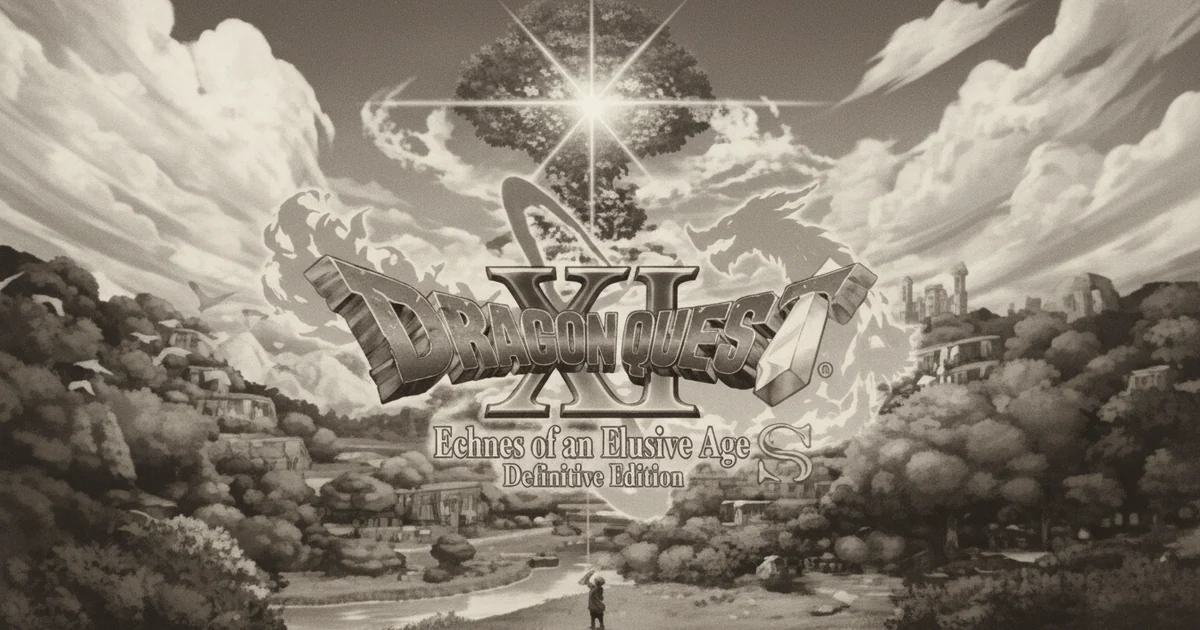
Three things to know upfront. First, there is no save-data transfer between the Switch 1 and Switch 2 versions of DQ XI. If you sank seventy hours into the original release, those hours stay on the Switch 1 cart, and a fresh Switch 2 purchase starts you back at the beginning. Second, there is no upgrade path for existing Switch 1 owners. No free patch, no discounted upgrade pack, no compatibility bridge. The Switch 2 version is sold as a standalone product at full price, and you pay for it again if you want it.
Third — and this is the one that matters for long-term ownership — the Switch 2 physical release is a Game Key Card rather than a true cartridge. You buy what looks like a physical product, but what you actually own is a download license tied to that card. The data is not on the cart; it is downloaded to your console and the card is essentially a hardware token authorizing the download.
What "Game Key Card" Actually Means for Your Library
Game Key Cards change what you actually own. With a traditional cartridge, the game data sits on the cart and your console reads from it directly. The cart is the game. With a Game Key Card, your console uses the card to stream data from Nintendo’s servers. Basically, the cart is a license to access the game.
There are a lot of practical consequences. The resale value will be lower to buyers because the card is useless without the game download. The long term value preservation will depend on Nintendo hosting the download. There is no guarantee the Game Key Card will function like it does today 15 years from now. If you want to loan a friend the cart, they will have to download the full game to their console first, which is an extra step people are going to want to take.
None of this is unique to DQ XI. Publishers across the industry are leaning into Game Key Card distribution because it cuts manufacturing costs. But it is part of why the DQ XI deal stings — players are paying for what looks like a physical purchase and getting download economics underneath.
The Inconsistency Problem: FF Tactics Got the Best Deal
To understand how DQ XI's treatment is especially poor, consider the case of Final Fantasy Tactics. Same publisher, same Switch 1 to Switch 2 transition, wholly different terms. FF Tactics Switch 1 owners receive a free upgrade pack via eShop that gives them the Switch 2 version at no cost. Save data transfers seamlessly, and the boxed release in Japan has a code that adds the Switch 2 version on top.
That deal makes sense structurally. The publisher takes care of existing owners, allows them to retain their progress, and acknowledges the loyalty of players who paid for the game. FF Tactics players got all of that. DQ XI players got none of it. The two games launched in the same period of time relative to the Switch 2 transition, and the difference cannot be explained by anything Square Enix has said publicly. The decision seems to be arbitrary and per-title.
The Other Square Enix Switch 2 Deals Compared
Three more titles complete the inconsistency picture. Romancing SaGa 2 charges Switch 1 owners for the Switch 2 upgrade but offers bidirectional save transfer — your progress moves either direction between the two versions. Dragon Quest III HD-2D ships a free compatibility patch that brings the Switch 1 version up to Switch 2 performance without requiring a separate purchase. Octopath Traveler 0 permits save transfer in one direction only, from Switch 1 to Switch 2, but offers no upgrade pricing at all.
Lay those out side by side: free upgrade plus save transfer for FF Tactics, paid upgrade plus bidirectional save transfer for Romancing SaGa 2, free compatibility patch for DQ III, one-way save transfer with no upgrade for Octopath Traveler 0, and nothing at all plus Game Key Card distribution for DQ XI. There is no governing principle that explains the differences. Square Enix has not articulated one publicly, and the pattern looks like five separate decisions made by five separate product teams.
Should Existing DQ XI Owners Care?
That depends on how much you want to replay DQ XI. If you're done with the first version on Switch and your save file is at the credits, there are not very many reasons to buy this again. The Switch 2 version has some visual and performance improvements, but the upgrades really aren’t worth starting a new save file again to experience these changes.
On the other hand, if you have not played DQ XI at all, your better option would actually be to completely avoid the Game Key Card for Switch 2, and instead get the Definitive Edition on PC/PS4/Xbox, where the same content is offered for usually less money with normal ownership rights. The portability of DQ XI is the only reason to get the Switch 2 version, especially since the first version is still playable on the Switch 2. Ultimately, there is no situation where the Game Key Card for Switch 2 is worth it.
What This Pattern Says About Square Enix's Cross-Gen Strategy
As for the rollout of its cross-gen policies, the individual inconsistency suggests that the various consumer-facing cross-generation policies are not harmonized at the publisher level across the company. Each product team sets the terms for each individual title, with no collaborative governing principle regarding save transfers, upgrade pricing, or distribution format, etc. The result is a disorganized collection where buying a Switch 2 console and expecting your existing Square Enix Switch library to migrate seamlessly is anyone's guess. You won't know what you are getting until the specific game's terms are revealed.
For DQ XI players in particular, the takeaway is straightforward: do not assume publisher loyalty translates to consumer-friendly cross-gen treatment. The title that defined the modern Dragon Quest era got the least player-friendly Switch 2 deal of any major Square Enix release in the same window. That is the news worth knowing before you spend on the Switch 2 version.
For broader recommendations on whether Dragon Quest XI is worth playing in 2026 — independent of the Switch 2 upgrade question entirely — our prior DQ XI coverage remains the better reference for that side of the decision.