
In any game with a dodge maneuver, I always perform the check: is dodging faster than running? Nine times out of ten the answer is no — developers add recovery frames or slow you down after a roll. In Ys Seven, dodging IS faster than running. You can and should spam dodge across every environment, turning Adol Christin from a legendary adventurer into a man doing barrel rolls across an entire continent. It's faster, it has invincibility frames, and the game never punishes it. This tells you everything about Ys Seven's relationship with its own mechanics: the tools exist, they work, and nobody checked whether they break the game's pacing entirely.
The Party System: Ys Goes Three-Deep
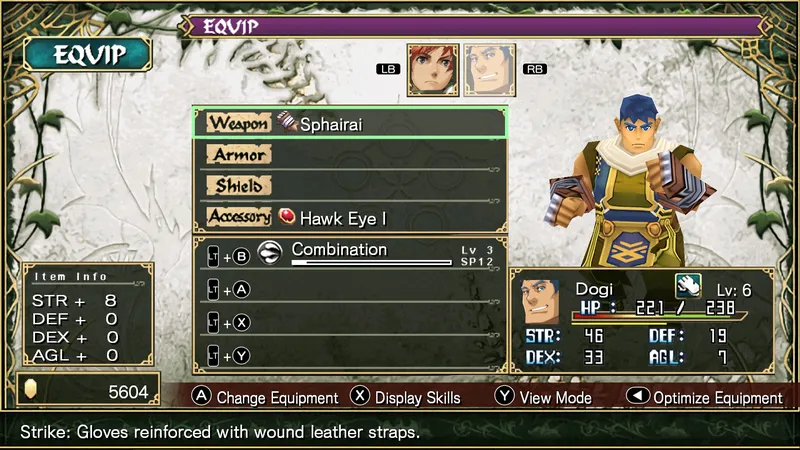
Ys Seven introduced the party system that would define the series going forward — three active characters with different weapon types (slash, pierce, strike) that enemies are weak to. Swapping characters mid-combat to exploit weaknesses sounds tactical. In practice, it means pressing a button whenever you notice an enemy is taking reduced damage, then mashing attack until it dies. The action combat is functional but shallow — Ys VIII and IX would refine this formula into something genuinely excellent, but Seven feels like the proof of concept.
Boss Design: The One Thing Ys Seven Gets Right
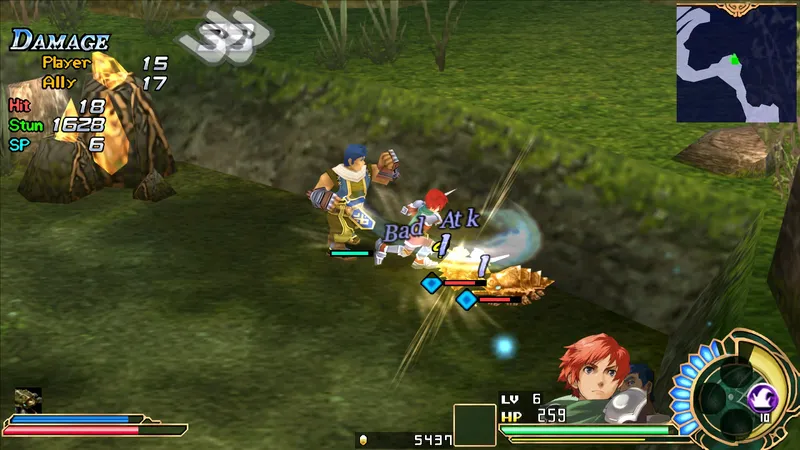
The boss fights save Ys Seven from complete dismissal. Giant creatures with pattern-based attacks that require dodge timing, position awareness, and weapon-type switching — these are the encounters where the combat system actually works as intended. The gap between trash mob combat (spam dodge + mash attack) and boss combat (read patterns + time dodges + swap characters) is enormous. When Ys Seven focuses on boss design, it hints at the excellent action RPG the series would become. When it doesn't, you're barrel-rolling through identical corridors fighting enemies that die before they attack.
The Dodge Roll Economy: Breaking Ys's Own Rules
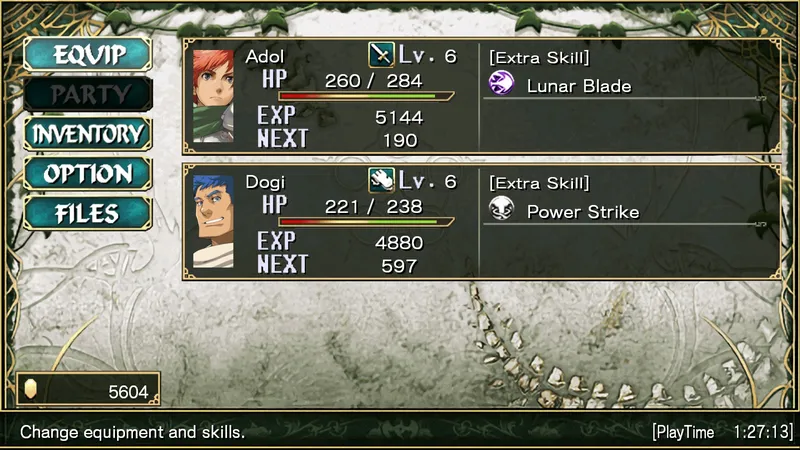
The dodge roll problem extends beyond movement speed. In Ys Seven, a perfectly timed dodge triggers a slow-motion window — "Flash Guard" for blocking, "Flash Move" for dodging — that gives you free hits while enemies freeze. The mechanic is supposed to reward precise timing. In practice, the timing window is generous enough that spamming dodge rolls will accidentally trigger Flash Move often enough to trivialize most encounters. I spent the first ten hours thinking I was getting better at the combat. Then I realized the game was just rewarding button mashing with a system designed for precision. It's like discovering your "skilled" Dark Souls parries were actually lag compensation. The illusion of mastery dissolving is Ys Seven's defining feeling.
The Dungeons: Corridors with a Different Color Palette
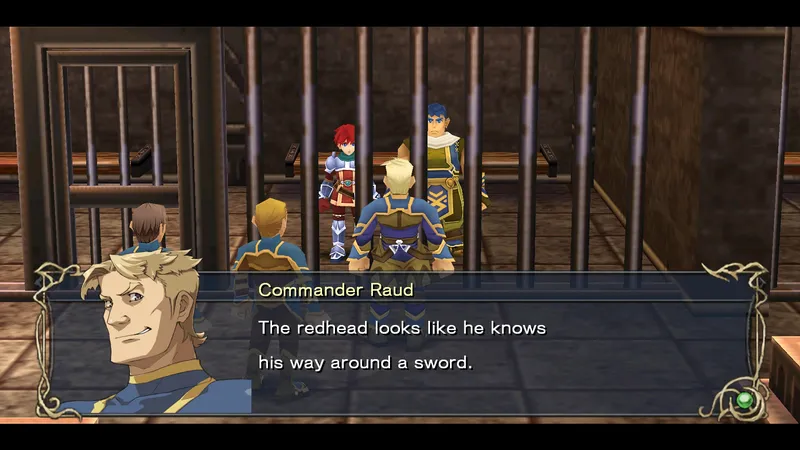
Every dungeon in Ys Seven follows the same template: enter area, fight through corridors of trash mobs, find a switch or key, open the door to the next corridor, repeat until boss. The visual themes change — forest, cave, ice temple, fire mountain — but the structure never does. There's no environmental puzzle that requires thinking. No shortcut that loops back to a previous area. No reason to explore off the main path because there's nothing off the main path except maybe a chest with a healing herb you don't need. Compare this to the Ys games that came after: Ys VIII's Castaway Village has exploration that feeds into base-building mechanics. Ys IX's Monstrum gifts create vertical exploration that changes how you approach each area. Seven's dungeons are the baseline that the series spent two sequels improving, and revisiting them after playing VIII or IX makes the flatness painfully obvious.
The Story: Adol Does Politics, Reluctantly
Adol Christin is a wandering adventurer who stumbles into political conflicts the way other people stumble into coffee shops — constantly, accidentally, and with the resigned acceptance that this is apparently his life now. Ys Seven sends him to the Five Great Dragon kingdom of Altago, where a king is sick, a political conspiracy is brewing, and ancient dragons need awakening. It's more narrative than the earlier Ys games attempted, which worked better when the series was "Adol arrives on island, fights monsters, leaves." The political intrigue in Seven never develops beyond "there's a bad guy behind the scenes" because the game rushes through exposition to get back to combat. The side characters are archetypes who exist to fill party slots: the loyal knight, the rebellious princess, the mysterious warrior with a dark past. None of them have the quiet personality that Ys VIII's Dana would bring to the series later.
The Verdict: Completely Terrible, Historically Important
Ys Seven is completely terrible and may very well be the poster child of what's wrong with so many PSP games — that was my conclusion in the original review, and I stand by it while acknowledging that the boss design philosophy Seven established would directly evolve into Ys VIII, one of the best action RPGs ever made. The dodge-roll pacing is broken. The story is generic Ys adventuring with political intrigue that never develops. The dungeons are corridors. But the boss fights are good, the party system blueprint would be perfected, and the game runs well on PSP hardware. Play it if you're a completionist working through the Ys series. Skip it if you just want the good Ys games — start with VIII.
The Ys series found its identity after Seven. Ys VIII: Lacrimosa of Dana took the party system and gave it purpose — character switching mattered because different weapon types opened different exploration paths. Ys IX added Monstrum gifts that transformed traversal. Seven was the awkward first draft where the ideas existed but the execution hadn't caught up. It's the Ys game you play to understand why VIII and IX are so good — by seeing what they improved on. Every frustrating dungeon, every spammed dodge roll, every generic NPC is a problem that Falcom spent two sequels solving. Seven is historically important. It's just not very fun to actually play.
If you're starting the Ys series in 2026, begin with VIII. It's better in every measurable way. Come back to Seven only if you want context for how far the series has traveled — and bring patience for the barrel-rolling.
All images are official screenshots from their respective publishers. Updated March 31, 2026.
1 Comment
I put about 10 hours into this game and it just wasn't doing it for me. I snagged it on PSN whenever there was a sale and I can't cry about spending a few bucks on it.
Comments are closed.