
I abandoned Vagrant Story three times before I finished it. The first time, my weapon hit for zero damage on the second boss and I turned it off in disgust. The second time, I made it further but drowned in menus — swapping blades, checking affinities, attaching gems, comparing numbers I didn't understand. The third time, something clicked. I read the in-game codex (the closest thing Vagrant Story offers to a tutorial), figured out why my weapons weren't working, and suddenly the game that had been punishing me for two years became the most rewarding RPG I'd ever played. Vagrant Story doesn't meet you halfway. It doesn't meet you at all. You come to it, on its terms, or you don't come at all. I almost didn't. I'm glad I did.
Ashley Riot and the Dead City of Leá Monde
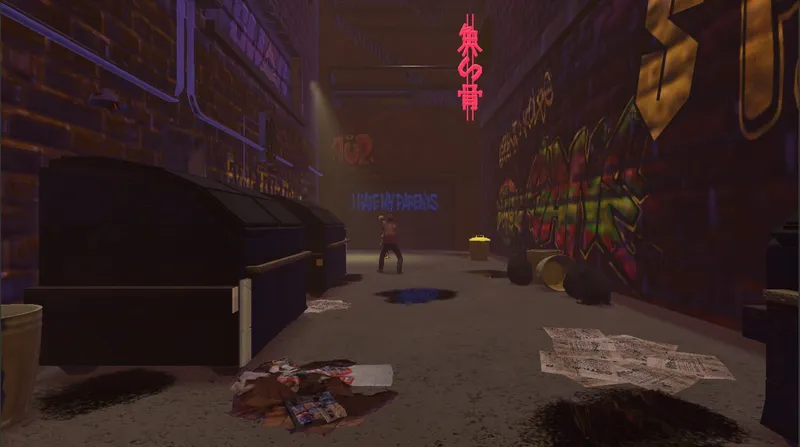
Ashley Riot is a Riskbreaker — an elite government agent sent into Leá Monde, a walled city abandoned after an earthquake and sealed off because of the dark magic festering inside it. His mission: retrieve Sydney Losstarot, a cult leader who's taken a duke hostage within the city's walls. The plot unfolds over a single night, told through cutscenes rendered with the PS1's hardware in ways that still impress — the poise Ashley strikes as he collapses a manor gate behind him, the burning mansion, the dragon that greets his arrival. Yasumi Matsuno wrote the script in an elegant middle-English register that never sounds overwrought, a quality almost no other JRPG has replicated.
Leá Monde itself is the game's greatest character. Catacombs beneath wine cellars beneath town streets beneath cathedrals — isometric rooms that connect through locked doors, magical sigils, and passageways that fold back on themselves. The city is a puzzle box that reveals its geography gradually, and emerging from hours of underground menus and combat into the sunlit, French-Romanesque streets of the town proper is one of the most memorable moments on the PS1. The architecture is both exotic and medieval, the color palette earthy and muted, and the non-voiced dialogue lets Matsuno's writing breathe without competing with voice direction.
The Weapon System: Why You're Hitting for Zero
Here's why people quit Vagrant Story. Every weapon has three layers of properties that determine its effectiveness: weapon type (edged, blunt, piercing), elemental affinity (fire, water, earth, air, light, dark), and enemy-class affinity (human, beast, undead, phantom, dragon, evil). Using a sword against beasts makes it better against beasts — and worse against everything else. The more you specialize a weapon, the more useless it becomes outside its niche. This means you need multiple weapons, all maintained, all upgraded, all rotated based on what you're fighting.
The game barely explains any of this. The in-game codex contains the information you need, but it reads like a textbook rather than a tutorial. Most players — including me, three times — reach a boss, hit for zero, and assume the game is broken. It's not broken. Your weapon is wrong. The fix is in the menus: check the enemy's type and affinity, swap to the right blade, apply the right buff, and suddenly you're hitting for meaningful damage. That first moment of understanding — when you diagnose why you're failing and fix it through equipment strategy rather than grinding — is one of the most satisfying feelings in any RPG. Vagrant Story's weapon system isn't user-hostile by accident. It's a puzzle game wearing a combat system's clothes.
Combat: Risk, Chains, and Body Part Targeting

Combat works like this: you enter an attack radius, pause the game, select a body part to target (head, body, arms, legs — each with different hit rates and status effects), and strike. If you nail the button press on the follow-up timing prompt, you chain into another hit, then another. Each successful chain increases your combo multiplier but also raises your Risk meter — a stat that reduces your accuracy and defense the higher it climbs. Chain too aggressively and you'll start whiffing attacks and taking critical damage. Let Risk settle and you lose your combo momentum.
The Risk system is what separates Vagrant Story from every other action RPG of its era. It's a built-in tension between greed and caution that makes every fight feel like a negotiation. Do you push for one more chain and risk becoming useless? Do you retreat, let Risk drop, and lose your offensive window? The system punishes button-mashing harder than any Souls game — pure aggression will get you killed not through damage but through accumulated inaccuracy. It demands that you fight deliberately, which sounds frustrating until you internalize the rhythm. Then it becomes deeply satisfying, a melee combat system where your brain matters more than your reflexes.
The Crafting Obsession: Hammers, Hilts, and Hundreds of Combinations
Vagrant Story's crafting is where the game either hooks you or loses you forever. Workshops scattered through Leá Monde let you disassemble weapons into blades and hilts, combine blades to create new weapons, attach gems for elemental bonuses, and repair durability. Hammers and heater shields, plated gauntlets and sallets, francisas and falchions, rapiers and staves — hundreds of combinations, each producing different stat distributions based on the materials and affinities of the components.
The joy is in the tinkering. You hit a golem that seems invincible. You retreat to a workshop. You disassemble two mediocre swords, combine their blades into something with better blunt affinity, attach a gem that boosts earth damage, and return to the golem. The damage estimate lights up green. You haven't even attacked yet and you've already won — the ensuing combo chains are just the victory lap. This loop — encounter a wall, retreat to menus, solve the puzzle, return triumphant — is Vagrant Story's core rhythm. It's not for everyone. It's deeply, stubbornly niche. But for the players it clicks with, nothing else in the genre replicates this specific satisfaction. Not then. Not now.
Leá Monde: The Best-Looking Game on the PlayStation?

I'll argue this. Vagrant Story pushed the PS1 harder than any game outside of maybe Chrono Cross. The character models — chiseled muscles, tightly worn tunics, metal bracers, short skirts over iron greaves — have a sculptural quality that makes them look like Renaissance statues brought to digital life. Ashley's introductory cutscene, where he collapses the manor gate and turns to face the camera with an expression somewhere between determination and exhaustion, is a piece of direction that rivals anything on the PS2. The environments — candlelit crypts, overgrown courtyards, a dragon's lair at the city's heart — use the PS1's limitations as an aesthetic choice rather than a constraint.
The sound design deserves equal credit. Vagrant Story is largely ambient — no bombastic orchestral score, just the echo of footsteps in stone corridors, the distant wail of ghouls, and Hitoshi Sakimoto's restrained compositions that surface only when the drama demands it. The silence makes Leá Monde feel isolated and dangerous in a way that a wall-to-wall soundtrack would undercut. When music does appear — during boss encounters or pivotal story moments — it hits harder because you've been walking through quiet for an hour. The case for a Vagrant Story remake starts and ends with this: imagine Leá Monde with modern rendering. The atmosphere would be unbearable in the best possible way.
The Block Puzzles (The One Bad Thing)
I have to mention them because they're genuinely terrible. Vagrant Story peppers its dungeons with block-pushing puzzles — move crates onto pressure plates, stack them to reach ledges, rearrange them in specific configurations to unlock doors. They're not clever. They're not thematic. They break the rhythm of combat-and-crafting exploration with busywork that feels imported from a different game. Some of them are legitimately difficult, not because they're well-designed but because the isometric camera makes spatial reasoning harder than it needs to be. If you play Vagrant Story and hit a block puzzle that makes you want to quit, look up the solution. The game around the puzzles is worth the indignity.
The Verdict: Give It as Many Chances as It Takes
Vagrant Story is the most rewarding RPG I've ever abandoned and returned to. The weapon system is a masterclass in mechanical depth — punishing if you ignore it, transcendent if you engage with it. The combat's Risk system creates tension that no other PS1 game achieves. The writing is Matsuno at his most confident, delivering a political thriller in middle-English through a cast that includes some of the most underrated characters in JRPG history. And Leá Monde is the single best dungeon in the genre — a dead city that feels alive with mystery, danger, and the accumulated weight of centuries of suffering.
It's not accessible. The learning curve is a wall, not a ramp. The block puzzles are awful. And the PS1 interface, even by 2000 standards, demands patience with its nested menus and tiny text. But if you push through — if you give it the second chance, or the third, or the fourth — Vagrant Story reveals itself as something extraordinary. A game so committed to its own vision that it would rather lose players than compromise. Twenty-six years later, nothing plays like it. Nothing sounds like it. Nothing else makes you feel like a genius for swapping a sword hilt in a menu screen. Play it on PS1, PSP, or PS3 Classics. And if you hit for zero — don't quit. Check your weapon. The answer is always in the menus. It's worth the work.
All images are official screenshots from Vagrant Story (Square). Originally published June 2016. Updated March 30, 2026.