
Most "best story JRPG" lists are useless. They throw Final Fantasy XVI next to Xenogears, call it curated, and move on. I've played over 250 JRPGs across 120+ articles here at Icicle Disaster since 2017, and the single biggest failure I see in this space is treating "has a story" as the same thing as "is story-focused." It isn't. This list fixes that.
What Makes a JRPG Actually Story-Focused (And Why Most Lists Get It Wrong)
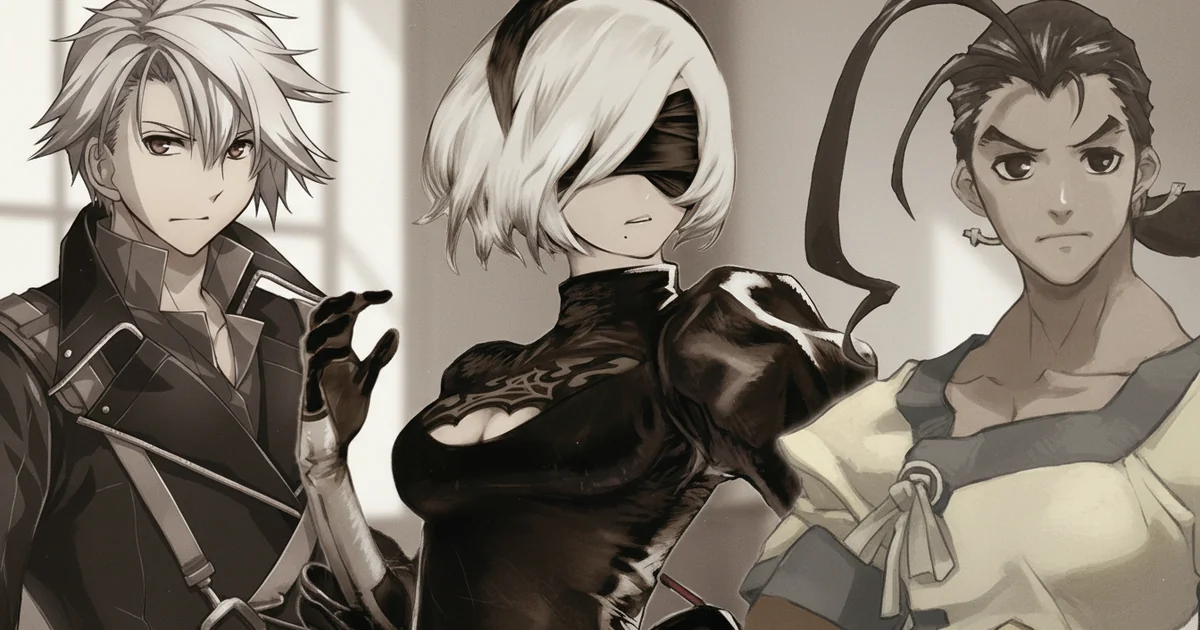
The filter I use is three things: pacing, character development, and narrative payoff. A story-focused JRPG keeps its plot moving without burying you in 40-hour combat tutorials. Its characters have actual arcs — they change, fail, and matter. And the ending earns its emotional weight rather than dumping a final-boss cutscene and calling it resolution.
What the filter actively rejects is conflating action-heavy games with narrative-driven ones. Monster Hunter-style combat loops, grinding-heavy progression, or mechanics-first design aren't disqualifiers on their own — but if the game's primary identity is mechanical, it belongs on a different list. Games like Final Fantasy XVI are excellent action games with decent stories. They are not story-focused JRPGs. That distinction matters, and almost no ranking list online makes it.
The games below passed all three tests. Some ask more of you mechanically than others — I've tiered them accordingly — but every one earns its place because the story is genuinely the point.
Tier 1: Play These for the Story, Full Stop
These are games where the narrative is so central that the gameplay is essentially the vehicle, not the destination.
NieR: Automata (PlatinumGames / Square Enix, 2017)
The only game I'll recommend where you are required to play it multiple times for the story to make sense — and it's worth every minute. Its routes don't repeat content lazily; they recontextualize everything you thought you understood. A masterclass in structure.
Xenogears (Square, 1998)
One of the most ambitious narrative experiments in the genre's history. It outran its own budget midway through development and still delivered something players are dissecting decades later. Disc 2's infamous "telling instead of showing" is a real flaw, but the story underneath it is extraordinary enough that the flaw shrinks in the rearview.
The Legend of Heroes: Trails in the Sky FC / SC / The 3rd (Nihon Falcom)
No JRPG has matched Trails in the Sky's commitment to narrative density. Every NPC has a name. Every named NPC has an opinion on current events. Every current event connects to a layered political story that pays off across hundreds of hours. FC is deliberately slow — it's a setup game — but SC delivers one of the best story conclusions in the genre.
Final Fantasy XIV (Shadowbringers / Endwalker) (Square Enix)
A Realm Reborn is slow and widely acknowledged as a rough start. Push through it. Shadowbringers and Endwalker are among the most emotionally resonant JRPG stories of their era, and that's not fan hyperbole — it's a consistent verdict from players who had no investment in the franchise going in. The MMO framework doesn't dilute the story; the slow build makes the payoff hit harder.
Tier 2: Strong Narratives with Some Combat Buy-In Required
These games have excellent stories, but they ask more of you mechanically. The combat systems have real depth, and you'll need to engage with them — not master them, but show up.
Persona 4 Golden (Atlus, 2012 / PC 2020)
The murder mystery framing is just the surface. What Persona 4 Golden actually does is build one of the most genuine ensemble casts in JRPG history, then puts each of them through something real. The Social Link system is optional engagement, but the characters are the story, so don't skip it.
Tales of Berseria (Bandai Namco, 2016)
The only Tales game I'd put on a story-first list without qualification. Its protagonist, Velvet, is built on anger and grief rather than hope and heroism — a structural choice that keeps the narrative honest in ways the genre usually avoids. Combat is active and mid-difficulty, but the story momentum carries you through it.
Final Fantasy VII Remake (Square Enix, 2020)
If you played the original, this earns its place by being genuinely daring with source material that didn't need touching. If you haven't, it's a cinematic action-JRPG with real character work and enough story ambition to place it here. The combat is demanding enough that it belongs in Tier 2, not Tier 1.
What These Games Do Differently: Pacing, Characters, and Payoff
Four things stand out across every game on this list.
First, they treat the player's time as a narrative resource, not dead space to fill. Trails in the Sky's slow open isn't padding — it's world-investment. NieR: Automata's routes aren't repetition — they're reframing. Pacing in these games is deliberate, which means when the story accelerates, you feel it.
Second, the supporting casts have arcs, not functions. Persona 4's cast doesn't exist to make the protagonist look good. Tales of Berseria's companions argue with Velvet and occasionally win. In weaker JRPGs, the party exists to wield weapons and deliver exposition. In these ones, they change.
Third, the endings earn their emotional weight by paying off setup you may have forgotten you cared about. Endwalker's finale lands the way it does partly because of choices made in A Realm Reborn. That's long-form writing — the kind that requires confidence the audience will stay.
Fourth, none of them mistake worldbuilding for story. Xenogears has an overwhelming amount of lore, but the story is always about specific characters in specific pain. The lore serves that. When worldbuilding becomes the point rather than the context, you get spectacle, not narrative.
Platform Availability in 2026: Where to Play Each One
| Game | Where to Play in 2026 |
|---|---|
| NieR: Automata | PC (Steam), PS4/PS5 (backward compatible) |
| Xenogears | PS1 original; available on PS3/PSP via PS Store legacy; no official modern port |
| Trails in the Sky FC / SC / The 3rd | PC (Steam / GOG) — the definitive way to play |
| Final Fantasy XIV | PC, PS5 — free trial covers A Realm Reborn and Heavensward in full |
| Persona 4 Golden | PC (Steam), PS Vita original; no PS5 native port as of 2026 |
| Tales of Berseria | PC (Steam), PS4 (backward compatible on PS5) |
| Final Fantasy VII Remake | PS5 (Intergrade version), PC (Epic Games Store / Steam) |
Xenogears is the awkward one. There is no remaster and no modern platform release — if you don't have PS1 hardware, emulation is the practical path in 2026. Every other game on this list is accessible on current hardware without significant friction.
For New Players: Which Story JRPG Should You Start With?
Start with Persona 4 Golden on PC.
I know the length looks intimidating — it runs 80–100 hours for a complete playthrough. Ignore that number. The game feeds you story at a steady pace from the first hour, the daily-life structure makes it easy to play in chunks, and the Tier 2 combat is approachable enough that you will not spend your first 10 hours reading menus. It also has the strongest ensemble cast on this list, which means you'll be invested before the mechanics have a chance to feel like work.
If Persona 4's social-sim structure sounds like too much structure — if you want something that just plays like a novel — try NieR: Automata instead. It's shorter, its action-RPG combat is low-friction, and it will ruin other games' endings for you. Both are correct starting points. Pick based on whether you want warmth and character or cold brilliance and existential weight.
The genre's reputation for 60-hour commitments and deep mechanics is real, but it's not an obstacle to the stories on this list — it's the cost of admission to some of the best writing in games. That trade is worth it. Get started with the full Persona series ranking or the our full JRPG story rankings if you want to know what's waiting further down the road.