
A good plot twist doesn't just surprise you — it changes the meaning of everything that came before. You replay conversations in your head. You reconsider decisions you thought were arbitrary. You realize the game was telling you the truth the entire time, and you weren't listening. JRPGs are uniquely positioned to deliver this experience because they give you forty, sixty, sometimes a hundred hours of context before pulling the rug. When a two-hour movie twists, you feel tricked. When a sixty-hour JRPG twists, you feel the ground move under you. These are eight games that moved the ground. Spoilers are unavoidable — but I'll frame each twist in terms of what it does, not the specific details of what happens.
For platform-specific JRPG guides, see PS5, Switch, Steam, Xbox, PS4, PS2, PS1, SNES, PSP, GBA, DS, 3DS, and Vita. The JRPG tier list ranks games cross-platform, and the best RPGs of all time covers the genre's peaks.
Final Fantasy VII (1997) — The Unreliable Hero
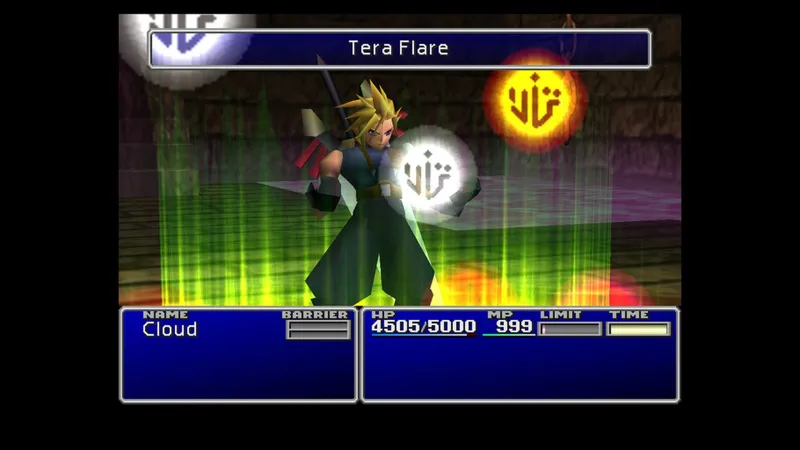
Everyone knows about the scene in the Forgotten City. It's been memed, parodied, and spoiled so thoroughly that most players going in today already know it happens. But FF7's real twist isn't a death — it's an identity. The game spends thirty hours building Cloud as a confident, elite soldier with a clear backstory. Then it dismantles him. The Lifestream sequence in Mideel doesn't just reveal that Cloud's memories are fabricated — it forces you to watch him rebuild his identity piece by piece, separating what actually happened from what he told himself to survive.
What makes this twist exceptional is that the clues are everywhere on replay. Cloud's headaches. Tifa's silences. The inconsistencies in his Nibelheim story that other characters notice but don't push. The game was telling you something was wrong from the first hour. You just didn't want to hear it because Cloud was cool, and cool characters don't lie about who they are. Except this one does — and when the truth surfaces, the entire game reconfigures around it. The best Final Fantasy twist isn't a surprise. It's a correction.
Chrono Trigger (1995) — The Future Was Always There
Chrono Trigger's first major twist is structural rather than narrative, and that's why it works. You're having a fun, colorful adventure through medieval kingdoms and prehistoric jungles — and then the game sends you to 2300 AD. The future is a frozen wasteland. Humanity is nearly extinct. An alien parasite called Lavos emerged from the planet's core in 1999 and ended civilization. The game shows you this, lets you walk through the ruins, and then sends you back to the past with one question: now what?
The genius is that the future doesn't change automatically. You have to earn it — every quest, every side mission, every choice across six time periods is about preventing a specific outcome that you've already seen. The Ocean Palace sequence in the Kingdom of Zeal adds a second twist: Lavos isn't just an apocalypse monster. It's been influencing human civilization for millions of years, drawn to concentrations of magical power. The kingdom that was most advanced, most magical, most proud of its achievements was also the most thoroughly puppeted. Chrono Trigger's twists work because they retroactively reframe exploration as intervention. You weren't sightseeing — you were triage.
Persona 4 Golden (2008 / 2012 / PC 2020) — The Fog Hides Everything
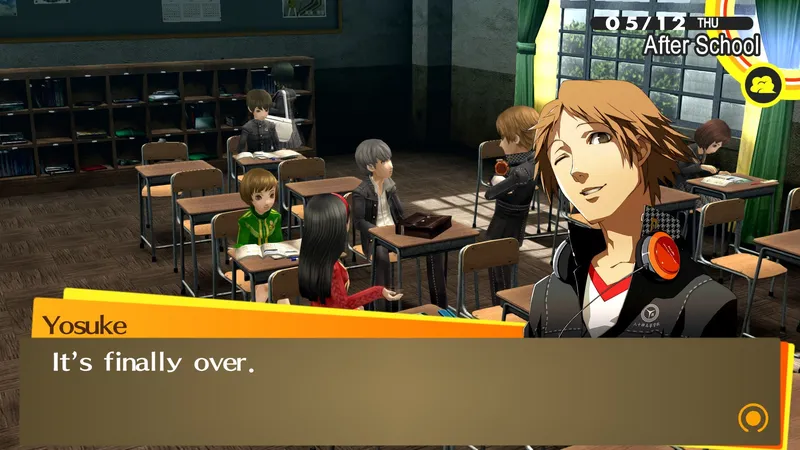
Persona 4 is a murder mystery that plays by murder mystery rules — the killer is someone you've met, the clues are available from early in the game, and the game gives you a chance to identify them yourself before the reveal. What makes P4's twist exceptional is that the killer's identity is simultaneously obvious and invisible. They're in your life. They're friendly. They seem helpful. And the game's social mechanics — where you spend time with people, build relationships, and trust the people around you — actively work against your suspicion. You don't want the killer to be who it is because you like them.
The true ending path (which requires specific choices that most players miss on their first run) adds another layer: the entire murder mystery is a manipulation orchestrated by a divine entity testing humanity's desire for truth versus its comfort in ignorance. The fog that covers Inaba isn't just weather — it's a metaphor for willing self-deception, and the game's true antagonist is betting that humans would rather live in comfortable lies than face uncomfortable reality. P4's twist works because it's a mystery game that makes you complicit in not solving it — and then punishes you for looking away.
Xenoblade Chronicles (2010 / DE 2020) — The God You Were Working For
Xenoblade Chronicles sets up a simple premise: you live on the body of a dead god (Bionis), you're at war with the machines living on the other dead god (Mechonis), and you have a magical sword called the Monado that can see the future. The first thirty hours feel like a straightforward revenge story — Shulk's colony is destroyed, and he sets out to eliminate the Mechon responsible. Then the game starts pulling at threads.
The Mechon aren't mindless machines. The war between Bionis and Mechonis isn't ancient history — it's ongoing, and you're a pawn in it. The Monado's visions aren't a gift — they're a leash. And the "dead" god you've been living on isn't dead at all. When Xenoblade's full picture assembles — who Zanza is, what the Monado actually does, why Shulk was chosen — the entire game inverts. You weren't fighting against fate. You were executing someone else's plan while believing it was your own. The twist doesn't just change the story — it changes what the combat system means mechanically.
Tales of the Abyss (2005) — You Are Not Who You Think You Are
Luke fon Fabre is a spoiled noble with amnesia who's been sheltered in his manor for seven years since being kidnapped. The Tales franchise has always used its protagonists' naivety as a storytelling tool, but Abyss takes it further: Luke's selfishness isn't just a character flaw — it's a design choice that makes the mid-game revelation hit like a truck. He's not the original Luke. He's a replica — a clone created by the game's antagonist, planted in the original's life, and raised as a weapon without knowing it.
What makes this twist work isn't the sci-fi premise — it's the emotional aftermath. Luke doesn't just learn the truth and move on. He falls apart. The party abandons him. He cuts his hair (a visual marker that signals "I'm trying to be someone different now") and spends the second half of the game trying to earn an identity that was never his to begin with. The twist reframes everything about Luke's behavior in Act 1: his arrogance, his entitlement, his inability to empathize — all of it was a personality built on a foundation of lies. Watching him build a real one from scratch is the franchise's best character arc.
Bravely Default (2012 / 2013 EN) — The Loop That Breaks the Screen
Bravely Default's twist is the most structurally daring in JRPG history. You spend the first half of the game awakening four crystals to save the world — standard JRPG fare. Then the game asks you to do it again. And again. Each loop changes slightly — dialogue shifts, NPCs behave differently, bosses are harder — but the structure repeats. Most players assumed this was padding. Some got angry. A few noticed that Airy, your fairy companion, was getting more desperate with each loop.
The twist: you were never saving the world. Each crystal awakening was opening a link between parallel universes, and Airy — your guide, your helper, the character who told you what to do for forty hours — was the villain's agent, manipulating you into tearing reality apart. The game's subtitle ("Where the Fairy Flies" — look at the logo, where the letters are cut off) actually told you the twist from the title screen. Bravely Default earns its repetition by making the repetition the point. The true ending requires you to reject the game's instructions — to actually disobey the UI prompts — and attack your own companion. No JRPG has ever weaponized player trust this effectively.
Star Ocean: Till the End of Time (2003) — Nothing Was Real

Star Ocean: Till the End of Time drops one of the most divisive twists in JRPG history around the thirty-hour mark: the entire Star Ocean universe — all three games, every character, every planet, every war — is a simulation. A video game within a video game. The "4D beings" who created the simulation are effectively the developers, and the characters you've been playing as are NPCs who've become self-aware. The Creator wants to delete the server. Your job is to fight for your right to exist as fictional beings.
Half the fanbase loved it — a meta-commentary on what fictional characters owe their creators, an existential crisis delivered through a JRPG combat system. The other half hated it — if nothing was real, then nothing in the previous games mattered, and the emotional stakes of the franchise evaporated retroactively. I'm in the "loved it" camp because the twist actually improves on replay: every item description, every NPC line about "programmed behavior," every reference to the Eternal Sphere takes on double meaning when you know what the Eternal Sphere is. It's not subtle. It's a sledgehammer. And the audacity of it — retroactively turning your entire franchise into a fiction-within-a-fiction — is something no other series has attempted.
Live A Live (1994 / HD-2D 2022) — The Hero Becomes the Villain
Live A Live's structure — seven short chapters set in different time periods, each with their own protagonist and gameplay style — feels like an anthology game until the Medieval chapter. Oersted is a knight who wins a tournament, saves a princess, and is positioned as the classic JRPG hero in every way the genre knows how. Then everyone betrays him. His best friend, his kingdom, the princess he saved — one by one, everything is taken from him through a conspiracy of jealousy and cowardice. Oersted doesn't overcome it. He breaks. He becomes Odio — the final boss of every other chapter.
The twist that the hero of one story is the villain of all the others isn't just clever — it's an argument about what creates evil. Odio isn't born a monster. He's made one by a world that punished him for doing the right thing. The final chapter brings all seven protagonists together to fight him, and the game offers two endings: one where you defeat Odio through combat, and one where you reach him through empathy. The HD-2D remake (2022) gave Live A Live its deserved second life, and the Medieval chapter's descent from heroism to hatred is one of the most brilliantly constructed villain origin stories in the genre.
What Makes a JRPG Twist Land
Movie twists rely on information withheld. JRPG twists rely on information reinterpreted. The best twists on this list don't hide the truth — they show it to you and trust that you won't see it because you're too busy playing the game, leveling your party, and trusting the characters who are lying to your face. Cloud's headaches. Airy's logo. P4's fog. The clues were there. You just had to stop and look. That's the genre's unique advantage: sixty hours of distraction is the best misdirection any medium can offer. And when the curtain pulls back, the length isn't padding — it's setup. Every hour you invested makes the twist hit harder. That's not a trick. That's craft.
All images are official screenshots from their respective publishers and developers. Published March 28, 2026.
The battle systems ranking analyzes combat design, the soundtracks ranking covers the music, and the JRPG meaning guide explains the genre's roots. For shorter RPGs under 20 hours, that guide has options. The 2026 recommendations page has fresh picks.