
The argument never dies. Every time someone asks for JRPG recommendations, the thread splits into two camps: the turn-based loyalists who insist that menus and command selection are the soul of the genre, and the action converts who think real-time combat is the future and everything else is a museum piece. I've spent hundreds of hours on both sides. I love Persona 4's press-turn exploitation as much as I love NieR: Automata's platinum-grade swordplay. They're not competing. They're doing different things, and which one is "right for you" depends on what you actually want from combat in an RPG. Let me break it down.
What Turn-Based Combat Actually Does
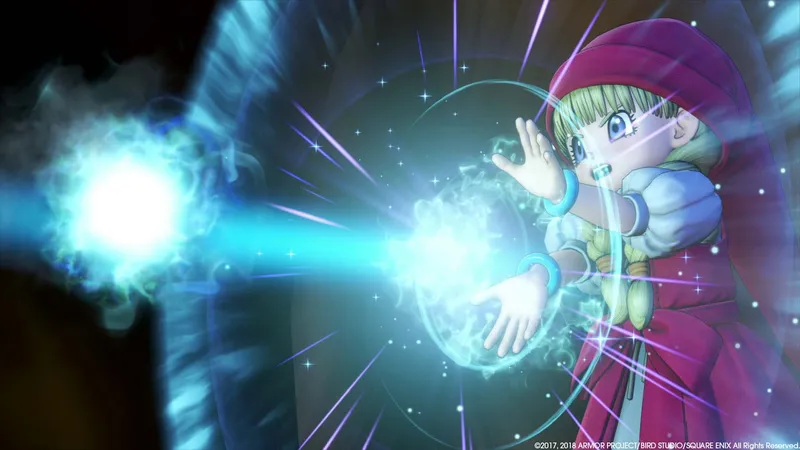
Turn-based combat is chess with anime characters. You see the board. You know the pieces. Nobody is rushing you — the game waits for your input, and every decision you make is deliberate. Dragon Quest XI doesn't care how fast your reflexes are. It cares whether you brought the right party composition, whether you remembered that this boss absorbs ice damage, and whether you kept enough MP in reserve for healing after his third-phase AoE attack.
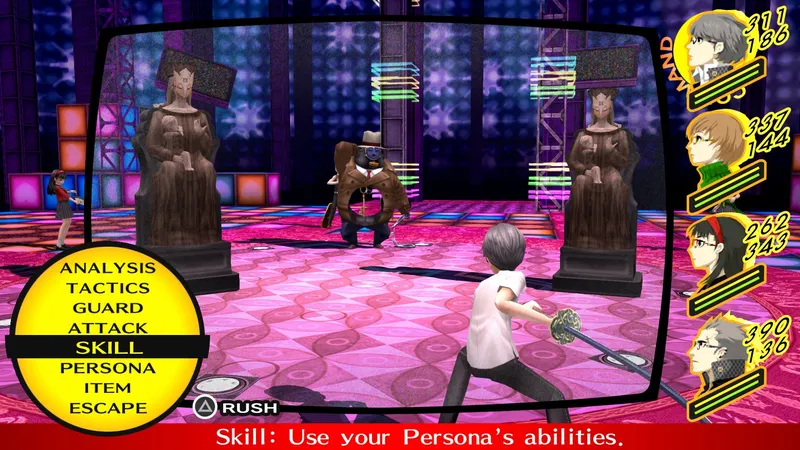
The best turn-based systems add wrinkles that make the deliberation more interesting. Persona 4's weakness exploitation system gives you extra turns for hitting the right element — which means a perfectly played fight can end in one round, but a sloppy one snowballs into disaster. SMT V: Vengeance uses press-turns where missing an attack gives the enemy bonus actions, punishing you for gambling on low-accuracy moves. Octopath Traveler's Boost system lets you bank action points across turns and spend them all at once for massive burst damage. The thinking is the gameplay. If your brain lights up when you solve a puzzle, turn-based combat is your format.
What Action Combat Actually Does
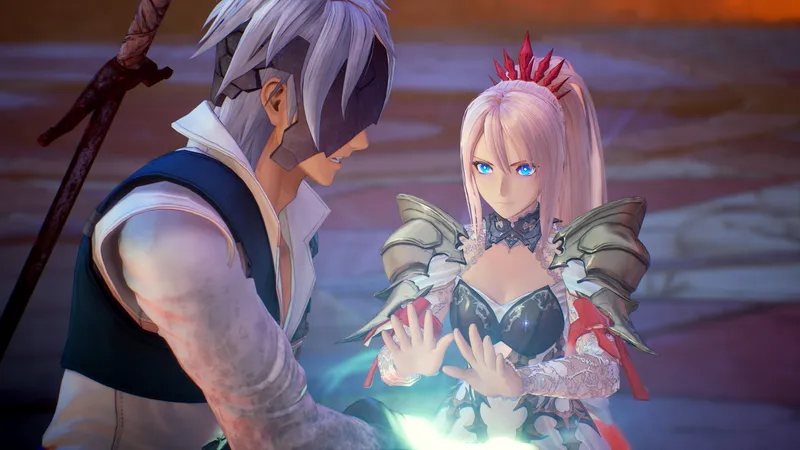
Action combat is performance. Your hands are the gameplay. Tales of Arise asks you to dodge-cancel into aerial combos, chain Artes with proper timing, and call in party members for Boost Strikes that break enemy armor at the right moment. It's closer to Devil May Cry than to chess — and the satisfaction comes from execution, not just decision-making. You knew what to do AND you pulled it off. That's a different dopamine hit entirely.
NieR: Automata takes it further: the combat is a full-blown character action game designed by Platinum Games, wrapped around a JRPG story structure. You dodge at the last frame for slow-motion counters. You switch between melee combos and ranged pod fire. You remap your entire chip set to customize how 2B fights. The action JRPG at its peak feels like a fighting game where you also happen to level up — and the physical skill ceiling means that two players can fight the same boss and have completely different experiences based on their execution quality.
The Real Tradeoffs (Not What You'd Expect)
The obvious tradeoff — "turn-based is strategic, action is mindless" — is wrong in both directions. Good action JRPGs have deep party management behind the combat (Star Ocean, Kingdom Hearts on Critical Mode, Ys VIII). Good turn-based games can feel intense and high-pressure (SMT on hard mode, where one wrong move kills your entire party). The real tradeoffs are less obvious.
Turn-based combat favors party depth. When the game pauses for your input, you can manage four to six characters with different ability sets, buff/debuff stacks, elemental matchups, and positioning. The mental overhead is high but the physical demand is zero. This is why the most tactically complex JRPGs — Persona, SMT, Fire Emblem, Octopath — are all turn-based. The pause gives you room to think about six things at once.
Action combat favors individual mastery. When combat is real-time, managing six characters is overwhelming — so action JRPGs typically give you direct control over one character while AI handles the rest. You go deeper on one character's moveset instead of wider across a whole party. This is why the most mechanically satisfying JRPGs — NieR, Tales, Ys, Star Ocean — are all action. The flow state of real-time execution is something menus can't replicate.
The Hybrids (Best of Both Worlds?)
The genre has been blending these systems for years, and some of the best JRPGs live in the space between. Final Fantasy VII Remake is the most successful hybrid — real-time movement and attacking, but ATB bars that fill and let you pause time to select spells, abilities, and items from a menu. It feels like action but thinks like turn-based. Xenoblade Chronicles uses real-time positioning with auto-attacks and cooldown-based abilities — it's an MMO combat system in a single-player JRPG body.
The ATB (Active Time Battle) system that classic Final Fantasy used (IV through IX) was an early hybrid — menus, but with a timer that punished indecision. Grandia's system visualized turn order on a timeline and let you cancel enemy attacks with properly timed strikes. Chrono Trigger hid its turn-based bones under seamless transitions that made combat feel like part of exploration rather than a separate mode. The spectrum between "pure turn-based" and "pure action" has dozens of stops, and you might find your sweet spot somewhere in the middle.
Pick Your Style
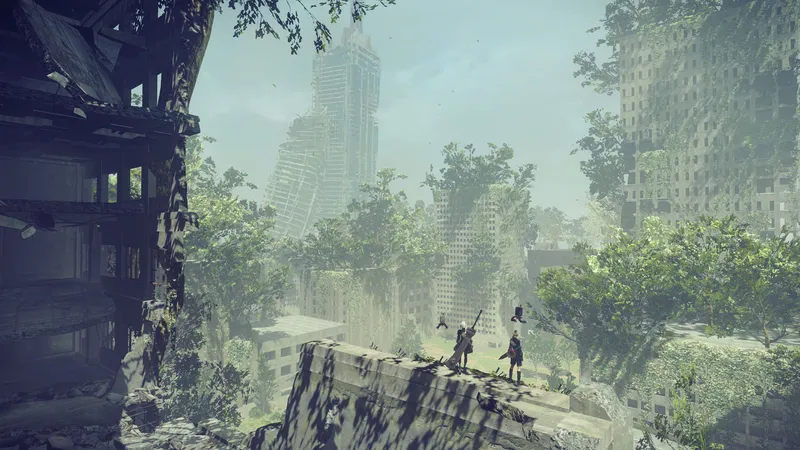
Here's the honest cheat sheet, no hedging.
You want turn-based if: you like puzzles more than reflexes. You enjoy managing a full party. You want time to think. You play RPGs for strategic depth. You don't care about frame-perfect timing. You multitask well. You'd rather optimize a build than practice a combo. Start with: Dragon Quest XI S (pure comfort) or Persona 5 Royal (style + strategy).
You want action if: you like feeling the combat in your hands. You enjoy mastery curves. You want the satisfaction of executing something difficult. You play games for flow state. You'd rather practice a combo than optimize a spreadsheet. You want every fight to feel physically different. Start with: Tales of Arise (accessible) or NieR: Automata (masterclass).
You want both if: you're indecisive, curious, or greedy. Start with: Final Fantasy VII Remake (the best hybrid) or Xenoblade Chronicles (MMO-style middle ground).
There is no wrong answer. The genre has room for everyone — that's the whole point. And if you finish one style and wonder what the other feels like, the beginner's guide has entry points for both. The only wrong move is not playing at all.
All images are official screenshots from their respective publishers and developers. Published March 28, 2026.