
On March 19, 2026, PC, PlayStation 5, and Xbox Series S/X users will receive their version of Crimson Desert, which Pearl Abyss regards as their most ambitious single-player project to date. The four years of development that Crimson Desert has undergone came from a Black Desert Online spinoff and has evolved into a unique experience for players in 2026. The MMORPG veterans building the desert experience from Black Desert Online's 12-year evolving live service ecosystem, shifted to embrace an entirely new design philosophy for Crimson Desert. This new iteration of Desert experience is more complete and sophisticated in terms of character development, narrative pacing, and combat, all wrapped within a self-contained single-player experience which is a welcome departure from the live service grind that had characterized the developers prior flagship game. The first-time single-player experience is likely going to be perceived as both a confident debut and transitional release as the developers instincts for MMO's collide with action-RPGs which will be expected from a mainstream audience with JRPGs and Western open worlds.
This review examines all aspects of Crimson Desert, so JRPG players can determine if the genre-hybrid game is worthy of a cross-platform purchase. This score is a result of an editorial review, weighing the genuine open-world achievement against a weak narrative, design ambitions that sometimes overshoot, and the execution of these ideas. In this case, we review the unique integration of borrowed mechanics; character-switching combat with soul-like boss designs; playable character roster; visuals rivaling Final Fantasy VII Rebirth; jet packs and dragon riding; story weaknesses revolving around Pywell and the Abyss; how deep is character customization; technical performance across platforms; and finally, where does Crimson Desert fall within the 2026 action-RPG landscape currently being dominated by Final Fantasy XVI and Final Fantasy VII Rebirth.
The Frankenstein Open World and Borrowed Mechanics That Cohere
Crimson Desert is inspired by the features of open world gameplay mechanics in Red Dead Redemption 2, The Legend of Zelda: Breath of the Wild, and Final Fantasy VII Rebirth. The game takes a “Frankenstein” approach to create its own identity from the many styles of gameplay it inherits from other developers. The way players control and animate their horse in the game is very similar to how they did this in Red Dead Redemption 2. The freedom of exploration in Breath of the Wild is very similar to the way Crimson Desert allows players to traverse the world of the game. In addition to this, the game has similar graphical beauty and overall quality to Final Fantasy VII Rebirth. With so many borrowed ideas from so many other games, it would suffocate the originality within the game; however, Pearl Abyss has put together a solid game.
Crimson Desert has a 150km expanse of land to explore which includes biomes like deserts, forests, coasts, and the story driven imperial city of Vellisburg. There are many activities to do, more than the average game, but unlike the average game, there are no boundaries to exploration making the game more enjoyable when approached with curiosity instead of completionism. For the best understanding of the evolution of the action-RPG combat and exploration design in the 2020's, best RPGs of all time provides a ranking and context for Crimson Desert and the other influences Pearl Abyss has pulled from.
Frankenstein construction serves more as a compliment because every integration works in moment-to-moment gameplay, even if some systems feel a little more derivative. Players coming from Final Fantasy VII Rebirth will find the same combat depth and pacing, and those coming from Breath of the Wild will have the same philosophy of freedom in exploration. The synthesis is Pearl Abyss's most successful design choice because, rather than being a single-genre release that leaves out broader appeals, it positions Crimson Desert as an accessible entry point for multiple audience segments.
Character-Switching Combat and Souls-Like Boss Design
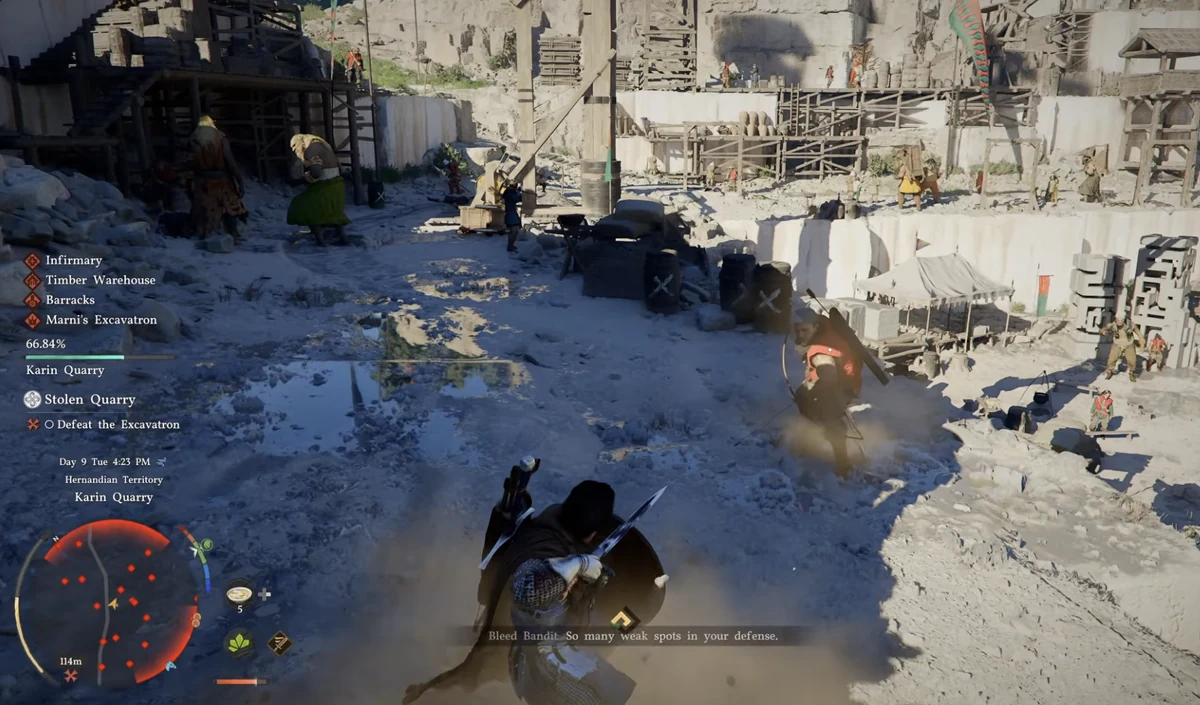
In Crimson Desert, players can switch characters during fights. Each character has different fighting styles and specializes in different game mechanics. For example, Kliff uses heavy two-handed weapons and encourages players to be more aggressive and offensive with his combo-damage system while using two-handed weapons. On the other hand, Damiane uses shields to fight and encourages players to be more defensive while also having to be strategic with counter-attacks. The difference in characters creates a tactical decision-making layer where players can approach different fights using the protagonist that best matches the characters and mechanics. This system connects to the older JRPG games where fighting as different characters in a party was a necessary part of the game and it takes inspiration from the modernized versions of Final Fantasy VII Rebirth and Tales of Arise.
Crimson Desert’s boss fights have been designed using inspiration from the designers of Souls-like games. Recognizing patterns in a boss’s mechanics, defensive positioning, and using strategy are the key components of winning rather than just focusing on stat maximizing your character’s gear. Learning the attack patterns and identifying the openings are crucial when facing the game’s bosses and this takes a lot of tactical patience. Unlike most MMOs in which players just gear up to beat bosses, those used to the Dark Souls series or Team Ninja games will appreciate this game’s clear departure from Pearl Abyss’s MMO design philosophy. Crimson Desert’s design philosophy is especially made for players who have experience in the JRPG genre and FrromSoftware and Team Ninja games.
To give a wider context to the genre, we can understand how contemporary systems in action-RPG games today modify systems used in turn-based JRPGs, then hybridize them with real-time systems. The article best JRPG battle systems has ranked the foundational systems which include both the turn-based tradition and the contemporary action hybrid systems which Crimson Desert is involved in. The combat and depth engage players with the campaign as long as they are willing to grapple with a soul-like design philosophy of bosses; those engaged in a story more than the aforementioned commit to the difficulty of having to memorize a pattern to beat the bosses will find accessible casual difficulty options.
Kliff, Damiane, and the Playable Character Roster
The list of characters you can play as goes beyond Kliff and Damiane and features new protagonists that can be unlocked at story-gated intervals throughout the campaign. Each new character brings in combat abilities and perspectives of the story that the exponentially expanding playable character roster utilizes to improve story pacing. The number of total characters is similar to Final Fantasy VI, but it is not used as often as that game, as some characters are more fun, or in other words mechanically rewarding, as some players have dedicated themselves to the game’s customization features, while others have simply focused on one fighting style throughout the campaign and controlled one character as these characters cover the entirety of the story.
The gameplay style overlaps with older JRPGs where the different characters each have their own role within the combat system. To understand how these JRPGs have influenced Crimson Desert, you can reference the best JRPGs with class systems to show how class systems have evolved beyond fixed roles to become more flexible Colonial America style. This style has also influenced older MMORPGs, as they were built on the premise of different roles within groups to complete objectives based on the chosen character class.
Several reviewers criticized the playable character roster and the unbalanced mechanical reasoning that encourages players to use characters other than Kliff and Damiane. The protagonists who unlock at story midpoint and beyond offer combat options that the early-game characters could already manage through skill tree investments, and the roster expansion sometimes feels like it is driven by narrative concerns rather than gameplay ones. This design weakness is most pronounced in the last third of the campaign where players who optimized one character's build are left with little reason to invest in the new characters, and while this critique may be valid, it does not seem to affect players who are engaging with Crimson Desert in true action-RPG fashion by single-character focus.
Open-World Visual Achievement Rival to Final Fantasy VII Rebirth
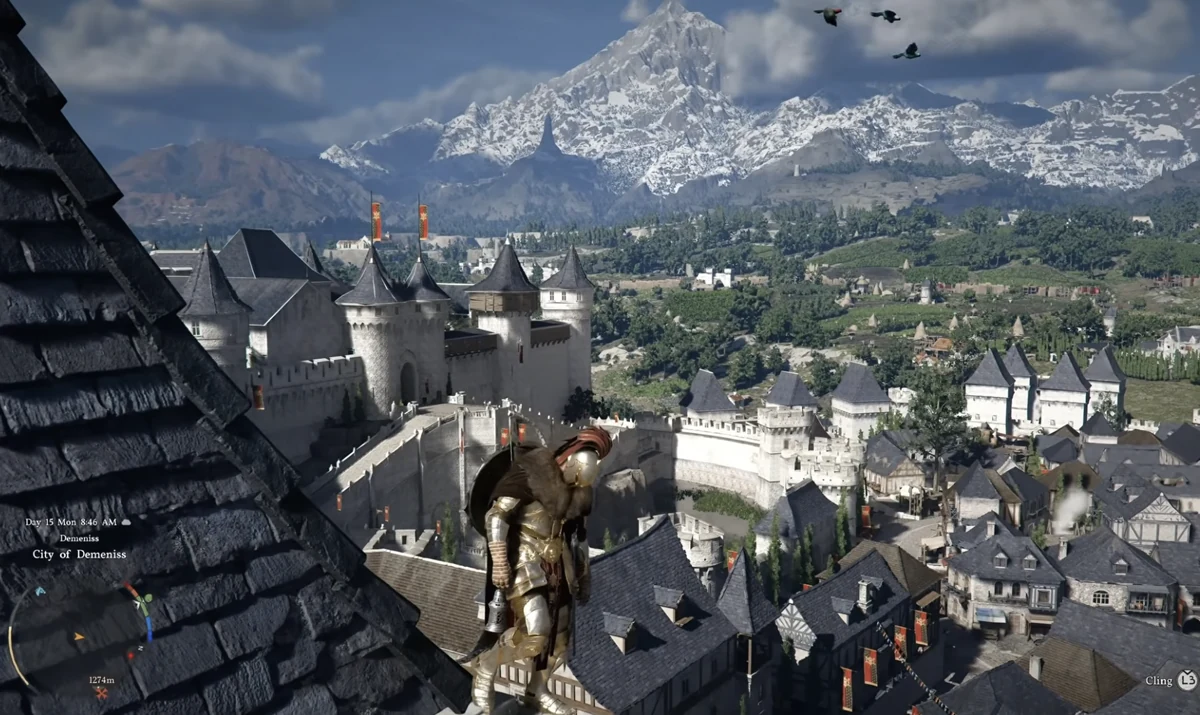
About Pearl Abyss's Crimson Desert and Square Enix's Final Fantasy VII Rebirth, it is outstanding both have produced a game engine that apparently provides, within a few specifications, a state-of-the-art open world experience for video games; it is, however, worthy to note that the visual production value is most comparable to that of the aforementioned company. Pearl Abyss's proprietary engine is capable of rendering the Pywell environments with a 'detail density' (as the tech industry calls it) that is, for some biomes, nearly photorealistic, and the lighting engine for the canyon desert biomes has the 'subtle seamless transitions' that Final Fantasy VII Rebirth is recognized for having within its Grasslands an. For franchise-wide context, every Final Fantasy ranked covers the mainline visual evolutiond Junon open world canyon regions. For visual quality (the engine's target, so if the goal is quality over performance the trade is), IN PC performance mode and PS5 performance mode version of the game, it is noted that there are 60 fps.
Square Enix, as noted earlier, in producing that video game opted for a different design philosophy than did Pearl Abyss. In this comparison of Final Fantasy VII Rebirth and Crimson Desert, I would, however, still assert that the visually realistic AAA-Korean style, as per the industry's known stylization, is, in a balanced comparison, a peer to the 'Final Fantasy' art style. Ultimately, in this comparison I think it favors the eye of the player because there is little to no measurable criteria to define a superior visually realistic AAA-Korean style," "Final Fantasy" style. Out of all of the Online role playing games, I would say that within the modern standards of video game engine production current state that Final Fantasy VII Rebirth is the most advanced, and therefore for my understanding of the visual production values of the prior ranked Final Fantasys.
More than typical AAA polish, they have opted to enhance their visual achievements further, which is a boon to open world exploration. Instead of a backdrop to a scripted narrative they can interact with the world as primary content. The visual detail will reward them while riding through the Pywell landscape, and will ensure they are able to take screenshots without having to frame the photos in a photo mode. It is even available for those that PlayStation and Xbox. It is recommended for those for whom visual production is a priority in their action-RPG experience.
Optional Activities and Pearl Abyss MMO Heritage
Pearl Abyss's MMO legacy runs through Pywell's optional activities, from more traditional open-world fare like hunting beasts, resource gathering, and regional NPC side quests, to the more unusual. Many open-world games don't grant vertical exploration, but the jet pack equipment lets you do just that. A flight system for late-game content allows players to traverse the map riding an unlocked dragon that serves an endgame narrative role. The mech suit equipment, available in specific story missions, unlocks after mission completion, adding combat variety that contrasts the character-based combat norm throughout the campaign.
Quantity over depth is the lure in these activities that draw from the Black Desert Online design philosophy. Players who enjoy the MMO’s breadth appreciate the game, even with the lack of polish that more focused single-player games provide. This activity layer suffers the most from the “too much crammed inside” critique. Some systems feel underdeveloped while the campaign focuses extensively on others.
Diversity in activities, familiar to MMO players, may feel overwhelming at first to fans of western open-world games. It may reward engagement once the pattern becomes clear. The hybrid design strategy successfully targets both audiences, even when individual activities are uneven in execution quality.
The Story Weakness — Abyss, Pywell, and Narrative Confusion
In the entire production, the most considerable flaw regarding the narrative structure is the lack of story cohesion. The first few hours of gameplay begin with a mercenary-style revenge story, hinting at grounded political intrigue; however, the story shifts to include high fantasy elements with the Abyss and confusing time travel that plagues the entire campaign. The mercenary framework is weakened when the motivations of the character(s) are/are not clearly defined. This lack of emotional engagement from the campaign is further amplified by the fact that players are unaware of the total time required to beat said campaign. Players who appreciate story coherence above all else are likely to review Crimson Desert negatively regardless of the positive gameplay experience.
Among the members of the playable roster, the character development is very inconsistent as many of the support cast are given little development when compared to the importance of their gameplay. Kliff, the protagonist, is about as charming as a cardboard cutout with little beyond his bootstrap revenge fantasy to justify the archetypical mercenary model. Like Damiane, other characters suffer from remarkably limited development. When compared to the solid character building in Tales of Arise's bonding system and Final Fantasy VII Rebirth, it's clear that modern JRPG audiences have come to expect a lot from a well-developed narrative. Unfortunately, Crimson Desert consistently fails to deliver on this promise across all of its characters.
To understand what Crimson Desert lacks in character development, we can analyze the deeper narrative development of JRPGs as a genre. jrpgs with the best stories covers all the foundational narratives and their latest modern releases are setting the current bar. These comparisons clearly show the other design dimensions Crimson Desert prioritized instead of narrative depth, and the editorial criticisms reflect JRPG conventions JPRG fans bring to action RPGs in stories instead of the storytelling being an objective flaw.
Character Customization and Build Diversity
In each game, players can unlock new skills unique to each character, and for franchise-wide context on how JRPG character progression intersects with class-based systems, best JRPGs with job class systems covers the parallel tradition. Skills can positively influence players combat skills and skills needed during exploration. Each character has a skill tree with around 45 to 60 skills. Skills are unlocked by gaining levels and spending skill points. Structures are made to encourage big build decisions, since people are unable to unlock every skill in one playthrough. Skill point system rewards players who truly want to invest in the build identity system. This system distinguishes players Baldur's Gate 3 characters by their builds. Players who engage with skill trees deeply are more rewarded than those who think skill points are given after leveling.
Along with the skill system, there is an equipment system. The equipment system consists of 3 parts. Each player can choose stat modifying and combat altering weapons, armor, and accessories. There are new campaign-locked weapons for players to discover, and players can improve their weapons through a crafting system once they obtain the right materials. This experience was comparable to the degree of depth in Black Desert Online, but the game is single-player focused, so the equipment systems are scaled for less experienced players.
The systems in place allow players to rearrange skill points freely and also without the cost of resources. Those 2 things encourage players to experiment with their builds. This design choice allows players who find themselves with undesirable builds to change at any point in the campaign easily. This leads to good tactical engagement when fighting new bosses, since they may require adjustments to player builds.
Technical Performance and Patch Trajectory
Crimson Desert runs well on every console with the Steam Crimson Desert version supporting full PC scaling. Every PlayStation 5 player can expect 60 fps during campaign gameplay with their console's performance mode, and quality mode has 30 fps for all Xbox Series X players. The Xbox Series S is less stable with lower frame rates and quality mode changes, and the PC version is the same. Steam Deck OLED users can even experience the campaign via handheld engagement with adjusted hardware scaling for their consoles. Every PC user has access to the entire range of resolutions and frame rates.
Pearl Abyss has improved the game with new patches each month since its launch. The post-launch patching cycle is similar to maintenance of an MMO. Instead of abandoning the game to "release it as-is," Pearl Abyss has shown that they will actively support the game by patching balance and performance to improve the game. Anyone who purchased the game since its launch has access to a better version of the game compared to release-day players.
Crimson Desert offers the same graphical quality and performance across platforms. It allows players to choose their preferred console without a dramatic effect on the gameplay and overcoming bosses before the end of the game will provide a better experience on a console or desktop. The portability of the Steam Deck OLED is limited to low to moderate intensity content and while it may stretch the game's audience, it does so beyond the biases of AAA console exclusives.
Where Crimson Desert Fits in 2026 Action-RPG Landscape
Crimson Desert's primary competitors in the 2026 action-RPG market include the forthcoming 2024 title Black Myth Wukong, the ongoing buzz surrounding the Final Fantasy VII Remake Trilogy, Final Fantasy XVI's continued focus post-launch, and the audience interest in Tales of Arise. Positioned within this is the Korean development studio that offers a distinct perspective from the long-standing Japanese AAA traditions that have dominated the field. This editorial perspective is significant, as Western reviewers assess the game through the lens of Western open-world expectations, while the Asian audience views it through the lens of MMO heritage. The hybrid nature of Crimson Desert facilitates a discussion that no singular tradition could achieve.
For this reason, Crimson Desert must compete with closed world action-RPGs whose price points include more polished narratives and greater mechanical depth focus. In this case, the player's preferences determine the release's competitive position. Tales of Arise and Final Fantasy XVI are more rewarding for hardcore JRPG fans who prefer narrative driven combat, while Crimson Desert is competitive against the genre's top titles for fans of open world exploration who desire high levels of environmental detail. This explains the polarizing reviews as a result of differing primary review criteria.
To better understand Square Enix’s contributions to the 2026 action-RPG conversation, review best Square Enix JRPGs. This will show you the baseline that Crimson Desert is measured against. For a more extensive look ahead, check JRPGs of 2027. This looks at the announced releases that will define the transition for JRPGs from 2026 to 2027. To see the pixel art tradition of game design that contrasts with the photorealism of Crimson Desert, review best pixel art JRPGs. This explores a design philosophy that focuses on visual consistency through an intentional aesthetic commitment rather than the relentless pursuit of the latest rendering benchmarks. The previous complementary coverage at Starbites review is representative of the indie JRPG counterpart to AAA Crimson Desert that the editorial /reviews/ format applies across game scale variations. The piece at Final Fantasy 1987 review is representative of the chronological franchise foundation that Final Fantasy II review extends, and history of JRPGs traces the broader genre evolution that contextualizes both Korean and Japanese contributions, and most anticipated JRPGs of 2027 surveys the upcoming calendar to the modern action-RPG conversation. The original RPGSite Crimson Desert coverage that informed parts of our analysis is available at the source review for cross-reference context.
Final Verdict — Where Crimson Desert Earns Its Place
Crimson Desert warrants a 7/10 rating, and will most likely appeal to action RPG enthusiasts who enjoy open-world exploration, appreciate high-caliber visuals, and prefer switching their playstyle using different characters in combat while ignoring narrative coherence and focused genre gameplay. Players who enjoy gameplay freedom, and high quality visuals will appreciate what The Pearl Abyss has created and will justify the commitment to a multi-platform purchase. Narrative weaknesses surrounding Pywell and the Abyss means that Crimson Desert fails to compete with Final Fantasy XVI or Final Fantasy VII Rebirth for JRPG players who value narrative most, as well as players who focus their reviews on character arcs and storytelling in which case the trade-offs should be considered.
Score: 7/10. The visual achievement, combat depth, and exploration freedom outweigh the narrative weaknesses and the activity-layer unevenness. Players who value Western open-world action RPG style already set by Red Dead Redemption 2 and Breath of the Wild will appreciate what they offer. With the multiple platform release players can choose which platform, including the Steam Deck OLED for true portability during content of moderate combat. 2027 will likely have the most anticipated JRPG releases that will continue to evolve the genre which makes Crimson Desert a notable 2026 release that will push the visual benchmark forward even when the other aspects are uneven.