
In 2026, Starbites will be one of the indie JRPGs that will surprise many with its release, and will be released in the West on May 21 after releasing in Japan on October 2025. Starbites is developed by IKINA GAMES, and NIS America and Happinet are handling the publishing of the title. It will also be releasing on all major platforms such as the latest versions of PlayStation 5, Nintendo Switch, Nintendo Switch 2, as well as Xbox Series S/X and PC. Starbites is an indie title with a multi-platform publishing deal, which gives it an interesting spot on the calendar, especially with other major titles like Final Fantasy and Persona coming up in 2026. Starbites has the potential to be a well optimized title and guarantee players to invest a significant amount of time in turn-based combat and customization.
This will be an evaluation of Starbites by an editor who built a score around combat depth, customization options, and the other end of the spectrum technical intricacies and pacing. The Starbites review will cover all objectives such as the plot, the Driver's High combat system, the weak mechanics which people have also drawn parallels to Octopath Traveler, character progression, skill trees, free respecs, mecha equipment customization, visual design, the 2D and 3D model art, technical performance across all platforms, The Ramsey (bonus content), and finally give all of the JRPG Starbites reviews an overarching ranking based on previous games.
The Story of Lukida on Desert Planet Bitter
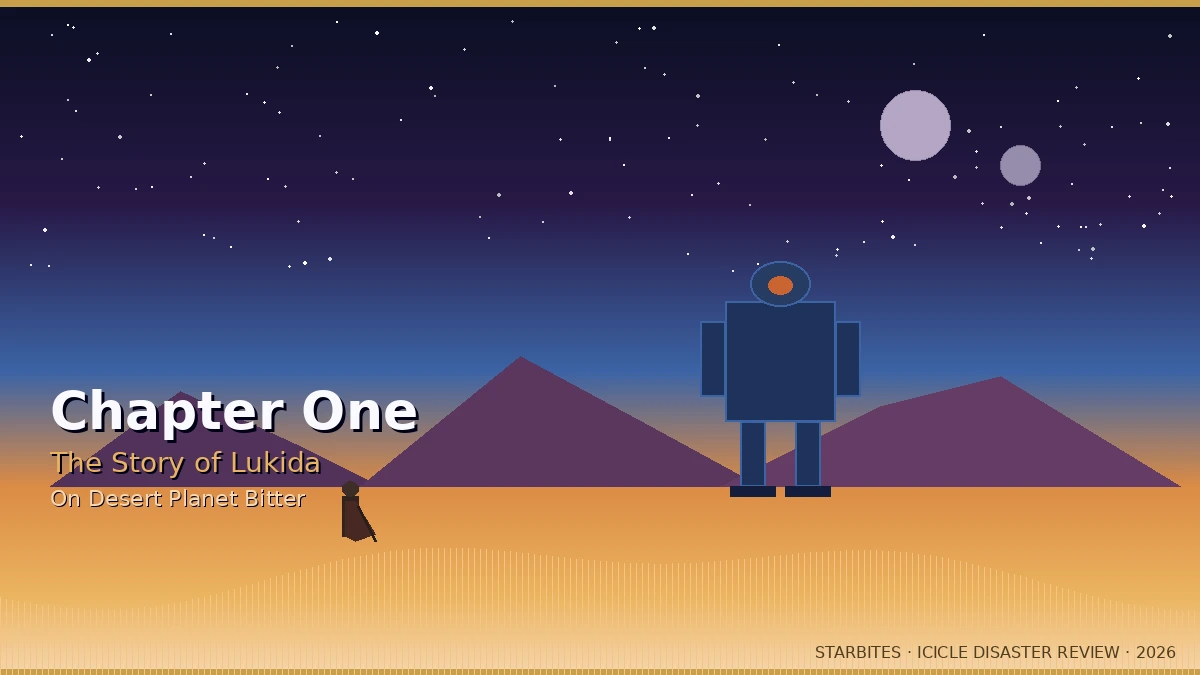
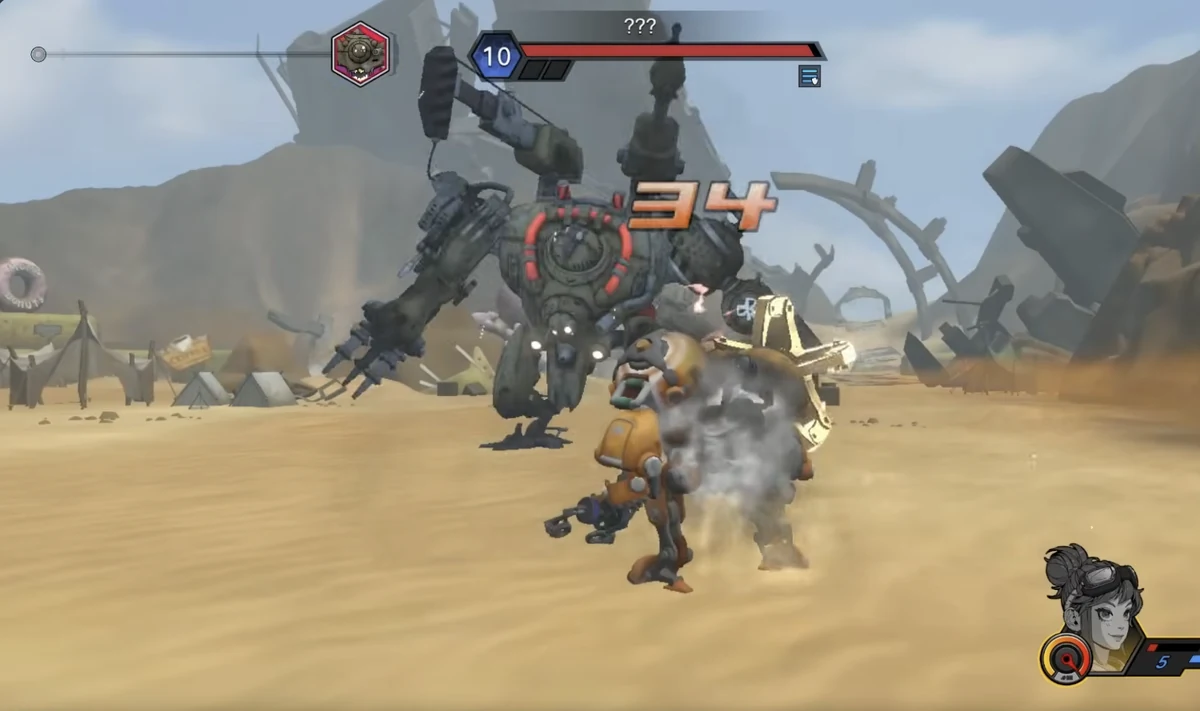
Starbites begins on the desolate desert planet Bitter, where the player meets Lukida, a salvager who works under the cruel overseer Fennec. Within moments, the game establishes Lukida's debt-driven story and builds the uncomplicated narrative motivation of wanting to escape the planet due to having a chance to purchase a single ticket of high value. The first few hours of gameplay come off as simple and may feel like they consist mostly of fetch quests. This may result in players feeling like the campaign does not justify its rumored 30-40 hour playtime. Starting with the event where there is a combat struggle against an unknown mech, things start to develop beyond the original concept of the game when several chapters detach the storyline from the ticket.
Early reviewers of Starbites voiced the slow pace and then the game opens up with a wider story. Patience is required since there are nearly ten hours of gameplay consisting of like this and the lack of immediate payoff will be unattractive for those familiar with the pacing found in JRPGs. Initially framed due to circumstances of a debt collection narrative, Lukida does become more sympathetic, especially as the story progresses. Their interactions grow large enough to be distinct, which is why the early hours only teasingly promised, via party member dynamics, supporting characters.
Backtracking means having to go through the same areas over and over, and is the biggest culprit for pacing issues in this game. The primary story beats require you to go to previously traveled areas and fast-travel options are extremely limited. The side quest design directs players through the same spaces repeatedly, and as a player you can decide to accept the backtracking and feel positive towards the story payoff, but seeing backtracking and poor pacing as weaknesses in game design is purely justified compared to more recent JRPGs.
Turn-Based Combat and the Driver's High Gauge System
Starbites' Driver's High features turn-based combat with 3 active member slots and 1 support slot for bench characters. Driving High's combat mechanic is exclusive because it fills up over time and with damage taken. Once full, players gain the ability to use game-changing out-of-turn actions. This system creates a meta-game where players can defer an attack to do more damage when an enemy is vulnerable or when it is one of their party members' burst attacks, allowing Starbites to go beyond other turn-based jRPGs that simply rely on powerful deck stats.
Patterns formed during combat where the player is rewarded is learning enemy weaknesses. DH activations are rewarded and so are well-timed. The beginning of the game contains easy enemies but the systems of combat are revealed as you unlock more moves and face higher level enemies, shifting the demand from simple level grinding to skill-based combat. The trio composition of your party members means players will need to think carefully about their party selection to fully utilize the support slot system and follow-up attack mechanics. For additional insight on combat depth in contemporary JRPGs and how Starbites shares design DNA with them, the best JRPG battle systems covers Shin Megami Tensei: Persona, One More and other modern implementations.
Giving players the choice of three difficulty options at any time allows for accessibility without lessening the importance of the combat systems. For story-focused players, difficulty can be dropped for tough boss battles, which means they don't have to play on easy for the whole game. This flexibility gives players the most choice in how to play, which is a hallmark of modern JRPG design. This level of respect for player agency ensures that the developer doesn't compromise the experience for those wanting to challenge themselves with a no-difficulty-run.
The Weakness System and Octopath Traveler Comparison
The system used in Starbites for weaknesses clearly resembles Octopath Traveler in the way the hidden weaknesses of enemies must be ‘tested’ through use of specific skills or standing in certain positions to discover them. Each enemy has blank spots under their HP bar indicating how many weaknesses have not been found. Each time a weak point is hit, one of the blanks is filled and that weak point is classified while the enemy’s shield value decreases. Once an enemy's shield value hits zero, they are put into a Break state which delays their turn order and increases the damage they receive.
Breaking shields creates the rhythmic flow to combat that is found in all Octopath-influenced JRPGs. Talented players will hit the Break state by timing it perfectly with area of effect skills, directed high damage gauge skills, or even both. The system of formations adds gameplay because the enemies are positioned in such a way that determined whether a given skill will hit only one enemy or multiple. All of these factors combine to create a deeper combat system than what the opening hours give away for Starbites.
The system works with magic and elemental systems found throughout the genre. For more information on how JRPG systems of weaknesses systems evolved from elemental triangles to modern implementations found in Octopath Games, consider reading best JRPG magic systems for a franchise-wide overview. Starbites offers a new version of the system that fits well with what has been established while adding a new layer of tactics with the DH gauge.
Character Customization, Skill Trees, and Free Respecs
In Starbites, character progression works through unique skill trees for each party member that unlock new skills when they level up. Each tree splits into several specializations that can alter combat and non-combat roles. The combat roles include damage, tanking, and healing, while the non-combat roles could include things like scouting. Each player can create their preferred party member roles to play in whatever way they want, thanks to a free respec system that allows players to unallocate and reallocare points without any resources used. This encourages players to freely change their roles while playing the 30-40 hour campaign.
The philosophy of the no cost respec system is incredibly player-friendly for modern JRPG design. Previous JRPGs would limit the ability to change skills to prevent experimentation through consumables and currency systems. In contrast, Starbites promotes build diversity. A player can change their build when they discover a weakness at any point during the campaign without having to grind for materials to change their skills. This flexibility creates the need to experiment with different strategies when fighting new bosses. The intersection of JRPG job class systems and skill tree design is explored in best JRPGs with job class systems covering the Final Fantasy V to Octopath Traveler era offerings that share design philosophies with Starbites.
There is quite a bit of variation between characters in how deep their skill trees run. Support characters typically have narrower trees, while the primary combat characters have more expansive options. This asymmetry means that players have to make important decisions about their roster. The makeup of the party directly influences the level of customization available to them in both the active and the support roles.
Mech Equipment and Tactical Build Diversity
Apart from skill trees, Starbites also allows mech equipment customization such as interchangeable weapons, frames, engines, and cores, which form tactical synergies among the party. The equipment system is akin to the materia system in Final Fantasy VII, only with sci-fi salvager-themed words. Players can focus characters to be faster, tougher, have elemental affinities, or be hybrids of multiple roles with certain engine-core combinations.
The greatest mech equipment depth is late-game when bosses start requiring specific resistances or skill-set tactical loadout responses. Players who engage with the customization layer deeply will be rewarded, while those who prefer default loadouts and focus on combat will be catered to as well. The dual-path nature of the design philosophy honors player preference by offering more mechanics without overwhelming players who engage with just a few because of the complexity involved.
The level of customization depth that the synergy between skill trees and mech equipment provides justifies the length of the campaign. Players who consider mech loadouts set-and-forget will find their build stagnating around chapter five or six, while players who actively seek out and experiment with specific equipment combinations will find tactical options available to them well into the endgame. This design philosophy is a microcosm of the more overarching cluster mechanics found repeatedly in the best JRPGs with permadeath, where the investment in specific builds becomes more meaningful due to the weight of unit loss.
Visual Design Disparity: 2D Art vs 3D Models
Starbites most criticism stems from 3D models used in gameplay that look less refined than the gorgeous 2D character artwork. 2D character artwork blends anime and western comic influences in a way that looks more polished than the actual in game visuals. The 3D models have obvious aliasing, an annoying depth of field effect, and the texture work looks like what you'd see in late 90s and early 00s cartoons.
There are cutscenes in between gameplay that will have 2D character artwork that looks better than the 3D models. The difference between the 3D models and 2D character artwork in cutscenes is similar to what critics said about Star Ocean: The Last Hope. The difference in quality creates a problem for customers that expect quality in all visuals; the good combat and customization systems won't make up for the issue.
When looking at the current JRPGs that Starbites takes visual cues from, Starbites visual decisions are easier to understand. For an overview of concept spanning multiple franchises both modern indie pixel revivals and HD-2D provide better cohesion within budget constraints than Starbites. best pixel art JRPGs covers the design philosophy of maintaining visual consistency through a deliberate aesthetic choice. Rather than unified pixel art like many indie JRPGs, Starbites attempts a hybrid 2D portrait + 3D gameplay, but this is much harder to do well.
Technical Performance and PS5 60fps Stability
Starbites delivers an outstanding gameplay experience on PS5, with an impressive technical performance of 60fps during standard gameplay scenarios. Though combat transitions may experience minor lag due to unoptimized loading routines, frame stability is solid throughout the whole campaign. A few known bugs include erratic camera movements during some transitions and a video glitch of a cat NPC that gained brief attention on social media around launch time.
Frame rate stability during major battle events and overall smoother gameplay on Switch 2 is improved compared to original Switch . Xbox Series S and X are comparable to PS5 while X has higher gameplay cinematic resolution. PC can be played at any resolution and frame rate and Steam Deck OLED players can choose to play handheld JRPG at any resolution and frame rate.
Because there is no cross-platform save data transfer, individual platform performance characteristics provide the best option per players' preferences. Nintendo Switch 2 version gives players the best option for portability and good enough graphics, and good enough graphics provide the most context to Switch JRPG. Best JRPGs on Nintendo Switch include all first party and third party games.
The Ramsey Bonus Content and Replay Value
The Ramsey, a puzzle-platformer releasing in 2023, will be included as a bonus title in Starbites. Starbites has a 6-8 hour gameplay time as its core campaign, and including Ramsey as a bonus stretches its gameplay even further. While Ramsey is not a JRPG, it is classified as a competent indie puzzle-platformer and will most likely appeal to a customer base who appreciates variety in games. On the other hand, die-hard JRPG fans looking for Starbites to have more JRPG content will be disappointed.
Ramsey’s bonus content is strategically important over mechanically important, conveying more important information than its gameplay. Providing a fully functional indie game is a sign of confidence in IKINA GAMES and offers solid value for the base price. Using a value-driven pricing model allows the company to focus on the RPG elements in Starbites while including a secondary title which is less prominent. Gamers wanting the JRPG will not be disappointed as they can ignore Ramsey completely and still access everything in Starbites, while those appreciating the bonus will get a full indie game.
The depth of Starbites gameplay customization should determine how much players replay the game. New Game Plus systems tend to keep their character and equipment, but in Starbites it will also be to players’ benefit to try and have their skill tree go a different way from their combat equipped mechs. Players will likely find that there is also tactical depth to support a build they did not explore in their run. Gamers will find that there is more content to be played beyond sufficient levels in their gameplay.
Final Verdict — Where Starbites Lands in the 2026 JRPG Lineup
Starbites deserves encouragement for their unwavering support for JRPGs, and it shows with their understanding of the meticulous nature that comes with the initial hours of grinding while gaining an understanding of the intricacies of the Driver's High combat system, that incorporates gauged, Octopath-inspired weakness systems, as well as flexible, free respec mechanics, deep character customization through skill trees and mech attachments, and allows for the completion of the campaign to be justified within the 30 - 40 hour range. Most visual and technical bugs will be present due to their indie development and lack of sophistication from those used to development AAA games.
7.5/10 for the multi-platform release. Many will be able to choose their preferred regions based on their play styles. For handheld JRPGs, the Switch 2 + Steam Deck OLED options will work, while those who are fans of Octopath-inspired systems and JRPG character creation will find the visual disparity and pacing issues less significant than combat depth and customization.
To contextualize JRPGs in 2026, Best RPGs of All Time shows where Starbites sits within the span of video game history. For those looking for comparisons to Starbites in more recent writings, look to our Final Fantasy 1987 review, as it exemplifies the editorial deep-dives we do for key releases in the JRPG genre. For Square Enix context, the franchise-wide ranking series has every Final Fantasy ranked, and for history of JRPGs, we trace the evolving genres that influenced the design of Starbites. For coverage of JRPGs Starbites will complement, most anticipated JRPGs of 2027 covers the confirmed titles looking into next year. The original RPGSite Starbites coverage that we referenced is linked at the source review for cross-reference context.